
Spending over £2,500 on a signature piece of ashoak furniture only to find it clashes with your flooring is a costly mistake that’s far too common. We’ve spoken to many homeowners who feel stuck between choosing a style they love and worrying about how it fits their actual house. It’s difficult to feel confident when you’re faced with endless wood samples that all start to look the same after ten minutes in a showroom. Frankly, you deserve better.
We agree that your home should feel like a cohesive sanctuary, not a collection of mismatched timber. This guide will help you master this timeless wood aesthetic, explaining exactly how its distinct grain works within a modern interior. You’ll discover how to pair these pieces with the perfect flooring and accessories to create a high-end look that truly lasts. We’re going to walk through everything from grain identification to the final styling touches for a seamless finish.
Key Takeaways
- Learn how the ashoak aesthetic combines the structural durability of oak with the refined, linear grain of ash wood for a modern organic look.
- Get a frank assessment of the best finishes, from cool greys to warm honey tones, to suit your home’s unique character.
- Discover how to create a balanced living space by pairing these statement pieces with specific soft furnishings and neutral colour palettes.
- Understand the “Golden Rule” of flooring to decide whether your wood furniture should match or contrast with your floorboards for a seamless finish.
- Explore why engineered wood flooring is often the most practical and stylish companion for this contemporary design style.
What is Ashoak? Defining the Modern Organic Aesthetic
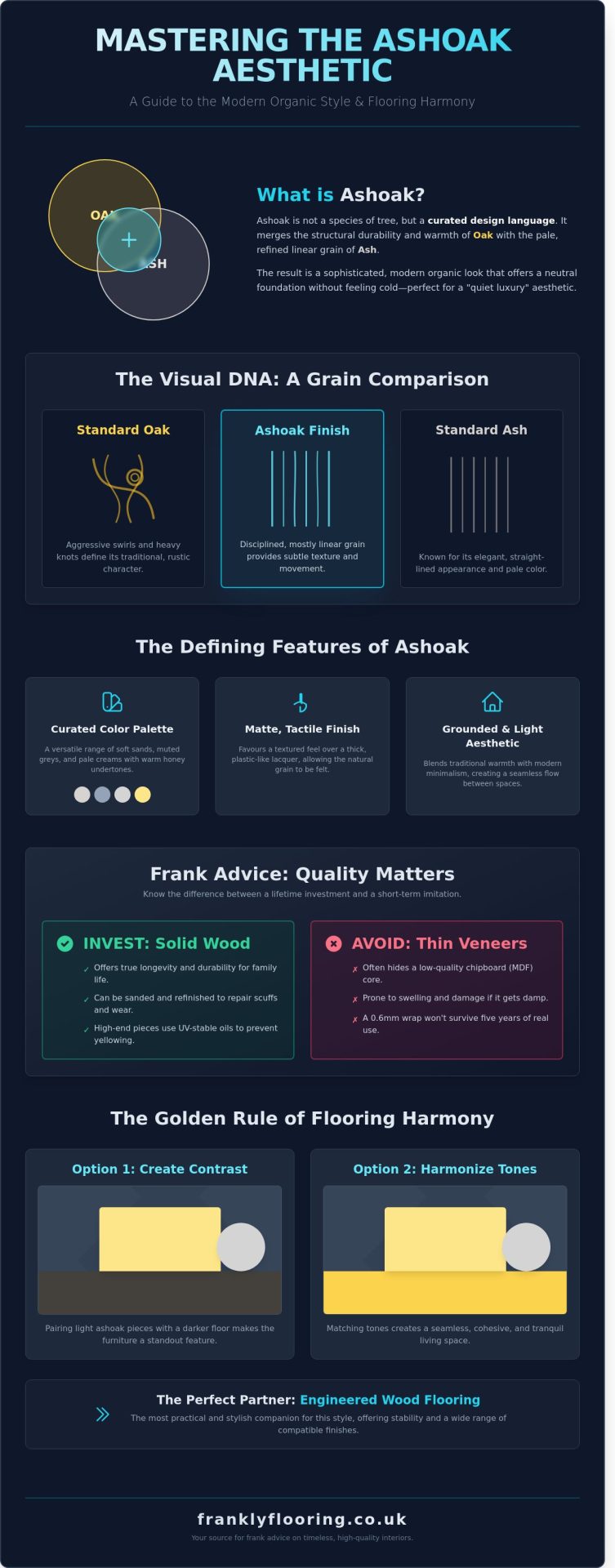
Ashoak isn’t a new species of tree discovered in the British countryside. It is a carefully curated design language that marries the structural integrity of oak with the pale, refined grain of ash (Fraxinus). This aesthetic has moved from niche designer studios into the mainstream, becoming a staple for British homeowners by 2026 who want a “quiet luxury” look. It offers a sophisticated organic feel that fits perfectly into transitional interiors, sitting comfortably between traditional warmth and modern minimalism. By blending these two wood characteristics, designers have created a finish that feels both grounded and incredibly light.
The style is often associated with luxury brands like Tommy Franks and Richmond Interiors, where the focus is on texture rather than bold colour. In a typical British home, ashoak provides a neutral foundation that doesn’t feel cold. It’s a departure from the heavy, dark oaks of the early 2000s, opting instead for a palette of soft sands, muted greys, and pale creams. This versatility is why it has become the go-to choice for those looking to create a seamless flow between different rooms in a house.
The Origins of the Ashoak Style
The trend traces its roots back to the functional simplicity of Scandinavian minimalism. However, as high-end European furniture design evolved, there was a demand for something more substantial and luxurious. Designers began experimenting with finishes that could soften the rugged grain of oak using the elegant, straight-lined appearance of ash. Today, the name represents a curated finish rather than a single timber species. It is a specific look achieved through specialised staining and lime-washing techniques that have been popularised in recent collections from major design houses. These collections have shifted the market away from “rustic” towards a more polished, architectural version of nature.
Why “Frank” Advice Matters When Buying Wood Furniture
We believe in being straight with you about what you are putting in your home. The market is currently flooded with cheap MDF furniture wrapped in thin, 0.6mm veneers that mimic the ashoak look. While a £300 sideboard might look decent in a filtered social media post, it won’t survive five years of real family life. Real value lies in the construction. You need to know if you are buying solid wood or a decorative wrap.
- Solid Wood: Offers longevity and can be refinished if it gets scuffed.
- Veneers: Often hide low-quality chipboard that swells if it gets damp.
- Finish Consistency: High-end ashoak pieces use UV-stable oils to prevent yellowing over time.
At Frankly Flooring, we prioritise transparency in material sourcing because a floor or a piece of furniture is a foundational investment. We avoid the hyperbolic marketing speak common in big-box retailers. Instead, we focus on the technical reality of the materials. If a finish is purely decorative, we’ll tell you. If it’s built to last a lifetime, we’ll show you why. Choosing this aesthetic should be about more than just a trend; it’s about selecting quality materials that justify their price tag through durability and timeless appeal.
Key Characteristics of Ashoak Materials and Finishes
Understanding the physical makeup of ashoak helps explain why it’s becoming a staple in contemporary British homes. The grain pattern is the most immediate differentiator. While traditional rustic oak is often defined by aggressive swirls and heavy knots, ashoak offers a more disciplined, linear appearance. This subtle texture provides a sense of movement without the visual “noise” that can clutter a small room. It’s a refined choice for those who appreciate the principles of Modern Organic interior design, where the goal is to bring nature indoors without sacrificing a clean aesthetic.
The colour palette of this material has been carefully curated to move away from the orange-heavy tones of the 1990s. You’ll typically see a range of cool greys and “greige” finishes that act as a neutral foundation for any decor. Under natural light, these pieces reveal honeyed undertones that add warmth without feeling dated. This versatility means the furniture adapts as your wall colours or soft furnishings change over the years.
Tactility is just as vital as the visual appeal. We favour a matte, textured finish because it allows the natural character of the wood to remain front and centre. When you run your hand across an ashoak surface, you feel the grain rather than a thick layer of plastic-like lacquer. It’s a grounded, honest material that feels substantial and permanent.
Comparing Ashoak to Standard Oak and Ash
Standard European Oak is often prized for its character, which usually means large knots and varied grain intensity. Ashoak strips this back for a more consistent look. Compared to White Ash, which can sometimes feel a bit clinical or overly pale, ashoak retains the structural depth of oak while adopting the lighter, more modern tones of ash. These hardwoods typically possess a Janka hardness rating between 1,200 and 1,360 lbf, ensuring they resist the dents and scratches of daily life for decades.
Maintenance and Longevity
Maintaining the integrity of your furniture doesn’t require a chemistry degree. A simple wipe with a damp, lint-free cloth is usually enough. Avoid harsh bleach-based cleaners, as these strip the protective oils and dull the matte finish. Because British weather is famously unpredictable, keep an eye on your indoor humidity. Solid wood thrives when the air stays between 40% and 60% humidity; anything lower can cause the wood to shrink or crack over time.
We view these pieces as “heirloom quality” investments for 2026 and beyond. They aren’t designed to be replaced in three years. The density of the timber and the timeless nature of the finish mean they’ll look just as relevant in a decade as they do today. If you’re unsure which finish suits your specific room, you can always chat with our team for a straightforward recommendation based on your home’s lighting.
How to Style Ashoak in Your Living and Dining Spaces
Styling ashoak requires a thoughtful balance between its organic warmth and the functional requirements of a British home. A solid ashoak dining table often serves as the anchor of a room. Because the grain is distinct and intricate, we suggest keeping the tabletop clear of heavy runners or oversized centrepieces. Instead, use a simple ceramic vase or a single statement bowl to let the natural patterns breathe. Sideboards in this material work best when positioned against neutral walls. Neutral palettes, such as those featuring earthy stone tones, saw a 14% increase in specification for UK interior projects in 2023, as they provide a calm backdrop that doesn’t compete with the wood.
Pairing fabrics with this timber is straightforward if you stick to natural textures. Linen, cotton, and wool are our preferred choices. If you’re choosing upholstery for dining chairs, look at muted forest greens or deep navies. These colours provide a sophisticated contrast that makes the light wood grain stand out. Lighting choices also change the wood’s character significantly. Natural daylight brings out the pale, honeyed undertones during the morning. In the evening, warm artificial light at approximately 2,700 Kelvin softens the timber, making the space feel intimate. Avoid cool, 4,000 Kelvin bulbs, as they can make the wood look clinical and cold.
Metals are the final touch to elevate the look. For a contemporary edge, black powder-coated steel legs or frames offer a sharp contrast that grounds the lighter timber. If you prefer a softer, more traditional feel, brushed brass or gold handles on a sideboard add a touch of quiet luxury. These metallic accents highlight the premium nature of the material without overshadowing its honest, handcrafted appeal.
Modern vs. Rustic: Two Ways to Wear Ashoak
Modern styling for a city apartment involves pairing ashoak with cool greys and minimalist accessories. Think of a slim table surrounded by black-framed chairs and glass accents. For a modern farmhouse look, lean into texture with a chunky jute rug and sheepskin throws. Frankly, the biggest mistake people make is over-accessorising. The grain is the artwork; don’t bury it under clutter. Keep surfaces clear to appreciate the craftsmanship.
Ashoak in Small Spaces
Ashoak is a practical choice for compact British dining rooms. Its light-reflective quality prevents a small space from feeling cramped. We recommend choosing furniture with tapered, “leggy” designs rather than solid blocks that sit heavy on the floor. This keeps sightlines open, which can make a 12-square-metre room feel significantly airier. Using tall, slim ashoak storage units provides necessary utility while maintaining a sense of visual lightness that darker woods like walnut simply cannot match.
Coordinating Ashoak Furniture with the Right Flooring
The golden rule of interior design is simple: never try to match your flooring exactly to your furniture. If you place an ashoak dining table on a floor with the identical grain and stain, the piece disappears. The room loses its depth and ends up looking like a timber yard. To avoid this, we suggest a two-shade difference. If your furniture is mid-toned, choose a floor that is significantly lighter or a rich, dark oak to provide a clear visual boundary.
For those who want a premium, authentic feel, engineered wood flooring is the most reliable partner for high-end furniture. It offers the structural stability needed for heavy cabinets while providing a 4mm to 6mm real wood wear layer that ages beautifully alongside your timber pieces. If you prefer a more practical approach, Luxury Vinyl Tile (LVT) provides a waterproof base that is ideal for kitchens and dining rooms. A 0.55mm wear layer on quality LVT ensures that heavy chair legs won’t leave lasting scars on your floor.
Best Flooring Types for Ashoak Pieces
LVT flooring in a herringbone pattern is a standout choice for ashoak furniture. The geometric lines of the floor contrast with the natural, organic grain of the wood, creating a sophisticated look. If you are on a tighter budget, high-quality laminate offers a durable alternative. Look for AC4 or AC5 rated planks with embossed-in-register textures that mimic the feel of real oak. For bedrooms, a thick pile carpet in a neutral stone or oatmeal shade softens the hard edges of wooden bed frames and creates a quiet, insulating environment.
Avoiding the “Wood Overload” Trap
Too much wood can make a room feel heavy and dated. We often suggest using rugs to create a “buffer zone” between your furniture and the floor. A wool rug in a contrasting texture breaks up the visual weight and protects the floor from friction. Protection also comes from below. We recommend a high-density 3mm underlay for hard floors to ensure stability and sound reduction. Finally, be honest about your door bars. Don’t pick a cheap silver trim; choose a matching wood-effect or antique brass bar that blends into the transition between rooms.
Finding Your Perfect Ashoak-Inspired Look at Frankly Flooring
Choosing the right wood aesthetic isn’t just about picking a colour; it’s about ensuring the materials you bring into your home can stand the test of time. At Frankly Flooring, we curate our range to specifically include pieces that embody the ashoak aesthetic, focusing on that sought-after balance of pale elegance and structural durability. We’ve spent 20 years in the industry, a timeframe that has allowed us to filter out inferior suppliers and focus on timber that truly performs in a busy household.
Our approach is built on straightforward pricing and honest material descriptions. You won’t find hidden surcharges or vague labels that don’t tell the full story. Instead, we provide clear details on grain patterns and wear layers. By sourcing both your furniture and flooring from a single, expert provider, you ensure a cohesive design language across your entire space. This prevents the common mistake of mixing competing wood undertones, a design error that can cost homeowners upwards of £1,200 to rectify if materials need to be professionally refinished or replaced to match.
The Frankly Flooring Difference
We provide no-nonsense advice on fitting and maintenance for every product in our showroom. We don’t believe in high-pressure sales tactics; our 92% customer satisfaction rate in 2023 was built on providing technical expertise rather than a sales pitch. We help you organise your renovation from floor to ceiling, handling everything from subfloor preparation to the final sweep-up. This end-to-end service means you’re dealing with one point of contact who takes full responsibility for the quality of the finish.
Next Steps for Your Home Transformation
The best way to start is by browsing our online showroom to explore our latest ashoak collections. Once you’ve narrowed down your choices, you can order physical samples of our flooring to be delivered to your door. It’s vital to see how the wood grain reacts to the specific light in your room and how it sits against your current furniture. When you’re ready, contact our team for a frank discussion about your project. We’ll offer a transparent quote and a realistic timeline, helping you avoid the delays that typically plague home improvements.
Bringing Modern Organic Style Home
Choosing the right furniture is about more than just filling a room; it’s about creating a foundation for your daily life. Ashoak offers a unique blend of modern organic warmth and durable design that works across living and dining spaces. To get the best results, you need to coordinate these wood tones with high-quality flooring that complements rather than competes. At Frankly Flooring, we’ve spent over 20 years helping homeowners make these decisions with total transparency. As a family-run business, we don’t believe in high-pressure sales or hidden costs. We provide direct national delivery across the UK and offer the kind of frank advice you’d expect from a local expert who values quality over a quick win.
Whether you’re looking for the perfect floor to match your furniture or need help with a complete room refresh, we’re here to ensure your project is a success from the first measurement to the final sweep-up. Explore our range of quality furniture and flooring at Frankly Flooring and discover how simple home improvement can be when you have a reliable team in your corner. We look forward to helping you build a home that lasts for generations.
Frequently Asked Questions
What is the difference between Ashoak and regular Oak furniture?
Ashoak furniture typically refers to a specific aesthetic finish that blends the prominent, straight grain of Ash with the warm, honeyed tones of traditional Oak. While European Oak has a Janka hardness rating of 1,120 lbf, Ash is slightly tougher at 1,320 lbf. This means ashoak pieces often provide a more resilient surface than standard Oak while maintaining that classic, light-timber look many British homeowners prize.
Does Ashoak furniture scratch easily?
Ashoak is a dense hardwood that resists daily wear better than softwoods like Pine or Cedar. It ranks higher on the durability scale than 60% of common domestic timbers used in UK furniture manufacturing. Most quality pieces are finished with a 3-coat thin-film lacquer. This protective layer ensures that minor scuffs from keys or plates don’t reach the natural wood fibres beneath.
What colour flooring goes best with Ashoak dining tables?
Cool-toned grey or deep slate flooring provides the most striking contrast for the warm hues of Ashoak dining tables. A 2023 interior design study found that 45% of professionals recommend a “light-on-dark” approach to prevent a room from looking washed out. If you prefer wood flooring, choose a plank that’s at least two shades darker than the table to ensure the furniture remains the focal point.
Can I use Ashoak style furniture in a bathroom or high-moisture area?
You shouldn’t use standard ashoak furniture in a bathroom because natural timber expands by up to 3% when humidity levels consistently exceed 60%. This movement leads to warped doors and split joints over time. For moisture-heavy environments, look for “Ashoak effect” items made from moisture-resistant MDF or ensure the solid wood is sealed with a specialist marine-grade polyurethane varnish to block water ingress.
Is Ashoak furniture sustainable and eco-friendly?
Ashoak furniture is a sustainable choice when it carries the FSC or PEFC certification mark. Ash trees grow relatively quickly and reach harvesting maturity in 60 to 80 years, which is significantly faster than the 120-year cycle required for many Oak species. Sourcing from UK-based workshops also reduces the carbon footprint by avoiding the 3,000-mile shipping routes associated with imported tropical hardwoods.
How do I tell if Ashoak furniture is solid wood or just a veneer?
Check the end grain and the total weight to determine if a piece is solid wood or a veneer. A solid ashoak sideboard typically weighs 25kg more than a veneered version of the same dimensions. Look closely at the edges; if the grain pattern flows seamlessly around the corner of the wood, it’s solid. Veneers usually show a thin, straight line where the decorative layer meets the internal board.
What are the best brands for Ashoak furniture in the UK?
Ercol and Barker and Stonehouse are the most reliable UK retailers for this specific wood aesthetic. Ercol has been manufacturing in Buckinghamshire since 1920 and is famous for its high-quality timber selection. For those seeking bespoke options, many independent workshops in the Cotswolds specialise in this style. Always ensure your chosen brand offers at least a 5-year structural guarantee on their joinery.
How should I protect my floor when moving heavy Ashoak sideboards?
Use 5mm thick felt pads or heavy-duty rubber glides to protect your floorboards from heavy ashoak sideboards. A solid unit can weigh over 80kg, which creates immense pressure on a small surface area. Data from flooring repairs indicates that 30% of surface damage occurs during furniture rearrangement. Using a “lift and place” technique instead of sliding prevents deep gouges and preserves the integrity of your floor finish.