
The most expensive mistake you can make with your home renovation isn’t buying premium luxury vinyl; it’s believing that the sticker price on the plank is the final amount you’ll see on your invoice. It’s a common frustration for homeowners who find that a quoted lvt flooring cost per m2 uk of £25 quickly spirals once the necessary extras are added. We agree that the current market feels like a maze of confusing quotes and varying quality levels that make it difficult to know if you’re getting a fair deal or a floor that will fail in 24 months.
To help you plan, we’ve put together a transparent, no-nonsense breakdown of current and projected 2026 prices. We’ll show you exactly where your money goes, from the raw materials to the critical subfloor preparation that ensures your floor stays level for 20 years. You’ll gain the confidence to choose the right quality level for your home and leave with a clear, total budget for your project. We’re stripping away the jargon to explain how to spot genuine value and why the professional fitting process is just as important as the tiles themselves.
Key Takeaways
- Get a frank breakdown of the lvt flooring cost per m2 uk for 2026, helping you budget accurately between £20 and £60+ per m2 before you even visit a showroom.
- Discover how to decode technical specs like wear layers and core materials to ensure you’re paying for long-term durability rather than just a brand name.
- Compare the total cost of click versus glue-down systems, including why the fitting process for glue-down often requires more professional labour.
- Identify the “hidden” extras—from subfloor preparation to underlay—that can unexpectedly inflate your final bill if not accounted for early on.
- Learn how to maximise your budget by prioritising high-traffic zones and spotting high-quality alternatives that offer the same premium look for a fairer price.
Understanding LVT Flooring Costs: What to Expect in 2026
When you’re looking for a floor that balances durability with style, Luxury Vinyl Tile (LVT) is the current UK market leader. By 2026, it has effectively replaced laminate as the go-to choice for modern renovations. If you’re asking what is LVT flooring exactly, it’s a multi-layered synthetic product designed to mimic wood or stone without the maintenance headaches. It’s a straightforward solution for busy homes.
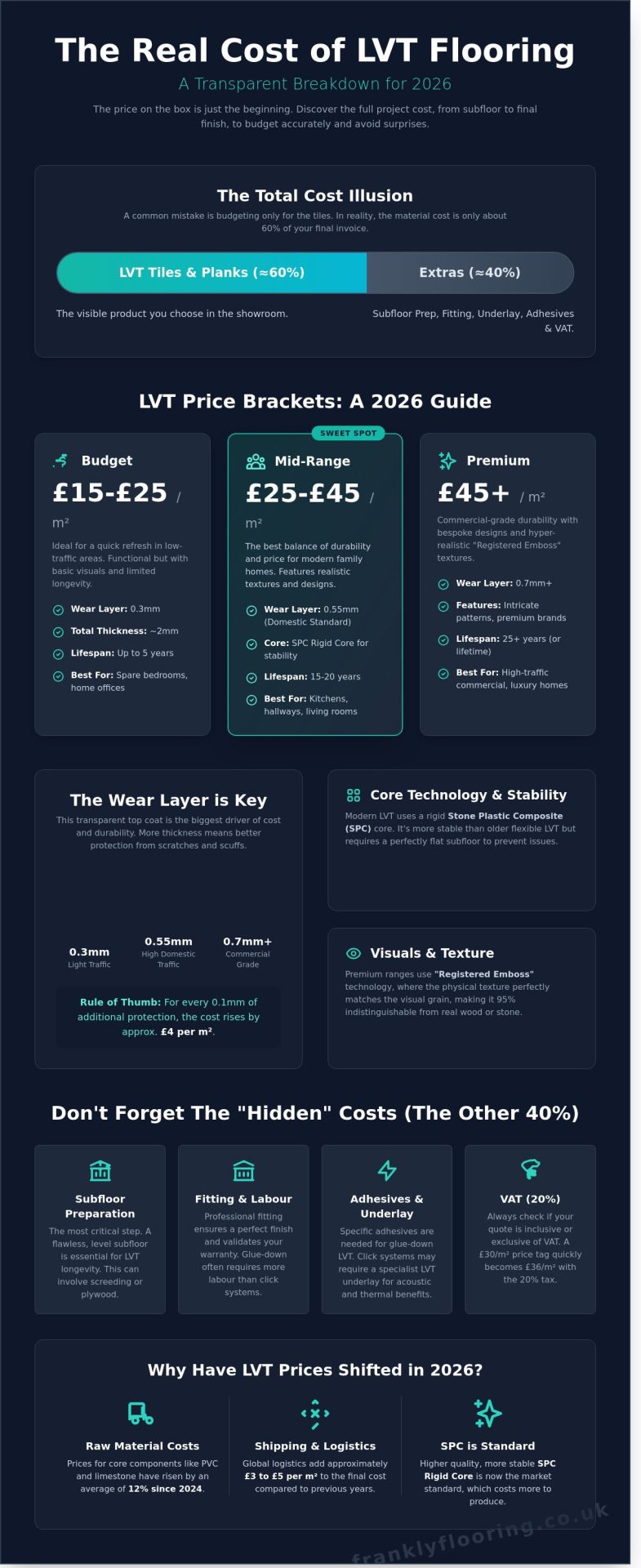
For the tiles alone, expect to pay between £20 and £60 per m2. However, we need to be frank with you. The price on the box only represents about 60% of your total project budget. You still have to account for subfloor preparation, adhesives, and professional fitting. If you ignore these, your budget will fall apart before the first plank is laid. We handle everything from the initial subfloor check to the final sweep-up, ensuring the quality of the fitting matches the quality of the tile.
The Three Main LVT Price Brackets
Your choice usually falls into one of three categories based on the wear layer thickness and design detail:
- Budget (£15-£25 per m2): These are usually 2mm thick with a 0.3mm wear layer. They’re fine for a spare bedroom or a quick refresh, but they won’t stand up to a busy kitchen for more than 5 years.
- Mid-Range (£25-£45 per m2): This is the lvt flooring cost per m2 uk sweet spot. You get a 0.55mm wear layer and realistic textures that suit family life. Most of our kitchen and hallway projects fall here.
- Premium (£45+ per m2): This bracket includes commercial-grade 0.7mm wear layers and intricate patterns. Brands like Amtico or Karndean often sit here, offering bespoke finishes that last 25 years or more.
Why LVT Prices Have Shifted in 2026
Global supply chains haven’t been kind to flooring prices recently. Raw material costs for PVC and limestone have risen by 12% on average since 2024. Stone Plastic Composite (SPC) technology is now the standard because it’s more stable; however, it costs more to produce than older flexible LVT. When you’re browsing our showroom or looking at quotes, always check if VAT is included. A £30 per m2 price tag becomes £36 very quickly once the taxman takes his 20% cut. Shipping and logistics now add roughly £3 to £5 to the final lvt flooring cost per m2 uk compared to previous years. We prefer to give you the full, honest figure upfront so there are no surprises on fitting day.
The Quality Spectrum: Why Prices Vary from £20 to £60+ per m2
When you compare quotes, the lvt flooring cost per m2 uk homeowners see can vary wildly. This isn’t just retail markup. It usually reflects the internal engineering of the plank. The most significant cost factor is the wear layer, which is the transparent top coat protecting the design from scratches and scuffs. Beyond that, the manufacturing process for the visuals plays a role. Budget options use flat prints that look “plastic,” while premium ranges use registered embossed textures. This technology aligns the physical grooves of the plank with the visual grain of the wood or stone, creating a finish that is 95% indistinguishable from the real thing.
The relationship between wear layer thickness and price is direct: for every 0.1mm of additional protection, the cost typically rises by approximately £4 per square metre.
Wear Layer Thickness: The Real Driver of Cost
- 0.3mm: This is the entry-level choice. It’s perfectly adequate for a guest bedroom or a home office with light foot traffic. It’s the most affordable way to get the LVT look on a budget.
- 0.55mm: This is the 2026 domestic standard. It’s designed for high-traffic areas like hallways, kitchens, and living rooms. Most families find this provides the best balance between price and long-term durability.
- 0.7mm+: These are heavy-duty commercial grades. You’ll find these in shops or restaurants. While the initial investment is higher, the 25-year or lifetime residential warranties often make them the most cost-effective choice over two decades.
Core Technology and Stability
Modern LVT uses either a flexible or a rigid core. Traditional flexible LVT is cheaper to manufacture but requires a flawless subfloor. If the surface underneath has even a 2mm dip, the flexible material will eventually show that imperfection. To get this right, our fitters follow the British Standard for flooring installation, which requires rigorous subfloor preparation. This prep work often offsets the savings made on the cheaper material.
Rigid Core, specifically Stone Plastic Composite (SPC), uses limestone powder to create a core that doesn’t expand or contract. It’s 100% waterproof and much more stable in rooms with large windows or temperature swings. Many SPC products now include an integrated underlay. This might increase the lvt flooring cost per m2 uk by £5 to £8 upfront, but it removes the need to buy and fit a separate underlay later. If you want to see how these different cores feel underfoot, you can browse our latest LVT collections to find the right fit for your home.
Click vs Glue-Down: How Installation Method Impacts Your Budget
Frankly, the price on the shelf is only half the story. When calculating your lvt flooring cost per m2 uk, the way those planks join together dictates whether you’ll be spending your weekend with a rubber mallet or writing a larger cheque to a professional fitter. By 2026, we expect the price gap between the two main methods to remain stable, but the hidden costs of preparation are where most budgets go off the rails. It is a common trap to look at the box price and forget the extras needed to actually get it on the floor.
The Click-Lock System Premium
You’ll usually pay a premium of £7 to £12 per m2 for click-lock planks compared to their glue-down counterparts. This extra cost covers the complex tongue-and-groove engineering that allows the floor to float over an underlay. While the product is pricier, the fitting is significantly faster. A skilled fitter can often complete a 25m2 lounge in a single day, whereas glue-down might require two days for subfloor prep and adhesive curing.
If you’re looking to save money, this system is the most DIY-friendly option. You can follow our How to Lay LVT guide to cut professional labour costs entirely, which typically saves you £20 per m2 in 2026 rates. This shift toward user-friendly systems is one of the key trends in the LVT market, as manufacturers respond to the growing demand for homeowners to handle their own renovations without the mess of glues.
The Glue-Down Reality
Glue-down LVT offers a lower entry price for the material, often starting around £18 per m2 for quality 2026 stock. However, don’t let that lower figure fool you. This method requires a perfectly flat subfloor, which means you’ll likely need to budget for 6mm flooring-grade plywood or a self-levelling screed compound. A 15kg tub of high-quality pressure-sensitive adhesive now costs between £45 and £65, covering roughly 40m2.
- Subfloor Prep: Expect to pay £15 to £22 per m2 for professional screeding and priming.
- Thermal Efficiency: Glue-down is the superior choice for underfloor heating, providing roughly 15% better heat transfer than floating floors.
- Durability: It won’t shift or bounce, making it a better long-term investment for high-traffic hallways.
Choosing glue-down usually means hiring a pro, as mistakes with adhesive are messy and expensive to fix. When you factor in the total lvt flooring cost per m2 uk for both the product and the necessary accessories, glue-down often ends up costing 10% more than click-lock despite the cheaper box price. It’s about deciding whether you want to pay for the material or the craftsmanship.
Factoring in the ‘Hidden’ Extras: Subfloors, Underlay, and Fitting
Most homeowners focus entirely on the price of the planks themselves. Frankly, that’s a mistake that leads to budget overruns. When calculating your total lvt flooring cost per m2 uk, the “hidden” extras often account for 30% to 40% of the final invoice. These aren’t optional add-ons; they’re the components that ensure your floor remains flat, quiet, and durable for the next two decades.
You must always factor in a 10% waste allowance. For a standard 20m2 room, you should order 22m2 of material. If you’re opting for a complex herringbone pattern, increase this to 15%. This covers cutting errors and ensures you have a few matching planks left over if a leak or accident happens in 2028.
Preparing the Ground: Subfloor Costs
The finish of your LVT is only as good as the floor beneath it. If your subfloor is uneven, your new LVT will click, creak, or even snap at the joints. For timber subfloors, 6mm or 9mm plywood is standard. This typically costs between £12 and £18 per m2 including the labour to fix it down. If you have a concrete base, a professional self-levelling compound is essential. Expect to pay roughly £15 per m2 for a 3mm depth. Skipping this step is a false economy; 85% of flooring failures are caused by poor subfloor preparation.
Trims and Finishing Touches
The final 5% of your budget covers the details that make the room look finished. You have two main choices for the edges. You can use scotia beading to cover the expansion gap, which is cost-effective, or you can remove and refit your skirting boards for a much cleaner look. Door threshold strips are another small but vital expense. While a basic aluminium strip might cost £5, a premium solid oak or colour-matched metal bar can cost up to £25 per doorway. For glue-down LVT, don’t forget the adhesive. Budget roughly £1 per m2 for a high-temperature, professional-grade glue that won’t fail in direct sunlight.
If you’re using click LVT, you’ll need a dedicated underlay. Prices for a high-density LVT underlay range from £4 to £8 per m2. Avoid cheap foam underlays designed for laminate; they’re too soft and will cause your LVT joints to fail under pressure. If you want a clear, all-in price without the guesswork, request a frank quote from our team today.
How to Maximise Your Budget Without Cutting Corners
Getting the best lvt flooring cost per m2 uk doesn’t mean you should settle for the thinnest, cheapest planks on the market. We advocate for a “Buy Once, Cry Once” approach. Investing in a 0.55mm wear layer typically costs an extra £3 to £6 per square metre compared to a 0.3mm domestic grade, yet it can double the floor’s lifespan. This small jump in initial spend prevents the disruption and expense of a full replacement in seven years. When you look at the total lvt flooring cost per m2 uk over a decade, the higher-spec product is almost always the cheaper option.
Smart homeowners use a “zoning” strategy to protect their bank balance. You should prioritise premium, heavy-duty LVT for high-traffic zones like hallways and kitchens where grit and moisture are constant. For a guest bedroom or home office that sees little footfall, you can safely drop to a thinner wear layer or a simpler click-system to save roughly 20% on material costs. It’s about being tactical with where you deploy your budget to ensure the most durable material is under the heaviest feet.
Smart Shopping Strategies
Don’t pay for a brand name when you can pay for the specification instead. Many Karndean & Amtico alternatives offer identical technical data sheets, including 0.55mm wear layers and 20-year warranties, for 30% less than the big-brand retail price. Always order physical samples first. Seeing the texture in your own light is the only way to avoid an expensive mistake. Keep an eye on “end of line” sections; if you only need 12m2 for a utility room, you can often find premium stock at 40% off the original price.
Choosing Frankly Flooring for Honest Value
We’ve spent 20 years curating a range that focuses on genuine value rather than marketing gimmicks. By operating as a specialist online retailer, we bypass the massive overheads of high-street showrooms, passing those savings directly to you. Our pricing is transparent. We don’t hide “fitting kits” or surprise delivery surcharges at the final checkout stage. You get a straightforward price for a high-quality product that’s built to last. Our team selects every range based on its durability and ease of fitting, ensuring you get professional results without the inflated price tag.
Secure a Fair Price for Your 2026 Flooring Project
Planning a home renovation for 2026 requires a clear-eyed look at your budget. You’ve seen that while material prices typically range from £20 to over £60 per m2, the true value lies in the durability of the wear layer and the precision of the fitting. Don’t forget to set aside roughly 30% of your total budget for subfloor preparation and professional fitting; it’s the foundation that ensures your floor lasts for its intended 25-year lifespan. Understanding the lvt flooring cost per m2 uk helps you avoid the common trap of underestimating “hidden” extras like specialist underlay or moisture barriers.
At Frankly Flooring, we bring 20+ years of family-run expertise to every order. We provide direct-to-door UK delivery and no-nonsense, transparent pricing that cuts through the usual industry fluff. We’re here to ensure you get a premium finish without high-pressure sales tactics. Your home deserves a foundational element that combines style with long-term reliability. We’ll help you find the perfect balance between upfront costs and decades of performance.
Discover Quality LVT at Honest Prices – Shop the Range
We look forward to helping you transform your space into something truly special.
Frequently Asked Questions
Is LVT flooring cheaper than real wood or laminate?
LVT is generally cheaper than solid wood but sits at a higher price point than basic laminate. Solid oak flooring typically starts at £45 per m2, whereas mid-range LVT averages £25 to £35 per m2. While budget laminate can be found for £12 per m2, it won’t offer the 100% waterproof protection or 20 year lifespan you get with quality vinyl. Choosing LVT represents a balanced investment for high-moisture areas like kitchens.
How much does LVT installation cost per m2 in the UK for labour?
Standard fitting costs for LVT in the UK currently range between £15 and £25 per m2 for labour alone. This price fluctuates based on the complexity of the pattern, such as a 45 degree herringbone layout which often commands a 30% premium. Frankly, you should also budget an additional £10 to £15 per m2 for subfloor preparation like ply-lining or screeding to ensure a level finish.
Do I really need underlay for LVT flooring?
You need underlay if your chosen LVT doesn’t have an integrated backing, as it provides essential sound reduction of up to 19 decibels. Rigid core boards often come with a 1mm foam layer already attached, saving you approximately £5 per m2 in material costs. If you’re fitting glue-down LVT, you’ll skip the underlay entirely but must invest in high quality adhesive and a perfectly smooth subfloor.
Is it cheaper to buy LVT online or in a showroom?
Showrooms often provide better total value through bundled fitting packages, even if the lvt flooring cost per m2 uk looks higher on the sticker. Online retailers might save you £2 per m2 upfront, but they frequently hide £50 delivery fees and won’t take responsibility if the subfloor isn’t ready. A local showroom handles the measurement and waste calculation, which prevents the 15% over-ordering mistake many DIY buyers make.
How much extra LVT should I order for waste?
You should order an extra 10% of flooring for standard straight-lay patterns to account for cuts and mistakes. For a 20m2 lounge, this means purchasing 22m2 of material. If you’ve chosen a herringbone pattern, increase this waste margin to 15% because the intricate diagonal cuts at the room edges result in more unusable offcuts. Ordering this surplus ensures you have matching batch numbers if you need a repair later.
Can I lay LVT directly over my old floor to save money?
You can only lay LVT over an old floor if it’s perfectly level, dry, and structurally sound, though we rarely recommend it. Laying over old ceramic tiles requires filling grout lines first, as any 2mm dip will eventually cause the vinyl to telegraph the pattern underneath. Frankly, removing the old carpet or vinyl is the only way to guarantee the 25 year manufacturer warranty remains valid and the finish stays flat.
Does the thickness of LVT affect the price significantly?
Thickness is a primary price driver, with every 1mm of extra core material typically adding £3 to £5 to the lvt flooring cost per m2 uk. A 2mm glue-down plank is the budget choice, while a 6mm rigid core plank offers better stability and warmth. However, the 0.55mm wear layer is actually more important for durability than the overall thickness of the plank itself. You’re paying for the structural integrity of the click system.
How long does a £25 per m2 LVT floor typically last?
A £25 per m2 LVT floor will typically last 15 to 20 years in a residential setting if maintained correctly. This price point usually secures a 0.3mm to 0.5mm wear layer, which is tough enough to withstand daily foot traffic from a family of four. We’ve seen floors at this specification still looking excellent after 12 years of use, provided they weren’t cleaned with harsh bleach-based products that strip the protective coating.