
You might think a tough lacquer “shield” is the only way to protect your home from the chaos of kids and pets, but for many families, the supposedly “high maintenance” oiled finish is actually the more practical choice. It is a common dilemma when weighing up oiled vs lacquered wood flooring; one sits on top like a protective layer of glass, while the other sinks deep into the grain to protect the wood from within. We understand the fear of seeing a permanent scratch on a brand new investment or worrying if a kitchen spill will leave a lasting mark.
Yes, you can switch finishes, but it involves sanding the wood back to its raw state. Since oil penetrates the timber’s grain, you must remove enough of the surface to ensure the new lacquer can bond properly. If any oil remains in the fibers, the lacquer will peel or fail to dry. It’s a labor-intensive process that resets your floor’s lifecycle, so choosing the right finish initially saves significant effort. To ensure such a transition is handled correctly, specialized contractors like F&F Surface Group LLC offer the expert refinishing and installation services necessary to achieve a professional result.
This guide provides the frank truth about these finishes so you can choose a floor that looks natural and survives real life. You will discover the honest differences between UV oil and natural oil, along with the reality of how each handles daily wear. We will also outline a clear 10-year maintenance plan to ensure your floor remains a foundational element of your home’s character without the stress of constant upkeep. Whether you prefer a finish that acts as a shield or one that behaves like a skin, we’ll help you make an informed decision for the long term.
Key Takeaways
- Understand the mechanical difference between a surface lacquer “shield” and an internal oiled “skin” to properly protect your investment.
- Learn why oiled finishes offer a significant advantage for high-traffic areas by allowing for easy, localized spot repairs without sanding the whole room.
- Compare the spill management capabilities of both finishes to ensure your kitchen floor survives daily life without permanent damage or “edge-seep.”
- Evaluate oiled vs lacquered wood flooring based on your desired aesthetic, from light-reflecting brightness to a natural, tactile feel underfoot.
- Discover the honest 10-year maintenance reality for each finish so you can plan for a floor that remains a foundational element of your home.
Frankly Speaking: What Is the Difference Between Oiled and Lacquered?
Choosing wood flooring involves more than just picking a species like Oak or Walnut. The finish you select is the primary factor in how your floor handles daily life. When comparing oiled vs lacquered wood flooring, the fundamental difference lies in where the protection sits. To understand the core of the Frankly Speaking: What Is the Difference Between Oiled and Lacquered? debate, you have to look at the physical bond between the treatment and the timber. Think of it as a choice between a shield and a skin.
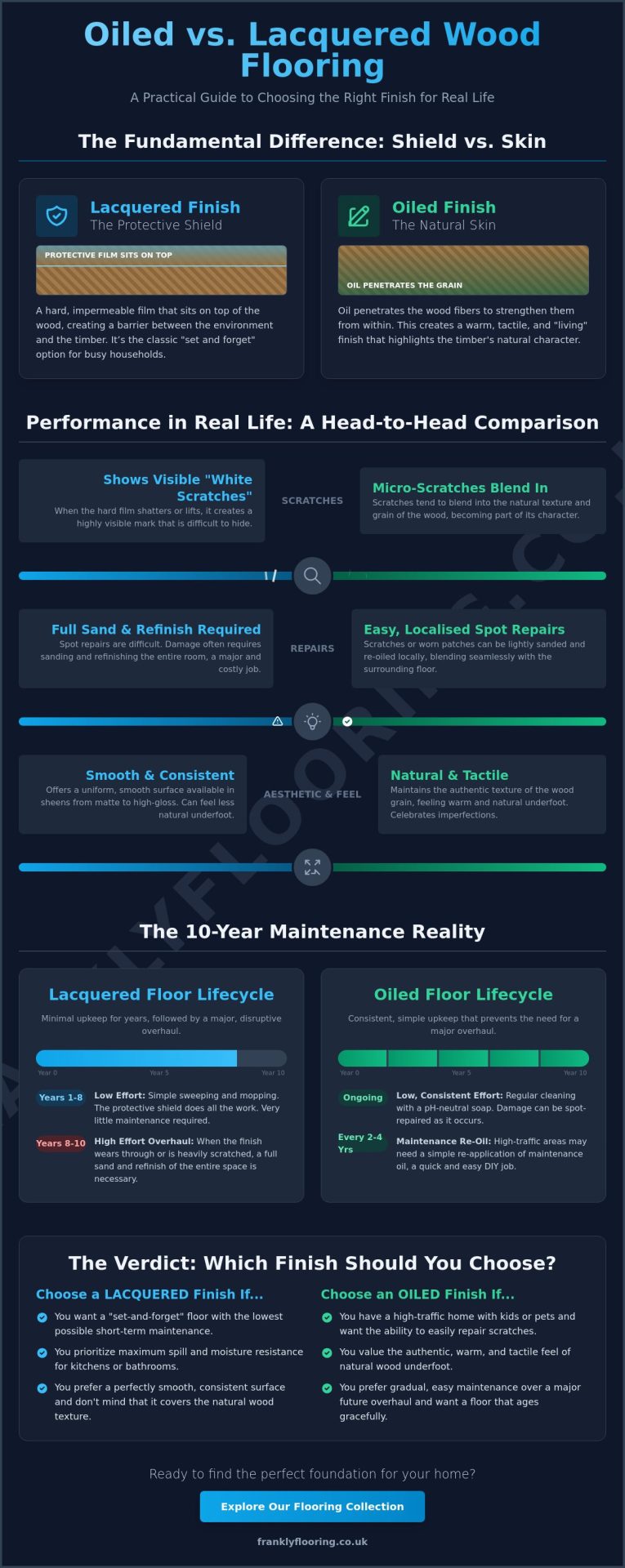
A lacquered finish acts as a shield. It is a hard, protective film that sits on top of the wood boards, creating a barrier between the environment and the wood. In contrast, an oiled finish acts like a skin; it penetrates the wood fibers to strengthen the material from within. This distinction changes everything from the way the floor feels under your feet to how you will maintain it over the next decade. The choice of finish is often just as important as the wood species itself because it dictates the floor’s long-term durability.
Lacquered Wood: The Protective Shield
Modern lacquers are typically made from advanced polyurethane. This creates an impermeable barrier that prevents moisture and dirt from ever touching the actual timber. It is the classic “set and forget” option for busy households that want a floor that is easy to wipe clean. While older lacquers from the 1990s were often criticized for being overly shiny or looking like plastic, current technology allows for incredibly sophisticated matte finishes. These modern options provide heavy-duty protection without the dated high-gloss glare. It remains the most popular choice for those who want a consistent, durable surface that requires very little thought in the short term.
Oiled Wood: The Natural Depth
Oiled floors offer a more organic connection to the timber. There are two main types to consider: natural air-dried oil and UV-cured oil. Natural oils soak deep into the grain and dry over time, while UV oils are hardened instantly during manufacturing using ultraviolet light. Both methods enhance the wood’s texture rather than covering it up. This creates a “living” finish that feels warm and tactile. Because the oil is inside the wood, the grain remains open and visible, highlighting the unique character of every plank. It is a favorite for those who value the authentic feel of wood and want a finish that ages gracefully with the home.
- Lacquer: Sits on the surface, offers high liquid resistance, and provides a smooth, consistent texture.
- Oil: Sinks into the grain, allows for easy spot repairs, and maintains the natural, tactile feel of the wood.
Performance and Durability: Which Finish Survives Real Life?
When you’re comparing oiled vs lacquered wood flooring, the word “durability” is often misunderstood. Most people assume that the hardest surface is the most durable, but in a busy home, flexibility often matters more than sheer strength. Technical insights from the U.S. Department of Agriculture regarding Performance and Durability: Which Finish Survives Real Life? suggest that the way a finish interacts with the wood’s cellular structure determines how well it handles impact and moisture over time. A finish isn’t just about looks; it is the frontline defense for your investment.
For UK homes where damp shoes and pet paws are common, UV-oiled floors offer a sensible middle ground. These floors are treated with oil and then cured under ultraviolet light in the factory. This process creates a finish that is tougher than a standard natural oil but remains more flexible than a traditional lacquer. It gives you the matte, organic look of oil with a significant boost in surface resilience. If you’re still weighing up these factors, browsing our range of high-quality wood can help you see how these finishes look on different species.
Scratch Resistance and Surface Wear
Lacquer is undeniably harder than oil, but that hardness comes with a trade-off. When a heavy object or a pet’s claw breaches a lacquered surface, it often leaves a “white scratch” where the film has shattered or lifted from the wood. This is highly visible and difficult to hide. Oiled wood behaves differently. Because the oil is inside the grain, micro-scratches tend to blend into the natural texture of the timber. The wear layer is the thickness of real wood above the tongue and groove that determines how many times a floor can be sanded and refinished. On an oiled floor, you might never need a full sand because the surface doesn’t “shatter” like lacquer does.
Spills, Stains, and Kitchen Use
Lacquered wood is the traditional choice for kitchens because it creates an impermeable film. Liquids sit on top of the shield, giving you plenty of time to wipe them away. However, lacquer can fail if water sits in the joints, leading to “edge-seep” where the wood swells beneath the finish. Oiled surfaces are more vulnerable to standing water, which can cause tannin reactions and dark spots. To combat this, modern hardwax oils combine natural oils with waxes to boost liquid resistance. This makes oiled floors much more viable for dining areas, provided you don’t leave spills to sit overnight.
- Lacquer: Best for liquid resistance but shows scratches clearly.
- Natural Oil: Best for hiding scratches but requires immediate spill cleanup.
- UV Oil: A hybrid choice that balances scratch masking with improved stain resistance.
The Aesthetic Debate: Texture, Sheen, and Feel Underfoot
Choosing between oiled vs lacquered wood flooring often comes down to how you want the room to feel at 7 AM when the sun hits the floor. While the technical “shield vs skin” argument covers durability, the aesthetic debate is about the atmosphere you create. Lacquer, even in its modern forms, has a reflective quality. It bounces light around the room, which can be a strategic choice for smaller, darker spaces that need a boost in brightness. Oil, however, absorbs light. It offers a deep, muted finish that highlights the organic variations in the timber without the glare.
Matt lacquer is the industry’s best-kept secret for 2026. It bridges the gap for homeowners who want the low-maintenance benefits of a film finish but crave the flat, modern look of an oiled floor. This hybrid option is gaining massive traction because it avoids the “plastic” look that older lacquers were famous for. Another factor to consider is colour maturation. An oiled floor allows the wood to “breathe” and react to UV light, developing a richer, deeper patina over the years. Lacquer tends to lock the wood’s appearance in time, though the film itself may amber slightly as it ages.
Sheen Levels: From High Gloss to Ultra-Matt
Sheen is measured by how much light reflects off the surface. A standard natural oil has a 0% sheen level, looking completely flat and raw. Modern matt lacquers usually sit around the 10% mark. This subtle difference impacts more than just style; it affects how much you notice daily life. Lower sheen levels are far better at hiding dust, pet hair, and footprints. The Frank recommendation for modern, minimalist interiors is almost always an ultra-matt finish. It provides a clean, sophisticated backdrop that doesn’t compete with your furniture for attention.
Tactile Quality and The “Real Wood” Connection
The biggest difference is felt, not seen. When you walk barefoot on an oiled floor, you are touching the actual wood fibers and feeling the grain. It is a warm, textured experience. Lacquer, by design, smooths out the character of the wood. If you have chosen a rustic grade with heavy knots and grain patterns, a thick lacquer can make those features feel “filled in” and distant. We always advise feeling samples before committing to a full pallet. There is a psychological difference between walking on a natural material and walking on a protective polyurethane film.
- Oiled: Best for texture, warmth, and a floor that develops character over time.
- Lacquered: Best for brightening dark rooms and achieving a smooth, consistent surface.
- Matt Lacquer: The 2026 “middle ground” for an oil-look with a lacquer-feel.
Maintenance and Repair: The Long-Term Reality
The real test of oiled vs lacquered wood flooring doesn’t happen on installation day. It happens three years later when a heavy object drops in the hallway or high-traffic paths start to dull. This is where the maintenance philosophies diverge sharply. Lacquer is often sold as a maintenance-free solution. This is true until the surface is scratched. Once that protective film is breached, you cannot simply patch it. You are looking at a full professional sand and reseal for the entire room to ensure a consistent finish.
Oiled floors require more regular attention, but they offer the massive advantage of spot repairs. If your hallway looks tired, you can apply a maintenance oil to just that specific area. This prevents the full sand nightmare that homeowners dread. You won’t need to move all your furniture out or deal with industrial dust just to fix a single scuffed corner. Most people worry that re-oiling is a monthly chore, but for most residential rooms, a fresh coat is only needed every 12 to 24 months. It is a predictable, manageable rhythm.
Daily and Weekly Cleaning Routines
Many people fall into the supermarket cleaner trap. Cheap, multi-purpose cleaners often contain waxes or silicones that build up over time, leaving a sticky residue on lacquer or stripping the natural oils from the wood. Using a pH-neutral cleaner specifically designed for timber is non-negotiable. For engineered wood flooring, dry mopping with a microfiber head is your best defense against abrasive dust. Keeping grit off the surface is the simplest way to extend the life of any finish. Avoid soaking the floor; a damp mop is all you need.
The “Frank” Guide to Life-Cycle Costs
When evaluating the long-term lifecycle of oiled vs lacquered wood flooring, the cost of a £20 maintenance kit is a small price to pay to avoid a £1,000 professional renovation. You can tell your floor is thirsty when it starts to look dull or if water no longer beads on the surface. Oiled floors allow you to keep the character of the wood without the looming threat of a total floor replacement. A well-maintained oiled floor can effectively last a lifetime because you never have to sand away the precious wear layer to fix a scratch.
- Lacquer: Low weekly effort, but requires a full professional overhaul when the surface wears out.
- Oil: Higher weekly awareness, but allows for infinite spot repairs and a longer total lifespan.
- Cleaning: Always use pH-neutral soaps; never use steam mops on real wood.
If you’re looking for a floor that handles the reality of a busy home, you can find the right balance in our range of premium wood flooring and accessories.
The Verdict: Which Finish Should You Choose?
Deciding between oiled vs lacquered wood flooring isn’t just about a visual preference; it’s a decision about how you live. If you want a floor that looks consistent from day one and requires nothing more than a quick sweep, lacquer is your best bet. It provides that reliable surface shield. However, if you view your floor as a long-term investment that should age gracefully and survive the occasional mishap without a professional overhaul, oil is the superior choice. It’s the difference between a floor that stays the same until it fails and a floor that evolves with your home.
UV Oil has emerged as the 2026 market leader for busy homes for a very specific reason. It bridges the gap by offering the tactile, matte beauty of a natural oil with a factory-cured durability that rivals lacquer. This hybrid finish handles the chaos of a modern household while remaining easy to patch if a deep scratch occurs. We always recommend ordering samples from Frankly Flooring before you commit. Seeing the sheen levels and feeling the texture in your own light is the only way to be certain of your choice.
Room-by-Room Recommendations
For areas prone to moisture like kitchens and bathrooms, wood requires extra caution. In these spaces, we often point customers toward high-quality laminate flooring or a multi-coat lacquer that can stand up to frequent spills. Living rooms and bedrooms are where oiled finishes truly shine. These rooms benefit from the warmth and organic feel that only an oil-penetrated grain can provide. Hallways are the real battleground of any home. Because these areas see the most foot traffic, the “Frank” choice is almost always a spot-repairable oiled floor. It’s much easier to refresh a walking path with a bit of maintenance oil than it is to sand back a whole hallway.
Buying Your Wood Flooring Online with Confidence
We believe in total transparency. As a family-run UK business with 20 years of experience, we’ve seen every flooring trend come and go. Our goal isn’t to push the most expensive finish, but to ensure you understand exactly what you’re buying. We provide clear, honest descriptions of every product so there are no surprises when the pallet arrives at your door. Choosing a floor is a big commitment, and we’re here to act as your straight-talking advisors throughout the process. When you’re ready to find the foundational element of your home’s character, you can browse our full range of Wood Flooring and see the difference for yourself.
- Choose Lacquer: For rental properties, low-traffic areas, or if you prefer a smooth, wipe-clean surface.
- Choose Oil: For family homes, high-traffic hallways, and anyone who values a natural, tactile wood feel.
- The 2026 Pro Tip: Look at UV-oiled options for the best balance of modern durability and classic aesthetics.
Ready to Choose Your Perfect Finish?
Selecting between oiled vs lacquered wood flooring comes down to your lifestyle and how you value maintenance. If you prefer a “set and forget” surface with high liquid resistance, lacquer remains a solid choice for a busy home. For those who want a floor that develops a rich patina and allows for localized repairs without the need for professional sanding, an oiled finish is the smarter long-term investment. Both options have their place; it simply depends on whether you want a protective shield or a natural skin.
At Frankly Flooring, we provide the honest, no-nonsense advice you need to make this decision with confidence. As a family-run business with over 20 years of expertise, we prioritize integrity over high-pressure sales tactics. We offer direct UK delivery on our entire range of wood, LVT, and accessories, ensuring your project stays on track. You can trust our technical craftsmanship to guide you toward a floor that isn’t just a commodity, but a foundational element of your home’s character.
Order your free wood flooring samples today to see and feel the difference between these finishes in your own home. We’re here to help you build a space that lasts a lifetime.
Frequently Asked Questions
Can I change an oiled floor to a lacquered one later?
Yes, you can switch finishes, but it involves sanding the wood back to its raw state. Since oil penetrates the timber’s grain, you must remove enough of the surface to ensure the new lacquer can bond properly. If any oil remains in the fibers, the lacquer will peel or fail to dry. It’s a labor-intensive process that resets your floor’s lifecycle, so choosing the right finish initially saves significant effort.
Does lacquered wood flooring scratch easily?
Lacquer is harder and more scratch-resistant than oil, but it isn’t scratch-proof. When a lacquered surface is gouged by furniture or grit, it often creates a visible white line where the film has shattered. Unlike oiled surfaces where scratches can be blended away, these marks are permanent unless you refinish the entire area. Keeping the floor free of grit is the most effective way to prevent this type of surface wear.
How often do I need to re-oil my wood floor?
Most residential wood floors only need a fresh coat of maintenance oil every 12 to 24 months. High-traffic areas like entryways might need attention sooner if the wood starts to look “thirsty” or dull. You don’t need to sand the floor for these top-ups; a simple clean and a thin application of oil will restore the protection. It’s a predictable part of the long-term maintenance plan for any quality oiled floor.
Is oiled wood flooring waterproof?
No real wood floor is truly waterproof, but oiled finishes are water-resistant when maintained correctly. When comparing oiled vs lacquered wood flooring, lacquer provides a surface film that stops liquids instantly. Oiled wood relies on grain saturation to repel moisture. If spills sit for long periods, they can soak in and cause staining. In kitchens, immediate cleanup is essential to prevent permanent damage to the timber’s appearance.
Which finish is better for homes with dogs?
Oiled finishes are generally better for dog owners because they hide claw marks more effectively. When choosing between oiled vs lacquered wood flooring for a home with pets, remember that lacquer can show permanent white scratches. With an oiled floor, you can buff out minor scuffs and re-apply oil to specific spots. This keeps the floor looking fresh without the need for a full professional sand and seal every few years.
What is UV oiled wood flooring vs natural oiled?
Natural oil is applied and left to air-dry over several hours, penetrating deep into the wood fibers. UV oiled flooring is cured instantly in the factory using ultraviolet lights. This creates a slightly tougher surface that acts as a hybrid between oil and lacquer. UV oil provides better initial stain resistance while still allowing for the spot repairs that make oiled floors so practical for modern households.
Does lacquered flooring look like plastic?
Modern lacquers have moved far beyond the high-gloss, plastic looks of the past. You can now choose ultra-matt lacquers with a 10% sheen level that are almost indistinguishable from an oiled finish at a glance. These finishes provide the heavy-duty protection of a film without the artificial glare. While they don’t have the same tactile, textured feel as raw wood, they offer a sophisticated and natural appearance for contemporary interiors.