
Is your furniture working with your floor, or against it? Many homeowners choose an oak coffee table uk based on a polished studio photo, only to find it looks completely out of place once it’s sitting on their own floorboards. It’s a common frustration. You want the warmth and durability of natural wood, but you’re likely worried about clashing grains, confusing “solid wood” labels, and the fear of a single spill ruining the finish forever.
We believe in being frank about what you’re buying. This guide cuts through the marketing fluff to help you distinguish between genuine solid oak and thin veneers, ensuring your investment lasts for decades. You’ll learn how to navigate the 2026 UK timber regulations and fire safety standards while gaining the confidence to pair different wood tones without the headache. From the “two-thirds rule” for sizing to practical advice on maintenance, we’re sharing the technical expertise you need to select a centrepiece that truly complements your home’s character.
Key Takeaways
- Understand the frank truth about solid oak versus veneers so you can choose a piece that matches your budget and longevity expectations.
- Discover how to use the “rule of thirds” to find an oak coffee table uk that perfectly balances the proportions of your sofa and floor space.
- Learn why wood tones don’t need to match exactly and how to harmoniously pair your new table with existing flooring like laminate or LVT.
- Get straightforward maintenance tips for handling spills and ring marks to keep your furniture looking its best for years to come.
Why an Oak Coffee Table remains a British Home Staple
Oak isn’t just a choice; it’s a standard for the British home. While interior trends shift every few years, an oak coffee table uk remains a constant because it offers a level of resilience that cheaper materials simply cannot match. Unlike MDF or softwoods like pine, which often dent, scratch, or peel within a few years of use, oak is a dense hardwood. It’s built to survive the chaos of a real living room. When you look at the history of the coffee table, you see how these pieces evolved from mere functional surfaces into the anchor of the lounge. Choosing oak means you’re buying a piece of furniture that grows more character with age rather than one that needs replacing every three years. It’s a “buy once, buy better” philosophy that saves you money in the long run. Many people are tempted by the low price tags of flat-pack alternatives, but those pieces often end up in landfill far too soon. Investing in quality oak is a practical decision for your wallet and the environment.
The Durability of European and American Oak
The secret to oak’s strength lies in the Janka hardness scale. This is a technical measurement used to determine how much pressure a wood species can handle before it dents. To put it simply, oak sits high enough on this scale to shrug off dropped remote controls, heavy books, and the occasional stray toy. Most manufacturers use either European or American oak. White oak is generally preferred for its tighter grain and better natural resistance to moisture; red oak offers a slightly more porous texture and warmer, pinkish hues. For a busy family, this density is the difference between a table that looks worn out in twelve months and one that remains a proud centrepiece for decades. It handles the weight of heavy books and the accidental kicks of daily life without flinching.
Aesthetic Versatility: From Rustic to Scandi
Oak is a bit of a chameleon. Its natural grain patterns can be wide and wild, which is perfect for a rustic farmhouse look, or straight and clean for a minimalist Scandi vibe. This versatility is why it works just as well in a Grade II listed cottage as it does in a contemporary city apartment. Our frank view is that oak never truly goes out of fashion because it brings an organic warmth that man-made materials can’t replicate. It bridges the gap between cold, modern surfaces and a home that feels lived-in and welcoming. When searching for an oak coffee table uk, it’s easy to get distracted by flashy designs, but the real value is always in the timber itself. Whether you prefer a light, natural finish or something deeper and more traditional, oak provides a solid foundation that adapts as your personal style evolves.
Solid Oak vs Oak Veneer: The Frank Truth About Quality
Buying an oak coffee table uk often feels like a guessing game. Retailers use clever wording to hide what’s actually under the surface, making it difficult to know if you’re paying for a lifelong heirloom or a temporary fix. There is a place for both solid wood and veneers, but you need to know exactly what you’re getting for your money. A “bargain” solid wood table might actually be a thin veneer over low-grade MDF, which will likely peel or chip within months. Understanding the technical construction of your furniture is the only way to ensure you’re making a sound investment. If you want to see examples of high-quality construction, you can browse our full range of oak furniture to compare different styles and builds.
Understanding Solid Oak Construction
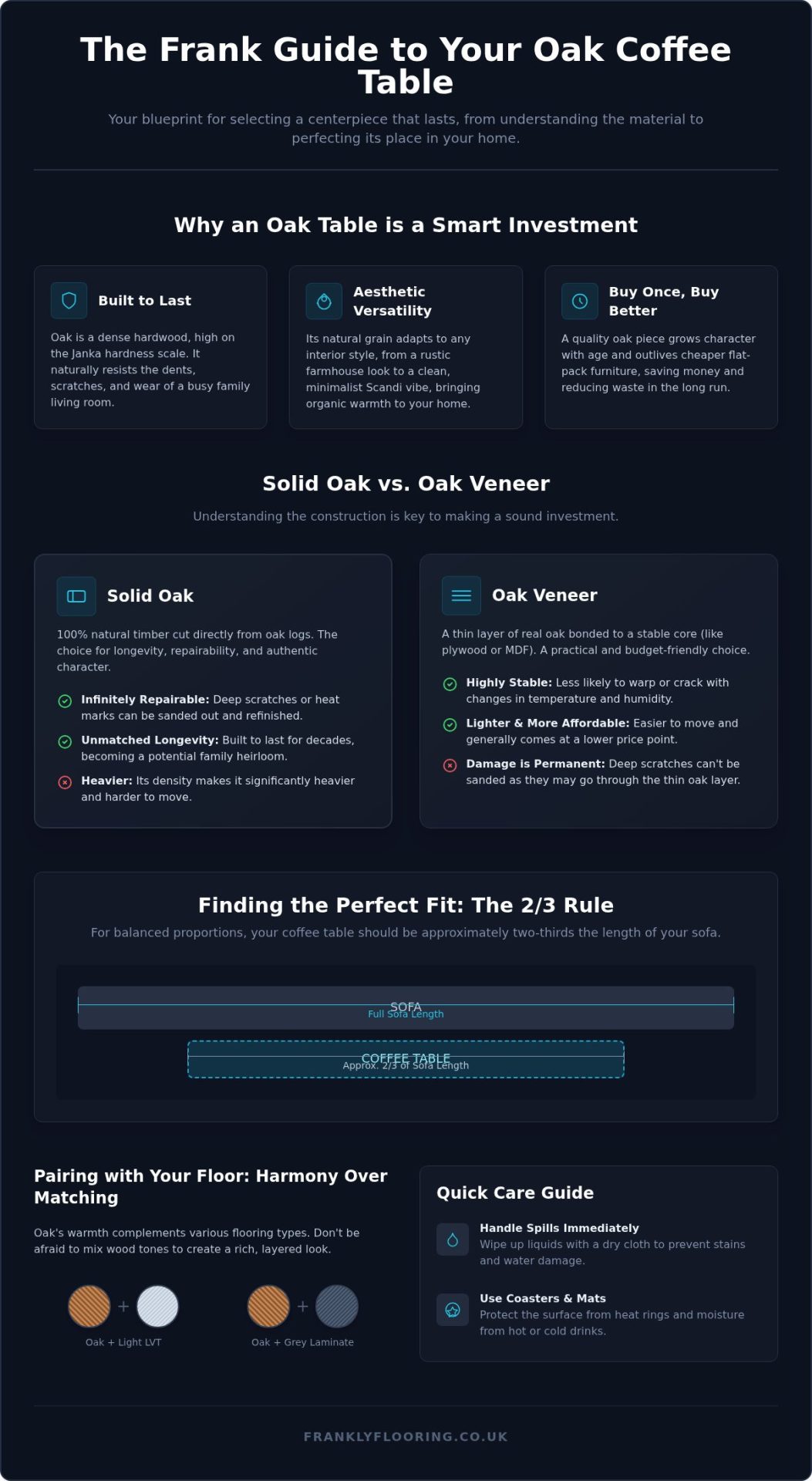
Solid oak is a 100% natural timber product without composite fillers. When we talk about solid construction, we mean that every part of the table, from the top to the legs, is cut directly from oak logs. This density is why these pieces are significantly heavier than their counterparts. The primary benefit here is longevity. If you accidentally deep-scratch a solid oak table or leave a heat ring from a tea mug, you can sand the surface back and refinish it. It’s a forgiving material that handles the reality of a busy home. To verify quality, look at the joinery. Proper solid wood furniture often features dovetail joints in any drawers. These interlocking wedge-shaped joints are a sign of traditional craftsmanship. They rely on the strength of the wood itself rather than just glue or staples, which is essential for a piece that will be used every single day.
When to Choose Oak Veneer
Veneer isn’t a dirty word, provided the retailer is honest about it. A veneer consists of a thin layer of real oak bonded to a stable core, such as plywood or high-density fibreboard. It’s a sensible choice if you’re working with a tighter budget or if you need a lighter piece of furniture that’s easier to move. High-quality veneers are also remarkably stable. Because the core material doesn’t expand and contract as much as solid timber, veneered tables are less likely to warp or crack when your central heating kicks in during a cold UK winter.
The danger lies in “oak-effect” imitations. These aren’t real wood at all. They are typically made of particleboard covered in a plastic or paper laminate with a wood-grain pattern printed on top. You can identify these by looking at the edges; if the grain pattern doesn’t wrap naturally around the corner or looks “printed,” it’s likely a low-quality imitation. A genuine oak coffee table uk should feel substantial. Even a veneered piece should use a thick enough top layer that it feels and looks like real timber to the touch. Don’t settle for paper-thin finishes that can’t withstand a simple spill.
Finding the Perfect Fit: Shapes, Sizes, and Styles
Measuring your living room correctly is the difference between a room that flows and one that feels like an obstacle course. When choosing an oak coffee table uk, the golden rule is that the table should be approximately two-thirds the length of your sofa. This creates a balanced visual weight and ensures the table doesn’t look like a tiny island in a sea of carpet. If you have a large L-shaped sectional, a square or round table often works better to fill the central void. For a standard three-seater sofa, a rectangular shape remains the most functional choice for providing reach across the entire seating area.
Don’t forget the walkways. You need at least 30cm to 45cm of space between the table and the sofa to allow for comfortable legroom and easy movement. If your home is on the smaller side, nested oak tables are a practical, frank solution. They provide extra surface area when guests arrive but tuck away neatly to reclaim floor space when you’re alone. If you find yourself constantly tidying up remotes, tablets, or magazines, look for a model with a lower shelf or integrated drawers. It’s about finding a balance between aesthetic appeal and the daily utility your household actually requires.
Choosing the Right Height
Your coffee table height should sit within 2cm to 5cm of your sofa’s seat cushions. If the table is too high, it feels intrusive; if it’s too low, reaching for a drink becomes a chore. Low-profile tables, often sitting just 30cm off the ground, are popular in modern, minimalist rooms where the goal is to keep sightlines clear. Before you buy, measure the height of your sofa cushions while someone is sitting on them, as the compression can change the ideal table height significantly. This ensures the oak coffee table uk you select is as comfortable to use as it is to look at.
Style Profiles: Modern, Industrial, and Classic
Oak adapts to your decor through its finish and frame. Industrial styles often pair thick oak tops with black metal legs, creating a sturdy, no-nonsense look that suits modern renovations. For those who prefer a softer touch, Scandi-oak features tapered legs and light, oil-based finishes that highlight the natural blonde tones of the wood. If you want something more organic, a live-edge table retains the natural curve of the tree on its sides, bringing a unique character to your lounge. Each style offers a different way to showcase the timber while fitting into your specific architectural context.
The Perfect Match: Pairing Your Oak Table with Your Flooring
Many homeowners worry that an oak coffee table uk will clash with their existing floors. They often believe every piece of wood in the room needs to be the exact same shade. This is a myth. Trying to match everything perfectly usually leads to a room that feels flat and artificial. A better approach is to look for harmony rather than a mirror image. Oak is naturally versatile, meaning it can bridge the gap between different textures and colours if you follow a few simple rules of thumb.
If you have laminate flooring, an oak table adds a layer of authentic texture that helps the room feel grounded. The natural variation in the table’s grain breaks up the repetitive pattern often found in laminate planks. For those with a grey carpet, the contrast is even more striking. The warm honey tones of the oak pop against the cool grey, creating a modern, balanced aesthetic that feels intentional. It’s about creating layers of interest rather than one continuous block of colour.
Oak on Oak: Managing Wood Grains
Placing an oak table directly onto engineered wood flooring is where most people get nervous. The key here is the scale of the grain. If your floor has wide, rustic planks, choose a table with a tighter, cleaner grain pattern. This variation creates visual interest and prevents the furniture from “disappearing” into the floor. Our “Frank” tip for this scenario is simple: use a rug. A rug acts as a visual buffer, preventing a “sea of wood” effect where the furniture and floor bleed into one another. It defines the seating area and allows both the floor and the table to be appreciated as separate design elements.
Oak Furniture with LVT and Vinyl
Modern luxury vinyl tile is designed to mimic natural materials, making it an excellent partner for an oak coffee table uk. Instead of trying to find an exact colour match, focus on the undertone. If your LVT has a cool, ash-grey base, look for a table with a similar cool or neutral finish. If your floor is warm and golden, stay within that warm family. One practical note: heavy solid oak furniture can put significant pressure on your floor. Always use high-quality felt pads on the legs to prevent indentations or scratches on your vinyl or LVT. If you’re still deciding on the right foundation for your furniture, you can explore our full range of flooring and furniture to see how these materials work together in practice.
Maintenance and Long-Term Care for Oak Furniture
Owning a high-quality oak coffee table uk is a long-term commitment that requires very little effort if you get the basics right from the start. Oak is incredibly resilient, but it is still a natural material that reacts to its environment. The “Frank” guide to daily cleaning is refreshingly simple: put down the aerosol sprays and harsh chemical cleaners. These products often contain silicones that build up over time, creating a dull film that masks the natural beauty of the grain. A soft, slightly damp lint-free cloth is all you need for daily dusting. If you have a stubborn mark, a tiny drop of mild dish soap in warm water will do the job without stripping the finish.
Spills are inevitable in a busy living room, but they don’t have to be permanent. The trick is to blot the liquid immediately with a dry cloth rather than rubbing it, which can push the moisture deeper into the wood fibres. If you’re dealing with a waxed finish, it provides a decent barrier against light splashes, while an oiled finish allows for easier spot-repairs if a ring mark does occur. Positioning also plays a vital role in longevity. Direct sunlight can bleach the wood over time, and placing your table right next to a radiator can cause the timber to dry out too quickly, leading to small cracks or warping. Aim for a spot with a stable temperature to keep the wood happy.
Step-by-Step: Re-oiling a Solid Oak Table
Re-oiling should be done every 6-12 months to maintain the wood’s natural moisture. This process isn’t just about looks; it prevents the timber from becoming brittle and prone to staining. Start by lightly sanding the surface with the grain using a fine-grit sandpaper to remove any surface grime or light scratches. Once the table is clean and dust-free, use a lint-free cloth to apply a thin, even coat of furniture oil. Work in the direction of the grain and let it soak in for about 20 minutes before wiping away any excess. This simple routine ensures your oak coffee table uk remains a standout feature for decades.
Preventing Common Damage
Prevention is always easier than a repair. Using coasters and heat mats is the simplest way to protect your investment from the “white rings” caused by heat and moisture. It’s also helpful to remember that solid wood will “move” slightly as the seasons change and humidity levels in your home fluctuate. This is perfectly normal and a sign of a genuine natural product. By following these care steps and choosing pieces that meet our Frankly Flooring furniture quality standards, you can be confident that your coffee table will handle the rigours of family life while maintaining its character and style.
Finding a Centrepiece That Lasts
Choosing the right furniture is about more than just aesthetics; it’s about understanding the craftsmanship behind the piece. We’ve explored how to look past marketing labels to identify genuine quality, whether you’re opting for solid timber or a stable veneer. By applying the “rule of thirds” for sizing and matching undertones rather than exact colours, you’ll find an oak coffee table uk that creates a sense of balance in your living space. Proper maintenance, like seasonal re-oiling and using coasters, ensures your investment remains a proud feature of your home for decades.
As a family-run UK business with over 20 years of expertise, we’re dedicated to providing transparent, frank advice on every product we offer. We value integrity and long-term satisfaction over quick sales, helping you build a home that reflects your character. Browse our range of high-quality furniture for British homes and discover pieces built with technical precision and care. Your lounge is the setting for your most comfortable moments, and we’re here to help you get the foundation just right.
Frequently Asked Questions
Is solid oak better than oak veneer for a coffee table?
Neither is objectively better in every scenario; the choice depends on your specific needs and budget. Solid oak offers unmatched longevity and can be sanded down to remove deep scratches, making it a true heirloom piece. High-quality veneer is more stable in homes with fluctuating temperatures and is generally more affordable. If you want a piece to last a lifetime, solid wood is the superior investment.
How do I know if a coffee table is real oak?
Check the weight and the end grain to verify the material. Real oak is a dense hardwood and should feel significantly heavier than pine or MDF alternatives. Look closely at the grain patterns; real wood has unique variations and “medullary rays” that appear as small, silvery streaks. If the pattern repeats perfectly across the surface, it’s likely a printed laminate rather than genuine timber.
Should my coffee table match my wood floor?
No, your coffee table doesn’t need to be an exact match for your flooring. Aim for harmony by matching the undertones, such as pairing warm-toned oak with a warm-toned floor, rather than trying to find identical shades. Using a slightly different grain scale or colour creates visual depth and prevents your furniture from disappearing into the floor. A rug can also act as a perfect buffer between the two wood surfaces.
Can you use a steam mop near oak furniture legs?
You should never use a steam mop directly against or near oak furniture legs. The concentrated heat and moisture can easily penetrate the finish and cause the wood to swell, peel, or turn grey. It’s much safer to use a traditional damp mop and dry the area around the furniture legs immediately. This simple precaution prevents permanent water damage to the base of your oak coffee table uk.
How do I remove water rings from an oak coffee table?
For light water rings on an oiled table, you can often remove them by applying a small amount of furniture oil and buffing gently with a soft cloth. If the mark is stubborn, you might need to lightly sand the area with fine-grit sandpaper before reapplying the finish. Always work with the grain and test a hidden spot first. This is a major benefit of choosing a quality oak coffee table uk over cheaper imitations.
Does oak furniture darken over time?
Yes, oak naturally changes colour as it’s exposed to light and oxygen in your home. This process is called patination and typically results in the wood taking on a deeper, richer amber hue over several years. It’s a sign of a genuine natural product and is generally considered a desirable trait. You can slow this process by keeping your furniture out of direct, intense sunlight.
What is the best finish for a high-traffic oak coffee table?
A high-quality oil finish is usually the best choice for a table that sees daily family use. Oiled finishes are excellent because they’re easy to maintain and allow you to spot-repair marks without refinishing the entire piece. Lacquered finishes provide a tougher, more water-resistant surface initially, but they’re much harder to fix if they eventually get scratched or chipped. For most UK homes, oil provides the best balance of protection and longevity.
Is oak furniture sustainable for UK buyers?
Oak is a sustainable choice when sourced from responsibly managed forests, especially under the 2026 UK timber regulations. Because oak trees are slow-growing and the furniture lasts for decades, it has a much lower environmental impact than “fast furniture” made from composite materials. Investing in a durable piece means less waste in landfills. It’s a practical way to furnish your home with environmental responsibility in mind.