
The most expensive wool carpet in the showroom could be the worst investment you make for your high-traffic hallway. It is a blunt reality, but choosing the wrong material for the wrong room is a mistake that UK homeowners make every single day. Most people weighing up wool vs synthetic carpet want a floor that stays plush for a decade, yet they are often stuck balancing the fear of moth damage against the risk of a synthetic pile going flat and lifeless. It is a confusing landscape of polypropylene, nylon, and 80/20 blends that often feels designed to hide the facts behind a sales commission.
We prefer a more candid approach to flooring. This guide settles the debate for 2026 by looking at the technical reality of how these fibres actually perform in a busy home. You will discover exactly where synthetic practicality wins on stain resistance and why natural wool remains the king of structural resilience for your stairs. We are skipping the marketing fluff to show you how to get genuine value for money over the next 15 years, ensuring your choice handles everything from spilled drinks to heavy footfall without losing its character.
Key Takeaways
- Learn why wool’s natural elasticity makes it the only reliable choice for stairs and hallways where cheaper synthetic fibres often flatten permanently.
- Cut through the jargon of polypropylene and nylon to find out which synthetic materials are truly bleach-cleanable and which are just marketing hype.
- Discover why an 80/20 wool blend is usually the most honest recommendation for a family home, balancing natural luxury with synthetic strength.
- Assess the true cost of wool vs synthetic carpet over a 15-year period to ensure you aren’t overspending on a material that won’t suit your lifestyle.
- Identify the specific rooms where the structural resilience of natural wool is essential and where the stain-resistance of a modern synthetic wins every time.
Wool vs Synthetic Carpet: The Frank Reality of Your Choice
Choosing between wool vs synthetic carpet isn’t just about how a sample feels between your thumb and forefinger. It is a choice between two fundamentally different materials. Wool is a protein-based natural fibre grown on a sheep’s back, while synthetics like polypropylene and nylon are petroleum-based plastics. Understanding carpet materials and construction is the first step in avoiding a costly mistake. While both can look identical on a hanger, they behave very differently once they are under your feet.
The biggest technical difference is the “bounce-back” factor. Wool fibres have a natural microscopic crimp that acts like a tiny coiled spring. When you step on it, the fibre compresses and then pushes back up. Most synthetic fibres are straight, extruded plastics. Once they are crushed by heavy furniture or constant footfall, they often stay flat. This is why a budget synthetic carpet can look “tired” within eighteen months, whereas a wool version can stay upright for decades. In the UK, the 80/20 wool-nylon blend has become the industry standard because it marries this natural resilience with the added strength of man-made materials.
The Resilience vs. Cleanability Trade-off
Your choice usually boils down to a trade-off. Wool is the undisputed king of structural integrity, making it the better choice for high-traffic areas like stairs where you don’t want the pile to “bald” or flatten. However, synthetics win the battle against spills. Modern polypropylene is essentially coloured plastic, which means it is often bleach-cleanable and resistant to permanent staining from red wine or coffee. You need to be honest about your household priorities: do you fear a flattened hallway more than a spilled drink?
Why “Cheap” Often Costs More Long-Term
A “bargain” synthetic carpet might look tempting on the price tag, but if it flattens and needs replacing every three to five years, it is a poor investment. Wool maintains its appearance through that natural crimp resilience. It resists the “shading” and tracking marks that plague cheaper man-made alternatives. Appearance retention is the single most critical factor for stairs, as it defines how long a carpet looks new rather than just how long it stays in one piece. Investing more upfront in a quality material often saves you the cost and hassle of a full replacement just a few years down the line.
Wool Carpets: Natural Resilience and the 80/20 Secret
Wool is often praised for its luxury, but its real value lies in its technical performance. British wool is a renewable resource that provides excellent thermal insulation, helping to keep UK homes warm while reducing energy bills. It also possesses natural fire retardancy, which is a significant safety benefit compared to some oil-based synthetics. When looking at a Carpet and Rug Fiber Chart, you’ll see that wool excels in resilience. However, 100% wool can be a mistake for a busy family home. It is often too soft for the constant scuffing of trainers and pets. This is where the 80/20 blend comes in. By mixing 80% wool with 20% synthetic nylon, manufacturers create a floor that feels like a natural product but has the structural backbone to survive a decade on the stairs. This blend is the secret to getting the most out of your wool vs synthetic carpet decision.
While the debate of wool vs synthetic carpet often focuses on price, the air quality benefits of wool are hard to ignore. Wool acts as a natural air filter. It absorbs common indoor pollutants and VOCs (volatile organic compounds), trapping them until they are vacuumed away. This makes it a smart choice for bedrooms where air quality is a priority.
The Truth About Moths and Modern Prevention
The fear of moths is the number one reason people avoid wool, but the reality is manageable. Moths are attracted to keratin, a protein found in natural fibres. They love dark, undisturbed areas. Most high-quality wool carpets today are treated with moth-proofing agents during the manufacturing process to deter larvae. The best defence is simple: don’t let dust settle. Vacuuming under heavy furniture and along the skirting boards removes the quiet spots where moths thrive.
Maintenance for Natural Fibres
Wool requires a specific approach to cleaning. You should use a vacuum cleaner with a beater bar or a power head to agitate the pile and lift out grit. New wool carpets will shed for the first few months. This is perfectly normal. It isn’t a sign of the carpet falling apart; it is just short fibres working their way to the surface. One major benefit is the natural lanolin coating on the wool. This waxy layer provides a brief window of stain resistance, allowing you to blot up spills before they soak into the core of the fibre. If you’re ready to see the difference for yourself, you can browse our full range of quality wool carpets online.
Synthetic Carpets: Polypropylene, Nylon, and the Bleach-Cleanable Myth
Synthetic carpets aren’t just a budget fallback. When you are weighing up wool vs synthetic carpet, it’s vital to recognize that “synthetic” is a broad label covering very different materials. Polypropylene, Polyamide (Nylon), and Polyester each behave differently underfoot. You also need to be wary of the “bleach-cleanable” label. While it sounds like a magic shield, it usually refers to the fibre being solution-dyed. This means the colour is baked into the plastic rather than applied to the surface. It makes the carpet stain-proof, but excessive use of harsh chemicals can still damage the carpet’s backing or void your manufacturer’s warranty.
Polypropylene: The King of Stain Resistance
Polypropylene is the most common choice for busy UK households. It is virtually impossible to stain permanently with water-based spills like fruit juice or coffee. It is the life-proof option for playrooms and rental properties where you expect a bit of a battering. However, it has a technical downside called “oil affinity.” Because it is a petroleum product, it naturally attracts oils. A greasy spill from a pizza or oil tracked in from a garage can bond to the fibres, making them very difficult to clean. If you’re putting carpet near a kitchen, this is a frank reality you need to consider.
Polyamide (Nylon): The Synthetic Underdog
If you want the resilience of wool without the natural fibre price tag, Polyamide (Nylon) is the answer. It is the most durable synthetic fibre available. Unlike polypropylene, which can feel a bit “waxy” and flattens easily, Nylon has a higher melting point and better structural memory. This allows it to spring back after being stepped on, much like wool does. While synthetic options offer undeniable practicality, the sustainability of carpet fibers remains a key point of difference, as these materials are petroleum-based rather than renewable.
Nylon represents the most honest alternative for homeowners who love the resilience of wool but need a material that is immune to moth damage. It typically costs more than polypropylene but less than a high-end wool blend, sitting comfortably as a mid-range performance leader. Polyester is another option you’ll see, often marketed for its extreme softness. It feels incredible in a bedroom, but it is the most prone to flattening in high-traffic zones, so we rarely recommend it for stairs or hallways.
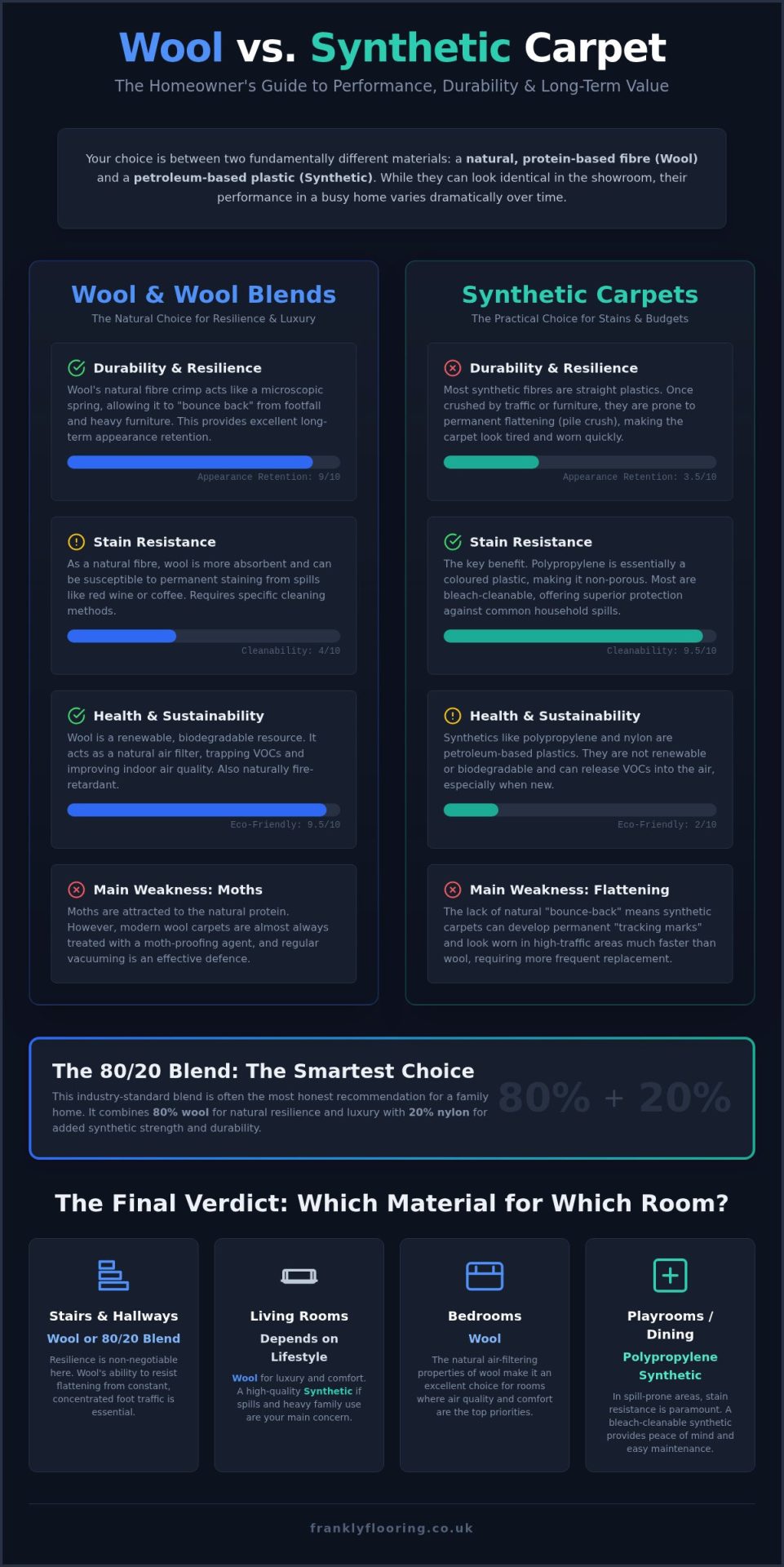
Performance Showdown: Durability, Stains, and Sustainability
The bottom of your stairs is where carpets go to die. This “pivot point,” where you turn and put maximum pressure on the fibres, is the ultimate test in the wool vs synthetic carpet debate. In a domestic setting, wool or high-end nylon will withstand this grinding motion for years. Conversely, a budget polypropylene will often lose its structure and look “bald” in months. Beyond just staying upright, you need to consider how the material handles the British climate. Wool is a natural insulator that traps heat, making a draughty Victorian terrace feel significantly warmer. Synthetics are essentially plastic sheets; they offer very little thermal benefit unless you pair them with a heavy-duty underlay.
Fire safety is another area where the materials behave differently. Wool is naturally flame retardant. It has a high ignition temperature and tends to char and self-extinguish. Synthetics are oil-based, meaning they will melt and drip when exposed to high heat. While modern UK manufacturing standards ensure all carpets are safe for home use, the “melt vs char” distinction is a frank reality for those prioritising natural safety in their living rooms.
Crushing and Tracking: Which Stays Plush?
Pile crush occurs when heavy furniture or constant walking flattens the carpet fibres. Wool’s natural elasticity allows it to recover its shape after you move a sofa, whereas many synthetics will leave permanent indentations. You also need to consider “tracking,” which is the visible path of footprints or vacuum lines. Deep-pile synthetic carpets, especially polyester, are notorious for showing every step. To ensure your investment stays in place and maintains its tension, using a high-quality carpet gripper is essential. Without proper tensioning and a dense underlay, even the most expensive wool carpet will eventually ripple and wear unevenly.
The Environmental Impact: Natural vs Plastic
Sustainability is no longer a niche concern for UK homeowners. Wool is a renewable, biodegradable resource with a relatively low chemical footprint during production. When a wool carpet reaches the end of its life, it won’t sit in a landfill for centuries. Synthetics are a different story. Because they are plastic, they are not biodegradable. However, the industry is improving. Recycled synthetics, such as ECONYL, use diverted waste like old fishing nets to create new fibres. If eco-credentials are your priority, wool is the clear winner, but a high-quality recycled nylon is a responsible second choice. If you want to explore the best options for your home, you can check out our range of sustainable UK carpets today.
The Final Verdict: Which Material for Which Room?
Choosing between wool vs synthetic carpet often comes down to the specific demands of each room. You don’t need a heavy-duty wool blend in a spare bedroom that is rarely used, just as you shouldn’t put a cheap polyester on your main staircase. We believe in matching the material to the traffic. A carpet is a tool for your home; you need the right tool for the job to ensure it lasts the full ten to fifteen years you expect from it.
For stairs and hallways, we only ever give one frank recommendation: 80/20 wool or high-quality Nylon. These areas face the most vertical pressure and “pivot” movements. Anything less will flatten and look tatty within a few years. In the living room, an 80/20 wool blend offers the best balance of luxury and resilience. If you have small children and a high risk of juice spills, a premium polypropylene might be the safer tactical choice to avoid permanent heartbreaker stains on an expensive floor.
Bedrooms are where you can prioritise comfort. This is the ideal place for the extreme softness of a deep-pile Polyester or the natural warmth of pure wool. Air quality is also a factor here; wool’s ability to absorb pollutants makes it a healthy choice for sleeping environments, much like how a premium hybrid mattress from LivMattresses can enhance your overall sleep quality. For playrooms or basements where moisture or heavy mess is expected, Polypropylene wins every time. It is essentially plastic, so it handles dampness and stains that would ruin a natural fibre.
The “Frank” Decision Matrix
- High traffic + No pets: 80/20 Wool blend. It keeps its shape and looks premium for 15 years.
- High traffic + Pets/Kids: High-quality Polyamide (Nylon) or an 80/20 Wool with a professional stain-protection treatment.
- Low traffic + Budget-conscious: Polypropylene. Great for guest rooms where you want a fresh look without a large investment.
Don’t Forget the Foundation
The best carpet in the world will fail if you skimp on the underlay. We often see homeowners spend £40 per square metre on wool only to put it on a cheap, thin foam. That is a waste of money. A premium underlay acts as a shock absorber, protecting the carpet fibres from being crushed against the floor. For wool, you want a firm, dense underlay that supports the natural structure. For synthetics, you can go a bit more plush to enhance the feel underfoot. Choosing the right carpet for your specific lifestyle means looking at the whole package, from the grippers to the final pile.
Making the Right Choice for Your UK Home
Choosing between wool vs synthetic carpet doesn’t have to be a gamble. You now have the technical facts to match the right material to the specific needs of each room. Wool’s natural resilience is essential for high-traffic stairs. Conversely, the stain-resistance of polypropylene is a tactical win for messy playrooms or rental properties. The secret to a floor that lasts 15 years lies in being honest about your household’s daily life. Never skimp on a quality underlay to protect your investment.
As a family-run UK business with over 20 years of flooring expertise, we value integrity over high-pressure sales. We provide direct-to-door national delivery to ensure you get the best value without the showroom markups. Browse our full range of quality carpets and get a frank deal today. You are now equipped to choose a carpet that brings both character and longevity to your home.
Frequently Asked Questions
Is wool carpet harder to maintain than synthetic?
Wool isn’t necessarily harder to maintain, but it requires a different set of rules. It naturally hides dry soil better than most synthetics because of its opaque structure. You must use a vacuum with a beater bar and avoid harsh alkaline cleaners that can damage natural proteins. While polypropylene can handle aggressive cleaning, wool’s resilience often means it looks cleaner for longer between professional deep cleans.
Can I really clean a synthetic carpet with bleach?
You can only use a diluted bleach solution on solution-dyed polypropylene carpets. This specific manufacturing process locks the colour inside the fibre, making it resistant to fading. However, using bleach on nylon or wool will permanently ruin the pile and strip the colour. Always check your specific manufacturer’s warranty first, as some “bleach-cleanable” claims are restricted to specific concentrations and spill types.
Which carpet is best for allergies, wool or synthetic?
Wool is generally considered better for allergy sufferers because it acts as a natural air filter. It traps dust and allergens in its pile, preventing them from floating in the air until they are vacuumed away. While synthetic carpets don’t harbour allergens themselves, they don’t have the same filtering properties. If you choose a synthetic, ensure you have a high-filtration vacuum to manage dust effectively.
Why does my wool carpet seem to be shedding?
Shedding is a perfectly normal characteristic of a new wool carpet and is not a sign of a defect. It occurs when short, loose fibres left over from the spinning process work their way to the surface. This usually subsides within the first few months of regular vacuuming. You aren’t losing the density of your carpet; you are simply clearing out the manufacturing remnants that weren’t fully twisted into the yarn.
Do synthetic carpets smell more than wool?
Synthetic carpets are more likely to emit a distinct chemical odour, often called “off-gassing,” due to the VOCs used in the backing and adhesives. This smell typically dissipates within a few days with good ventilation. Wool is a natural protein and rarely has a strong scent unless it becomes damp, which can lead to a faint, earthy smell. Choosing a high-quality underlay can also reduce the overall odour of a new installation.
Is an 80/20 wool blend better than 100% wool?
An 80/20 wool blend is often superior to 100% wool for most UK homes. The addition of 20% synthetic fibre, usually nylon, provides extra strength and prevents the wool from wearing down as quickly. This blend maintains the luxury feel and “bounce-back” of natural wool while making it tough enough for stairs and hallways. It is the most honest recommendation for anyone wanting longevity without sacrificing the premium look.
How much more expensive is wool compared to synthetic?
Wool is almost always a higher upfront investment compared to entry-level synthetic options. The price reflects the cost of farming, processing, and the natural properties of the fibre. While you can find budget synthetics for a lower initial cost, wool often provides better lifetime value. When weighing wool vs synthetic carpet, consider that a wool floor can stay looking fresh for 15 years, whereas cheap plastic alternatives may need replacing twice in that time.
Will a synthetic carpet flatten faster on my stairs?
Yes, a budget synthetic carpet will almost certainly flatten faster than wool on your stairs. Polypropylene lacks the natural “crimp” that allows wool to spring back after being stepped on. Once the plastic fibres are crushed, they stay flat, leading to a “bald” look on the tread of the step. If you must go synthetic for stairs, choose a high-grade Nylon (Polyamide), which is the only man-made fibre with decent structural memory.