
The most common mistake homeowners make is assuming that parquet and solid wood are the same thing. In reality, parquet is simply a geometric pattern, which means you can achieve that high-end, timeless look using materials that actually fit your lifestyle and your budget. If you love the intricate look of traditional timber but dread the thought of sanding and oiling it every few years, herringbone lvt flooring has become the gold standard for a reason. It offers the visual depth of oak with the water-resistant durability required for a busy UK kitchen or bathroom.
We know that staring at endless samples of chevrons and herringbones can feel overwhelming, especially when you’re trying to figure out why one plank costs £20 per square metre and another costs £80. This guide provides a frank, transparent look at parquet styles and materials to help you choose the perfect foundation for your home. We’ll break down the real differences between patterns, compare the longevity of wood versus laminate, and give you the confidence to buy your new floor online without the typical sales pressure.
Key Takeaways
- Learn why parquet is a design pattern rather than a specific material, allowing you to balance aesthetic goals with your actual lifestyle needs.
- Understand the visual distinction between the broken zig-zag of herringbone and the sharp, continuous V-shape of a chevron pattern.
- Discover why herringbone lvt flooring is the most practical choice for high-moisture areas like kitchens and bathrooms where real wood often fails.
- Find out why professional subfloor preparation is the most critical factor in ensuring your geometric planks align perfectly across the room.
- Get a transparent breakdown of material costs and the benefits of ordering premium flooring online for direct national delivery across the UK.
What is Parquet Flooring? Beyond the Geometric Pattern
Parquet is often misunderstood as a specific type of timber. In reality, it’s a decorative mosaic of flooring pieces arranged to create a geometric pattern. Historically, these designs were a hallmark of prestige in grand UK period properties. If you’ve ever walked through a Victorian hallway or a Georgian drawing room, you’ve likely seen the intricate artistry of solid wood blocks. While the look remains timeless, the way we achieve it has changed. To understand the technical roots and history of these designs, you can look into What is Parquet Flooring? and how it evolved from a luxury for the elite into a versatile choice for modern British homes. Today, parquet serves as an umbrella term for various layouts, including the popular herringbone and chevron styles.
The Evolution of Parquet Materials
For decades, traditional parquet consisted of solid wood blocks, usually around 20mm thick. These were beautiful but had significant drawbacks. They reacted poorly to the UK’s fluctuating humidity and central heating, often leading to gaps, warping, or lifting. This created a need for more stable solutions. Engineered wood became the modern standard, offering a real timber surface bonded to a high-density core that resists movement. However, the biggest shift for many homeowners has been the rise of synthetic alternatives. High-quality herringbone lvt flooring has democratised the look. It allows you to have the sophisticated pattern of a period home without the high material costs or the maintenance requirements of real timber. It’s a practical, “fit and forget” solution that works in rooms where wood usually struggles.
Why Parquet is Trending in 2026
Interior design in 2026 has moved away from the flat, sterile aesthetic of plain planks. People want character. Parquet provides a sense of “quiet luxury” that adds immediate architectural interest to a space. It’s a smart choice for property value too. Because these patterns are rooted in history, they don’t date like specific colour trends do. A well-laid herringbone lvt flooring installation can make a narrow hallway feel wider or a small living room feel more substantial. It works just as well in a minimalist new-build as it does in a rustic cottage. This versatility is why we see it everywhere. It bridges the gap between traditional craftsmanship and modern durability, providing a foundation that feels both permanent and stylish.
Herringbone vs. Chevron: Deciphering Parquet Patterns
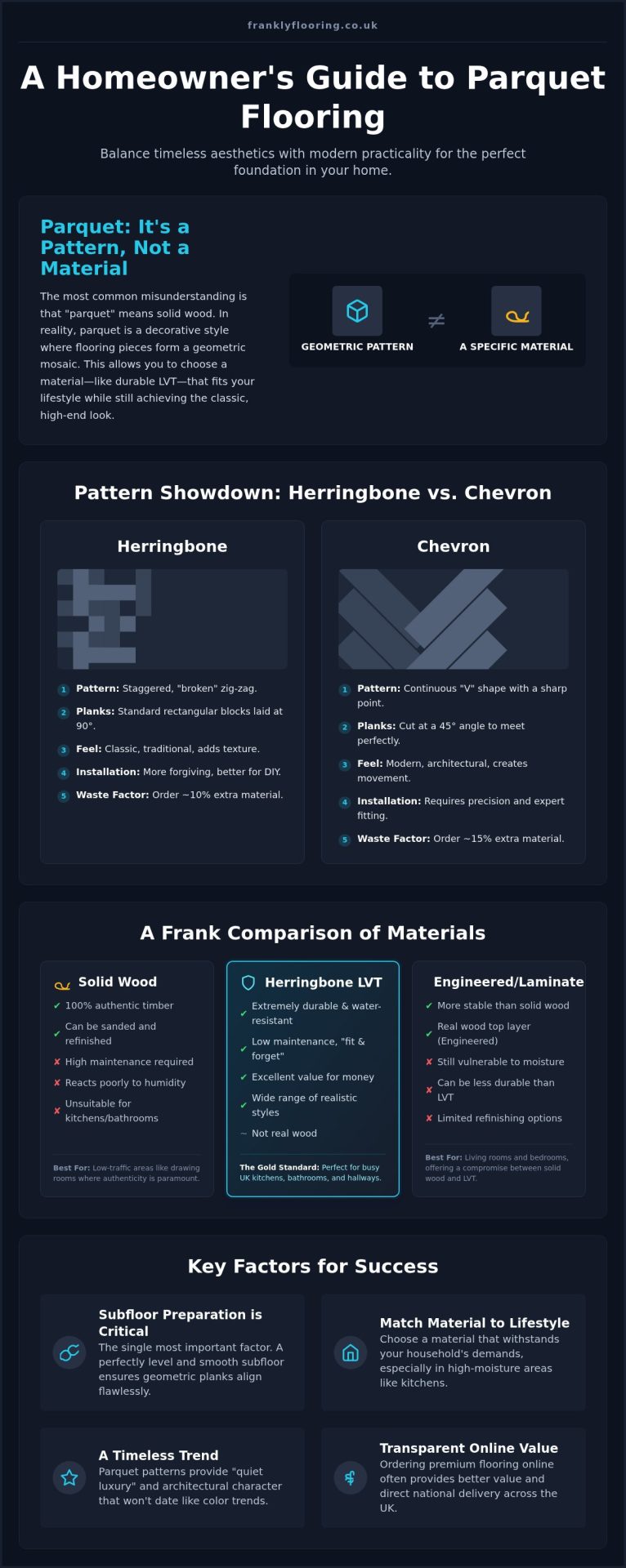
The confusion between herringbone and chevron often stems from the fact that they both look like “zigzags” from a distance. However, the difference lies entirely in the way the planks are cut and joined. While both fall under the parquet umbrella, they create vastly different atmospheres. Herringbone uses standard rectangular planks. Chevron requires each board to be cut at a precise angle, usually 45 degrees. This small structural change dictates everything from the final material cost to how difficult the floor is to fit.
Herringbone: The Classic Choice
In a herringbone layout, rectangular blocks are laid at 90-degree angles to one another. This creates a staggered, woven appearance that doesn’t form a straight point. It’s the iconic look found in Victorian and Edwardian hallways across the UK. One reason herringbone lvt flooring is the top choice for modern home renovations is its practicality. Because the planks are standard rectangles, they’re easier to align and lock together. This makes them much more forgiving for DIY-friendly installations compared to the rigid requirements of a chevron join. It provides a timeless, period feel that adds character to a room without feeling overly trendy.
Chevron: The Modern Architectural Look
Chevron is the choice for those seeking a sharp, modern architectural look. The 45-degree angled cut ensures that each plank meets its partner at a perfectly straight centre line, forming a continuous “V” shape. This creates a powerful sense of movement, leading the eye through the space and making a room feel longer. However, this precision comes with a price disparity. Chevron is typically more expensive to manufacture because of the specific angled cuts required at the factory. During installation, you’ll also need to calculate for significantly more waste. We usually recommend ordering an extra 15% for chevron compared to the standard 10% for herringbone to ensure you don’t run short when trimming the angles at the walls.
Our frank advice is to consider the scale of your room before you commit to a purchase. In smaller UK homes, herringbone is often the safer bet. The broken zigzag pattern adds texture and interest without making a tight space feel cluttered. Chevron, with its long, sweeping lines, needs room to breathe. It works best in large, open-plan living areas where the pattern has enough floor space to fully repeat and establish its rhythm. If you’re considering herringbone lvt flooring for a high-traffic area, you can explore our full selection of styles to find the right fit for your floor.
Real Wood, LVT, or Laminate? A Frank Comparison
Choosing the right material for your parquet floor is often a battle between your heart and your head. Your heart might want the prestige of solid oak, but your head knows that a busy UK household needs something that can survive a wet dog and a spilled coffee. We believe in being transparent about these trade-offs. While solid wood was once the only option, modern alternatives often provide better performance for a fraction of the total project cost. The best choice depends entirely on which room you’re flooring and how much maintenance you’re willing to do.
The Case for Engineered Wood Parquet
This is the premium choice for those who won’t settle for anything less than the real thing. Engineered wood flooring provides the authentic texture and unique grain patterns that only nature can create. Because it’s constructed in layers, it’s far more stable than old-fashioned solid blocks. This stability is a non-negotiable requirement if you have underfloor heating, which is now standard in most modern UK renovations. The long-term value is high too. You can sand and refinish an engineered floor in the future, meaning it can literally last a lifetime if you treat it well.
Why Herringbone LVT Flooring is Dominating the Market
If you’re looking for a floor that’s truly “life-proof,” herringbone lvt flooring is the clear winner for family homes. It’s 100% waterproof. This allows you to carry that sophisticated parquet pattern from your hallway directly into your kitchen or bathroom without the fear of warping or rot. For a detailed breakdown of the technical layers, you can check our guide on what is LVT flooring. It’s also noticeably warmer underfoot than stone and much quieter than laminate. It absorbs the sound of footsteps rather than echoing them, which is a massive benefit in open-plan living spaces.
Laminate Parquet: Style on a Budget
Don’t fall for the old myth that laminate looks “cheap.” By 2026, high-definition printing and textured surfaces have made laminate look incredibly realistic. It’s the most budget-friendly way to achieve the parquet look without the heavy investment. The primary advantage here is the click system. It’s much faster to install than traditional glue-down blocks, which can significantly reduce your labour costs. It’s also remarkably scratch-resistant. If you have pets with sharp claws, a high-quality laminate might actually stay looking new for longer than a real wood surface would.
Preparing for Parquet: Subfloors and Installation Realities
The beauty of a parquet floor is 90% in the preparation. This isn’t marketing fluff; it’s a technical reality that every professional fitter understands. While a standard plank floor can sometimes hide minor subfloor imperfections, geometric patterns are completely unforgiving. If your subfloor isn’t perfectly level, your herringbone lvt flooring will never align correctly. Even a 3mm dip can cause the planks to “lip” or disconnect over time, ruining the visual symmetry you’ve paid for. In British homes, where old floorboards and damp concrete are common, you must address the foundation before the first block is laid.
Mastering the Subfloor
Testing for moisture in concrete subfloors is an essential first step. If you lay engineered wood over a damp slab without a proper liquid damp-proof membrane (DPM), the wood will eventually warp. For those choosing LVT, the challenge is different. You need a surface that is as smooth as glass. This usually involves plyboarding over old timber floorboards to create a rigid, flat base. If you’re working with concrete, using a high-quality self-levelling compound is the only way to avoid the lipping issues mentioned earlier. It creates a seamless canvas that allows your pattern to flow perfectly from one room to the next.
Choosing the Right Accessories
The accessories you choose are just as important as the floor itself. You’ll need to decide between a floating installation with underlay or a traditional glue-down method. Glue-down is often preferred for parquet because it feels more solid underfoot and eliminates the “bounce” associated with floating floors. However, if you’re transitioning from your new parquet to a carpeted area, don’t skimp on your carpet gripper to ensure a secure and professional finish at the threshold. Selecting door bars and trims that match the premium look of your floor is the final step in ensuring the project doesn’t look like a DIY afterthought.
Here is a Frank warning: real wood parquet is generally not a project for a first-time DIYer. The precision required to keep a herringbone or chevron pattern straight across a large room is immense. If you’re determined to do it yourself, herringbone lvt flooring with a click-lock system is a much more manageable option. It provides the same aesthetic result with a significantly lower risk of costly mistakes. If you want to get the job done right, you can shop our full range of installation accessories to ensure you have every professional tool required for a lasting finish.
Finding Your Perfect Parquet at Frankly Flooring
We don’t believe in high-pressure sales or hiding behind industry jargon. We believe in getting the right floor for your home at a fair price. With over 20 years of industry experience, our family-run team has seen every trend come and go. We’ve used that knowledge to cut through the marketing fluff and curate a range that actually performs in real British households. Buying parquet online shouldn’t feel like a gamble. We provide the technical clarity you need to make a solid investment in your property’s future.
Our Range of Parquet Solutions
We’ve built a selection that covers every practical requirement and aesthetic preference. If you want the pinnacle of authenticity, our engineered oak parquet offers a depth of grain and character that only real timber can provide. For those who need a truly life-proof surface, our herringbone lvt flooring provides a 100% waterproof solution that doesn’t sacrifice that classic style. We offer a variety of finishes, including the natural, matte look of oiled boards and the hard-wearing protection of lacquered surfaces. You can also find the full kit required for a professional finish. We sell the specific underlays, high-strength adhesives, and matching trims needed to complete your project to a high standard.
The Frankly Flooring Advantage
Our business is built on candour. You’ll find no-nonsense pricing and transparent stock levels across our entire website. We don’t use “from” prices that vanish when you reach the checkout. Because we’re a family-run specialist, you aren’t dealing with a corporate call centre. You’re talking to a dedicated team that actually knows the products we sell. We’re proud of the craftsmanship behind our ranges and we want you to feel that same pride when the project is finished. We provide comprehensive guides to help you through every stage, from initial material selection to the final cleanup.
Here’s a final Frank tip for your journey. Never commit to a full floor based on a digital image alone. Screens can’t accurately capture how a texture feels or how a colour reacts to natural light. A floor that looks warm on your phone might look quite different in a north-facing UK living room. We always recommend ordering samples first. It’s the only way to see how the herringbone lvt flooring pattern sits in your specific space. Once you’ve made your choice, we handle the rest with reliable national delivery across the UK, ensuring your new foundation arrives safely and on time.
Ready to Transform Your Home with Parquet?
Choosing a new floor is about balancing the timeless look of a period pattern with the practical demands of your daily life. Whether you’ve decided on the prestige of engineered wood or the waterproof durability of herringbone lvt flooring, the secret to a successful project always lies in the preparation. Remember that a level subfloor and the right accessories are what separate a professional finish from a frustrating mistake.
At Frankly Flooring, we bring over 20 years of industry expertise to help you navigate these choices without the usual marketing fluff. As a family-run business, we’re committed to providing the same honest advice we’d give our own friends. We offer national UK delivery on all orders, ensuring your materials arrive safely no matter where you’re based.
Browse our full range of Herringbone LVT and Parquet at Frankly Flooring and take the first step toward a foundation that truly reflects your home’s character. We’re here to help you get it right the first time.
Frequently Asked Questions
Is herringbone LVT flooring more expensive than standard planks?
Yes, herringbone lvt flooring generally carries a higher price tag than standard straight planks. This is because the smaller blocks require more precise manufacturing and the installation process is significantly more time-consuming. You’ll also need to factor in a higher waste percentage for the perimeter cuts. While the initial investment is larger, the architectural interest it adds to a UK property can often justify the additional cost.
Can I install parquet flooring over underfloor heating?
Most modern parquet options are perfectly compatible with underfloor heating, but material choice is critical. Engineered wood and LVT are the safest bets because they handle temperature fluctuations without warping. Solid wood blocks are much riskier and generally not recommended for this setup. Always check the manufacturer’s maximum temperature limit, which is typically 27°C for most UK flooring systems, to ensure long-term stability and consistent performance.
How do I clean and maintain my herringbone LVT floor?
Maintenance is straightforward and doesn’t require specialist chemicals. Regular sweeping or vacuuming with a soft brush attachment will remove grit that could scratch the surface. For deeper cleans, use a damp mop with a pH-neutral cleaner. Avoid using steam mops on your herringbone lvt flooring, as the intense heat can eventually weaken the adhesive or the core structure. It’s a practical solution compared to the constant oiling real wood requires.
Does herringbone flooring make a room look smaller or larger?
Herringbone patterns actually make a room feel larger and more expansive. The “V” shape of the pattern acts as a visual pointer, drawing the eye toward the corners of the room and creating an illusion of width. This is why it’s a favourite for narrow Victorian hallways in the UK. The key is to choose a plank size that scales with the room’s actual dimensions to avoid a cluttered look.
Can I lay herringbone LVT flooring myself?
You can attempt a DIY installation if you choose a click-lock system, but it’s significantly more challenging than laying straight planks. The difficulty lies in keeping the “spine” of the pattern perfectly straight across the entire floor. If you’re off by even a millimetre at the start, the error will compound as you move across the room. For glue-down parquet, we always recommend hiring a professional fitter with geometric experience.
Which is better for parquet: glue-down or click-system?
Glue-down is the professional’s choice for a truly premium feel. It eliminates the “hollow” sound sometimes associated with floating floors and provides a more stable foundation for the pattern. However, click-systems are much faster to install and don’t require messy adhesives, making them a popular choice for quick renovations. Your choice should depend on your budget and your subfloor; glue-down offers better long-term durability but requires a perfectly flat surface.
What is the best parquet material for a kitchen or bathroom?
LVT is the undisputed winner for kitchens and bathrooms. Unlike real wood or standard laminate, high-quality LVT is 100% waterproof and won’t swell when exposed to moisture or spills. You get the high-end look of a traditional parquet floor without the constant worry of water damage. It’s also much warmer underfoot on a cold winter morning than traditional ceramic tiles, which is a major benefit for UK homes.
How much waste should I allow for when ordering herringbone parquet?
We recommend allowing for 10% to 15% waste when ordering herringbone. This is higher than the standard 5% suggested for straight planks because of the intricate cuts required at the edges of the room. If your space has many alcoves, bay windows, or irregular corners, lean toward 15% to ensure you don’t run short. It’s much cheaper to have a few spare planks than to pay for a second delivery later.