
What if the natural floor you love in a sitting room feels impractical in the places your household uses most? Seagrass carpet has a distinctive woven texture and an earthy look, but its suitability depends on more than appearance. Consider moisture, footing and everyday wear before you choose.
It’s reasonable to wonder whether this natural fibre can stand up to family life and how it compares with familiar carpet materials. Seagrass has some natural moisture resistance, but that doesn’t make it suitable for bathrooms or remove the need for care. Its smooth texture can also feel slippery underfoot, which matters when you’re considering stairs.
This guide covers the material’s defining characteristics, practical trade-offs and the rooms where it may work best. We’ll compare it with sisal, jute and synthetic carpet, then outline what to check before ordering samples or settling on a style. The aim is to help you decide whether seagrass suits your home, not just the look you have in mind.
Key Takeaways
- Use seagrass carpet’s woven texture and natural colour variation to judge whether its look fits your room.
- Compare fibres by feel, appearance, care needs and room suitability rather than assuming one material performs best in every home.
- Consider moisture exposure, everyday use and cleaning habits alongside the floor’s practical limitations.
- Order samples to view colour and texture at home, then measure carefully and account for the room shape, thresholds and fitting layout.
What Is Seagrass Carpet, and What Gives It Its Distinctive Look?
Seagrass carpet is a natural-fibre floor covering with a woven appearance. Its visible texture and natural variation give a room a more organic character than plain, smooth carpet. The fibre is only one part of the design: weave and colour also shape the finished look, and details vary between products.
That distinction matters when you’re comparing options. “Seagrass” describes the fibre, not a single colour, pattern or precise finish. The weave affects how prominent the texture appears, while the colour depends on the individual product. Don’t assume every seagrass floor will look or feel the same based on a small online image.
How Does Seagrass Carpet Look and Feel?
The woven surface is its most recognisable feature. It can add definition where plain carpet might feel visually quiet, but the exact texture and underfoot feel depend on the product and weave. Inspect a sample rather than relying on the material name alone.
View a sample in your room in natural daylight and artificial light. A colour that looks muted on screen may appear warmer or more pronounced at home. Place it beside nearby furnishings and finishes, and look at the weave from different angles. This helps you judge the actual sample rather than an idealised product photograph.
What Should You Know About Seagrass as a Natural Fibre?
Seagrass is a natural-fibre choice, unlike synthetic carpet, which is made from manufactured fibres. The name refers to flowering plants that grow in marine environments; for a broader botanical overview, see information about seagrass. That background explains the name, but not everything about a finished floor covering. Consider each product’s construction, weave and appearance individually.
It’s also sensible to separate “natural” from assumptions about environmental impact. The label alone doesn’t establish how a particular product was sourced, processed or made. If those details matter to your decision, look for product-specific information rather than treating all natural-fibre flooring as the same.
For a wider view of carpet materials and the factors that distinguish them, Frankly Flooring’s carpet buying guide offers useful context. Keep the comparison practical: consider the look you want, the feel underfoot and the information available for the product. A natural fibre can bring a distinctive character to a room, but the right choice depends on the specific floor, not just its category.
Seagrass Carpet Benefits and Limitations: What to Weigh Before Buying
The appeal is clear: a woven natural-fibre floor can bring visual character and a less uniform finish than plain carpet. But a floor needs to work in the room where it’s going, not just look right in a photograph. Weigh seagrass against the room’s moisture exposure, foot traffic and the care routine you’re comfortable with.
Seagrass is often described as durable, but that doesn’t mean every product suits every household. Construction and product guidance matter, as do the demands of the space. A quiet bedroom and a busy family room have different patterns of use, even if both are dry indoor spaces.
Where Can Seagrass Carpet Be Used?
Living spaces and bedrooms may be suitable, provided the selected product is appropriate for the room and its expected use. Consider how the space is used throughout the day: a bedroom may see occasional footfall, while a sitting room may have more regular movement and furniture in place.
Be cautious in bathrooms and other areas exposed to moisture. Seagrass shouldn’t be treated as suitable for a wet room simply because it may cope with some everyday conditions. Check the chosen product’s suitability and care information before deciding. If spills, damp footwear or frequent cleaning are routine in the room, factor those into your assessment.
Is Seagrass Carpet Right for a Busy Household?
Start with the room’s actual routine rather than a general label such as “hardwearing”. Consider who uses the space, how often people cross it, whether shoes are usually worn indoors and how much time you’re prepared to spend following the product’s care instructions. If you have children or pets, compare those household habits with the specific care guidance rather than assuming a natural-fibre carpet will be easy to maintain.
Be honest about how you feel about visible texture and natural variation. These qualities give seagrass its character, but may not suit someone looking for a smooth, consistent appearance. A sample helps you judge how the surface looks in the room, while the care details explain more about everyday upkeep.
In short, seagrass offers distinctive natural texture, but its appearance alone doesn’t establish whether it will work in your home. Match the product’s care guidance and limitations to the room’s moisture, traffic and household routine.
A room-by-room check is more useful than assuming one fibre works everywhere. If you’re weighing up other carpet materials for a different space, you can browse the carpet range and compare options against your practical priorities.
Seagrass vs Sisal, Jute, Wool and Synthetic Carpet: How to Compare
There isn’t one best fibre for every home. Seagrass, sisal, jute, wool and synthetic carpet differ in texture and appearance, but care and suitability depend on the specific product as well as the material. Use the comparison below as a starting point, then check the product description and care guidance before deciding.
| Material | Feel and appearance | Care considerations | Room suitability |
|---|---|---|---|
| Seagrass | Woven, naturally varied look; feel depends on the weave. | Follow the product’s care instructions and consider how visible texture fits your routine. | Assess the room’s moisture exposure and intended use; don’t assume it suits every space. |
| Sisal | Distinctive natural woven appearance; compare the actual surface with seagrass. | Care guidance varies by product, so check cleaning instructions before purchase. | Match the product’s guidance to the room and household use. |
| Jute | Natural-fibre look with a different feel and finish from other woven options. | Check product-specific care details, especially if the room is prone to spills. | Choose based on the stated room suitability, not the fibre name alone. |
| Wool | Available in varied textures and carpet constructions. | Cleaning and upkeep depend on the product; read its care information. | Compare the specification with the room’s needs and expected use. |
| Synthetic | A broad category with varied textures, finishes and constructions. | Care requirements differ between products, so check the individual instructions. | Use product details to assess suitability for the room and your routine. |
Seagrass or Sisal: Which Natural Texture Suits Your Home?
Both can give a room a woven, natural character, but the label alone won’t tell you how a particular floor feels underfoot or looks in your light. Weave and construction matter. Compare samples side by side and read the descriptions for the specific options. Then weigh the differences against how the room is used and the texture you prefer living with each day.
Seagrass or Wool and Synthetic Carpet: Which Priorities Matter Most?
If a natural woven appearance is your priority, compare seagrass with other natural-fibre choices. If softness, a particular finish or a familiar carpet construction matters more, wool and synthetic options broaden the comparison. Don’t assume a fibre guarantees a specific feel, cleaning result or lifespan. Product details are more useful than broad claims. For example, Frankly Flooring’s Associated Weavers Sophistication is a Saxony carpet made from 100% polypropylene, with a 16.0 mm pile and a 100% bleach-cleanable surface. Compare its stated features with the feel and care requirements you want before choosing.
The deciding factor is usually the room’s conditions and the feel you want, balanced against the care guidance for the exact product. Compare those points first, then let colour and appearance narrow the choice.
How to Choose Seagrass Carpet for a Specific Room
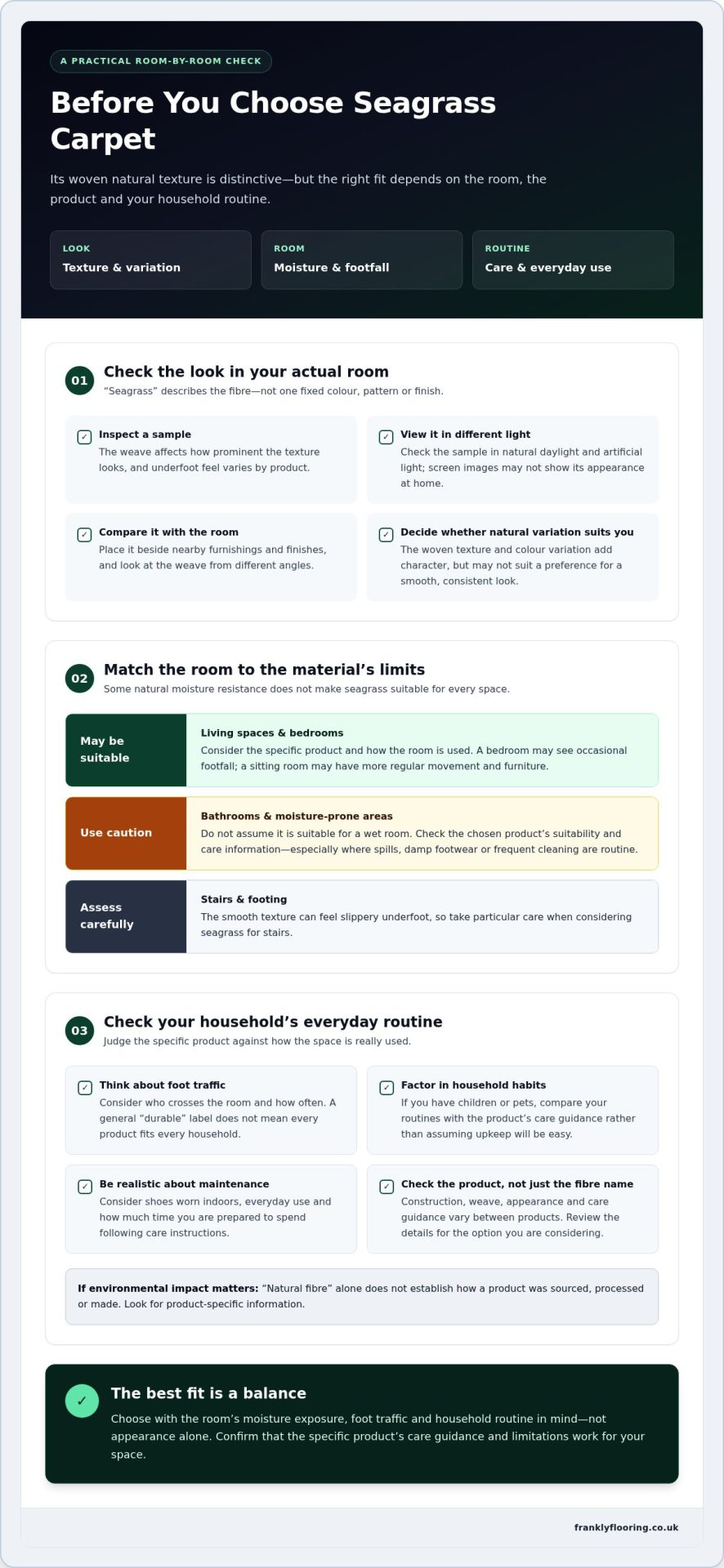
A room-by-room check is more reliable than choosing on appearance alone. Seagrass carpet can bring a distinctive woven finish, but the right decision depends on the conditions in the space and the details of the individual product. Work through these checks before committing:
- Identify the room conditions. Note regular dampness, spills, wet footwear or other moisture exposure. Bathrooms and wet rooms are poor choices for seagrass; don’t assume a natural fibre is suitable just because it has a woven surface.
- Consider how the room is used. Think about foot traffic, furniture and your usual cleaning routine. A room with frequent spills or regular wet cleaning calls for careful attention to the product’s care guidance.
- Inspect a sample at home. Compare its colour, weave and feel with the room’s furnishings. Look at it in daylight and under your usual evening lighting, since natural variation and texture can appear different as the light changes.
- Check the product details. Review the stated width, room suitability, care instructions and fitting requirements. Make sure they align with your measurements and the conditions in the intended space.
Pre-purchase checklist: assess moisture and room conditions, consider everyday use and cleaning, view a sample in your lighting, then check width, suitability, care and fitting details.
Which Rooms Deserve Extra Caution?
Bathrooms and other moisture-prone areas deserve particular caution. Don’t treat seagrass as a wet-room floor covering. In any room, consider whether spills are likely, how you’d clean them and whether dampness is part of normal use. Base your decision on those conditions and the chosen product’s stated suitability.
What to Check in a Seagrass Carpet Sample and Product Description
Place the sample on the floor where it’s likely to sit, then compare its appearance with nearby colours and finishes. Check whether the weave and feel work for the room, not just whether the colour appeals. Read the product description for width, care and room guidance, and note any fitting requirements. A carpet gripper guide can also clarify related fitting terminology.
Once you’ve settled on the room and product details, measure the space. Room shape, doorways and thresholds can affect how the floor is planned, so include them in your notes rather than measuring only the longest walls. If you’re comparing other carpet options, browse the carpet range to explore the wider choice.
Buying Seagrass Carpet Online: Samples, Measurements and Next Steps
Buying flooring online is easier when you slow down at the points where a screen can’t tell the whole story. A photograph can help you shortlist a colour, but it can’t show exactly how a woven surface feels underfoot or looks in your home. Before placing an order, view a sample, measure the space carefully and read the product information from top to bottom.
How to Order Samples and Plan Measurements
View a sample in the room where the floor is intended, rather than judging it against a screen or the lighting in another room. Check it in daylight and again in the evening with your usual lights on. Look at the texture close up, then step back to see how its colour sits alongside furniture, walls and other finishes. Frankly Flooring offers free samples, so you can assess carpet options at home before choosing.
Measure the room’s full shape, not just its longest length and width. Include recesses, alcoves and changes in the floor outline, and note doorways and thresholds. Keep a simple sketch with each measurement labelled. This gives you a clearer picture of the space and helps prevent small but important details from being forgotten.
The quantity needed depends on the product dimensions and how the carpet is laid out. A room with an alcove or awkward corner may need a different plan from a straightforward rectangle. Don’t assume the floor area alone settles the order quantity: compare the product’s stated dimensions and fitting-layout information with your measurements.
- View samples in daylight and artificial light.
- Record the room outline, including recesses and thresholds.
- Compare your measurements with product dimensions and fitting-layout guidance.
- Review care, suitability, pack coverage and delivery information before ordering.
This checklist is a practical starting point for comparing carpet options online. A broader guide to buying flooring online can help you think through the order process and the details worth reviewing before checkout.
What to Review Before Placing an Online Carpet Order
Read the details for the exact carpet you’ve selected. Check its stated width, suitability for the intended room, care instructions and fitting requirements. If pack coverage is shown, compare it with the measured area and fitting layout; don’t rely on a quick estimate based on the room’s appearance.
Review delivery information and order requirements before completing your purchase, and make sure the measurements and product choice refer to the same space. Keep the care guidance to hand so you know what routine the selected carpet calls for. These checks matter for any floor covering, especially when texture and product construction influence your decision.
If you’re still comparing materials and styles, take a look through Frankly Flooring’s carpet range and use the available free samples to assess options at home before choosing.
Make Your Next Flooring Choice with Confidence
Choosing a floor comes down to how you want a room to feel and what works with the way you live. If seagrass carpet still appeals, use the product details and your room’s conditions to guide your decision rather than choosing on appearance alone. If another carpet material looks like a better fit, that’s useful to know too.
Frankly Flooring is a family-run business with over 20 years of flooring-industry experience, serving customers across the UK through its online store. Free samples make it easier to compare colour and texture at home before deciding which carpet suits your space.
Browse Frankly Flooring’s carpet range and order a free sample to see how your options look at home. Compare carefully and choose the floor that suits the room.
Frequently Asked Questions
Is seagrass carpet suitable for bedrooms and living rooms?
It may suit a bedroom or living room if the specific product’s guidance matches the room. In a bedroom, consider whether you usually walk barefoot and how the texture feels against your feet. In a living room, think about regular foot traffic and where heavy furniture will sit. Check the stated suitability and care instructions before choosing, as products and household routines differ.
Can seagrass carpet be used in a bathroom?
No, a bathroom is generally not suitable for seagrass carpet. Steam, splashes and damp conditions can create problems for natural-fibre flooring, so don’t treat it as appropriate for a wet room. This caution also applies to spaces that regularly get wet, even if they aren’t bathrooms. Choose a floor covering specifically described as suitable for those conditions.
Is seagrass carpet hard to clean?
It can require more care than a carpet with straightforward cleaning guidance, so check the specific instructions before buying. Don’t assume water, a household stain remover or a carpet-cleaning machine is safe to use on it. If a drink is spilled, for example, follow the product’s stated method rather than reaching for a general-purpose cleaner. The right routine depends on the carpet’s construction.
Does seagrass carpet feel rough underfoot?
It can feel firmer and more textured than a soft-pile carpet, but the exact sensation depends on the weave and product. If you often walk barefoot, a small sample is useful: handle it and, if practical, stand on it at home. A photograph won’t show how the surface feels. Compare it with a softer carpet sample before deciding which feel suits the room.
Is seagrass carpet more durable than sisal carpet?
Not necessarily. Sisal is often described as the more durable of the two, but that broad comparison doesn’t predict how a particular carpet will perform in your home. Construction, room use and maintenance all matter. Compare product descriptions and care requirements, then consider how much traffic the floor will face. Avoid choosing on a general fibre ranking alone.
Does seagrass carpet need underlay?
Underlay and fitting requirements depend on the product, so follow its specification rather than assuming it can be laid like a standard carpet. Seagrass is commonly fitted using a double-stick method, where the underlay is fixed to the subfloor and the carpet is fixed to the underlay. Check the product’s fitting guidance and make sure the proposed underlay and method are compatible.
How do I choose the right colour and weave of seagrass carpet?
Start with a sample and compare it against your walls, furnishings and existing flooring in daylight and evening light. Then consider how bold or subtle you want the woven pattern to look. Weave affects the surface’s visual character, so compare samples rather than relying on colour names or online photographs. Check the product details to ensure the selected option suits the room.