
The most expensive-looking floor isn’t automatically the best choice for resale. Real wood flooring can boost a UK property’s value by up to 5-7%, making it a strong contender when choosing flooring to increase home resale value. Its impact also depends on the condition of the floor, the room and how well the finish suits the rest of the home.
Flooring shapes a buyer’s first impression: worn, dated surfaces can make rooms feel neglected, while a clean, consistent finish helps a home feel ready to move into. It’s natural to want an appealing material without spending more than the potential return justifies.
This guide compares solid hardwood, engineered hardwood and luxury vinyl plank (LVP) for resale value, buyer appeal and first impressions. You’ll also learn where each option tends to fit best, why a practical surface may be a better choice in some rooms, and how colour and continuity can influence the overall feel of a property.
Key Takeaways
- Prioritise the condition and suitability of each floor, not just the material’s reputation for resale appeal.
- Compare solid hardwood, engineered hardwood and LVP by appearance, room conditions and the upkeep buyers may expect.
- Use consistent flooring through connected living spaces to create a more cohesive first impression.
- Match flooring to how each room is used: warmth may suit bedrooms, while practical surfaces can make sense in busy areas.
1. What Flooring Adds the Most Value to a Home?
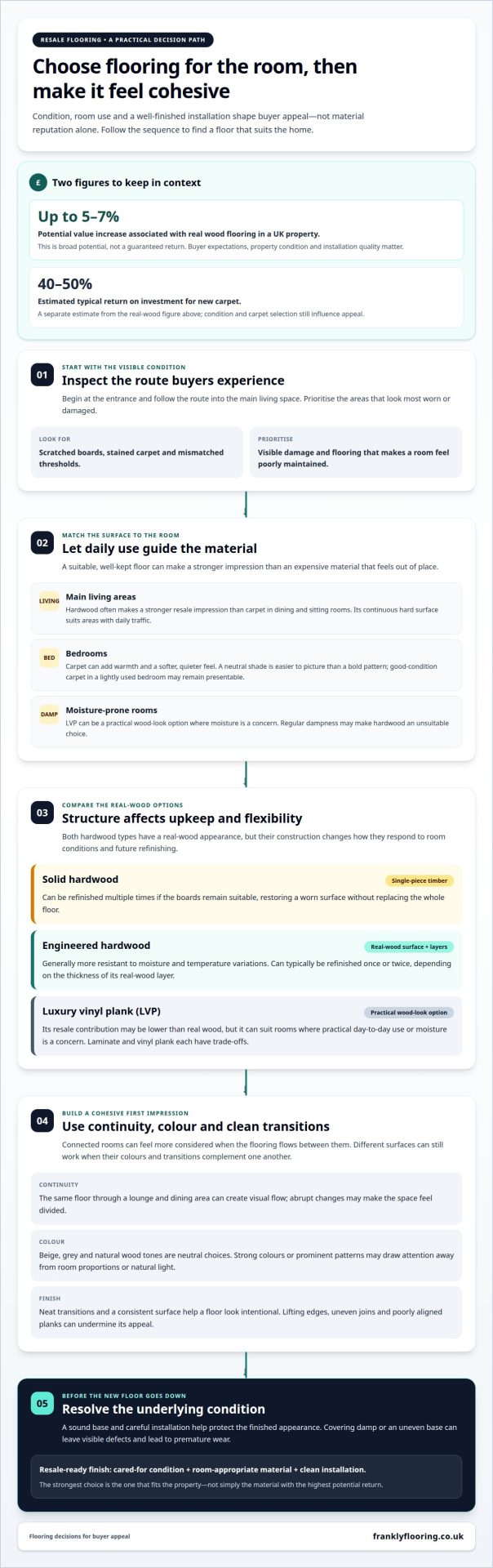
In main living areas, hardwood often makes a stronger resale impression than carpet. Its continuous, hard surface suits dining and sitting rooms, where daily traffic can flatten carpet. Replacing visibly worn flooring may improve a home’s appeal, but the material alone won’t determine its resale value. Buyers also notice whether the floor looks cared for and suits the room.
Bedrooms are different. Carpet can add warmth and a softer, quieter feel, which may appeal to buyers seeking comfort underfoot. New carpet has an estimated typical return on investment of 40-50%, but condition and selection matter: a neutral shade is easier to picture in a bedroom than a bold pattern. For a wood-effect look with a softer room feel, consider how carpet compares with hard flooring before deciding.
Carpet needs regular care because dust and allergens can accumulate in its fibres, while stains may be difficult to remove. A practical step is to assess the pile, visible marks and worn traffic paths before deciding to replace it. A guide recommends replacing carpet every 10 years to help maintain a home’s value. In a lightly used bedroom, good-condition carpet may remain presentable; a heavily marked hallway carpet can make the whole floor feel tired.
UK building regulations or standards may be relevant if replacement changes the floor’s construction, fire performance or access. A like-for-like surface change alone doesn’t determine which requirements apply, so the work’s scope and the property’s circumstances matter.
There’s no single useful UK average cost by material and room in the figures available here. Total cost depends on floor area, material choice, the existing floor’s condition and any preparation or fitting. A small bedroom and a large living room therefore need different estimates.
Poor installation or maintenance can undermine buyer confidence. Uneven surfaces, badly finished edges, loose sections, persistent stains and damaged boards all draw attention. Address the underlying floor condition before laying a new covering: concealing damp or an uneven base can leave visible defects and lead to premature wear. For resale, a sound finish suited to the room matters more than choosing carpet throughout.
2. Solid hardwood versus engineered hardwood and LVP
Solid hardwood is made from a single piece of timber, while engineered hardwood combines a real-wood surface with a layered construction. Both have the appearance of real wood, but their different structures affect how they respond to moisture and temperature changes. Engineered boards are generally more resistant to these variations, which may make them practical where conditions are less stable.
Refinishing is another resale consideration. Solid hardwood can be refinished multiple times if its boards remain suitable, restoring a worn surface without replacing the whole floor. Engineered hardwood can typically be refinished once or twice, depending on the thickness of its real-wood layer. In a renovation, that difference matters: a floor with more scope for renewal may stay presentable for longer.
Real wood flooring can boost a UK property’s value by up to 5-7%. That is a broad potential, not a fixed return for every home. Buyer expectations, property condition and the quality of the installation all shape how the floor contributes to resale appeal. In a competitive market, neat transitions between rooms and a finish that suits the home can support the overall impression.
LVT offers a wood-look alternative when practical day-to-day use matters. Its contribution to resale value may be lower than real wood, but the right choice depends on the room and the condition of the existing floor. Take particular care in areas prone to moisture: hardwood may not be a sensible choice where regular dampness could damage it.
Is LVP or laminate better for resale? Laminate and vinyl plank each have trade-offs, so consider the room conditions when choosing between them. LVP can be a more practical option in rooms where moisture is a concern.
For a flooring selection that balances wood appearance with room conditions, compare vinyl and laminate flooring as well as real-wood options. The strongest choice is the one that fits the property, not simply the material with the highest potential return.
3. How flooring affects first impressions and marketability
Buyers form an impression as they move from the entrance into the main living space. Scratched boards, stained carpet and mismatched thresholds can make rooms feel poorly maintained, even when other features are in good condition. Start by assessing what visitors see along that route, then prioritise visibly damaged areas.
Consistency helps connected rooms feel considered. Using the same floor through a lounge and dining area, for example, can create visual flow, while abrupt changes may make the space feel divided. Not every room needs identical flooring: an entrance with a practical surface and a bedroom with a different finish can still feel coherent when colours and transitions work together.
Colour influences how buyers read a room. Beige, grey and natural wood tones are neutral choices that can sit comfortably with different furniture and décor. A strong colour or prominent pattern may draw attention away from the room’s proportions or natural light. When preparing a property for sale, choose a finish that supports the space rather than competing with it.
Durability also affects marketability. Visible wear in a busy hallway can suggest ongoing upkeep; LVT may offer a wood-effect appearance in a practical format. The overall impression still depends on the finish: lifting edges, uneven joins or poorly aligned planks can undermine an otherwise appealing floor. Clean transitions and a consistent surface help it look intentional.
Premium materials aren’t automatically right for every property. Buyers may value a well-kept floor suited to the room more than an expensive surface that looks out of place. Consider the home’s character, existing finishes and likely use: understated wood tones may suit a traditional sitting room, while durable flooring can make sense near an entrance. A balanced selection can help the home feel cared for and ready to live in without making the floor the sole focus.
4. Flooring choices and home resale value
The best choice depends on the room, its condition and the property’s overall finish. Real wood may suit a sitting room where buyers value a traditional look, while a water-resistant surface may be more practical in a busy kitchen. Choosing flooring to increase home resale value means considering the home as a whole, not just one room’s appeal.
Consider the room’s exposure to moisture when choosing flooring. Laminate isn’t waterproof, so it isn’t recommended for either space. Luxury vinyl tile is water-resistant and suitable for kitchens, bathrooms and high-traffic areas. That makes it a useful option where spills and regular foot traffic are part of daily life.
Bedrooms often call for a different balance. Carpet can bring warmth and softness, while wood-effect flooring offers a harder surface that may suit buyers who prefer easier cleaning. The choice depends on whether the finish complements the room’s use and the rest of the property. In a connected bedroom and landing, coordinating tones can make the transition feel deliberate.
LVT or LVP has an estimated typical return on investment of 60-70%. Treat that figure as a broad guide, not a guaranteed increase in sale price. The condition of the existing floor, the quality of the finished appearance and buyer expectations all affect how an upgrade is received. Replacing damaged flooring can make sense; replacing a clean, sound floor solely to change its material may not. A sensible plan for flooring to increase home resale value starts with the areas buyers are most likely to notice.
Before choosing, assess the property room by room: identify damaged surfaces, consider moisture and traffic, then select finishes that work together. This approach directs renovation effort towards practical improvements rather than changes buyers may not value. If laminate fits your rooms and priorities, explore laminate flooring options as part of your selection. For flooring to increase home resale value, prioritise a finish that suits both the home and its everyday use.
Frankly Flooring
Frankly Flooring offers carpet and furniture for homeowners considering how flooring choices fit a property’s rooms and overall presentation. If a bedroom would benefit from a softer finish, carpet is one option; furniture can also help complete the look of a space. The right decision still depends on the room, the existing floor’s condition and the impression you want to create for buyers.
Use these comparisons to narrow down what matters most: appearance, practicality or comfort. Then choose flooring that makes sense for your home, rather than replacing a sound floor without a clear reason.
For a straightforward conversation about your flooring choices, contact Frankly Flooring.
Make your next flooring decision with the whole home in mind
Before committing to a change, decide what you want the flooring to do for the next owner and for your own daily life. A resale-minded choice should support the home’s character without turning every room into a renovation project. Note which areas genuinely need attention, then weigh buyer appeal against comfort, upkeep and how long you plan to stay. That gives you a practical basis for choosing flooring to increase home resale value, rather than selecting a material on appearance alone.
Frankly Flooring offers LVT, Wood and Carpet, giving you options to consider across different rooms and priorities. If you’re ready to discuss which direction suits your home, contact Frankly Flooring. A clear, considered choice can help your home feel more complete while still feeling like yours.
Frequently Asked Questions
What Flooring Adds the Most Value to a Home?
Real wood can be a strong resale option, but the best choice depends on the property and room. Wood may suit a period home’s reception room, while a practical surface may be a better fit for a busy entrance. Consider whether the flooring complements the home’s character and whether its condition supports the asking price. A well-matched finish is more persuasive than a material chosen for prestige alone.
Do buyers prefer carpet or hard flooring?
There’s no single preference shared by every buyer. Hard flooring can suit reception rooms and hallways, while carpet may appeal in bedrooms where a softer feel matters. Think about how a room is used: a busy family room has different needs from a quiet spare bedroom. A home with both comfortable and practical surfaces can meet a broader range of expectations.
Should I replace old flooring before selling my home?
Replace flooring if it’s visibly damaged, stained or beyond a thorough clean. If it’s structurally sound and simply looks dull, professional cleaning may be enough to present it well. Cleaning a presentable carpet, for example, may be more sensible than replacing it just before a sale. Base the decision on what buyers will actually see, not just the material’s age.
Do buyers care about hardwood floors?
Yes, hardwood can matter to buyers who value real materials and a floor that can be renewed. Its effect depends on the home: original boards in a character property may support its style, while damaged or poorly matched boards can distract. Ask whether the floor looks consistent with the property’s quality and has an appearance buyers can imagine living with.
Does LVP add as much value as hardwood?
Don’t assume LVT will add as much resale value as hardwood. It may still suit buyers who prioritise a practical surface and a wood-like appearance, especially where real wood would not fit the room’s demands. Consider the likely buyer and the surrounding finishes. A coherent, well-presented choice can be more appealing than an expensive material that feels unsuitable.
Is Installing Hardwood Floors Worth It Before Selling?
Installing hardwood before a sale can make sense if existing floors are damaged and the finish suits the property. Replacing a sound surface solely to add value is harder to justify, since the result depends on buyer expectations and the home’s overall condition. Compare the proposed change with other visible improvements, such as repairing worn thresholds or refreshing a tired room, before deciding where renovation effort belongs.