
The cheapest carpet on the high street is often the most expensive mistake you’ll ever make for your home. It’s a bold claim, but when a bargain-bin floor flattens into a thin mat within six months, the initial saving disappears faster than a sales commission. You’ve likely felt the frustration of navigating pushy showroom tactics or getting stung by hidden fees for grippers and door bars that weren’t in the advertised price. We agree that finding the best budget carpet UK retailers offer shouldn’t feel like a game of hide-and-seek with the truth, which is why we’re being frank about what actually works.
This guide is designed to give you a direct look at how to balance price with performance in 2026. We’ll show you how to choose materials like polypropylene for maximum durability and why spending a little more on your underlay can actually save you hundreds in the long run. You’ll learn how to calculate the total project cost upfront and discover the benefits of ordering online to skip the high-street markup. By the end, you’ll have the confidence to choose a floor that looks premium and stays plush without overstretching your bank account.
Key Takeaways
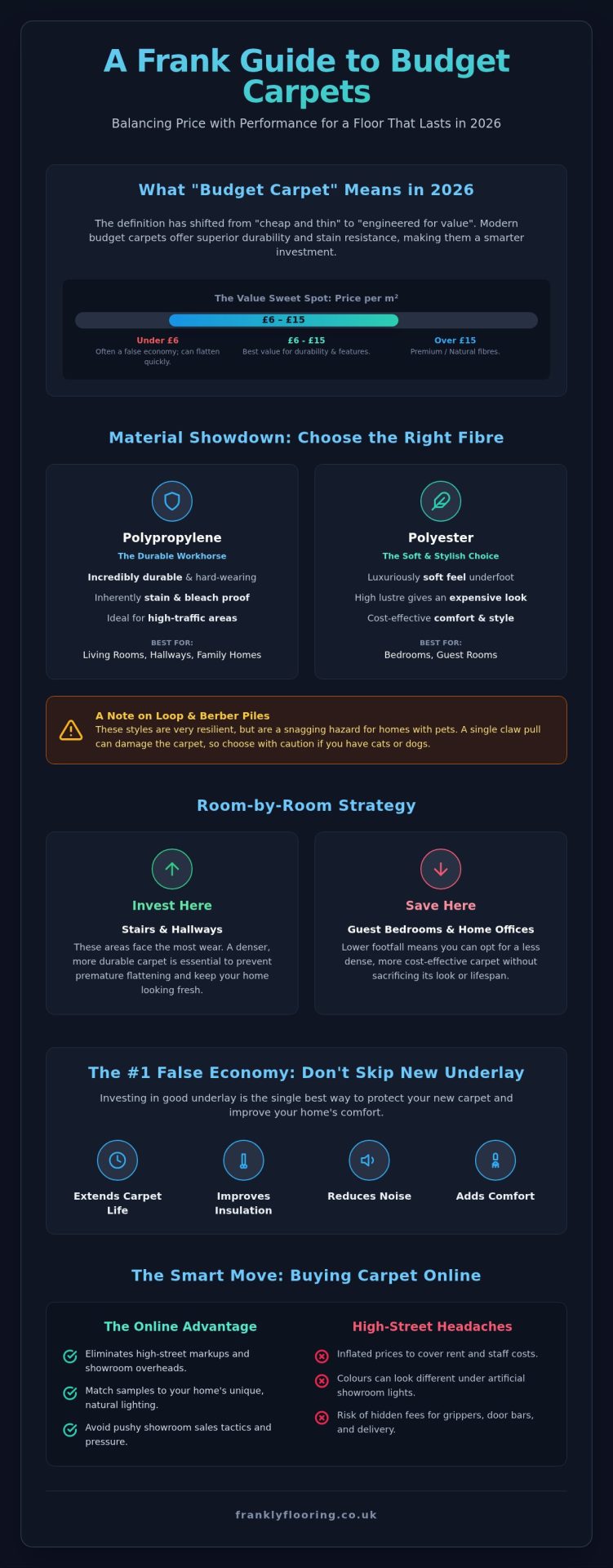
- Understand that the best budget carpet UK homeowners can buy in 2026 typically costs between £6 and £15 per square metre, focusing on engineered synthetics that offer genuine value over older, low-quality alternatives.
- Learn why polypropylene is the superior choice for high-traffic durability and stain resistance, while polyester serves as a softer, cost-effective option for guest bedrooms.
- Identify which areas of your home allow for savings and which spaces, such as stairs and hallways, require a slightly higher investment to prevent flattening.
- Discover why skipping new underlay is a false economy that reduces the lifespan of your flooring and how the right accessories improve warmth and soundproofing.
- Find out how buying online eliminates high-street markups and provides the convenience of matching samples to your home’s unique lighting.
What Does “Budget” Carpet Mean in the UK in 2026?
In 2026, the definition of the best budget carpet UK homeowners can find has shifted. It is no longer about buying the thinnest, scratchiest material possible just to cover the floorboards. Today, “budget” refers to a specific category of engineered flooring that typically sits between £6 and £15 per square metre. While you might see older guides quoting prices as low as £5, those often ignore the reality of 2026 inflation and the improved quality of modern entry-level synthetics.
We’ve moved away from “cheap and thin” towards “engineered for value.” Modern manufacturing allows for denser piles even at lower price points. A common misconception is that a lower price tag means you’re sacrificing protection. In fact, many budget-friendly options are now inherently stain-resistant because of the way the fibres are dyed. This isn’t just about the initial cost; it’s about how long that investment lasts. A £10 carpet is often a far better investment than a £5 one because it won’t flatten in six months. That extra few pounds pays for the density that keeps your room looking fresh for years.
The 2026 Price Landscape for UK Flooring
The current market is dominated by two main synthetic types. Polypropylene remains the workhorse of the industry, offering incredible durability for busy households. Polyester blends are your go-to for a softer feel underfoot, especially in bedrooms where you aren’t wearing shoes. Because we operate as an online retailer, Frankly Flooring can offer these materials without the massive markups required to run a physical showroom. For a durable, comfortable bedroom carpet in 2026, you should expect an entry-point price of roughly £9 per square metre.
Why Budget Carpets are Smarter Than Ever
Technology has been kind to the budget sector. Most of our entry-level ranges now feature bleach-cleanable fibres. This means a spilled glass of red wine isn’t a catastrophe; it’s a five-minute cleanup. This makes budget options incredibly family-friendly and pet-proof. We’ve also seen a rise in felt-backed carpets. These are much easier for DIY enthusiasts to fit, potentially saving you more on labour costs. When you combine this practicality with the ongoing trend for sophisticated neutral tones, like the ever-popular “grey carpet” look, it’s hard to tell a well-chosen budget floor apart from a premium one. For a deeper dive into the technical side, you can explore the history and construction of various carpet materials and piles to see how these synthetics have evolved to meet modern needs.
Best Budget Carpet Materials and Piles: A Frank Comparison
Choosing the right material is where most people stumble. They either overspend on wool they don’t need or buy a bargain-bin synthetic that looks great for a week before flattening into a pancake. In 2026, finding the best budget carpet UK suppliers offer is about matching the fibre to the room’s purpose. You don’t need the same specifications for a guest bedroom as you do for a high-traffic lounge.
Polypropylene: The Workhorse of Affordable Flooring
100% polypropylene is the undisputed king of value. It’s not as soft as wool, and we won’t pretend otherwise. However, this material is inherently stain-resistant because the colour is locked into the fibre during manufacturing. This makes it bleach-cleanable and perfect for busy family homes where spills are a daily occurrence. When you’re browsing, check the density by pressing your thumb into the pile. If you can easily feel the hard backing underneath, the carpet is likely too thin for a high-traffic lounge but might be fine for a spare bedroom. A denser twist pile will resist crushing much better over time and keep its appearance longer than a loose, shaggy alternative.
Polyester offers a softer alternative for those who prioritise comfort. It has a higher lustre, giving it a slight sheen that looks more expensive than it is. It’s the ideal choice for master bedrooms where you want a bit of luxury underfoot but don’t have the heavy footfall of a hallway or stairs.
Loop Piles and Berbers: Style on a Shoestring
If you’re chasing a rustic or “Scandi” look, a neutral Berber is your best friend. These are typically loop piles, where the yarn is looped back into the backing rather than cut. They are incredibly resilient and don’t show vacuum marks or footprints. This makes them a popular choice for home offices and modern living spaces. The Frank truth, however, is that loop piles are a nightmare for pet owners. A single snag from a cat’s claw or a dog’s nail can pull a whole line of yarn, ruining the floor instantly. For households with pets, a twist pile is a far safer investment.
To help you decide, here is how the two main budget piles compare:
- Twist Piles: Best for families and pet owners; hides vacuum marks well; available in the widest range of colours.
- Loop Piles: Best for a natural look; highly durable; prone to snagging; doesn’t show footprints.
While loops are generally more durable than budget twists, the maintenance trade-off is something you must consider before buying. You can explore our current stock of value carpets to find a style that fits your lifestyle and your budget.
Room-by-Room Strategy: Where to Save and Where to Spend
Buying the same carpet for every room in the house is a mistake that usually leads to either overspending or premature wear. If you’re hunting for the best budget carpet UK suppliers can provide, you have to be tactical. You can’t treat a landing with heavy footfall the same way you treat a guest bedroom that only sees use three times a year. A smart strategy allows you to put your money where it’s needed most while cutting back in rooms that don’t face daily abuse.
Prioritising High-Traffic Areas
Your hallway and stairs are the front lines of your home. They take the brunt of every muddy boot and heavy footstep. This is the one area where we tell customers to avoid the absolute cheapest felt-back options. Instead, look for a budget “Action Back” carpet. This secondary backing is much stiffer than felt and ensures the material won’t stretch or bag under the pressure of stair traffic. It requires a bit more care during fitting, but the longevity is worth the effort.
To keep that budget material looking premium and staying safe, you must use quality carpet grippers. These are essential for keeping the pile taut on stairs, preventing the “rounding” effect that makes cheap carpets look tired and dangerous. Our Frank recommendation is to spend roughly 20% more on your hallway and landing material than you do elsewhere. It’s a small uplift that prevents you from having to replace the entire floor in two years.
The lounge requires a similar balance. You want comfort for bare feet but enough “bounce-back” ability to prevent permanent indentations from sofas and coffee tables. A medium-density polypropylene twist is usually the sweet spot for a living room that needs to look good and work hard.
Creating a Cosy Bedroom for Less
Bedrooms are where you can really slash your budget. Since you’re usually walking on these surfaces in socks or bare feet, the fibres don’t face the same abrasion as a hallway. A deep-pile polyester feels incredibly luxurious and soft, yet it’s often significantly cheaper than a heavy-duty twist. It’s a clever way to get a high-end look without the premium price tag. For more advice on matching styles to your lifestyle, read our guide on Choosing the Right Carpet.
If the room is small, lighter shades like beige or light grey are your best friends. These tones reflect light and make a budget-friendly space feel much larger and more airy. For spare rooms or home offices, you can go even further with entry-level felt-backs or clearance bargains. These areas don’t require high-performance specs, so they’re the perfect place to save your cash for the stairs.
The Hidden Costs: Underlay and Accessories
Why Underlay is Your Budget’s Best Friend
We have one golden rule: never reuse your old underlay. It might look fine, but underlay is designed to compress and bounce back. After a few years, it loses that elasticity. Putting a new budget carpet over old underlay is the fastest way to make your new floor look flat and tired. Our Frank advice is simple. If your budget is tight, spend slightly less per square metre on the carpet fibre itself and put that saving into a higher-quality underlay. An 8mm or 10mm underlay can make a basic carpet feel like a premium range.
A good underlay, such as those from brands like Cloud 9, does more than just add comfort; it provides essential soundproofing and improves the “tog rating” of your floor. This means your room stays warmer and quieter, which is vital if you’ve chosen a thinner synthetic pile. By investing in the foundation, you extend the life of the carpet and improve the daily experience of walking on it. It is a strategic trade-off that pays dividends in comfort every single day.
Measuring and DIY Savings
Accuracy is your best tool for saving money. We always recommend the 10cm rule: measure the maximum width and length of your room and add 10cm to each for cutting. This prevents you from being short on the day but stops you from over-ordering expensive waste. If you’re feeling confident, measuring the room yourself and hiring an independent fitter can save you a significant amount. High-street stores often add an administration fee to fitting services that you can avoid by going direct to a local professional.
Don’t forget the small bits that complete the project. You’ll need grippers to hold the carpet in place, door bars to transition between rooms, and spray adhesive for felt-back options. Having these ready prevents last-minute trips to the DIY shop where prices are often higher. You can find all the essential flooring accessories you need right here to ensure your project stays on budget from start to finish.
Why Buying Budget Carpet Online is the Smart Move
High-street retailers often claim you need to visit a showroom to judge quality. We disagree. Showrooms are carefully lit environments designed to make every product look premium, regardless of its actual durability. The reality is that showroom lighting is deceptive. By removing the overheads of physical stores, rent, and high-pressure sales commissions, we pass those direct savings to you. This is how you secure the best budget carpet UK shoppers can find in 2026 without the artificial markup.
Transparent pricing is the cornerstone of our business. You won’t find “50% off” sales here because we don’t inflate our prices just to slash them later. Instead, we offer honest everyday value. We leverage 20 years of industry experience to curate ranges that offer genuine longevity. We only stock materials that we would be happy to have in our own homes, ensuring you don’t have to sift through sub-par options to find a bargain.
The Frankly Flooring Difference
Being a family-run business means we understand the needs of a real UK home. We know that a carpet for a busy rental property needs different specifications than one for a quiet master bedroom. Our “Frank” approach to descriptions means we tell you exactly what a material can and cannot do. We won’t sell you a thin polyester for a staircase and pretend it will last. If you’re looking for something more resilient for high-moisture areas or heavy-duty hallways, you might consider Laminate Flooring UK as a cost-effective, durable alternative.
Next Steps: From Sample to Delivery
The smart way to shop in 2026 is to order samples. It’s the only way to see how a colour looks in your own home’s natural light, which is always different from a bright shop floor. Once you have a sample, you can perform your own density tests and check the “bounce-back” ability we discussed earlier. It gives you total control over the selection process without a salesperson hovering over your shoulder.
Our national UK delivery is built on two decades of logistics expertise. We ensure your new floor arrives safely and promptly, ready for your fitter to get to work. We don’t rush you through a sales funnel. We guide you through a logical journey from initial inspiration to final delivery. Ready to transform your space? Browse our full carpet collection for the latest budget deals and honest, expert advice.
Secure Your Perfect Floor with Confidence
Finding the best budget carpet UK homeowners can trust is about making strategic choices rather than just looking for the lowest price tag. We’ve shown that investing in a quality underlay and choosing the right material for each room ensures your flooring looks premium for years. Whether you’re opting for a durable polypropylene twist in the lounge or a soft polyester in the bedroom, success comes from understanding the trade-offs. By avoiding high-street gimmicks and showroom markups, you can allocate your budget where it actually matters: the foundation and the finish of your home.
As family-run UK experts with 20 years of experience since 2006, we pride ourselves on providing transparent advice and direct value. We don’t hide costs or use high-pressure tactics; we simply offer reliable products with national delivery to your door. It’s time to stop worrying about hidden fees and start looking forward to a fresh, comfortable home. Browse Our Frank Value Carpet Collection today and see how easy it is to find quality flooring that fits your budget. We’re here to help you get it right the first time.
Frequently Asked Questions
How much should a budget carpet cost per m2 in 2026?
In 2026, a reliable budget carpet typically costs between £6 and £15 per square metre for the material alone. While you might find advertised prices lower than this, they often represent very thin products that won’t withstand daily life. We recommend looking at the £9 to £12 range as the sweet spot for the best budget carpet UK retailers offer, as this usually provides a better balance of density and fibre quality.
Can I put a budget carpet on stairs?
You can certainly use budget materials on stairs, but you must choose a product with an “Action Back” rather than a basic felt backing. Stairs subject the material to intense pressure and stretching. A thin, felt-backed option will likely bag or wear through on the treads within months. Using a dense twist pile combined with high-quality grippers ensures the carpet stays taut and safe for years to come.
What is the best material for a cheap, durable carpet?
Polypropylene is the undisputed champion for anyone seeking a cheap yet durable floor covering. Unlike natural fibres, it is inherently stain-resistant and can be cleaned with a mild bleach solution without losing its colour. This makes it perfect for family homes where spills are inevitable. While it isn’t as soft as wool, modern manufacturing has improved the hand-feel of these synthetics significantly, making them a very practical choice for 2026.
Do I really need new underlay for a budget carpet?
New underlay is essential if you want your new floor to last. Even the most expensive carpet will feel thin and wear out prematurely if it is laid over old, compressed underlay. A fresh 8mm or 10mm layer provides the necessary bounce-back and protects the carpet fibres from the hard subfloor. It is a small additional cost that effectively doubles the lifespan and comfort of a budget-friendly material.
Is it cheaper to buy carpet online or in-store?
A well-chosen polypropylene carpet can last between 5 and 10 years depending on the footfall it receives. In a bedroom with light traffic, it might look fresh for even longer. However, in a busy hallway, a lower-density budget pile might start to show signs of tracking or flattening after three or four years. Choosing a denser twist pile and using quality underlay are the best ways to maximise this lifespan.
What is the best budget carpet for pets?
A 100% polypropylene twist pile is the best option for households with cats or dogs. Loop piles and Berbers are risky because claws can easily snag the loops, pulling the yarn out and ruining the appearance. Twist piles don’t have this issue. Additionally, the stain-resistant nature of polypropylene means that accidents or muddy paw prints can be cleaned up easily without leaving a permanent mark on your new flooring.
Can I fit a budget carpet myself?
Fitting a carpet yourself is possible, especially with felt-backed options that don’t strictly require underlay or grippers. However, we always advise caution. Professional fitters have the tools and experience to ensure the material is stretched perfectly taut, which prevents wrinkles and premature wear. If you are fitting a room with many corners or tackling a staircase, hiring an independent professional is usually worth the investment to avoid wasting expensive material.