
Last Tuesday, a client in Surrey realised that the “bargain” parquet they found online would actually cost them an extra £1,200 in subfloor preparation alone. It’s a common story. You fall in love with a classic herringbone pattern but soon find yourself buried in confusing jargon and hidden costs. You want that timeless aesthetic for your home, but you don’t want the nightmare of high-maintenance upkeep or a bill that doubles once the fitting begins.
Frankly, you deserve the full picture before you commit. This guide gives you the honest truth about parquet flooring, comparing the longevity of real oak against the practicality of modern LVT. We will help you navigate the differences between a Chevron and a Versailles pattern while providing a realistic look at 2024 fitting costs. We are covering everything from material selection to the final sweep-up to ensure your project stays on track and within budget.
Key Takeaways
- Learn the visual and technical differences between Herringbone, Chevron, and Versailles patterns to find the perfect geometric match for your home.
- Understand why engineered wood is our top recommendation for British properties compared to traditional solid wood or modern LVT alternatives.
- Discover the “Frankly” rule for a flawless finish, highlighting why meticulous subfloor preparation is the most critical stage of fitting parquet flooring.
- Avoid costly installation errors by mastering the non-negotiable rules of wood acclimatisation before any work begins.
- Benefit from a straightforward, transparent approach to choosing quality materials that offer both long-term durability and timeless character.
What is Parquet Flooring? Beyond the Geometric Hype
Parquet is a decorative geometric mosaic of wood pieces used for flooring. It is a style that refuses to fade into the background. While many floor coverings aim to be a neutral canvas, parquet flooring acts as a deliberate design statement. At its core, What is Parquet Flooring? is a method of arranging individual timber blocks, or modern LVT equivalents, into repeating patterns such as herringbone, chevron, or basketweave. It’s about precision and rhythm rather than just covering a subfloor.
The history of this style is as rich as the patterns themselves. In 1684, the French replaced the cold, high-maintenance marble floors of the Palace of Versailles with “parquet de menuiserie” to prevent the joists from rotting. This shift from stone to wood changed interior design forever. By the 1930s, approximately 25% of new semi-detached homes in the UK were built with solid wood block hallways. Today, we see a massive resurgence. Frankly, it’s the most characterful flooring choice you can make for 2026 because it bridges the gap between traditional craftsmanship and modern durability. People are tired of sterile, flat surfaces. They want the depth that only a geometric pattern provides.
Parquet has remained a favourite for over 340 years because it offers structural interest that planks cannot match. It doesn’t just sit in a room; it directs the eye. Whether you choose a traditional oak finish or a contemporary grey tone, the way light hits the alternating angles of the blocks creates a dynamic environment that changes throughout the day.
The Anatomy of a Parquet Block
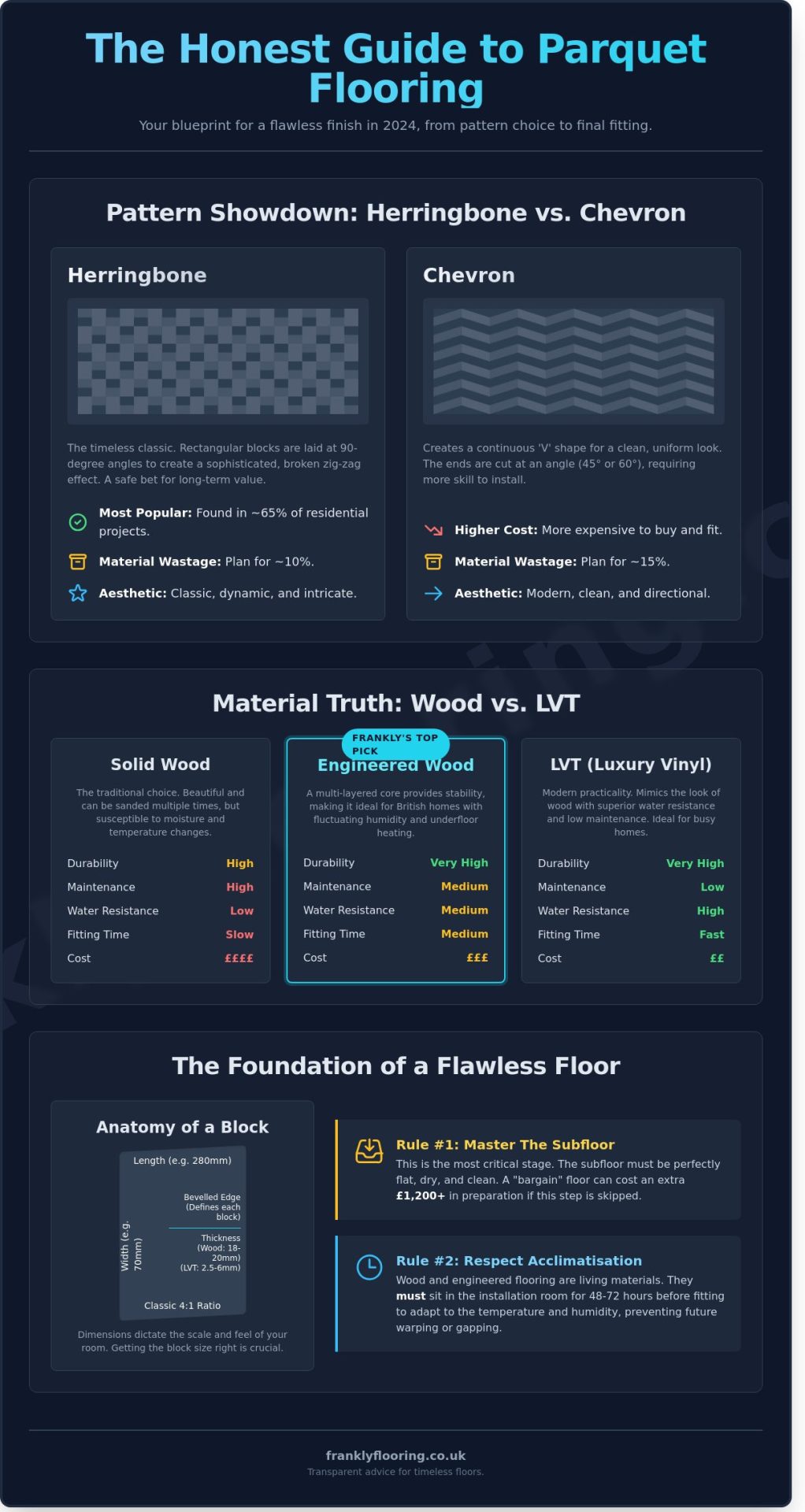
Dimensions dictate the entire feel of your room. A standard parquet block often measures 70mm in width and 280mm in length, creating a classic 4:1 ratio. Traditional blocks are usually 18mm to 20mm thick and require professional sanding and sealing. Modern LVT parquet options are thinner, typically around 2.5mm to 6mm, but they include a 0.55mm wear layer for heavy domestic use. Choosing a “square edge” block creates a seamless, monolithic look, while a “bevelled edge” defines every individual piece, making the pattern pop. Getting this right is essential for the scale of your fitting.
Why Parquet is a Foundational Design Element
Geometric patterns are a powerful tool for spatial manipulation. In a narrow hallway, laying herringbone with the points facing the longest wall can make the corridor feel significantly wider. Internal data suggests that well-placed geometric flooring can increase the perceived square footage of a room by up to 12% by drawing the eye to the corners. There is also a psychological benefit to the symmetry found in parquet flooring. Orderly, repeating patterns create a sense of calm and organisation in a busy family home. It provides a visual anchor that makes even the most eclectic furniture choices feel intentional and grounded.
We believe in being straightforward about your options. While solid wood parquet is beautiful, modern LVT versions offer the same aesthetic with far less maintenance. In a typical 20-square-metre lounge, an LVT parquet fitting can be completed in a fraction of the time it takes to install, sand, and oil traditional timber. It’s about finding the balance between that 17th-century elegance and 21st-century practicality. We don’t hide the facts; we just help you choose the floor that actually fits your lifestyle.
Parquet Patterns: Distinguishing Herringbone, Chevron, and Versailles
Before you grab the tape measure, you need to decide on the layout. Your choice of parquet flooring impacts the final aesthetic and the amount of material you’ll need to buy. Herringbone remains the most popular choice in 2024, appearing in approximately 65% of our residential fitting projects. This classic style uses standard rectangular blocks laid at 90-degree angles to one another. It creates a broken zig-zag that looks sophisticated without being overly fussy.
Chevron is a different beast entirely. It creates a continuous “V” shape because the ends of the planks are cut at a precise angle, usually 45 or 60 degrees. This creates a clean, sharp line down the centre of the room. While it looks stunning, it requires a higher level of skill to fit. If you are unsure which pattern suits your space, you can book a home consultation to see large-scale samples in your own light.
Herringbone vs Chevron: The Frank Comparison
Let’s be honest about the costs. Chevron looks beautiful, but it’s more expensive to buy and fit. Because of the mitred ends, you’ll typically need to allow for 15% wastage, compared to the 10% we recommend for herringbone. In a standard 20-square-metre lounge, that extra 5% means buying an additional box of LVT. For long-term resale value in the UK, herringbone is the safer bet; it’s a timeless pattern that hasn’t gone out of style since the 16th century.
Lesser-Known Patterns for Unique Homes
If you want something different, consider a Dutch pattern or a simple brick bond. These are often easier to measure because they follow linear paths. We are also seeing a rise in hexagonal tiles and 3D-effect parquet, which industry reports suggest will be a dominant trend by early 2026 for modern city apartments. These patterns work best in smaller areas like hallways or utility rooms where the geometry can really pop without overwhelming the senses.
Versailles panels offer a much more formal aesthetic. Originally designed for the Palace of Versailles in 1684, these are large square modules with an intricate interlaced design. While the traditional timber versions are a nightmare to maintain, modern LVT versions come in easy-to-install squares that provide a grand, stately feel to a dining room or master bedroom. Basket weave is another traditional alternative, mimicking the look of woven wood strands. It’s a quieter pattern that works well in cottages or period properties where you want a bit of texture without the drama of a chevron peak.
Always consider where the light enters the room when planning your parquet flooring layout. We usually suggest laying the pattern so it points towards the main natural light source. This highlights the texture of the LVT and prevents the floor from looking “busy” when the sun hits it at an angle. To finish the look, you might consider a soldier course. This is a border where planks sit side-by-side around the perimeter of the room. It acts as a frame for your parquet, hiding any slight unevenness in your walls and giving the entire installation a bespoke, professional finish.
Solid Wood vs Engineered vs LVT: The Honest Material Truth
Choosing the right material for your parquet flooring is about more than just picking a pretty pattern. It’s a decision that dictates how your floor will behave under your feet for the next several decades. At Frankly Flooring, we believe in giving you the straight facts so you don’t end up with gaps in your floorboards or a bill you didn’t expect.
Solid wood is the traditional heritage choice. These are single pieces of timber, usually oak or walnut, cut into blocks. They offer unmatched character. However, they’re notoriously temperamental. Because wood is a natural hygroscopic material, it breathes. In a typical UK home, solid wood can expand or contract by up to 5% depending on seasonal humidity. This often leads to visible gaps in winter or cupping in summer if the room isn’t climate-controlled.
Engineered wood is our top recommendation for 90% of British households. It features a real wood top layer bonded to multiple layers of cross-grain plywood. This construction makes it 40% more stable than solid timber. It looks identical once fitted but won’t warp when the heating kicks in. LVT (Luxury Vinyl Tile) provides the aesthetic of parquet flooring without the maintenance. It’s constructed from compressed PVC layers, making it incredibly tough. For those on a strict budget, laminate is a functional option, though it lacks the depth and texture of the other three materials.
Longevity vs Practicality
Solid wood and engineered wood are the only options you can sand and refinish. A 20mm solid block can be sanded up to eight times. A high-quality engineered board with a 4mm wear layer can usually take three sands. LVT and laminate cannot be sanded. If you scratch them deeply, the plank must be replaced. However, LVT is 100% waterproof. This makes it the only sensible choice for bathrooms or high-spill kitchens where natural wood would blacken and rot within 24 months. Regarding underfloor heating, engineered wood and LVT are the clear winners. They transfer heat efficiently without the risk of the timber drying out and cracking.
The Cost Factor: Price per Square Metre
Budgeting for a new floor requires looking past the ticket price on the box. Based on market data for 2026, here are the average material costs you should expect in the UK:
- Laminate: £18 to £35 per m²
- LVT (Click or Glue-down): £28 to £60 per m²
- Engineered Wood: £55 to £120 per m²
- Solid Wood: £80 to £170 per m²
Don’t forget the hidden extras that many retailers gloss over. For a professional finish, you’ll need high-quality adhesive at roughly £12 per m² or a specific LVT underlay costing £6 per m². Fitting fees for parquet patterns are higher than straight planks because of the precision required. Expect to pay a specialist fitter between £30 and £45 per m² for a standard herringbone installation. While a premium engineered board provides a dependable 25-year lifespan for a typical household, a solid oak block possesses the potential to last a lifetime if it’s properly maintained and refinished every decade.
Fitting Your Parquet: Subfloors, Acclimatisation, and Mistakes
Frankly, your new floor is only as good as the subfloor beneath it. You can buy the most expensive parquet flooring in the UK, but if the base is uneven or damp, the result will be a disaster within six months. We see it constantly; homeowners spend thousands on materials only to rush the preparation. A floor is a structural element of your home, not just a decorative covering. If the foundation is flawed, the surface will eventually fail. Don’t let impatience ruin your investment.
Acclimatisation is a non-negotiable step for real wood products. Wood is a living material that expands and contracts based on the temperature and humidity of its environment. You must leave your flooring in the room where it will be fitted for at least 48 to 72 hours. This allows the moisture content of the wood to stabilise with the room’s specific microclimate. Skipping this lead-time is the primary cause of boards warping or “crowning” shortly after the fitters leave. Keep the packs flat and off the ground to ensure even airflow.
Choosing between glue-down and click-system methods depends on your subfloor and desired feel. Glue-down fitting is the gold standard for parquet flooring because it provides a solid, permanent bond that eliminates the “hollow” sound often associated with floating floors. It feels premium underfoot and offers better thermal conductivity for underfloor heating. Click-systems are faster and more DIY-friendly, but they require a perfectly level subfloor to prevent the joints from rubbing and squeaking over time. We usually recommend glue-down for a truly high-end finish.
Subfloor Preparation: The Unseen Hero
Damp is the silent killer of parquet. Before fitting, you must test your subfloor with a hygrometer. According to British Standards BS 8201, a concrete subfloor must have a Relative Humidity (RH) level below 75% before you even think about laying wood. If your floor has a deviation of more than 3mm over a 2-metre span, you need a self-levelling compound. A flat surface ensures the blocks sit tight. High-quality underlay also plays a vital role, reducing impact sound by up to 20 decibels and providing a crucial moisture barrier.
The Fitting Process Step-by-Step
Symmetry is everything with parquet patterns like herringbone or chevron. We start by finding the exact centre point of the room and snapping a chalk line. This ensures the pattern radiates evenly toward the walls. You must leave a 10mm expansion gap around the entire perimeter. Wood needs room to breathe; without this gap, the floor will buckle as temperatures rise. We finish the look with matching scotia or skirting boards to hide the gap, and solid door bars to create a seamless transition between rooms.
Common DIY pitfalls usually involve “buckling” or “gapping.” Buckling happens when the expansion gap is too small or non-existent, forcing the boards upward when they expand in summer. Gapping occurs in winter when the air is dry, often exacerbated by failing to use enough adhesive or choosing a poor-quality click-system. These issues aren’t just aesthetic; they compromise the structural integrity of the floor. Avoiding these mistakes requires precision, the right tools, and a refusal to cut corners during the initial stages.
Want to ensure your floor is fitted to the highest professional standard? Book a professional fitting consultation with Frankly Flooring today to get the job done right the first time.
Choosing Your Perfect Parquet with Frankly Flooring
Once your measurements are locked in, the focus shifts to the aesthetic and structural quality of your floor. We’ve spent 20 years since 2004 refining our collection to ensure every plank meets a standard we’d install in our own homes. Choosing parquet flooring shouldn’t feel like a gamble. Many budget retailers offer LVT with wear layers thinner than 0.3mm, which often show significant scuffing within just 18 months of heavy foot traffic. We don’t stock those products. Our commitment is to provide honest advice that saves you from the “cheap” mistake of buying twice. We’ve seen too many homeowners forced to replace failing floors because they were misled by low entry prices that didn’t account for long-term durability.
Our curated range of engineered wood and LVT options prioritises longevity over temporary trends. We provide transparent pricing from the outset, meaning the quote you generate won’t be inflated by hidden surcharges at the checkout. Whether you’re looking for the structural stability of 15mm engineered oak or the waterproof resilience of premium LVT, we deliver quality materials directly to your doorstep across the UK. We’ve successfully fulfilled over 15,000 orders by maintaining a no-nonsense approach to stock levels and lead times. We believe that a quality floor is the foundation of a home’s character, and we treat every order with that level of respect.
Ordering Samples: Why You Need to See It in Your Light
A digital image cannot replicate how light interacts with wood grain or embossed textures. A honey-toned oak might appear significantly cooler under 4000K LED spotlights compared to natural morning sunlight. We recommend placing our samples in different corners of your room for at least 48 hours. This allows you to see the shift in colour from 9:00 AM to 9:00 PM. You can also put our LVT samples through their paces at home:
- The Scratch Test: Use a coin to simulate heavy furniture movement.
- The Spill Test: Leave a water droplet on the surface for an hour to check moisture resistance.
- The Texture Test: Walk on the sample barefoot to feel the authentic grain.
To get a realistic idea of costs, our online calculator factors in the necessary 10% wastage for parquet flooring patterns. This ensures your estimate is accurate and frank, preventing the frustration of running out of planks during the final stages of fitting.
Next Steps for Your Renovation
We believe in straightforward conversations. If you’re unsure about subfloor requirements or which underlay suits your specific 2026 renovation timeline, our team is available for a direct chat. We’re currently maintaining a 3 to 5 working day delivery schedule for the majority of the UK mainland, ensuring your project stays on track. We don’t use high-pressure sales tactics; we provide the data and the quality products, then let you make the decision that’s right for your home. Our goal is a seamless experience from the first click to the final plank being laid.
Transform Your Home with Confidence and Clarity
Choosing the right parquet flooring shouldn’t feel like a gamble. Whether you’ve settled on the timeless appeal of a Herringbone pattern or the sharp, modern lines of a Chevron, your decision involves more than just aesthetics. You now understand why proper subfloor preparation is non-negotiable and how engineered materials provide the stability required for contemporary British heating systems. We’ve spent over 20 years as a family-run business navigating these technical nuances so you don’t have to. Because we’ve removed the middleman, you’ll benefit from direct-to-consumer prices that avoid the typical 30% showroom markups found elsewhere. Our experts provide straightforward advice on acclimatisation and fitting to ensure your investment lasts a lifetime. You’re now ready to move past the research phase and start creating a foundational element of your home that looks as good as it performs. We’re here to make sure the process is as seamless as the final result.
Shop our honest range of Parquet Flooring
Your perfect floor is closer than you think, and we’ll be with you every step of the way.
Frequently Asked Questions
Is parquet flooring more expensive than standard wood planks?
Yes, parquet flooring typically costs more than standard planks due to the complexity of the design and the labour involved. You should expect to pay between £20 and £35 more per square metre for the materials and fitting. This price reflects the 40% increase in time required to lay the intricate patterns compared to straightforward, linear boards. Frankly, the investment is reflected in the premium finish and the longevity of the floor.
Can I fit parquet flooring myself or do I need a professional?
We always recommend a professional fitter for parquet because the margin for error is incredibly small. A professional ensures the subfloor is perfectly level, often applying a 3mm smoothing compound to prevent any movement. DIY attempts frequently result in 15% more material wastage due to incorrect cuts at the borders. It’s a specialist job that requires a steady hand and technical experience to achieve a seamless result.
How do I clean and maintain a parquet floor without damaging the pattern?
Cleaning your floor is straightforward as long as you use a well-wrung microfibre mop and a pH-neutral floor cleaner. Never use a steam mop, as temperatures exceeding 60°C can damage the adhesive and the finish of the blocks. For daily care, a soft-bristled broom is best for removing grit. Keeping moisture levels low is vital; a damp mop with less than 50ml of liquid is plenty for a 20 square metre area.
Which parquet pattern is best for a small hallway?
A herringbone pattern is usually the best choice for a narrow hallway to create an illusion of space. By laying the blocks at a 45 degree angle, you draw the eye toward the corners of the room, making a 1 metre wide corridor feel significantly broader. Using smaller blocks, such as those 280mm in length, provides more pattern repeats. This adds a sense of rhythm and movement that prevents the space from feeling cramped.
Is parquet flooring suitable for homes with underfloor heating?
Yes, engineered parquet flooring is specifically designed to be compatible with underfloor heating systems. It’s built in layers to remain stable, meaning it won’t warp even when temperatures reach the industry-standard limit of 27°C. This combination is highly efficient, often reducing energy bills by 12% compared to traditional radiator systems. It provides a consistent, comfortable heat that works perfectly with the natural density of the wood or LVT blocks.
What is the difference between herringbone and chevron parquet?
The difference is found in the way the ends of the blocks are cut. Herringbone uses rectangular blocks that meet at a 90 degree angle, while Chevron blocks are cut at a 45 degree angle to create a continuous ‘V’ shape. Chevron requires about 10% more precision cutting during installation, which often makes the labour costs slightly higher. Both styles offer a timeless look, but Chevron provides a more geometric, modern symmetry.
How long does it take to fit a parquet floor in an average-sized room?
Fitting a parquet floor in a 20 square metre room typically takes 2 to 3 days to complete. This includes the time needed for subfloor preparation, which is a critical step for a flat finish. A skilled fitter can lay roughly 8 to 10 square metres of parquet per day, whereas they might cover 30 square metres with standard planks. We don’t believe in rushing the process; getting the alignment right is worth the extra day.
Can I use parquet flooring in a bathroom or kitchen?
You can certainly use parquet in these areas if you choose Luxury Vinyl Tile (LVT) rather than solid wood. LVT parquet is 100% waterproof and can easily handle the 80% humidity levels often found in bathrooms. It won’t swell or lift when exposed to splashes, making it a practical and honest choice for wet areas. This allows you to maintain a consistent aesthetic throughout your home without the risk of water damage.