
You shouldn’t have to pay a “designer tax” just to get a floor that survives the daily chaos of a busy household. While big name brands often dominate the conversation, many homeowners find themselves paying extra for a logo rather than actual performance. If you’ve been looking for a solution that balances high end aesthetics with trade grade durability, polyflor flooring is likely already on your radar. It’s the industry standard for a reason, offering the same hard wearing resilience found in commercial spaces but tailored for the modern home.
We know that staring at a catalogue of sub brands can feel more like a logic puzzle than an interior design project. It’s easy to worry about whether you’re choosing the right thickness or if you’re overpaying for a name. In this Frank 2026 guide, we’re cutting through the marketing jargon to give you a clear, honest look at which range actually fits your budget and lifestyle. We’ll explore why these floors are built to last and provide the straightforward advice you need to ensure your investment looks professional for years to come.
Key Takeaways
- Understand why polyflor flooring is the industry standard for durability and how it brings commercial-grade strength to your home without the designer price tag.
- Learn the differences between collections like Camaro and Colonia to find the right balance of style and budget for your specific project.
- Discover how PUR technology creates a protective barrier that resists stains and simplifies your long-term maintenance routine.
- Compare glue-down and rigid core options to choose the best installation method for your subfloor and lifestyle needs.
- Master the “10% rule” for calculating wastage to ensure you order exactly what you need when buying your floor online.
What is Polyflor Flooring and Why Does It Lead the UK Market?
Polyflor isn’t just another name on a box; it’s a staple of British manufacturing. As a key brand under James Halstead plc, they’ve been producing high-performance vinyl for decades. While you might recognize the name from school corridors or hospital wards, polyflor flooring has quietly become the preferred choice for savvy homeowners who value substance over marketing hype. It’s a brand that doesn’t feel the need to shout because its track record in heavy-duty commercial environments speaks for itself.
The real reason architects and professional fitters specify it so often is the technical build. Unlike some entry-level vinyl you’ll find in local DIY sheds, these products feature robust wear layers designed to handle significant foot traffic. You’re getting the same engineering that keeps a busy clinic floor looking fresh, but reimagined for your hallway or kitchen. It bridges that gap between industrial strength and domestic style perfectly. It’s reliable. It’s proven. It’s built to last.
The Evolution of Luxury Vinyl Tile (LVT)
British living rooms have seen a massive shift in the last decade. We’ve moved away from the thin, “plastic” sheets of the past toward something far more sophisticated. If you’re still wondering what is LVT flooring, think of it as the ultimate evolution of vinyl. Polyflor led this charge by taking their technical expertise and applying it to hyper-realistic textures. Modern ranges now replicate the deep grain of oak or the cool touch of slate so accurately that it’s difficult to tell them apart from the real thing until you feel the warmth under your feet.
Polyflor vs. The Big Designer Brands
Let’s be frank about the competition. Brands like Karndean and Amtico have massive marketing budgets, and they’ve done a great job of making LVT a household name. However, polyflor flooring is often described as the “secret of the trade.” You’re getting comparable durability and often identical technical specifications without paying the “designer tax” that supports those flashy TV adverts. Choosing a technical brand doesn’t mean you’re sacrificing style. It simply means you’re prioritizing the quality of the material and the transparency of the price point. It’s a pragmatic choice for those who want a floor that performs as well as it looks without overpaying for a logo.
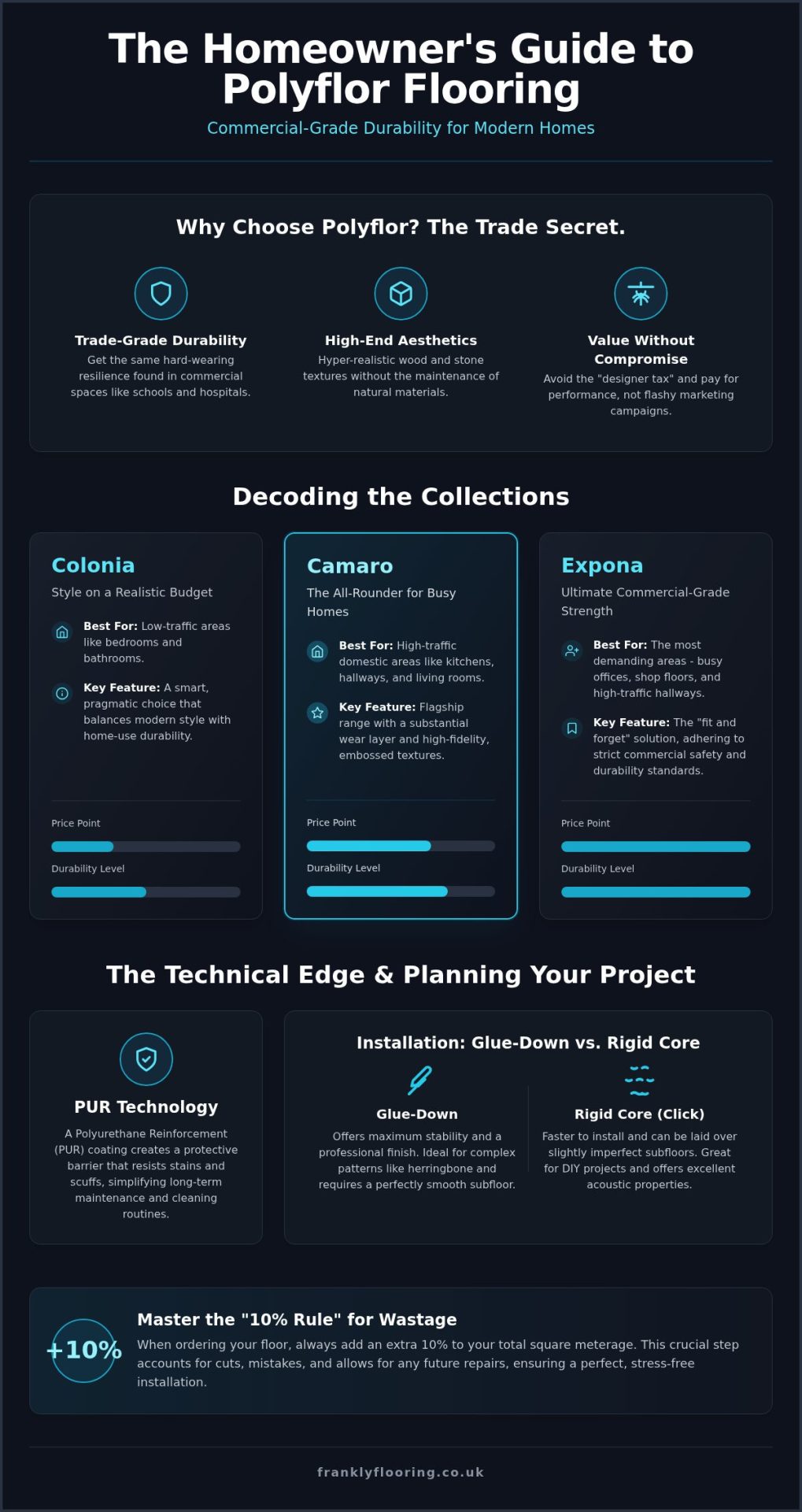
Decoding the Collections: Camaro, Colonia, and Expona
Choosing polyflor flooring often feels like trying to read a map without a legend. On the surface, the samples look remarkably similar, but the real value lies in the wear layer and the intended environment. Understanding these differences ensures you don’t overspend on commercial-grade materials for a spare bedroom; conversely, it prevents you from installing a budget range in a high-traffic kitchen where it might wear prematurely. Each collection serves a specific purpose in the home.
Camaro: The All-Rounder for Busy Homes
Camaro is the flagship for a reason. It strikes a balance between aesthetic detail and home durability that’s hard to beat. With a substantial wear layer designed for kitchens and hallways, it stands up to the scratches and spills of family life. The designs are high-fidelity, featuring standard planks alongside elegant parquet and herringbone options. The surface isn’t just printed. It’s embossed to follow the grain of the wood, providing a tactile experience that mimics natural materials without the maintenance of real timber.
Colonia: Style on a Realistic Budget
If you’re looking for the smart choice in bedrooms or bathrooms, Colonia is the answer. It’s designed specifically for the modern British home with a palette of colours that feels current yet timeless. While it’s slightly thinner than Camaro, it doesn’t skimp on the protective coating. It’s the ideal way to get the look of luxury vinyl without paying for a commercial-grade specification you simply don’t need in a low-traffic room. It’s about being pragmatic with your budget where it makes sense.
Expona: When Durability is the Only Priority
Expona is where Polyflor’s commercial heritage really shines. This range is built for shop floors and busy offices, making it the ultimate “fit and forget” solution for high-traffic hallways or home offices. It adheres to strict safety standards, often referenced by organizations like the UK Slip Resistance Group, to ensure performance in demanding environments. Beyond durability, Expona offers unique abstract and stone patterns that you won’t find in the more traditional domestic collections. It’s the professional’s choice for areas that take a beating.
For those who want to skip the glue and the mess, Camaro Rigid Core offers a “click” installation that’s faster and more forgiving on uneven subfloors. If you’re still undecided on which collection fits your project, you can browse the full LVT range to see these textures and styles up close.
The Technical Edge: PUR Technology and Water Resistance
Polyflor isn’t just a pretty surface; it’s engineered to survive the friction of daily life. The “PUR” label you see on the boxes stands for Polyurethane Reinforcement. Think of it as a factory-cured shield that’s been baked into the top layer of the tile. This cross-linked coating creates a dense, non-porous surface that prevents dirt and stains from getting a foothold in the material. While other floors might absorb a spilled glass of red wine if not caught immediately, the PUR layer keeps the liquid sitting on the surface where it belongs.
This technical build is why architects trust it for high-traffic public spaces. In a home setting, it means your floor maintains its finish without the need for constant intervention. It’s a robust solution that prioritises long-term performance over short-term shine. When you invest in polyflor flooring, you’re paying for this invisible protection that keeps the designs looking crisp for years.
Cleaning and Maintenance the Frank Way
You don’t need a cupboard full of expensive, specialist chemicals to keep your floor looking sharp. In fact, many high-street “floor shine” products can actually leave a dulling residue on the PUR surface. A simple neutral detergent and a damp mop are usually enough for the weekly clean. Because of the “No-Polish” promise, you’ll never have to spend a weekend stripping and reapplying wax. To protect that wear layer long-term, we recommend using felt pads on furniture legs and being diligent about entrance mats to catch grit before it can act like sandpaper on your new tiles.
Is Polyflor Truly Waterproof?
There’s a lot of marketing fluff around the word “waterproof.” Let’s be clear: LVT is made from synthetic PVC, so the planks themselves won’t swell, warp, or rot like laminate or real wood if they get wet. This makes it a superior choice for high-moisture zones like utility rooms and bathrooms. However, it’s vital to distinguish between surface water and a flood. While the tiles are waterproof, the subfloor underneath them usually isn’t.
If you’re going for a glue-down installation in a bathroom, the adhesive provides a tight seal. For click systems, water can technically seep through the joints if left to sit for a long time. It’s always best to wipe up spills quickly to protect the integrity of your home’s structure. If you’re planning to use underfloor heating, polyflor flooring is an excellent conductor of heat. Just ensure your system is limited to the industry-standard 27°C. This prevents the vinyl from softening and ensures the adhesive bond remains permanent. It’s a small technical detail that prevents a lot of expensive headaches later.
Glue-Down vs. Rigid Core: Planning Your Installation
Choosing between glue-down and rigid core isn’t just about the fitting process; it’s about the long-term finish you want in your home. Glue-down, or dryback, is the traditional professional’s choice for polyflor flooring. It provides a permanent, flush finish that feels incredibly solid underfoot and allows for complex patterns like herringbone without any movement. On the other hand, Rigid Core or “Click” polyflor flooring is a floating floor system. It’s significantly faster to install and can hide minor subfloor imperfections that would show through a thinner glue-down tile. If you’re still weighing up your options, you might want to see how this compares to laminate flooring, which uses a similar floating installation method but offers a different aesthetic and feel.
Subfloor Prep: Don’t Skip This Step
Here’s the frank truth: your new floor is only as good as the surface beneath it. Subfloor preparation represents about 90% of a successful installation. If you’re laying over floorboards, you’ll need a high-quality plywood base to prevent the grain or gaps from “telegraphing” through the vinyl. This is where the texture of the subfloor shows through the finished surface. On concrete, a self-levelling compound is essential to create that mirror-smooth finish. Most importantly, never skip a moisture check. Even a tiny amount of rising damp can ruin the adhesive bond or cause the tiles to lift over time. It’s a technical step that saves a massive amount of cost and stress later.
Essential Accessories for a Professional Finish
Getting the finish right requires more than just the tiles. If you’re opting for glue-down in a conservatory or a room with large south-facing windows, you must use a High-Temperature adhesive. Standard glue can soften under direct sunlight, causing the floor to shift or the joints to open. You’ll also need matching door bars to create clean transitions between rooms. While we specialize in LVT and hard flooring, understanding how these components work together is as vital as knowing how to fit carpet gripper in other areas of your home. It’s about ensuring the whole project lifecycle is handled with precision and care.
To ensure your project has everything it needs for a professional result, you can buy your Polyflor materials and accessories online for direct delivery to your door.
Buying Polyflor Online: Quality Flooring Without the Frills
Buying polyflor flooring online shouldn’t feel like a gamble. By stripping away the overheads of physical showrooms and high-street retail units, we can pass those savings directly to you. It’s about getting the same professional-grade material used by architects and developers, but at a price point that makes sense for a domestic renovation. We believe in a transparent e-commerce model where the quality of the product and the honesty of the advice are the primary focus.
When you’re ready to order, remember the “10% rule” for wastage. This isn’t just a suggestion; it’s a practical necessity for a professional finish. You’ll need extra material for intricate cuts around door frames, corners, and the inevitable small mistakes that happen during fitting. More importantly, ordering your full requirement in one go ensures you receive tiles from the same batch. Vinyl is produced in specific runs, and while the differences are subtle, a slight shift in shade or texture between different batch numbers can become visible once the floor is laid across a large, open space.
Our delivery process is designed to be as predictable as our advice. Because polyflor flooring is a heavy, dense material, it’s shipped via a national pallet network to ensure it arrives flat and undamaged. This is typically a curb-side delivery, so it’s wise to have someone available to help move the boxes into your property. It’s a straightforward, no-nonsense approach to logistics that prioritises the safety of your investment.
The Frankly Flooring Difference
We don’t believe in high-pressure sales tactics or “limited time” countdown timers. As a family-run business with over 20 years of industry experience, our reputation is built on integrity and technical craftsmanship. We only stock products that we’d be happy to install in our own homes. By getting your LVT, adhesives, and matching accessories in a single delivery, you reduce the risk of project delays and ensure every component is compatible. It’s about providing a comprehensive, stress-free experience from the first click to the final plank.
Next Steps for Your Project
Before you commit to a full order, we always recommend ordering samples. Seeing the grain and colour in your own natural light is the only way to be 100% sure of your choice. Once you have your samples, use this final checklist:
- Have you calculated your room area and added 10% for wastage?
- Do you have the correct adhesive or underlay for your specific subfloor?
- Have you accounted for door bars and transitions to other rooms?
- Is your subfloor dry, level, and clean?
If you’ve ticked those boxes, you’re ready to transform your space with a floor that offers genuine longevity. Browse our full range of Polyflor LVT here to find the perfect match for your home.
Transform Your Home with Confidence
Choosing polyflor flooring is a practical decision that prioritizes longevity and value over short-term trends. By understanding the technical differences between collections, you can ensure your investment matches the specific demands of your home life. Whether you opt for the permanent finish of a glue-down installation or the speed of rigid core, the result is a professional-grade floor that survives the daily chaos of a modern household. Success lies in the preparation; get your subfloor right and stick to the 10% wastage rule to avoid expensive project delays.
At Frankly Flooring, we use our 20 years of industry experience to help you navigate these choices without the marketing fluff. As a family-run UK business, we’re dedicated to providing the expert technical advice you need to avoid overpaying for a brand name. We offer fast national delivery to bring high-quality LVT directly to your door. If you’re ready to see these textures and designs in your own light, you can View the Polyflor Camaro & Colonia Collections today. Your project is an investment in your home’s character, and we’re here to ensure it’s a success.
Frequently Asked Questions
Is Polyflor better than Karndean?
The choice depends on your priorities, but polyflor flooring offers professional-grade durability often at a lower price point. While Karndean invests heavily in consumer marketing and high-end design varieties, Polyflor focuses on technical performance. For most busy UK homes, you’ll get the same hard-wearing resilience and longevity without paying a “designer tax” for a luxury brand name. It’s a pragmatic choice for those who value substance over style-led advertising.
Can I install Polyflor LVT over my existing tiles?
You can install it over tiles only if they are perfectly flat, secure, and clean. Any grout lines or slight unevenness will eventually “telegraph” through the vinyl, which ruins the final look. For glue-down ranges, you’ll need to apply a suitable smoothing compound over the tiles first. For rigid core options, you might succeed if the grout lines are narrow, but a flat subfloor is always the best foundation.
Does Polyflor need underlay?
The requirement for underlay depends on the specific range you choose for your project. Glue-down (dryback) collections are bonded directly to the subfloor and don’t use an underlay at all. However, Camaro Rigid Core typically features an integrated acoustic underlay already attached to the planks. If you’re using a click system without a built-in backing, you’ll need a specific LVT underlay. Never use standard carpet or laminate underlay as they’re too soft.
Is Polyflor Camaro suitable for bathrooms?
Camaro is an excellent choice for bathrooms because the PVC material is naturally water-resistant. Unlike real wood or laminate, these planks won’t swell or rot when they get wet. If you’re using the glue-down version, the adhesive creates a tight seal against the subfloor for added protection. Just ensure you wipe up standing water promptly to prevent moisture from reaching the subfloor through the perimeter edges or expansion gaps.
How long does Polyflor flooring last?
With correct maintenance, polyflor flooring can last between 15 and 20 years in a domestic setting. The actual lifespan depends on the wear layer thickness of your chosen collection and the traffic levels in the room. For instance, the heavy-duty Expona range will naturally outlast the budget-friendly Colonia range in high-traffic hallways. Using felt pads on furniture and regular cleaning will significantly extend the life of your new floor.
Can I use a steam mop on Polyflor flooring?
No, you should never use a steam mop on any LVT product. The intense heat and moisture pressure can soften the vinyl and weaken the adhesive bond, which leads to tiles lifting or warping over time. It’s safer to use a simple damp mop with a neutral detergent. This method protects the factory-cured PUR reinforcement layer that keeps your floor resistant to daily stains and scuffs without risking heat damage.
What is the difference between Camaro and Colonia?
The primary difference lies in the wear layer thickness and the intended environment. Camaro features a 0.4mm wear layer, making it robust enough for high-traffic areas like kitchens and hallways. Colonia has a 0.2mm wear layer, which is perfect for lower-traffic rooms like bedrooms or bathrooms. While both collections look fantastic, Camaro is built for more rigorous daily use, whereas Colonia offers a more budget-friendly entry point for quieter spaces.
Is Polyflor flooring scratch-resistant?
It is highly scratch-resistant but not entirely scratch-proof. The PUR layer provides a tough shield against everyday scuffs and minor abrasions from pets or children. However, dragging heavy furniture or sharp objects can still cause permanent damage. To protect your investment, we recommend:
- Using entrance mats to trap abrasive grit.
- Applying felt protectors to all furniture legs.
- Regular sweeping to remove debris that could cause scratches.