Is there anything more frustrating than watching your pristine flooring fall victim to the daily grind? The tell-tale claw marks from a happy dog, the drag line from a shifted armchair, or the mysterious scuff that appears out of nowhere can be disheartening. While the market is flooded with promises, finding a genuinely scratch resistant lvt that can withstand the rigours of a busy UK home is another matter entirely. Frankly, the term ‘scratch resistant’ is often misunderstood, leading to costly mistakes.
That’s why we’ve put together this honest guide. We’ll cut through the marketing noise to explain what truly makes a floor durable, demystifying the technical confusion around wear layers so you can make an informed decision with complete confidence. Consider this your straightforward manual for choosing a floor that not only looks stunning on day one, but will continue to do so for the next ten years and beyond, even in the most demanding areas of your home.
Key Takeaways
- Understand the crucial difference between “scratch-resistant” and “scratch-proof” to make a truly informed decision for your home.
- Learn how to decode wear layer measurements (e.g., 0.55mm) to ensure you choose the right level of durability for each room.
- Use our “Quarter Test” guide to assess the real-world resilience of any scratch resistant lvt against common household scuffs and scrapes.
- Uncover simple maintenance techniques and the right cleaning products to significantly extend the life of your new floor.
Understanding the Science of Scratch Resistant LVT
When we talk about flooring, the term “scratch-resistant” can be misleading. Frankly, no floor is entirely scratch-proof. However, a high-quality scratch resistant lvt is engineered to withstand the rigours of a busy home-from pet claws and children’s toys to dragged furniture. Its remarkable durability comes from a clever, multi-layered construction, a core principle in the science of vinyl flooring. Unlike natural timber, which can dent and scratch easily, or older laminates that can chip, LVT is designed for resilience from its core to its surface.
The Protective Layers: More Than Meets the Eye
The secret to LVT’s toughness lies in the synergy of its top layers. Each one performs a specific job, working together to protect the beautiful design beneath. Think of it as a comprehensive defence system for your floor.
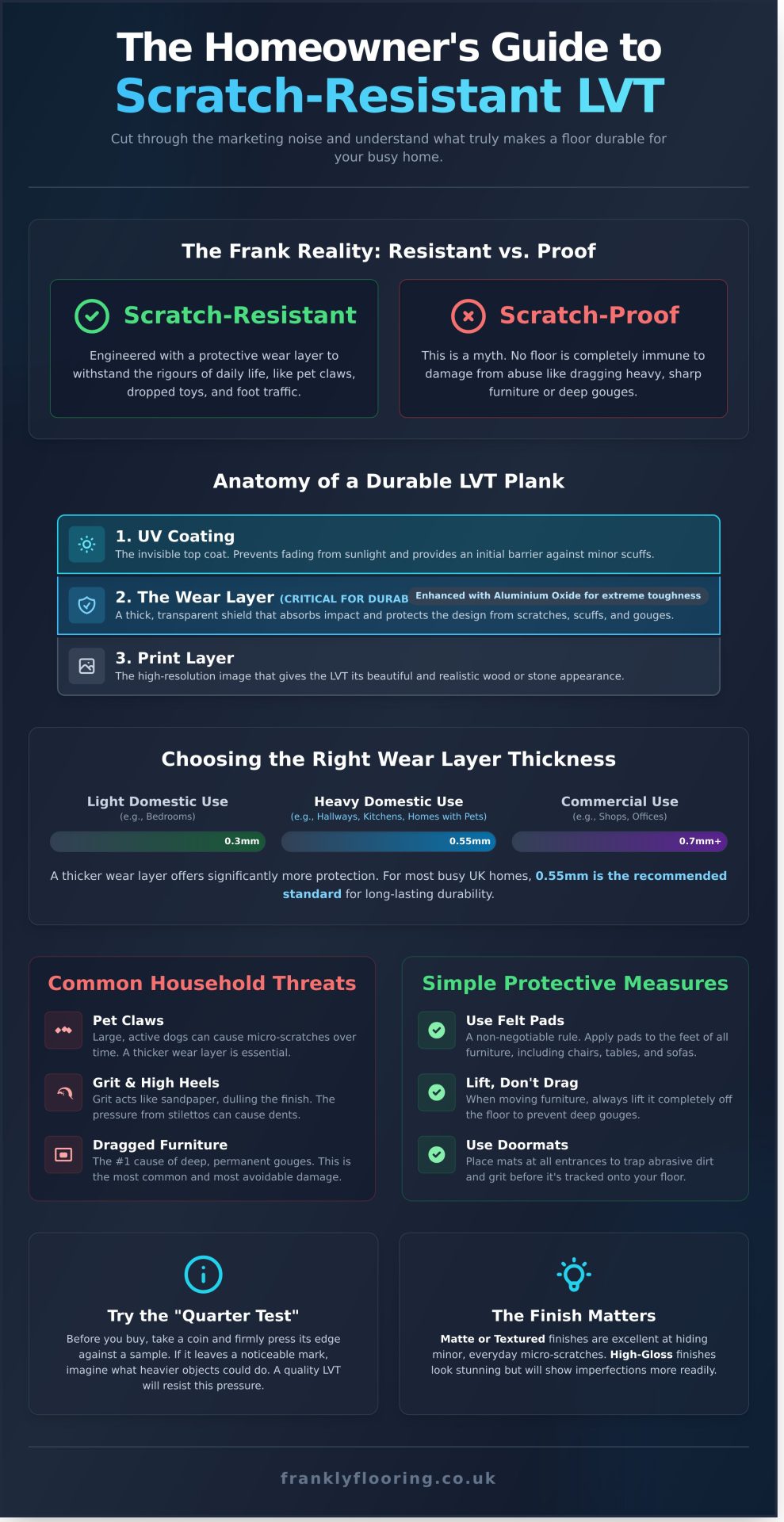
- The UV Coating: This is the very top, invisible layer. Its primary role is to prevent the floor’s design from fading due to sunlight, but it also provides an initial barrier against minor surface scuffs and makes cleaning straightforward.
- The Wear Layer: This is the most critical component for scratch resistance. A thick, transparent PVC layer, it acts as the main shield, absorbing the impact from daily traffic and protecting the print layer from deep gouges and scratches. The thicker this layer, the more durable the floor.
- The Print Layer: This is what you see-the high-resolution image that gives the LVT its authentic wood or stone appearance. Protecting this layer is paramount for maintaining the floor’s aesthetic appeal for years to come.
The Surface Finish: From Urethane to Aluminium Oxide
To enhance the wear layer, manufacturers add a final factory-cured coating. Basic LVT uses a simple urethane finish, but superior products incorporate advanced additives like Aluminium Oxide. These are microscopic, ultra-hard minerals suspended in the coating that create an exceptionally tough barrier against abrasive wear. It’s an honest trade-off to note that very high-gloss finishes may show fine micro-scratches more readily than a matte or textured surface. Fortunately, modern technology has allowed these advanced coatings to become thinner yet significantly tougher, offering robust protection without compromising the floor’s realistic look and feel.
Scratch-Resistant vs. Scratch-Proof: The Frank Reality
Frankly, there is no such thing as a scratch-proof floor. Any company that tells you otherwise is selling a promise they can’t keep. The term we use-and the one you should trust-is “scratch-resistant.” This means the flooring is engineered with a protective wear layer designed to withstand the rigours of daily life, but not outright abuse. A simple way to gauge this is the ‘Quarter Test’: if you can mark a sample with the firm edge of a coin, imagine what a dragged piece of furniture could do. Our straightforward approach is to help you select a quality scratch resistant lvt that genuinely matches your lifestyle. Understanding a floor’s true limits is the key to its longevity, which saves you a great deal of money and hassle in the long run.
Common Household Threats to Your LVT
Even the most durable LVT has its adversaries. Being aware of them is the first step in protecting your investment. The most common culprits we see are:
- Pet Claws: A small cat is one thing, but a large, active dog can cause micro-scratches over time. For homes with bigger pets, a thicker wear layer (0.55mm or more) is not a luxury; it’s a necessity.
- High Heels and Grit: The immense pressure concentrated on a stiletto heel-what we call a “point-load” problem-can dent LVT. Likewise, small stones and grit tracked in on shoes act like sandpaper, dulling the finish.
- Moving Furniture: This is the number one cause of avoidable, deep gouges. Always lift, never drag. Using felt pads on all furniture feet is a simple, non-negotiable rule for preserving your floor.
When “Scratch Resistant” Isn’t Enough
It’s crucial to manage expectations and understand the nuances of durability. A surface scuff, often caused by a rubber sole, is a superficial mark on the wear layer that can frequently be buffed out. A deep gouge, however, is a physical cut into the plank’s core and is usually permanent. The plank’s resilience is also heavily influenced by what’s underneath. This is why professional subfloor preparation is vital; an uneven base allows too much ‘give’, making the plank vulnerable to impacts from dropped objects. These principles are supported by rigorous industry standards for flooring durability that define how materials should perform under stress. Finally, consider the finish. A high-gloss scratch resistant lvt looks stunning but will show imperfections more readily than a textured or matte finish, which is far more forgiving of daily life.
Choosing the Right Wear Layer for Your Home’s Traffic
When selecting a durable LVT floor, the single most important factor is the ‘wear layer’. This is the transparent top coating that protects the decorative design from scuffs, scratches, and daily wear. Measured in millimetres (mm), its thickness directly dictates how well your floor will stand up to the demands of your home. Frankly, understanding this one specification is the key to choosing a floor that lasts. Industry bodies like the Resilient Floor Covering Institute (RFCI) have long focused on the science of these materials, confirming that a thicker wear layer provides superior protection.
To help you make an informed choice, here is a straightforward breakdown of the common wear layer thicknesses and where they fit best.
The 0.3mm Wear Layer: Light Domestic Use
This is a cost-effective option best suited for rooms with minimal footfall, such as a guest bedroom or a quiet home office. While it provides adequate protection for these spaces, it requires more caution with furniture and heavy items. We call this the “budget-friendly but honest” choice-it performs perfectly well in the right environment, but we wouldn’t recommend it for a busy hallway or playroom.
The 0.55mm Wear Layer: The Family Workhorse
For the vast majority of UK homes, a 0.55mm wear layer is the sweet spot. It offers an excellent balance of long-term durability and value, making it our most recommended specification for busy family life. This is the ideal choice for high-traffic areas like kitchens, hallways, and open-plan living spaces where pets, children, and daily life present a constant challenge. A quality scratch resistant lvt with a 0.55mm wear layer is built to handle it all.
The 0.7mm Wear Layer: Ultimate Protection
Originally designed for heavy commercial environments like shops and restaurants, a 0.7mm wear layer offers the highest level of scratch and dent resistance available for residential use. If you are planning your “forever home” and want a floor that looks impeccable for decades, this is a wise investment. The upfront cost is higher, but its sheer resilience means a 0.7mm wear layer can easily last over 20 years with proper care, providing exceptional long-term value.
When you look at a technical specification sheet for any LVT product, find the wear layer thickness first. This single number tells you more about the floor’s practical durability than any marketing slogan.
How to Protect and Maintain Your Scratch-Resistant LVT
You’ve chosen a high-quality floor designed for durability, but the right care routine is essential to making it last. Frankly, even the most robust LVT benefits from a little TLC. These straightforward maintenance steps will protect your investment, keeping your floor looking pristine for years to come and preventing the common issues that can shorten its lifespan.
The Power of Felt Pads and Entrance Mats
Prevention is always better than cure. An astonishing 90% of scratches are caused by tiny particles of grit and dirt walked in from outside. A good quality entrance mat is your first line of defence. For heavy furniture like sofas and cabinets, fitting felt protector pads is non-negotiable. They allow furniture to be moved without gouging the surface. One thing to avoid is rubber-backed mats, as the chemicals in the rubber can react with the LVT and cause permanent yellow staining.
Cleaning for Longevity
Maintaining the protective wear layer on your scratch resistant lvt is simple when you use the right tools. The single biggest mistake we see is the use of steam mops. The intense heat and moisture can weaken the adhesive and cause the planks to warp or peel over time. Stick to a simple, effective routine:
- Weekly: Hoover or sweep with a soft-bristled brush to remove surface grit. Follow with a damp (not soaking wet) mop using a pH-neutral cleaning solution.
- Avoid at all costs: Bleach, ammonia-based products, abrasive scouring pads, and wax polishes. These will strip the protective layer and dull the finish.
For minor surface scuffs, a touch-up with a manufacturer-approved repair kit can often resolve the issue without needing to replace a plank. And remember, the process starts before the floor is even laid. A high-quality underlay, fitted correctly, prevents the slight movements that cause “clicking” and stress on the joints, ensuring the surface remains stable and secure for decades.
If you have any questions about caring for your specific LVT floor, our team is always here to offer honest advice. Get in touch with us today.
Why Frankly Flooring is the UK’s Choice for Durable LVT
Choosing the right floor is a significant investment, and at Frankly Flooring, we believe the process should be straightforward, honest, and tailored to your home. As a family-run business with over 20 years of hands-on industry experience, we’ve built our reputation on providing expert advice and exceptional products without the inflated price tag. We cut out the costly showroom middlemen, sourcing directly from top manufacturers to offer you what we call “Karndean quality at frank prices.”
Sourcing the Best Scratch-Resistant Brands
Not all LVT is created equal. Our selection process is rigorous; we only add a range to our store if it meets our strict criteria for durability, realism, and long-term performance. The most critical factor is the wear layer. We focus on products with a substantial protective layer-typically 0.55mm or thicker-because this is what stands between your floor and the daily challenges of family life. Brands like Invictus, Polyflor, and Woodpecker consistently meet these high standards, offering superior defence against scuffs and scratches. Check out our Invictus LVT range to see this quality for yourself.
The Frankly Promise: Direct, Honest, and Reliable
Our name is our promise. We provide frank advice, even if it means telling you a particular floor isn’t the right fit for your circumstances. Whether you have a busy home with pets and children or a quiet, low-traffic space, we guide you to the most suitable option. If you have a question, you can speak directly to a flooring expert at the end of a phone line-not a call centre. This commitment to transparency and genuine expertise is what sets us apart.
From our no-nonsense sample service that lets you test colours and textures in your own light, to our reliable national UK delivery, we make the entire process seamless. We’ve done the hard work of curating the UK’s best scratch resistant lvt, so you can focus on finding a floor you’ll love for years to come.
Ready to find your perfect floor? Browse our full Scratch-Resistant LVT collection today.
Frankly, The Final Word on Durable Flooring
Navigating the world of durable flooring comes down to a few frank truths. We’ve learned that while no floor is truly scratch-proof, choosing a high-quality scratch resistant lvt with a substantial wear layer is the most effective defence for a busy home. Understanding this distinction, and how to properly maintain your investment, puts you in the best position to choose a floor that will genuinely last.
At Frankly Flooring, we believe in making that choice straightforward. With over 20 years of family-run expertise, we hand-select our ranges to ensure they meet a minimum 0.55mm wear layer standard for exceptional durability. Our direct-to-consumer model means you get this premium quality with honest pricing and national UK delivery. The best way to appreciate the quality is to see and feel it for yourself in your own home.
Ready to find the perfect foundation for your home? Order your free scratch-resistant LVT samples from Frankly Flooring and take the first step towards a beautiful, resilient floor you can trust for years to come.
Frequently Asked Questions About Scratch-Resistant LVT
Is LVT really scratch-resistant enough for big dogs?
Yes, for most homes. A quality LVT with a wear layer of 0.55mm or more is robust enough to handle the daily activity of large dogs. It’s crucial to remember it’s scratch-resistant, not scratch-proof, so deep gouges are still possible. Keeping your dog’s claws trimmed is a straightforward way to help protect the floor. Frankly, it’s one of the best choices for pet-loving households.
What is the best wear layer thickness for a busy kitchen?
For a busy kitchen, we always recommend a wear layer of at least 0.55mm. This provides a durable barrier against the daily challenges of dropped pots, chair legs, and constant footfall. For households with very heavy use or for those wanting commercial-grade assurance, opting for a 0.7mm wear layer is an excellent investment for maximum protection and a longer lifespan for your floor.
Can you fix a scratch on LVT flooring?
For minor surface scuffs, a dedicated LVT repair kit can often conceal the mark effectively. If a scratch is deeper and has penetrated the wear layer, the most practical solution is to replace the individual plank or tile. This is a key benefit of LVT over sheet vinyl; a skilled fitter can perform a near-seamless repair without having to replace the entire floor.
Does a thicker wear layer mean the floor is harder to fit?
Frankly, no. The thickness of the protective wear layer has no impact on the fitting process. It is an extremely thin, transparent coating that adds durability, not complexity. The overall thickness of the plank itself and whether it is a click-system or glue-down product are the factors that influence the fitting, but the wear layer doesn’t make the job any harder.
Is scratch-resistant LVT better than laminate for pets?
Both are excellent choices, but LVT often has the upper hand for pets. While modern laminate has good scratch resistance, LVT is typically 100% waterproof. This is a major advantage for dealing with water bowl spills or the occasional accident. This waterproofing makes a quality scratch resistant LVT a more robust and worry-free option for homes with four-legged family members.
Will dragging a sofa scratch my new LVT floor?
It’s very likely, yes. While LVT is built to be tough, dragging heavy, sharp-edged furniture across any floor is a recipe for deep scratches that can damage the wear layer. We always advise lifting furniture rather than sliding it. A simple and effective preventative measure is to apply felt protector pads to the feet of all heavy items like sofas, tables, and cabinets.
How long does scratch-resistant LVT typically last in a UK home?
In a typical UK home, a quality LVT floor that has been professionally fitted can be expected to last anywhere from 15 to 25 years. Its ultimate lifespan depends directly on the quality of the product, the thickness of its wear layer, and how well it is maintained. For most domestic settings, it represents a fantastic long-term investment in your home’s durability and appearance.
Are all luxury vinyl tiles scratch-resistant by default?
Not to the same degree. While all LVT has a protective surface, its effectiveness varies enormously. The term ‘scratch-resistant’ truly applies to LVT with a substantial wear layer-ideally 0.5mm or thicker for busy areas. Cheaper products with thinner layers won’t stand up to much wear and tear. To ensure genuine durability, you must choose a product specifically marketed as a high-performance scratch resistant LVT.