Navigating the world of flooring can feel like wading through an alphabet soup of acronyms. LVT, LVP, SPC… it’s easy to feel overwhelmed when all you want is a floor that looks beautiful and can handle the demands of a busy home. When you hear the term lvt flooring, you might picture the thin, curling vinyl of decades past, but the modern equivalent is a different beast entirely. It’s one of the most popular choices for UK homes today, but is it the right one for you?
Frankly, we believe in clear, honest advice. This guide cuts through the industry jargon to give you the straight-talking answers you need. We’ll explain exactly what Luxury Vinyl Tile is made of, weigh up its genuine pros and cons, and compare it fairly to other options like laminate. Our goal is simple: to help you feel completely confident in choosing a floor that’s not just stylish, but a practical and durable foundation for your family’s lifestyle, whether it’s for a bustling kitchen or a quiet lounge.
Key Takeaways
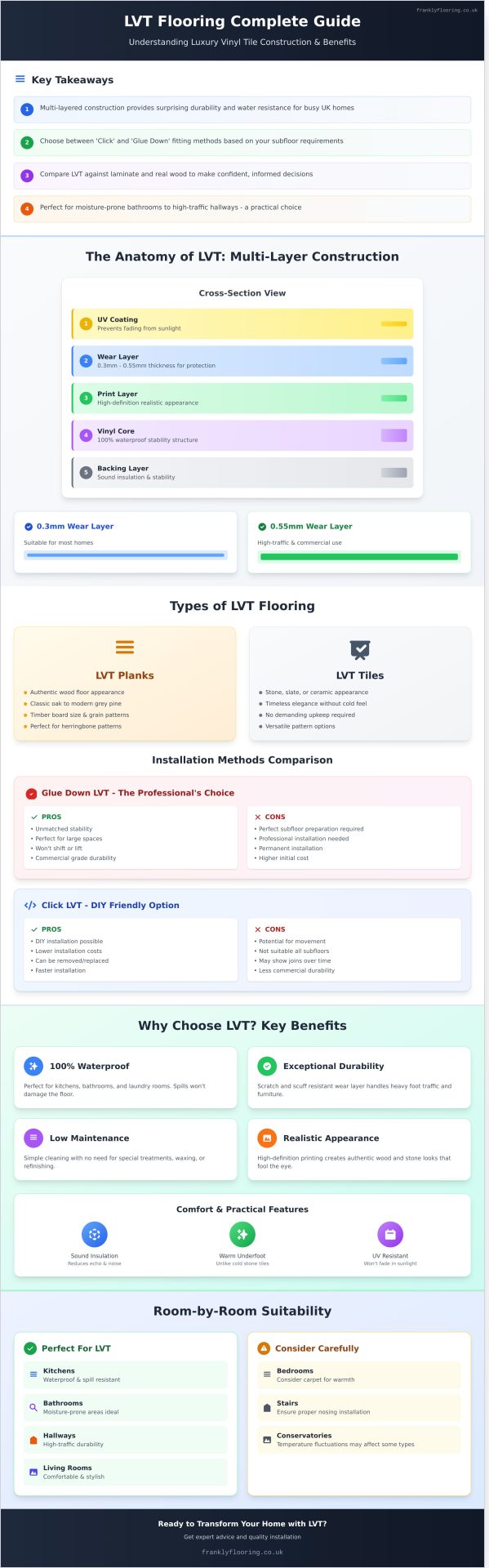
- Discover why LVT is more than just vinyl; its multi-layered construction provides surprising durability and water resistance for busy UK homes.
- Understand the crucial differences between ‘Click’ and ‘Glue Down’ types to ensure you select the right fitting method for your subfloor.
- Frankly compare how lvt flooring stacks up against popular alternatives like laminate and real wood to make a confident, informed decision.
- Learn which rooms are perfectly suited for LVT-from moisture-prone bathrooms to high-traffic hallways-and why it’s such a practical choice.
The Anatomy of LVT: What’s It Actually Made Of?
When you hear ‘vinyl’, it’s easy to picture the thin, curling lino from a bygone era. Frankly, modern Luxury Vinyl Tile (LVT) is an entirely different beast. It’s not a single sheet of material but an advanced, multi-layered product, engineered for performance and realism. This sophisticated construction is what sets it apart from older flooring like basic Vinyl composition tile and gives it its signature durability.
To understand its quality, you need to look at how it’s put together. Think of each plank or tile as a precisely engineered sandwich, with every layer serving a crucial purpose:
- 1. UV Coating: The final finish that prevents fading from sunlight.
- 2. Wear Layer: A transparent top coat for scratch and scuff protection.
- 3. Print Layer: A high-definition image that gives the floor its look.
- 4. Vinyl Core: The main structure, providing stability and water resistance.
- 5. Backing Layer: The foundation, offering grip and sound insulation.
The Protective Top Layers
The first line of defence is a UV-cured coating that protects the design from fading in direct sunlight. Directly beneath this is the most critical component for longevity: the clear wear layer. This is what absorbs the impact of daily life-foot traffic, dropped items, and furniture legs. Its thickness is a key indicator of durability. A 0.3mm layer is suitable for most homes, while a 0.55mm layer offers superior protection for high-traffic areas like hallways, kitchens, or light commercial use.
The Design & Core Layers
This is where the magic happens. A high-definition photographic print layer provides the stunningly realistic appearance of wood, stone, or ceramic. Modern printing technology ensures the pattern is detailed and rarely repeats, creating a natural look. Beneath the design sits the core. This is typically a robust vinyl composite that gives the plank its stability and makes high-quality lvt flooring 100% waterproof. Some premium options feature an SPC (Stone Plastic Composite) core, which adds limestone for extra rigidity, making it ideal for fitting over slightly uneven subfloors.
The Backing Layer
The final layer provides balance and stability to the entire plank, preventing it from warping or cupping. It also offers a degree of sound insulation, reducing echo in the room, and provides grip against the subfloor, which is essential for a solid and secure fit. It’s this combination of layers, all fused together under immense pressure and heat, that creates a flooring product that is not only beautiful but built to last. Each component works in harmony to deliver a seamless, resilient, and quiet floor underfoot.
Types of LVT Flooring: Planks, Tiles, and Fitting Methods
Once you’ve decided on LVT, the next step is to narrow down the options. Frankly, this comes down to two key choices: the visual format you prefer and the fitting method that best suits your home and budget. Understanding these differences is crucial for selecting the right lvt flooring for your project.
LVT Planks vs. LVT Tiles
The first decision is purely about aesthetics. LVT is designed to convincingly replicate natural materials, and it does so in two primary formats:
- LVT Planks: These are ideal for achieving an authentic wood floor look. From the warm tones of classic oak to the cool hues of modern grey pine, planks mimic the size and grain of real timber boards. The level of detail is now so high that many designs have been tested by home experts and praised for their authentic appearance.
- LVT Tiles: If you prefer the appearance of stone, slate, or ceramic, LVT tiles are the perfect choice. They provide the timeless elegance of natural stone without the cold feel or demanding upkeep.
Both formats are incredibly versatile. Popular and intricate patterns like herringbone and chevron can be created using specific plank and tile sizes, allowing for a truly bespoke finish.
Glue Down LVT: The Professional’s Choice
This is the traditional and, in our opinion, the most robust method of fitting LVT. Each plank or tile is individually bonded to the subfloor using a specialist adhesive. It’s a meticulous process that creates a permanent, solid floor.
- Pros: Unmatched stability, making it perfect for large, open-plan spaces, conservatories, or high-traffic commercial areas. It won’t shift or lift.
- Cons: The subfloor preparation must be flawless-perfectly smooth and level. This method almost always requires a professional fitter to achieve a seamless result.
Click LVT: The DIY-Friendly Option
Click LVT uses an innovative tongue-and-groove system, allowing the planks or tiles to lock together without adhesive. This creates a ‘floating floor’ that sits on top of an underlay rather than being fixed directly to the subfloor.
- Pros: Fitting is significantly faster and more straightforward, making it a popular choice for competent DIYers. It can often be laid over an existing hard floor, saving time and mess.
- Cons: It can be less stable in rooms with extreme temperature swings, as the floor needs space to expand and contract. It may not be suitable for very large areas without expansion joints.
Ready to see the options? Browse our full range of LVT styles.
Frankly, Why Choose LVT? The Key Benefits for Your Home
When choosing a new floor, it’s easy to get lost in trends. But the enduring popularity of Luxury Vinyl Tile (LVT) isn’t about fleeting fashion; it’s built on a foundation of solid, practical advantages that solve real-world homeowner problems. Frankly, it delivers on the promises that other flooring types often can’t keep.
Unbeatable Durability & Water Resistance
Life is messy. From muddy paws and dropped toys to kitchen spills, a modern floor needs to be tough. LVT is engineered for this, with a commercial-grade wear layer that resists scratches and scuffs. Crucially, it is 100% waterproof. Unlike real wood which can warp or laminate which swells at the edges when wet, LVT is completely impervious to water, making it the perfect, worry-free choice for kitchens, bathrooms, and utility rooms.
Incredible Design Versatility
This is where LVT truly shines. Forget the vinyl of old; today’s technology allows for astonishingly realistic designs. Whether you desire the warm, rustic grain of an oak plank or the cool, contemporary look of slate tile, there’s an LVT design to match. With authentic textures and bevelled edges that mimic the real thing, you get the timeless aesthetic of natural materials without the practical drawbacks. This blend of high-end looks and robust performance is why LVT has become a top selling non-carpet surface for discerning UK homeowners.
Comfort, Warmth, and Quiet
One of the most immediate benefits you’ll notice is how pleasant LVT is underfoot. It’s significantly warmer and softer than ceramic tiles or stone, making it a more comfortable surface for walking on, especially on a chilly morning. Furthermore, its composition provides excellent acoustic insulation. It dampens in-room noise and absorbs impact sound, creating a quieter, more tranquil home environment-a stark contrast to the hollow, ‘clicky’ sound often associated with laminate floors.
Simple to Clean and Maintain
We believe a floor should serve you, not the other way around. Our recommended lvt flooring is exceptionally low-maintenance. A simple routine of sweeping or vacuuming, followed by a wipe with a damp mop, is all that’s needed to keep it looking pristine. There’s no need for the specialist waxes, oils, or periodic sanding required by real wood. Its tough, protective surface layer is non-porous, meaning spills sit on the surface and can be wiped away easily, offering fantastic stain resistance.
LVT vs. The Alternatives: A Quick Comparison
Choosing a new floor is a significant decision, and it’s easy to feel overwhelmed by the options. When considering lvt flooring, it’s essential to understand how it stacks up against its main rivals. To help, we’re offering a frank comparison. This isn’t about sales talk; it’s about giving you the straightforward information you need to find the right fit for your home and budget.
| Feature | LVT Flooring | Laminate | Sheet Vinyl | Real Wood / Stone |
|---|---|---|---|---|
| Waterproofing | 100% Waterproof | Water-Resistant (core can swell) | 100% Waterproof | Varies (Wood is vulnerable) |
| Durability | Very High (Scratch & dent resistant) | High (Can chip) | Moderate (Can tear or gouge) | Varies (Can scratch or crack) |
| Realism & Style | Excellent (Textured, individual planks) | Good to Excellent | Moderate (Printed sheet) | Authentic (The real thing) |
| Maintenance | Low (Simple cleaning) | Low (Simple cleaning) | Low (Simple cleaning) | High (Requires sealing, oiling, etc.) |
| Typical Cost | ££ – £££ | £ – ££ | £ | ££££ |
LVT vs. Laminate Flooring
The fundamental difference lies in their core. LVT is made from a polymer composite, making it fully waterproof. Laminate, on the other hand, has a high-density fibreboard (HDF) core which can swell and permanently warp if exposed to significant moisture. While modern laminates offer excellent surface water resistance, LVT provides complete peace of mind in bathrooms, kitchens, and utility rooms where spills are inevitable.
For a deeper dive, read our full guide: LVT vs. Laminate: Which is Right for You?
LVT vs. Sheet Vinyl
Think of LVT as the premium, robust sibling to traditional sheet vinyl. While sheet vinyl comes on a large, flexible roll, LVT is manufactured as rigid individual planks or tiles. This structure allows for more realistic textures and bevelled edges, creating a far more authentic wood or stone look. Crucially, if a plank gets damaged, you can replace just that single piece-a simple repair that isn’t possible with a single sheet.
LVT vs. Real Wood & Stone
Here, the choice comes down to practicality versus tradition. LVT masterfully replicates the aesthetic of natural materials without the associated high cost and demanding upkeep. It won’t scratch as easily as most hardwoods, never needs sanding or sealing, and is completely waterproof. Compared to stone, it’s warmer and softer underfoot, more forgiving if you drop something, and avoids the risk of cracked tiles and crumbling grout over time.
Where to Use LVT Flooring: Room-by-Room Suitability
One of the greatest strengths of Luxury Vinyl Tile is its sheer versatility. Unlike materials that are limited by moisture or durability concerns, LVT is engineered to perform exceptionally well in almost any room of the house. To help you visualise its potential in your own home, here is our straightforward, room-by-room guide.
Kitchens and Bathrooms
Frankly, this is where LVT truly shines. These high-moisture environments demand a floor that can handle everything from bath-time splashes to cooking spills without warping or damage. Because LVT is 100% waterproof, it’s the ideal choice.
- Moisture Resistance: It provides a seamless, water-tight surface that protects your subfloor from damp and humidity.
- Easy Maintenance: Spills and stains are wiped away with minimal effort, keeping your floor hygienic and looking its best.
- Forgiving Nature: It has a slight give underfoot, meaning it’s kinder on your joints and less likely to shatter a dropped plate compared to hard ceramic tiles.
Hallways and High-Traffic Areas
Your entrance hall is the first thing guests see and it takes the brunt of daily life. LVT is built to withstand this constant footfall, from muddy boots to pushchairs and pets. Its resilience comes from a tough, transparent wear layer that protects the design beneath.
- Exceptional Durability: The protective top layer resists scuffs, scratches, and dents, maintaining its appearance for years.
- Simple to Clean: Dirt and grit can be swept or mopped away easily, ensuring your entranceway always looks smart and welcoming.
- Pro Tip: For the busiest homes, we recommend choosing a thicker wear layer (0.55mm or more) for maximum longevity.
Living Rooms and Bedrooms
While durability is important, comfort and style are paramount in your relaxation spaces. Modern lvt flooring offers an incredible range of designs, from authentic, textured wood-effect planks to sophisticated stone tiles, creating a warm and inviting atmosphere.
- Aesthetic Appeal: Achieve the timeless look of natural wood or stone without the associated cost or maintenance.
- Underfoot Comfort: LVT is naturally warmer and quieter to walk on than laminate or real wood, adding to the room’s cosy feel.
- Underfloor Heating: It is fully compatible with most water-based underfloor heating systems, providing a touch of luxury on cold mornings.
Find the perfect LVT for your project. Shop our collection now.
Frankly, Is LVT the Right Choice for Your Home?
As we’ve explored, the benefits of Luxury Vinyl Tile are clear. From its robust, multi-layered construction to its stunningly realistic appearance, it’s a flooring solution that genuinely delivers on both durability and design. It’s a versatile choice that works seamlessly in almost any room, offering a practical yet beautiful alternative to traditional materials. Ultimately, modern lvt flooring provides an exceptional foundation for any UK home.
At Frankly Flooring, we’re a family-run business with over 20 years of experience, built on providing straightforward advice and honest pricing. We believe choosing a floor should be an exciting, stress-free process. If you’re feeling inspired, the next step is simple.
Ready to find your perfect floor? Explore our LVT collection and see the quality for yourself. With free delivery on qualifying orders across the UK, your ideal floor is closer than you think.
Frequently Asked Questions About LVT Flooring
How long does LVT flooring last?
A quality LVT floor, when fitted correctly, can last anywhere from 15 to 30 years. The key factor is the thickness of the protective wear layer, which typically ranges from 0.3mm for light domestic use to 0.7mm for busy commercial areas. Frankly, the longevity of your floor is just as dependent on expert subfloor preparation and fitting as it is on the product itself. A solid foundation ensures your investment stands the test of time.
Is LVT flooring completely waterproof?
Yes, the luxury vinyl tile itself is completely waterproof, making it an excellent choice for moisture-prone areas like kitchens and bathrooms. However, a truly waterproof floor depends on a professional fitting. With glue-down LVT, a waterproof adhesive is essential. For click systems, while the planks are impervious, water could potentially find its way through the joints to the subfloor below if not installed perfectly. Proper fitting is paramount to guarantee protection.
Can you use a steam mop on LVT flooring?
We strongly advise against using a steam mop on LVT flooring. Frankly, it’s one of the quickest ways to damage your investment. The combination of intense heat and moisture can weaken the adhesive used for glue-down tiles, potentially causing them to lift at the edges. It can also damage the protective wear layer over time. A simple routine with a pH-neutral cleaner and a damp microfibre mop is all that’s needed to keep your floor looking its best.
Is LVT flooring cold underfoot?
Not at all. One of the distinct advantages of LVT is that it feels significantly warmer and more comfortable underfoot compared to materials like ceramic tiles or stone flooring. While it won’t be as warm as a deep-pile carpet, it holds the ambient temperature of the room well, so you won’t get that chilly shock on a cold morning. It is also an excellent partner for most underfloor heating systems, providing a consistently cosy surface.
Do you need underlay for LVT flooring?
This depends entirely on the type of LVT you choose. For ‘glue-down’ LVT, no underlay is used; the planks are bonded directly to a perfectly prepared, smooth subfloor. However, for ‘click’ or ‘rigid core’ LVT systems, a specific LVT underlay is often necessary to provide acoustic dampening and accommodate slight subfloor imperfections. Some modern rigid core products even come with the underlay pre-attached, simplifying the fitting process.
Is LVT scratch-proof for dogs and pets?
While no floor is completely scratch-proof, high-quality LVT is exceptionally scratch-resistant, making it a fantastic choice for homes with pets. The tough, commercial-grade wear layer is designed to handle the daily traffic of claws and paws. To be frank, a large dog with untrimmed nails could still cause surface scratches. We recommend keeping your pet’s nails trimmed and choosing a textured or matt finish, which is excellent at concealing any minor signs of wear.
Is LVT flooring better than laminate?
While both are excellent hard-wearing options, LVT has a few key advantages. Its primary benefit is being 100% waterproof, whereas most laminate has a wood-fibre core that can swell with moisture. LVT is also generally quieter and feels softer underfoot. While high-quality laminate can offer superior scratch resistance in some cases, for kitchens, bathrooms, and busy family homes, the durability and water resistance of LVT often make it the more practical choice.