
Let’s be frank. The search for the perfect floor can be overwhelming. You want the timeless warmth and character of a wooden floor, but the practical, waterproof benefits of a modern material. The last thing you need is a floor that screams ‘fake’ or a surprise bill for subfloor preparation you never saw coming. This is precisely where high-quality wood effect LVT flooring steps in, offering a stunningly realistic and durable alternative. But with a sea of options and confusing terms like ‘wear layers’, it’s easy to feel lost.
Consider this your straightforward guide. We’re cutting through the sales jargon to give you the honest advice you need to make a confident choice. We’ll walk you through how to spot a truly authentic-looking LVT, understand what you’re actually paying for, and ensure the final result is a beautiful, resilient floor that will stand the test of time in your home. No fuss, no hard sell-just clear, practical guidance on finding the perfect fit for your space and budget.
Key Takeaways
- Understand the honest pros and cons of LVT when compared directly with real wood and laminate, helping you choose based on feel, durability, and cost.
- Learn how to spot a premium finish by checking for two key features: a non-repeating pattern and ‘Embossed-in-Register’ texture that mimics real grain.
- Decide on the right aesthetic for your space, from the enduring popularity of classic oak to a frank verdict on whether grey tones are still in style.
- Get practical advice for fitting your wood effect lvt flooring, including how to measure correctly for wastage and choose the best installation method for your subfloor.
What is Wood Effect LVT Flooring and Why is it Trending?
At its core, wood effect LVT flooring is a highly advanced form of vinyl tile, engineered to replicate the look and feel of natural timber with remarkable accuracy. Gone are the days of thin, curling ‘lino’. Modern manufacturing has transformed vinyl into a sophisticated, multi-layered product. If you’re new to the material, understanding what is LVT flooring reveals how far the technology has come, with a focus on durability and hyper-realistic design through high-definition photography and embossed textures that mimic real wood grain.
Frankly, the appeal is straightforward: you get the stunning, timeless look of a £100/sqm solid oak floor for a fraction of the price and none of the worry. This combination of aspirational aesthetics and everyday practicality is precisely why it has become the number one flooring choice for UK kitchens and bathrooms. It delivers a premium finish that can withstand the rigours of a busy family home, from wet footprints to dropped pans.
The Anatomy of a Wood Effect Plank
Understanding what goes into a plank helps you appreciate its performance. Each piece is constructed from several key layers:
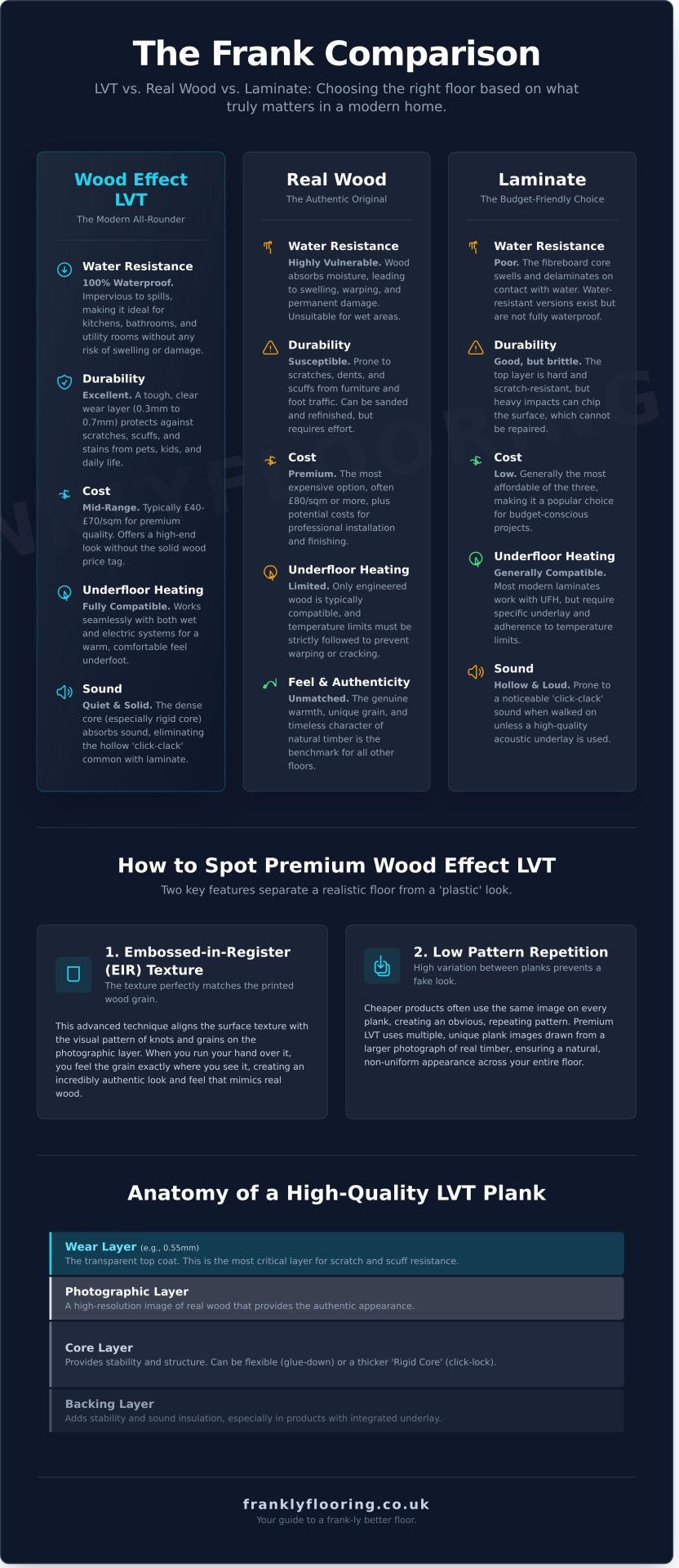
- The Wear Layer: This transparent top coating is the single most important specification. Measured in millimetres (e.g., 0.3mm for domestic use, 0.55mm+ for heavy traffic), it dictates the floor’s resistance to scratches and scuffs.
- The Photographic Layer: A high-resolution printed image of real wood gives the LVT its authentic appearance, capturing everything from subtle grain patterns to distinctive knots.
- The Core: This provides stability. It can be flexible, designed for a “glue-down” fitting, or a “rigid core,” which is thicker and features a click-lock system for a floating installation.
Key Benefits for the Modern UK Home
The practical advantages of wood effect LVT flooring make it a perfect match for the demands of contemporary living. It solves many of the problems associated with traditional materials, offering a blend of beauty and resilience.
- 100% Waterproof: Unlike real wood or laminate, LVT is impervious to water. This makes it the ideal, worry-free solution for kitchens, bathrooms, and utility rooms where spills are inevitable.
- Scratch & Stain Resistance: The tough wear layer protects against daily life, from the claws of family pets to the scuffs from high-heeled shoes, ensuring your floor looks pristine for years.
- Underfloor Heating Compatibility: A must-have for many UK renovations, LVT works seamlessly with both wet and electric underfloor heating systems, providing warmth and comfort underfoot without risk of warping.
Wood Effect LVT vs. Real Wood & Laminate: The Frank Comparison
When choosing a new floor, the options can feel overwhelming. Real wood offers timeless authenticity, laminate promises affordability, but where does wood effect lvt flooring fit in? Frankly, it often strikes the perfect balance between beauty, practicality, and price. Let’s break down the key differences between the ‘big three’ without the usual sales fluff, focusing on how they perform in a real home.
Nothing quite matches the unique warmth of real timber underfoot-we won’t pretend otherwise. However, high-quality LVT is a world away from the cold floors of the past, offering excellent thermal properties and a surprisingly comfortable feel. The real divergence comes with maintenance. A solid wood floor demands commitment: sanding, oiling, and constant vigilance against spills. LVT, in contrast, asks for little more than a sweep and a damp mop. While a ‘lifetime warranty’ on wood sounds impressive, it’s often riddled with clauses about humidity and wear; LVT’s durability is far more straightforward for a busy family home.
LVT vs. Engineered Wood
Engineered wood is a fantastic product, but its core is still wood-based. This means a higher initial cost (often £80+ per square metre versus £40-£70 for premium LVT) and a critical weakness: moisture. Even a small leak can cause it to swell and delaminate, making it entirely unsuitable for bathrooms or utility rooms, where LVT’s 100% waterproof nature offers total peace of mind. For a deeper comparison with another popular choice, see our detailed LVT vs Laminate Flooring guide.
The Sound Factor
We’ve all walked on a cheap laminate floor and heard that hollow ‘click-clack’ sound. It’s a dead giveaway of a floating floor with poor acoustics. This is where modern LVT truly excels. Its dense, composite structure-especially in rigid core products with integrated underlay-absorbs sound, creating a quiet and solid feel underfoot that mimics real wood. When comparing products, look for the Impact Sound Reduction rating (in decibels, dB). Reputable manufacturers, often adhering to standards set by the resilient flooring industry, will list this; a figure above 19dB is excellent for reducing noise transfer.
How to Spot High-Quality Wood Effect LVT (And Avoid the ‘Plastic’ Look)
Frankly, not all LVT is created equal. The difference between a floor that guests mistake for real hardwood and one that screams ‘vinyl’ lies in the details. High-quality wood effect lvt flooring is a master of deception, replicating the subtle imperfections of timber. Here’s what to look for to ensure your new floor has authentic character.
First, be wary of the ‘repeat pattern’ trap. Cheaper products often have a high pattern repeat, meaning you’ll spot the same distinctive knot every few planks, which immediately looks artificial. Premium ranges offer more unique plank designs per box, creating a far more natural, varied floor. Key features to seek out include:
- Embossed-in-Register (EIR): This is the gold standard for texture. It means the surface texture is perfectly synchronised with the printed wood grain image, so you can feel the knots and grain that you see.
- Bevelled Edges: Subtle V-grooves along the edges of each plank define them as individual boards. This adds depth and realism that flat-edged LVT simply cannot replicate.
- Matte Finish: A low-sheen or matte finish mimics the look of natural, oiled timber far more convincingly than a high-gloss, reflective surface which can often look plastic.
Decoding the Wear Layer
The wear layer is the transparent protective coat that determines the floor’s lifespan. For a typical family lounge, a 0.3mm wear layer is adequate for general domestic use. However, we often recommend a 0.55mm layer for busy homes with children or pets, as it provides a significant step up in durability for a modest increase in cost. A 0.7mm wear layer is overkill for most homes, being designed for heavy commercial environments like shops and offices.
Texture and Grain Realism
Beyond EIR, look for details that match your desired style. Hand-scraped or distressed textures, for instance, add a rustic, lived-in character that’s perfect for period properties. A completely smooth surface, while easy to clean, can sometimes betray the fact that it’s vinyl. This is why getting hands-on is crucial. A single sample plank won’t reveal the pattern repeat, so we always advise viewing several planks together to get a true feel for the finished floor. Understanding these nuances is key to selecting High-Quality Wood Effect LVT that will stand the test of time.
Choosing Your Style: Oak, Walnut, and Beyond
Once you’ve settled on the practical benefits of LVT, the exciting part begins: choosing a look that transforms your house into a home. The beauty of modern wood effect LVT flooring lies in its sheer versatility. The technology has become so advanced that the texture, grain, and tone are virtually indistinguishable from real timber, giving you a world of choice without the associated maintenance.
In the UK, classic oak remains the undisputed favourite, and for good reason. Its warm, inviting tones and versatile grain patterns complement everything from a traditional cottage to a contemporary new build. Whether you prefer a clean, light Scandinavian oak or a rustic, knotty finish, it’s a timeless choice that won’t fall out of fashion.
Grey wood effects, which dominated interior design for years, are still very much in style, though the trend is evolving. For 2026 and beyond, we’re seeing a shift towards warmer ‘greige’ tones that blend the coolness of grey with the warmth of beige, creating a sophisticated and calming neutral base. For those seeking a bolder statement, dark walnut or exotic wood effects provide a sense of luxury and depth. LVT allows you to achieve this high-end look sustainably and affordably, a topic we touch on when discussing Karndean & Amtico alternatives.
Plank Size and Room Perception
The dimensions of your chosen plank can have a surprising impact on the feel of a room. It’s a simple design principle that we always discuss with our clients during a consultation.
- Wide Planks: Using wider and longer planks creates fewer join lines, making smaller UK rooms feel more open and expansive.
- Multi-Width Planks: For a more rustic, reclaimed appearance, a floor fitted with planks of varying widths offers authentic character.
- Plank Direction: In a hallway, laying planks parallel to the longest wall will draw the eye forward, making it feel longer. Laying them across the width can make a narrow space feel wider.
Herringbone and Parquet LVT
The demand for herringbone and other parquet patterns shows no sign of slowing down. This classic, elegant style adds a sense of history and texture to any space. Frankly, this is where LVT truly shines. It makes a once-exclusive and costly flooring style accessible to the average homeowner. The smaller, individual blocks are far easier and more cost-effective to fit than their solid wood counterparts, delivering a premium finish without the premium price tag. If you’re drawn to these timeless patterns, our guide to Parquet & Herringbone Wood Flooring Explained is an excellent starting point.
Buying and Fitting: The Frankly Flooring Way
Once you’ve chosen your perfect wood effect LVT flooring, the final steps are about ensuring it’s fitted to a standard that lasts. Frankly, getting the practical details right is just as important as selecting the right design. From measuring correctly to understanding the fitting process, we believe in giving you straightforward, honest advice.
First, always order around 10% more flooring than the room’s square meterage. This ‘wastage’ allowance accounts for cuts, awkward corners, and the occasional mistake. Before any work begins, your LVT planks must acclimatise. This simply means leaving the unopened boxes flat in the room where they will be fitted for at least 48 hours, allowing the material to adjust to the ambient temperature and humidity. For more tips on purchasing, our Buy LVT Flooring Online UK Checklist is an excellent resource.
Subfloor Preparation: The Honest Truth
Luxury vinyl tile is a fantastic product, but it is not magic; it will follow the contour of whatever is beneath it, showing every lump and bump. For a seamless finish, your subfloor must be perfectly smooth and level. A professional fitter will typically recommend a latex screed for concrete subfloors or a layer of plywood for wooden floorboards. Frankly, proper subfloor preparation can often cost as much as the flooring itself, but it is absolutely vital for a flawless finish and to validate your product warranty.
DIY vs. Professional Fitting
Can you lay a click-lock LVT floor yourself? The honest answer is yes, if you are a competent and patient DIYer working in a straightforward, square room. However, it requires the right tools:
- A heavy-duty utility knife and a straight edge
- A tapping block and pull bar
- Spacers to maintain an expansion gap
- A tape measure and pencil
For glue-down LVT, intricate patterns like herringbone, or large, open-plan spaces, we always recommend calling in the professionals. A skilled fitter ensures your wood effect LVT flooring is laid perfectly, with a finish that will stand the test of time. It’s the difference between a good floor and a great one. If you want the job done right, from subfloor to final plank, you can get in touch with our team.
The Final Word: Making Your LVT Choice with Confidence
We’ve explored how modern LVT delivers the timeless aesthetic of wood with none of the maintenance headaches, and we’ve shown you what separates a premium, textured plank from a lesser alternative. The key is to look for quality indicators like a thick wear layer and realistic grain, ensuring your floor feels as good as it looks for years to come.
Choosing the right wood effect lvt flooring is a significant decision, but it needn’t be a daunting one. With over 20 years of family-run expertise, we’re here to offer direct, honest advice with no hidden costs. That’s the Frankly Flooring promise, delivered with every plank we supply.
Ready to see the quality for yourself? Browse our full range of wood effect LVT and order your free samples today. With national UK delivery on all orders, your perfect floor is closer than you think.
Frequently Asked Questions About Wood Effect LVT
Is wood effect LVT better than real wood?
Frankly, it depends on what you prioritise for your home. LVT offers superior water resistance and durability, making it ideal for busy areas, kitchens, and bathrooms where real wood might warp. It’s also typically easier to maintain and more budget-friendly. While real wood has a unique natural character and can be refinished over its lifetime, LVT provides a highly realistic wood look without the associated upkeep, offering a practical solution for modern family life.
How long does wood effect LVT flooring last?
A quality LVT floor, when fitted correctly, is a long-term investment. You can expect it to last anywhere from 15 to 25 years, and sometimes even longer in areas with less footfall. The lifespan is directly linked to the thickness of the wear layer and the quality of the product itself. Proper subfloor preparation and professional fitting are also crucial to ensure your floor performs at its best for its entire lifespan, preventing premature wear and tear.
Can you use wood effect LVT in a bathroom?
Absolutely. This is one of the key advantages of LVT. Unlike real wood or laminate, LVT is made from materials that are 100% waterproof, so it won’t swell, warp, or stain when exposed to moisture and steam. This makes it an excellent and highly popular choice for bathrooms, utility rooms, and kitchens. To ensure complete protection, we always recommend a professional fitting to guarantee a seamless, watertight finish around all edges and fixtures.
Does wood effect LVT scratch easily?
While no floor is completely scratch-proof, high-quality LVT is remarkably scratch-resistant. The protective top layer, known as the wear layer, is designed to withstand the daily demands of a busy household, including pets and children. Deeper scratches can occur if you drag heavy, sharp furniture across it, so we always advise using felt pads. For day-to-day use, however, its durability is one of its most significant benefits over softer materials like solid wood.
Is LVT flooring cold to walk on?
LVT feels much warmer and softer underfoot than materials like stone or ceramic tiles. While it won’t be as naturally warm as carpet, it retains heat better than many other hard flooring options, making it more comfortable to walk on first thing in the morning. Furthermore, most LVT ranges are fully compatible with underfloor heating systems, allowing you to create a genuinely warm and inviting space without compromising on the beautiful wood aesthetic.
How do I clean my wood effect LVT floor?
Maintaining your wood effect LVT flooring is refreshingly straightforward. A regular sweep or vacuum will remove loose dirt and grit. For a deeper clean, simply use a microfibre mop with a pH-neutral cleaning solution diluted in warm water. It’s important to avoid using steam mops, abrasive scourers, or harsh chemical cleaners like bleach, as these can damage the protective wear layer over time. A simple, gentle approach is all that’s needed to keep it looking its best.
Can I install wood effect LVT over my existing floor?
While it can sometimes be possible to fit LVT over certain existing hard floors, we honestly don’t recommend it. For a long-lasting, quality finish, the subfloor needs to be perfectly smooth, level, and clean. Fitting over an uneven or unsuitable surface can lead to movement, gaps, and premature wear, which would void the manufacturer’s warranty. Proper subfloor preparation is the most critical step in any flooring project, and it’s a non-negotiable part of our professional service.
What is the best wear layer for a busy family home?
For a busy family home with high footfall, children, or pets, we recommend a wear layer of at least 0.55mm. This thickness provides excellent durability and resistance to scratches and scuffs, ensuring your floor can handle the demands of hallways, kitchens, and living areas. While a 0.3mm layer is suitable for lighter use areas like bedrooms, investing in a thicker wear layer for your main living spaces is a sensible choice for long-term performance and peace of mind.