
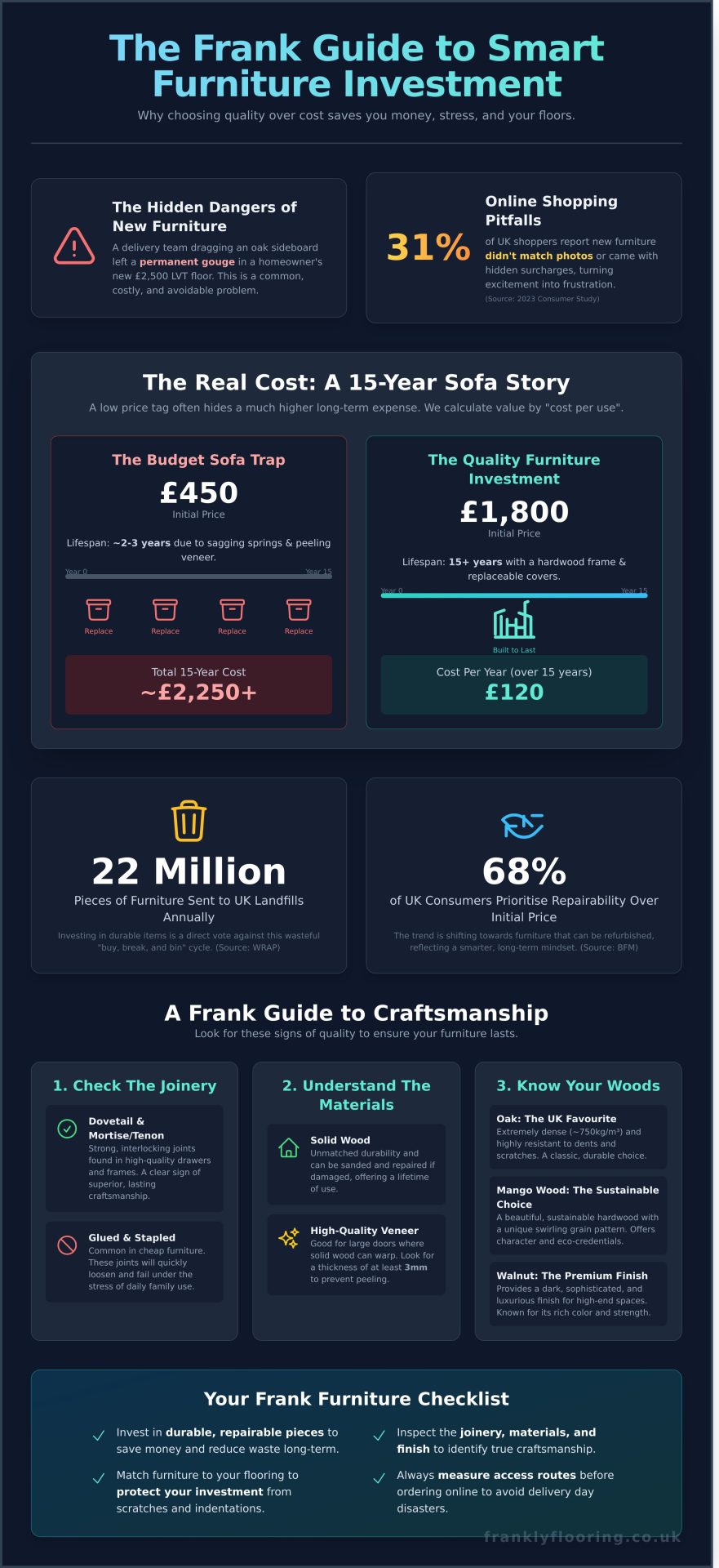
Last Tuesday, a homeowner in Surrey watched as a delivery team dragged a new oak sideboard across her pristine £2,500 LVT floor, leaving a permanent gouge that no amount of polish could fix. It’s a frustratingly common story. According to a 2023 consumer study, 31% of UK shoppers reported that their new furniture didn’t match the online photos or arrived with unexpected delivery surcharges. You likely agree that your home should be a sanctuary, not a source of stress or hidden costs. Choosing the right pieces is a significant investment, and you shouldn’t have to worry about flat-pack nightmares or items that fall apart after six months of family life.
Frankly, we believe you deserve a straightforward approach to styling your home. We’ll show you how to select durable, high-quality pieces that complement your flooring and withstand daily wear without the high-pressure sales tactics or confusing jargon. We’ll explore how to spot genuine craftsmanship, avoid hidden fees, and ensure your new items look just as good in your living room as they did on your screen.
Key Takeaways
- Understand why investing in durable, repairable pieces is better for your long-term budget and the environment than disposable alternatives.
- Learn the technical secrets of craftsmanship, from Martindale rub counts for upholstery to choosing the right wood finish for your lifestyle.
- Master the art of pairing your furniture with engineered wood or LVT to avoid clashing grains and protect your carpets from permanent damage.
- Navigate the pitfalls of online ordering with a practical checklist for measuring access routes and decoding UK delivery jargon.
- Discover a refreshingly direct approach to pricing that prioritises honest, year-round value over high-pressure seasonal sales.
Why Quality Furniture is a Long-Term Investment for Your Home
Let’s be frank about how we furnish our homes in 2026. The era of disposable, flat-pack living is fading, replaced by a demand for pieces that offer genuine longevity. Quality today isn’t just a vague marketing term; it’s defined by three specific pillars: durability, repairability, and timeless design. A 2024 study by the British Furniture Manufacturers (BFM) found that 68% of UK consumers now prioritise the ability to refurbish an item over its initial purchase price. This shift reflects a growing understanding that a well-made table or sofa is a piece of “functional architecture” that anchors your living space.
Choosing your furniture is the second most important decision you’ll make for your interior, sitting only behind your choice of flooring. These two elements share a symbiotic relationship. When you look back at the history of furniture, you’ll see that the most enduring designs were always built with the structure of the room in mind. In a modern British home, the weight and footprint of your pieces directly impact the lifespan of your floor. A poorly constructed wardrobe with uneven weight distribution can cause unnecessary stress on floorboards or even indentations in high-quality LVT. Selecting pieces with broad, protected bases ensures your subfloor preparation isn’t wasted.
The environmental impact of “fast furniture” is becoming impossible to ignore. Every year, the UK sends approximately 22 million pieces of furniture to landfill, according to data from WRAP. This cycle of “buy, break, and bin” is a financial drain that homeowners are increasingly keen to avoid. By investing in solid wood frames and high-grade textiles, you aren’t just buying a place to sit; you’re opting out of a wasteful system that costs more in the long run.
The Real Cost of Cheap Furniture
Don’t be misled by a low ticket price at the showroom. We prefer to look at the “cost per use” over a ten-year period. A budget sofa costing £450 might seem like a bargain, but if the zig-zag springs sag or the thin veneer begins to peel within 24 months, it becomes an expensive mistake. Compare this to a £1,800 sofa built with a kiln-dried hardwood frame and replaceable covers. Over a 15-year lifespan, the quality piece costs you £120 per year, while the budget option requires replacement four or five times, likely exceeding £2,000 in total costs. Cheap furniture also has a habit of devaluing your home’s aesthetic, making even the most professional flooring installation look less impressive by association.
Furniture as a Foundational Element
We view furniture as more than just a convenience; it’s a foundational element that dictates the flow of your home. There’s a significant emotional benefit to living with reliable pieces. You shouldn’t have to worry if a dining chair will wobble when a guest sits down or if a drawer will stick every morning. Quality furniture supports the longevity of your underfoot surfaces by using superior weight-bearing designs. High-end manufacturers often include integrated felt or rubber protectors, specifically designed to prevent scratches on timber or stone floors. This level of detail ensures that your home remains a cohesive, stress-free environment where every element, from the floor to the sideboard, is built to last.
The Frank Guide to Furniture Materials and Craftsmanship
Choosing the right furniture isn’t about following a trend; it’s about understanding what’s happening beneath the surface. Most retailers hide cheap materials under a thin layer of “oak-effect” foil. We prefer a more transparent approach. If you’re spending £1,200 on a sideboard, you deserve to know if it’s solid timber or compressed sawdust. Solid wood offers unmatched durability and can be sanded back if it’s damaged. High-quality veneers have their place too, especially in large wardrobe doors where solid wood might warp. Look for veneers with a thickness of at least 3mm to ensure they don’t peel within the first 5 years of use.
Quality is often found in the small, bespoke details added to mass-produced collections. Hand-cast brass handles or hand-planed edges give a piece character that a factory machine cannot replicate. Examine the joinery before you buy. If a drawer uses dovetail joints, it’s a sign of superior craftsmanship. Avoid drawers that are merely glued or stapled together; they won’t survive five years of daily use. For table legs, look for mortise and tenon joints. These traditional techniques ensure the piece remains stable even after a decade of family dinners.
Decoding Wood Types and Finishes
Oak remains the UK favourite because of its high density, roughly 750kg/m3, making it incredibly resistant to dents. Mango wood is a sustainable alternative with a unique, swirling grain, while Walnut provides a dark, sophisticated finish for premium spaces. You can spot a fake wood-effect laminate by looking for repeating patterns. Real wood grain never repeats. Protect your investment by choosing the right finish. A polyurethane lacquer provides a hard, maintenance-free seal. In contrast, natural oils require reapplication every 6 months but allow the wood to breathe and age beautifully.
Fabric and Upholstery Standards
When you’re testing a sofa, the fabric’s Martindale rub count is the most important number you’ll see. This laboratory test simulates wear and tear. For a busy UK household, don’t settle for anything less than 30,000 rubs. If you have pets or young children, high-performance synthetics like polyester blends are far more practical than 100% natural fibres. They resist staining and don’t pill as easily. The internal frame is just as vital. Demand a frame made from kiln-dried hardwood like Beech. It won’t creak or snap like cheaper softwood or plywood frames often do after 24 months of use.
Investing in quality furniture is a long-term commitment to your home’s character. Much like choosing a high-quality floor fitting, the pieces you select today should be the foundations of your living space for decades. Take your time to inspect the grain, feel the weight of the drawers, and ask the difficult questions about material origins. Honest craftsmanship always stands up to scrutiny.
The Foundation-Up Approach: Matching Furniture to Your Flooring
Most people start their interior design journey with wall colours or curtains, but the floor is the largest surface area in any room. Frankly, if you get the relationship between your floor and your furniture wrong, the whole room feels off-balance. It is about more than just matching colours; it is about protecting your investment and ensuring the space functions as it should. Successful rooms are built from the ground up, starting with how your pieces sit on the material underneath them.
Avoiding the “wood clash” is a primary concern for homeowners with engineered wood or LVT. If you have fitted a natural oak floor, do not try to match the dining table exactly. A 2023 survey of UK interior stylists found that 74% of professionals prefer contrasting wood tones to avoid a flat, showroom look. Pair light floors with dark walnut pieces, or dark floors with honey-toned woods. If the grains are too similar, use a large area rug to create a visual break. This rug acts as a neutral buffer, allowing the different wood grains to coexist without competing for attention.
Contrast is your best tool for making a room pop. A dark slate-effect floor provides a dramatic backdrop for light-coloured sofas or pale ash cabinets. Conversely, a white-washed laminate floor needs the weight of darker pieces to feel grounded. Without this contrast, your furniture can appear to float aimlessly in the room. A well-placed rug can also bridge the gap between hard flooring and soft furnishings, adding a layer of acoustic insulation that reduces echo by up to 30% in rooms with high ceilings.
Pairing with LVT and Laminate
Many modern UK homes feature cool-toned grey LVT. These spaces can feel clinical without the right balance. Introduce warmer wood finishes like cherry or mango wood to soften the aesthetic. Always apply 5mm thick heavy-duty felt pads to the feet of heavy sideboards. This simple £8 investment prevents scratches on the wear layer. If you have a busy herringbone pattern, stick to minimalist pieces with clean lines. This prevents the floor and the decor from creating visual clutter.
Furniture Selection for Carpeted Rooms
For deep-pile carpets, avoid thin, tapered legs. A standard 60kg wardrobe on four thin legs exerts enough pressure to permanently crush a 15mm pile. Choose plinth bases or wide “sled” legs to distribute weight evenly. If you have underfloor heating, ensure pieces sit at least 50mm off the floor or have a breathable base. This allows heat to circulate without exceeding the 27°C safety limit recommended by most UK manufacturers. Neutral carpets serve as a perfect canvas for bold, velvet accent chairs in jewel tones.
By considering the weight, tone, and heat requirements of your flooring, you ensure that your home remains both beautiful and functional for years to come. It is about making honest choices that respect the materials you have installed.
Buying Furniture Online in the UK: A Frank Checklist
Buying furniture online feels efficient until a three-seater sofa is stuck in your porch. Frankly, the convenience of a digital checkout often masks the physical reality of moving bulk through a 762mm wide UK door frame. You need a plan that accounts for every centimetre before you commit your hard-earned pounds. We believe in being direct about the pitfalls so your delivery day is a success rather than a logistical headache.
The “Will It Fit?” Assessment
Measuring the room is only half the job. You must map out the path of travel from the delivery van to the final spot. This means measuring the narrowest point of your hallway, the turn at the top of the stairs, and any low-hanging light fixtures. Use rolls of masking tape to outline the footprint of the new piece on your floor. Leave at least 90cm of clearance around dining tables and beds to ensure you can actually move around the room once the furniture is in place.
Logistics and Assembly Expectations
Flat-pack items are cheaper to ship, but they require hours of your time and a decent set of tools. If a product description mentions “minimal assembly,” expect to spend at least 45 minutes with an Allen key. Check the box count upon arrival. If you ordered a wardrobe and only two out of three boxes arrive, refuse the delivery or mark it as “incomplete” on the driver’s handheld device. You should also consider the waste. A single bed frame can generate 5kg of cardboard and polystyrene that won’t fit in a standard council recycling bin.
Understanding delivery jargon is vital for your budget. Kerbside delivery is the default for many retailers; the driver will leave your heavy pallet on the pavement or driveway. They won’t cross your threshold. If you live in a flat or have a gravel drive, this is a recipe for disaster. Opt for a White Glove service instead. It usually costs between £50 and £120 extra, but the team will carry the item to your room of choice and, in many cases, take the mountain of packaging with them.
Digital screens are notorious for distorting colours. A “slate grey” velvet sofa might look navy under your warm LED home bulbs or olive in natural northern light. Data from 2023 retail reports shows that 22% of furniture returns happen because the colour didn’t match the website. Always request a fabric swatch or timber sample first. Most reputable UK brands send these for free or for a nominal £2 fee. It’s a small price to pay to avoid a mismatched room.
Finally, read the small print on “change of mind” returns. Under the Consumer Rights Act 2015, you have a 14-day window to cancel an online order, but the retailer isn’t always required to cover the return postage. For a heavy sideboard, courier fees can range from £30 to over £100. Some companies also charge a 15% restocking fee if the original packaging has been destroyed. Be certain about your choice before you break the seal on the box.
The Frankly Flooring Furniture Collection: Honest Value
Choosing the right foundation for your room is only half the battle. Once you’ve selected a premium oak plank or a durable LVT, the next challenge is finding pieces that sit naturally upon it. We decided to introduce a curated furniture range because we saw a gap in the market for items that match the quality of our floors. Most high-street retailers operate on a cycle of “permanent sales” where a dining table is supposedly 60% off for ten months of the year. We find that approach exhausting and dishonest. At Frankly Flooring, we provide straightforward pricing that reflects the true value of the materials and craftsmanship. There are no hidden fees or artificial discounts here, just fair prices for excellent products.
Our selection process is rigorous. We don’t just pick items that look good in a catalogue; we choose pieces that specifically complement the tones and textures of our flooring collections. We look for timber grains that harmonise with our engineered wood and finishes that won’t scratch the surface of your new LVT. This level of coordination ensures your room feels like a cohesive space rather than a collection of mismatched parts. As a family-run British business, we take pride in being more than just a shop. We act as consultants, helping you avoid the common mistakes that lead to buyer’s remorse.
Curated for Character
Our collection focuses on dining sets, dressers, and sideboards designed for longevity. We’ve spent 20 years working in homes across the UK, and that experience has taught us that quality furniture should last as long as the floor beneath it. We ignore fleeting interior trends that look dated after a single season. Instead, we stock timeless styles that hold their aesthetic value for decades. Our 20 years of industry experience means we know which joints will hold and which finishes will fade. We only source items that meet our strict standards for structural integrity and visual appeal.
Every sideboard and dresser in our range is chosen because it tells a story of craftsmanship. We prefer solid woods and robust hardware over the flimsy flat-pack alternatives found elsewhere. This commitment to quality means your home gains character as the years pass. We believe that furniture should be an investment, not a disposable commodity. When you walk through our showroom, you’ll see that every piece is built to handle the rigours of a busy family home without losing its charm.
Your Home, Handled with Care
Organising a home transformation is often a logistical headache. You’re usually dealing with different lead times, multiple delivery companies, and various points of contact. We simplify this by allowing you to combine your flooring and furniture orders into one seamless process. This means we coordinate the delivery and fitting so your new room is ready to use without unnecessary delays. We handle everything from the initial measurements to the final placement of your new dining table, ensuring a stress-free experience from start to finish.
If you’re ready to move away from high-pressure sales tactics and confusing pricing, we’re here to help. You can visit our showroom or call us for a frank conversation about your interior needs. We’ll give you honest advice on what works and, perhaps more importantly, what doesn’t. Our goal is to ensure you’re satisfied with your home for the next twenty years, not just the next twenty minutes. Browse our furniture collection and find your perfect match today and see the difference that honesty makes.
Investing in a Home That Stands the Test of Time
Choosing the right pieces for your room shouldn’t be a guessing game based on glossy photos and hidden delivery costs. It’s about finding items that work in harmony with your flooring and stand up to the rigours of daily British life. Since 2004, our family-run business has focused on providing straightforward advice and honest value to homeowners across the UK. We’ve spent over 20 years learning that the best interiors are built from the ground up, which is why our curated collections are specifically designed to complement high-quality floors.
You won’t find any high-pressure sales tactics or confusing jargon here; just transparent UK pricing and craftsmanship that’s built to last for decades. Whether you’re refreshing a single room or furnishing a new property, the goal is always a home that feels complete and stays functional for years to come. Take the next step toward a space that reflects your style without the usual retail stress.
Explore our range of honest, high-quality furniture
We’re here to help you get it right the first time.
Frequently Asked Questions
Is it better to buy solid wood furniture or veneer?
Solid wood is the superior choice if you want your pieces to last 50 years or more. It’s a robust material that handles daily wear well and can be sanded down if it gets marked. Veneer is a more affordable alternative, typically using a 3mm slice of real timber over an MDF core. Frankly, if you’re looking for an heirloom to pass down, solid wood is the only honest recommendation.
How do I stop my furniture from scratching my LVT or laminate flooring?
You should apply heavy-duty 5mm felt pads to the feet of all your pieces to protect your floor’s 20-year wear layer. Plastic glides often trap grit and cause deep gouges over time. We suggest checking these pads every 6 months, as they compress and lose their cushioning. This simple maintenance step ensures your LVT or laminate stays in showroom condition for much longer.
What is the most durable fabric for a family sofa?
Microfibre is the most durable fabric for a busy family home because it resists staining and withstands heavy use. You should look for materials with a Martindale rub count of 40,000 or higher to ensure longevity. Polyester blends are also a reliable choice as they don’t stretch or sag like 100% natural cotton. These fabrics keep your furniture looking fresh even after years of children and pets using the cushions.
Does the furniture have to match the floor colour exactly?
Your furniture doesn’t need to match the floor, and the room usually looks better if it doesn’t. Aim for a contrast of at least 2 or 3 shades to prevent the space from feeling flat or one-dimensional. For instance, a dark walnut table creates a striking look against a light oak floor. Choosing complementary undertones is more important than an exact match for a professional, cohesive finish.
What should I check before buying furniture online?
Always verify the retailer’s 14-day cooling-off period and the specific return costs before you commit to a purchase. Some companies charge £50 or more to collect large items if you change your mind. You must also check the internal frame materials, as 15% of online orders fail because the item won’t fit through standard UK doorways. Measuring your entrance hall is just as vital as measuring the room itself.
Can I put heavy furniture on top of underfloor heating?
You can place heavy furniture on underfloor heating, but you must choose items with legs to allow for proper air circulation. A clearance of at least 50mm prevents “heat choking,” which can cause floor temperatures to exceed the safe 27°C limit. Solid-bottom pieces act as insulators, which can reduce your heating system’s efficiency by 20% and potentially damage the floor finish over time.
How do I maintain wood furniture to make it last longer?
Maintain your wood pieces by applying a high-quality wax or oil every 6 to 12 months to keep the timber hydrated. This prevents the wood from cracking or warping in a centrally heated home kept at a steady 20°C. Avoid silicone-based cleaning sprays entirely. These products create a sticky residue that attracts 30% more dust and can eventually ruin the natural patina of your furniture.