What if the most expensive wool carpet in the showroom is actually the wrong choice for your busiest rooms? It is a common dilemma for UK homeowners who want a floor that looks high-end but can actually survive the chaos of daily life. You likely worry that natural fibres are impossible to clean, or that opting for a synthetic will result in a flat, cheap-looking floor within twelve months. Recent industry figures from 2023 indicate that synthetic fibres now make up over 60% of the UK domestic market, yet many people still feel confused about whether they are sacrificing quality for cost.
We understand that you want a home that feels inviting and stays looking new. This guide offers a direct comparison of wool carpet vs polypropylene to help you decide where to invest and where to save. We will move past the jargon to explain how different materials respond to heavy footfall and cleaning products, ensuring you don’t spend more than necessary to get the result you want.
You will learn the specific benefits of each material, the truth about 80/20 blends, and which option offers the best long-term value for your home. We are here to provide the honest advice you need to make a confident decision for your next fitting.
Key Takeaways
- Understand the fundamental difference between renewable, keratin-based wool and synthetic, oil-based polymers to make an informed choice for your home.
- Learn why “pile_crush” is the enemy of a beautiful floor and which fibre offers the best resilience against heavy foot traffic over the years.
- Debunk common myths around maintenance by exploring how wool’s natural lanolin coating compares to the chemical stain-resistance of modern synthetics.
- Discover why a lower showroom price can be a false economy when comparing the long-term value and cost-per-year of wool carpet vs polypropylene.
- Get straightforward advice on which material to choose for specific areas, ensuring luxury in the master bedroom and maximum durability for your stairs and landing.
Understanding the Fibres: Natural Wool vs Synthetic Polypropylene
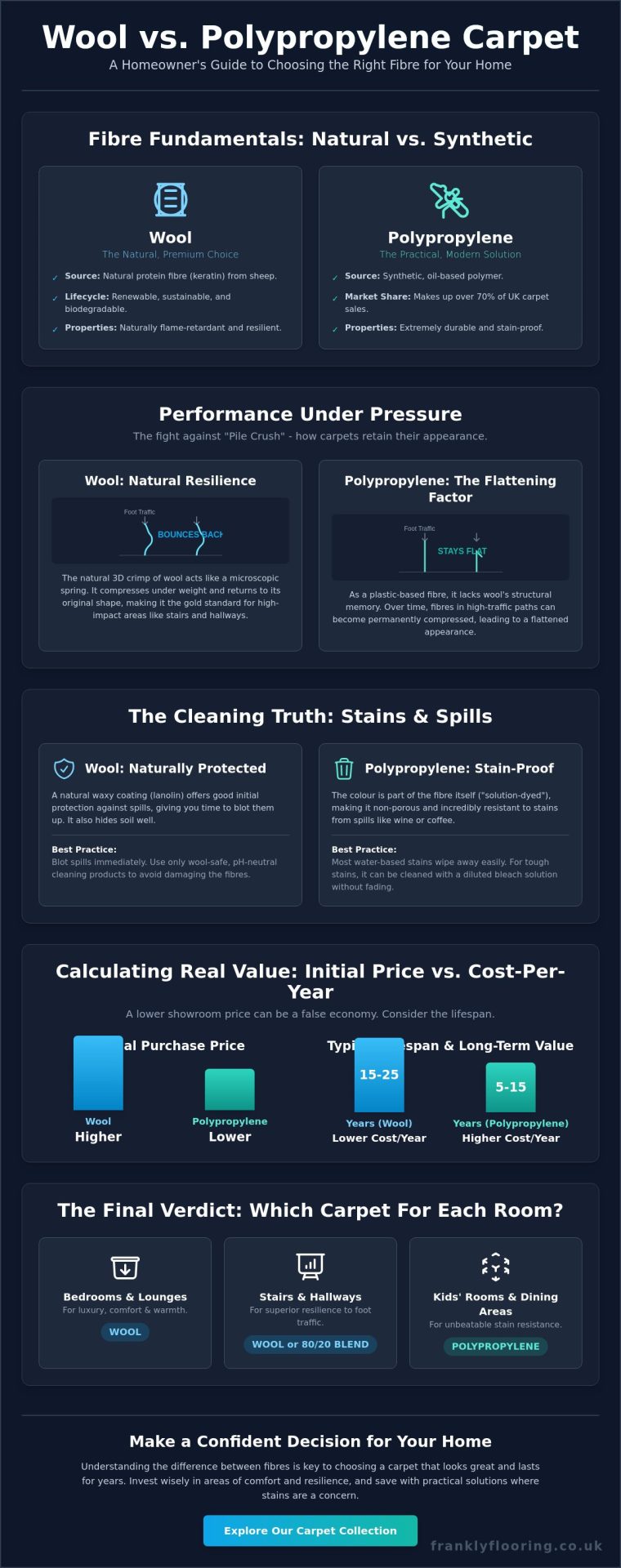
Choosing between a wool carpet vs polypropylene isn’t just about the price tag; it’s about understanding the raw materials that make up your home’s foundation. Wool is a natural, renewable protein fibre made of keratin. It’s essentially the same substance as human hair, grown by sheep and harvested annually without harming the animal. On the other side, we have polypropylene, often called olefin in the industry. This is a synthetic, oil-based polymer created through a chemical manufacturing process.
These two materials dominate the UK flooring market for distinct reasons. One is a product of nature that has been used for centuries, while the other is a triumph of modern industrial chemistry. Most homeowners find themselves torn between the two, which is why the 80/20 blend was developed. This “middle ground” usually mixes 80% wool with 20% synthetic material, such as nylon or polypropylene, to improve durability while keeping the natural feel. Understanding Carpet Fibres helps you see past the showroom lighting and understand how your floor will actually perform over the next decade.
What Makes Wool a “Premium” Choice?
Wool is often labelled “premium” because of its lifecycle and physical structure. It’s a sustainable and biodegradable choice, meaning it won’t sit in a landfill for centuries once its life in your home is over. Beyond ethics, the performance is top-tier. Each wool fibre has a natural “crimp.” This acts like a tiny coiled spring, allowing the carpet to bounce back after heavy furniture is moved or after years of heavy foot traffic. Wool also has inherent fire-retardant properties. It doesn’t catch fire easily and tends to self-extinguish, which provides genuine peace of mind in domestic settings.
The Rise of Polypropylene in British Homes
Polypropylene now accounts for more than 70% of all carpet sales in the UK. This massive market share isn’t just down to the lower price point. Modern manufacturing has transformed the texture of these carpets, making them surprisingly soft to the touch compared to the scratchy versions of the 1990s. The real draw for most families is the “solution-dyed” process. The colour is added while the polymer is still a liquid, so the pigment runs through the entire fibre. This makes the carpet incredibly resistant to fading and allows for the use of diluted bleach cleaners on stubborn stains. It’s a practical, hard-wearing solution for high-traffic areas where life happens fast.
Performance Under Pressure: Durability and Appearance Retention
When comparing wool carpet vs polypropylene, the real test isn’t how they look under showroom lights. It’s how they look after three years of school runs and heavy footfall. Durability in the flooring world refers to two things: how long the fibres last before wearing away, and how long they keep their shape. We call this “appearance retention,” and it’s where these two materials diverge sharply.
The biggest threat to your carpet’s aesthetic is pile crush. This happens when the weight of footsteps or furniture compresses the fibres until they lose their loft. While a high-quality underlay can extend the life of any carpet by up to 40%, it cannot fix a fibre that has simply given up. To be frank, your choice of material determines whether your hallway looks fresh or flattened in five years.
Moths are often the “elephant in the room” for wool. By 2026, the technology has moved on significantly. Roughly 98% of British-made wool carpets are now treated with moth-resistant finishes during the scouring process. This makes the “moth-proof” debate largely a thing of the past, provided you buy from reputable manufacturers who adhere to modern UK standards.
Resilience: Why Wool Bounces Back
Wool is a protein fibre with a natural, three-dimensional crimp. Think of it like a microscopic spring. When you step on it, the fibre compresses and then returns to its original shape. This structural memory is why wool is the gold standard for stairs and hallways. In these high-impact areas, wool maintains its height and texture far longer than synthetics. If you move a heavy wardrobe, wool fibres will usually recover their upright position within 24 to 48 hours with a bit of steam or light brushing.
Polypropylene and the “Flattening” Factor
Polypropylene is essentially a form of plastic. It is incredibly tough and difficult to tear, but it lacks the natural elasticity of wool. Once the fibres are crushed under heavy traffic, they tend to stay down. This results in “tracking,” those visible paths that develop between the sofa and the kitchen. You might also notice “shading” or “watermarking” in cut-pile synthetic carpets, where the light hits flattened patches at different angles.
If you prefer a synthetic option for its stain resistance, we suggest choosing a dense Berber or a low-profile loop pile. These tighter constructions provide better physical support for the polypropylene fibres, preventing them from leaning over as easily as a deep saxony would. If you’re struggling to decide which pile height works for your landing, we can provide honest advice during a home consultation.
- Wool: High resilience, excellent for stairs, recovers from furniture marks.
- Polypropylene: Prone to flattening in cut-pile styles, better suited for low-traffic bedrooms.
- Pro Tip: Always pair your carpet with a minimum 10mm high-density underlay to protect the pile from the hard subfloor.
The Cleaning Truth: Stains, Spills, and Maintenance Realities
Most homeowners we speak to in our showroom share one common fear: spending thousands on a beautiful floor only to have a single glass of red wine ruin it forever. Frankly, it is a valid concern, but the reality of wool carpet vs polypropylene maintenance is often misunderstood. Choosing between them is not just about how they look on day one, but how they handle the inevitable chaos of a busy household over the next decade.
Wool fibres possess a natural advantage that many people overlook. Each fibre is coated in lanolin, a microscopic waxy layer that acts as a built-in repellent. This coating gives you a vital grace period to grab a cloth before a spill penetrates the core. Beyond spills, wool contributes to a healthier home environment. It acts as a natural air filter, trapping dust and absorbing Volatile Organic Compounds (VOCs) from the air, whereas synthetic fibres can sometimes emit low levels of VOCs shortly after fitting. While both materials require a weekly vacuum, wool is more effective at hiding dry soil within its opaque structure, meaning it looks cleaner for longer between deep cleans.
The “Bleach Cleanable” Polypropylene Promise
The term “bleach cleanable” is the primary reason families with young children choose polypropylene. It means you can use a diluted solution of 10% household bleach and 90% water to scrub away stubborn stains like felt-tip pens or juice. It is incredibly resilient against water-based marks. However, polypropylene is “oleophilic,” meaning it attracts oil. Greasy spills or even the natural oils from bare feet can bond to the plastic fibres, creating dull, greyish patches in high-traffic areas that even bleach cannot fix.
Caring for Wool: Not as Scary as You Think
Wool is surprisingly forgiving if you follow a simple rule: blot, never rub. Because of the lanolin shield, you usually have a 5 to 10 minute window to soak up a liquid spill with a clean, dry towel before it sets. To keep the pile resilient and the colours vibrant, we recommend a professional “WoolSafe” certified clean every 18 months. This prevents dry grit from acting like sandpaper at the base of the fibres, ensuring your investment stays soft underfoot for its full lifespan.
Calculating Real Value: Initial Price vs Cost Per Year
Choosing between a wool carpet vs polypropylene often feels like a battle between your bank balance and your style aspirations. An entry-level synthetic might cost you £15 per square metre, while a premium British wool could sit closer to £50. Frankly, looking at the ticket price alone is a mistake. If you buy a cheap polypropylene for a high-traffic hallway, it will likely flatten and look tired within 36 months. Replacing that carpet twice in six years, including the cost of new underlay and fitting fees, makes it far more expensive than a single wool installation that remains resilient for 15 years or more.
Energy efficiency is another hidden saving that many homeowners overlook. Wool is a natural insulator with high tog ratings, frequently ranging between 1.5 and 2.5. This creates a thermal barrier that can reduce heat loss through floors by up to 10% according to industry estimates. In a UK climate where heating bills remain a primary concern, wool pays a dividend every winter. There is also the matter of resale value. Quality flooring is a foundational feature; estate agents often highlight wool carpets in property listings because they signal a well-maintained home.
The 80/20 Blend: The Best of Both Worlds?
The 80% wool and 20% synthetic mix is a British manufacturing staple for a reason. This blend keeps the luxury and warmth of natural fibre but adds the memory of nylon or polypropylene. The synthetic element provides extra strength; it helps the pile spring back after footsteps. It offers a superior price-to-performance ratio, giving you a carpet that feels like pure wool but handles the chaos of a busy family home with much more grace.
When to Save and When to Splurge
You don’t need premium wool in every corner of the house. For a children’s playroom or a rental property where bleach-cleanable surfaces are vital, polypropylene is the smartest financial move. However, for forever home spaces like the lounge or master bedroom, the investment in wool is justified by the daily comfort and long-term durability it provides. Value is the sweet spot where the cost per year of use meets the physical comfort of the fibre under your feet.
Ready to see the difference for yourself? Book a home visit to compare samples in your own light.
The Final Verdict: Which Carpet Should You Buy for Each Room?
Deciding between wool carpet vs polypropylene comes down to how you use your space. There isn’t a single “best” carpet, only the right carpet for your specific needs and budget. We believe in being direct about what works and what doesn’t, so you aren’t left with a flattened or stained floor in two years.
- Master Bedroom: Choose 100% wool. This room is your sanctuary. Wool provides a level of luxury, natural warmth, and “bounce” that synthetic fibres can’t match. Because foot traffic is usually light, a quality wool carpet here can easily last 15 to 20 years.
- Stairs and Landing: An 80/20 wool blend is the smartest choice. Stairs take a lot of vertical pressure. Wool has a natural “crimp” that allows it to spring back into shape, whereas pure polypropylene can often flatten permanently on the edge of the steps within 24 months.
- The Lounge: This is a high-use area where versatility is key. If you want comfort and longevity, an 80/20 wool blend is excellent. However, if your living room is a “no-shoes-off” zone with heavy footfall and occasional spills, a premium polypropylene offers a practical, hard-wearing alternative.
- Kids’ Bedrooms: Stick with polypropylene. It’s stain-resistant and, crucially, bleach-cleanable. From spilled juice to felt-tip pens, you can clean up messes that would permanently ruin a natural wool fibre. It’s a cost-effective way to keep their rooms looking fresh.
Frankly Flooring’s Recommendation
We don’t believe in high-pressure sales or hiding the truth behind industry jargon. Our commitment is to provide honest, long-lasting quality that suits your lifestyle. While the debate of wool carpet vs polypropylene often focuses on price, we suggest looking at the long-term value. A cheap carpet that needs replacing in three years is never a bargain. We always encourage you to order samples. You need to feel the difference in density and texture for yourself. If you’re still weighing up your options, take a look at our frank guide to choosing the right carpet to ensure you get the best value for your home.
Ready to Transform Your Home?
Buying carpets online shouldn’t be a gamble. We’ve made the process straightforward and transparent, from selection to the final sweep-up. Once you’ve chosen your material, don’t forget that a professional finish relies on the right accessories. Using quality carpet grippers and underlay is essential to prevent slipping and premature wear. We’re here to help you get the fitting right the first time. Browse our full range of wool and synthetic carpets and let’s get your home transformation started.
Finding the Right Foundation for Your Home
Deciding between wool carpet vs polypropylene depends on your specific room requirements and lifestyle. Wool remains the gold standard for resilience, often maintaining its spring for 15 years or more in high-traffic areas like landings. If you have a busy household with young children or pets, the bleach-cleanable nature of synthetic polypropylene provides a practical, cost-effective alternative. It’s about balancing long-term appearance retention with everyday maintenance realities.
At Frankly Flooring, we bring over 20 years of expertise as a family-run business to help you make an informed decision. We believe in transparent, direct-to-consumer pricing that removes unnecessary markups found at larger retailers. Whether you need a hard-wearing wool blend or a stain-resistant synthetic, our national UK delivery ensures your chosen floor arrives safely at your door. We’re proud to provide the straightforward guidance you need to transform your space with confidence.
Explore our honest range of quality carpets and order your free samples today
We look forward to helping you find a floor that stands the test of time.
Frequently Asked Questions
Is wool carpet better than polypropylene for allergies?
Wool is generally the superior choice for allergy sufferers because its natural scales trap allergens like dust and pollen until you vacuum them away. Research from AgResearch indicates that wool can reduce airborne dust by up to 50% compared to hard flooring. While polypropylene is a synthetic material that resists mould, it doesn’t have the same air-filtering properties to improve your indoor air quality.
Does polypropylene carpet feel cheap underfoot?
Modern polypropylene doesn’t always feel cheap, but it lacks the natural resilience and “bounce” found in wool. While a thick 2-ply polypropylene feels soft to the touch, the plastic fibres are prone to flattening over time. Wool has a natural crimp that acts like a spring, allowing it to recover its shape even after 10,000 compressions. If you want a floor that maintains its loft, wool is the honest choice.
How long does a wool carpet typically last compared to synthetic?
You can expect a high-quality wool carpet to last between 20 and 25 years with proper maintenance. In contrast, a standard polypropylene carpet often needs replacing after 7 to 10 years as the fibres begin to fray or lose their texture. When comparing wool carpet vs polypropylene, wool’s longevity often makes it more cost-effective over two decades, despite the higher initial cost for the material and fitting.
Can I use a steam cleaner on both wool and polypropylene carpets?
You should avoid using high-heat steam cleaners on wool because temperatures exceeding 60 degrees Celsius can shrink or permanently damage the natural fibres. Polypropylene is more robust and can handle steam cleaning, though you must still be careful not to over-saturate the backing. For wool, we recommend professional dry extraction or low-moisture methods to maintain the pile’s integrity and prevent the risk of browning.
Is wool carpet more fire-resistant than man-made fibres?
Wool is significantly more fire-resistant than synthetic alternatives because it’s naturally flame retardant. It has a high ignition temperature of approximately 600 degrees Celsius and is self-extinguishing once the heat source is removed. Polypropylene is a petroleum-based product that melts at roughly 160 degrees Celsius, which can lead to faster flame spread. This makes wool a safer choice for rooms with open fires or wood burners.
Which carpet fibre is best for homes with pets?
Polypropylene is often the most practical choice for pet owners because it’s 100% bleach cleanable and resists liquid stains from “accidents.” However, wool is naturally better at neutralising pet odours and doesn’t hold onto smells like synthetic materials often do. If your priority is easy cleaning of muddy paws, polypropylene is hard to beat. For a home that stays smelling fresh, wool remains our top recommendation.
Why do some wool carpets shed more than others?
Shedding occurs when loose, short fibres work their way to the surface, and it’s more common in “staple” wool carpets than in continuous filament types. It isn’t a sign of poor quality; it’s simply a natural characteristic of the material. Most shedding subsides after the first 10 to 15 vacuums. Frankly, if you use a vacuum with a beater bar, you’ll see more fluff in the cylinder during those initial weeks.
Does polypropylene carpet fade in sunlight?
Polypropylene is exceptionally resistant to fading because the colour is added during the liquid stage of production. This solution-dyeing process ensures the colour goes all the way through the fibre, providing high UV resistance. Wool can fade over time when exposed to direct sunlight for 6 or more hours a day. For bright, south-facing conservatories or rooms with large windows, polypropylene is a reliable, fade-proof option.