
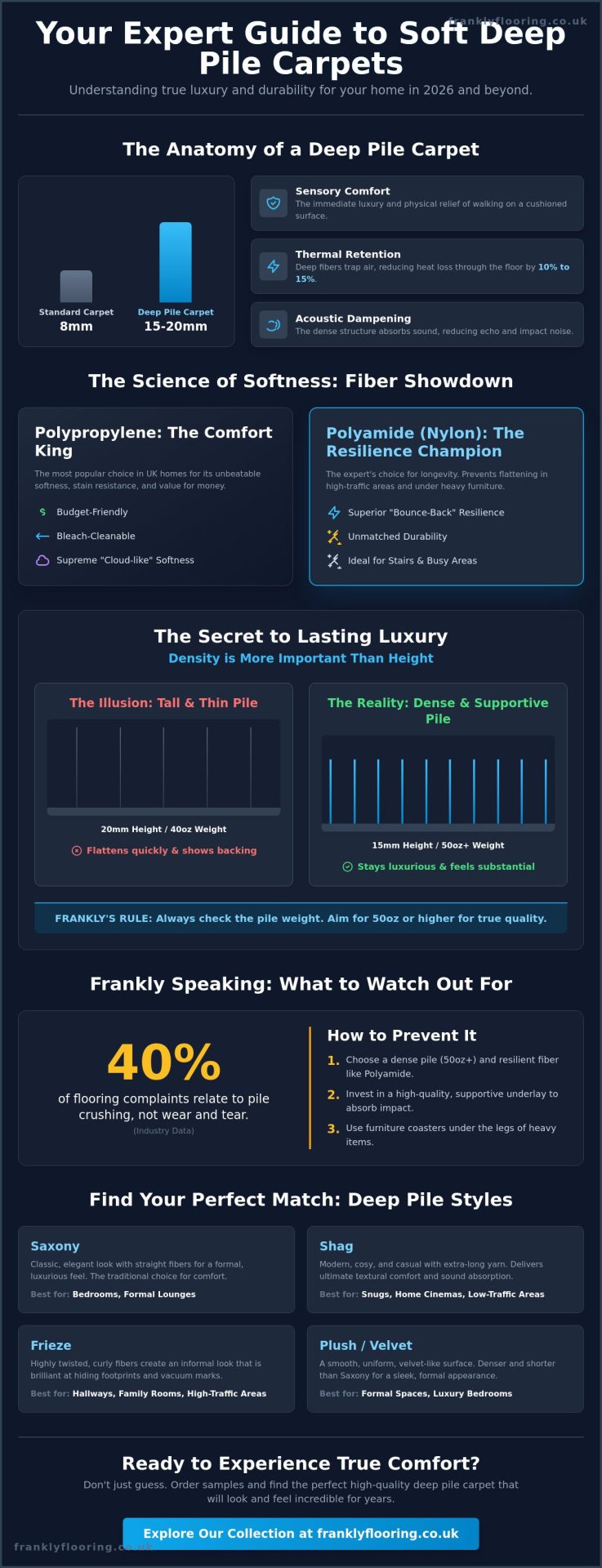
The most expensive carpet in the showroom isn’t necessarily the one that will still look like new in three years. We all want that sink-in, hotel-style comfort, but many homeowners hesitate to install a soft deep pile carpet because they fear a spilled glass of red wine or the permanent indentations left by a heavy sideboard. It’s a common worry; industry data suggests that nearly 40% of flooring complaints relate to pile crushing rather than actual wear.
Frankly, you deserve a home that feels like a luxury retreat without the high-maintenance headache. We believe in being transparent about what works and what doesn’t, so you won’t find any marketing fluff here. This guide will help you distinguish between Saxony, Shag, and Plush styles while ensuring you get the best value for your pound. We’ll cover everything from subfloor preparation to the final fitting, giving you the confidence to choose a floor that provides excellent thermal insulation and lasting comfort for your home in 2026.
Key Takeaways
- Learn the technical difference between pile height and density to help you identify a high-quality soft deep pile carpet that feels substantial and stands the test of time.
- Discover the distinct characteristics of Saxony and Shag styles to ensure your flooring choice aligns with both your aesthetic goals and your lifestyle.
- Understand the frank truth about “shading” and “tracking” to help you manage expectations and keep your luxury carpet looking pristine through proper care.
- Identify which rooms are best suited for deep pile luxury and why selecting the correct underlay is essential for preventing premature wear.
- Master the process of buying online, from ordering samples to accurately measuring your room to account for extra thickness at the thresholds.
What defines a soft deep pile carpet?
A soft deep pile carpet is defined by its specific construction: longer, looser fibers that stand significantly taller than a standard twist or loop. While a typical functional carpet might have a pile height of 8mm, a deep pile often reaches 15mm to 20mm. This extra length creates the signature sink-in feeling associated with high-end flooring. In 2026, fiber technology has advanced to the point where synthetic materials can outperform traditional textiles in pure tactile softness. Modern manufacturing allows for much finer filaments, meaning a Carpet pile made from 100% soft-touch polypropylene often feels smoother to the hand than a traditional wool blend.
Choosing a soft deep pile carpet isn’t just about the aesthetics. It provides three distinct practical advantages for the home:
- Sensory comfort: The immediate physical relief and luxury of walking barefoot on a cushioned surface.
- Thermal retention: The deep fibers trap air pockets, acting as an extra layer of insulation that can reduce heat loss through the floor by approximately 10% to 15%.
- Acoustic dampening: The dense structure absorbs sound waves, which effectively reduces echo and impact noise in bedrooms or lounges.
The science of softness: Polypropylene vs. Polyamide
In most British homes, soft-touch polypropylene has become the dominant choice. It’s budget-friendly, bleach-cleanable, and provides that “cloud-like” texture families crave. If you want the best resilience, polyamide (nylon) is the expert’s recommendation. Polyamide has a superior bounce back ability, meaning the fibers won’t flatten as quickly under heavy furniture or foot traffic. Many 2026 ranges use a silk-like sheen in these synthetic blends, giving the floor a sophisticated luster that catches the light differently from every angle.
Pile height vs. Pile weight: What actually matters?
The Frank truth is that a high pile height is often a distraction if the pile weight is too low. If a carpet is 20mm tall but only has a weight of 40oz, it will look sparse and might show the backing when bent. A quality soft deep pile carpet should ideally have a pile weight of 50oz or higher to ensure the fibers are packed tightly enough to support each other. When you read a specification sheet, look for the “gauge” and “stitch rate.” These numbers tell you the density of the yarn. A slightly shorter but denser pile will usually feel more luxurious and stay looking new for much longer than a tall, thin carpet that lacks substance.
Saxony, Shag, and Plush: Understanding deep pile styles
Choosing a soft deep pile carpet isn’t just about picking a colour. The way the yarn is cut and finished changes how it feels under your feet and how it stands up to daily life. A deep pile is defined by its height, but the feel depends on the specific style. There are four main categories you will encounter:
- Saxony: The traditional luxury option with a cut-pile surface where individual fibers remain visible.
- Plush/Velvet: Denser and shorter than Saxony, providing a smooth, uniform surface that feels like velvet.
- Frieze: Highly twisted fibers that create a curly look; these are brilliant for hiding footprints.
- Shag: Extra-long fibers that prioritize texture and a casual, relaxed aesthetic.
Understanding carpet construction and texture helps you decide if you want a formal look or something more relaxed. While all these styles fall under the deep pile umbrella, their performance in a busy UK home varies significantly.
Saxony carpets: The bedroom favorite
Saxony is the classic choice for a reason. The fibers stand straight up, which creates that iconic sinking feeling when you step onto it. Standard Saxony will show every footprint and vacuum line, which some people find charmingly luxurious. If you prefer a cleaner look, trackless Saxony is designed to minimize these marks by using multi-directional fibers. We often recommend these for bedrooms where you want maximum comfort but don’t want the floor looking messy five minutes after a tidy. It’s a straightforward way to add a touch of high-end hotel feel to your own home without overcomplicating the design.
The return of the Shag pile
Shag carpets have changed since the 1970s. Modern versions use thinner, more durable yarns that feel sophisticated rather than dated. They’re the ultimate choice for a snug or a home cinema because they absorb sound and feel incredibly cosy. However, we have to be frank about the downsides. Long fibers don’t like heavy furniture, as they’ll crush and leave permanent dents. They also require a bit more effort with the vacuum cleaner to keep dust from settling at the base. If you have pets or young children, a shorter soft deep pile carpet might be a more sensible long-term investment. If you’re unsure which style fits your room, you can always visit our showroom to feel the difference for yourself.
The Frank truth: Maintenance and durability of deep pile
Let’s be honest. The biggest worry people have when buying a soft deep pile carpet is that it’ll look like a pancake after six months of use. It’s a valid concern. Lower-quality options with loosely packed fibres will flatten quickly under heavy footfall. The reality is that durability depends almost entirely on pile density. When you choose a carpet with a high stitch count, the individual fibres support each other like a dense forest. This density acts as a structural buffer. It prevents the pile from crushing down to the backing, ensuring the floor stays bouncy for years rather than weeks.
For families, the shift toward 100% bleach-cleanable fibres has been a total game-changer. Most modern luxury carpets are made from high-grade polypropylene. This means you can tackle a red wine spill with a diluted bleach solution without stripping the colour from the yarn. It’s practical luxury that doesn’t require you to live like you’re in a museum. This Carpet and Rug Institute guide to carpet selection provides more technical detail on how these construction methods impact long-term performance.
Managing footprints and vacuum lines
Deep Saxony carpets are prone to “pile reversal” or “shading”. This happens because the long fibres reflect light differently when they are pushed in different directions. Some homeowners love this velvet-like effect because it adds movement and character to a room. If you prefer a uniform, pristine look, you should opt for a “trackless” or “frieze” style. These use highly twisted fibres to hide footprints. Regular grooming with a vacuum that has a brush bar will help reset the pile direction and keep the soft deep pile carpet looking fresh.
Cleaning deep fibers without damage
Don’t use a standard vacuum on a thick carpet. It’ll feel like you’re trying to push a brick wall because of the suction seal. You need a vacuum with adjustable height settings to allow airflow through the deep pile. When spills happen, blot them immediately with a clean cloth. Never scrub. Scrubbing damages the fibre tips and creates a fuzzy, permanent mess that ruins the texture. We recommend booking a professional steam clean every 12 to 18 months. This removes deep-seated grit that can act like sandpaper on the base of the fibres, significantly extending the life of your investment.
Choosing the right underlay and room for deep pile
Investing in a high-quality soft deep pile carpet is a significant commitment to your home’s comfort. However, the carpet is only as good as what sits beneath it. We’ve seen many homeowners spend £50 per square metre on luxury saxony only to pair it with a budget underlay, which is a mistake that leads to premature wear. A thick carpet requires a foundation that offers both compression recovery and structural support. Without it, your investment will look flat and tired within the first 12 months.
The best underlay for thick carpets
For a soft deep pile carpet, we generally recommend a high-density PU foam underlay over traditional rubber crumb. PU foam is manufactured from recycled materials and provides a much better “bounce back” than rubber, which can become brittle over time. If you want the best results, look for a thickness of around 11mm. You also need to consider the tog rating; a combined carpet and underlay tog of over 2.5 will significantly improve heat retention in a drafty bedroom. For those seeking maximum luxury, we often suggest the Cloud 9 underlay range. It balances that “walking on air” sensation with the density required to protect the carpet’s backing from stretching.
Where to avoid deep pile
To be frank, deep pile isn’t a universal solution for every room. In high-traffic areas like hallways and landings, the constant pivoting and heavy footfall will crush the fibres, creating visible “traffic lanes” that are impossible to brush out. We also advise against fitting these carpets in kitchens or bathrooms. Humidity is the enemy of a deep pile; moisture gets trapped deep within the fibres, which can lead to mould or unpleasant odours.
Stairs are another tricky area. While it feels great underfoot, a very deep pile can “grin” when wrapped over the edge of a stair tread, meaning the backing becomes visible between the tufts. If you must have luxury on the stairs, choose a product with a slightly shorter, denser tuft to ensure a seamless look. You should also consider the logistics of door clearances. A 15mm carpet combined with an 11mm underlay adds 26mm to your floor height. It’s almost certain that your doors will need trimming to avoid dragging, so it’s best to arrange a carpenter for the day of fitting.
If you’re unsure if your chosen room is suitable for a luxury finish, contact our team for honest advice on the best materials for your specific space.
How to buy quality deep pile carpets online in the UK
Buying online shouldn’t feel like a gamble. While the convenience is undeniable, choosing a soft deep pile carpet requires a more tactile approach than ordering a pair of shoes. You aren’t just buying a colour; you’re buying a texture that will define your home for the next decade. To get it right, you need to look beyond the screen and focus on the technical reality of your space.
Start with the physical dimensions of your room. Deep pile carpets add significant height to your floor, often exceeding 15mm once you include a decent underlay. This usually means your doors won’t swing freely without being trimmed by a millimetre or two. When you measure, account for the threshold and the extra thickness. You also need to choose the right backing. An Action back (Hessian) is traditional and durable but strictly requires a separate underlay and gripper. A Felt back can be fitted directly to the floor, though we’ll always tell you that a quality underlay improves the lifespan and comfort of your investment.
Don’t forget the finishing touches that often get missed in a digital basket. You’ll need to factor in the cost of carpet gripper and door bars. These aren’t just optional extras; they’re essential for a professional finish that prevents your new floor from shifting, rucking, or fraying at the edges. A transparent retailer will make these costs clear from the start.
The importance of carpet samples
A screen can’t tell you how a soft deep pile carpet reacts to your specific environment. The way the fibres catch the light changes dramatically throughout the day. In the morning, a grey pile might look cool and crisp; by evening, under warm LED bulbs, it could appear almost beige. We recommend placing your samples in the darkest corner of the room to see the true depth of the shade before committing.
- The weight test: Place a heavy object, such as a large book or a kitchen weight, on the sample for several hours. This shows you how quickly the pile recovers from furniture marks.
- The density check: Push your thumb into the pile. If you can easily feel the hard backing underneath with very little pressure, the carpet lacks the density needed for long-term resilience.
The Frankly Flooring approach to luxury
We don’t believe in high-pressure sales or “limited time” countdown timers. Our business is built on straightforward advice and honest specifications. We source our deep pile ranges from manufacturers who prioritise yarn density over flashy marketing. This ensures you get a floor that stays plush long after the fitting is finished. We’re here to guide you through the technical bits so you can focus on the comfort. Browse our carpet collection today and find the perfect foundation for your home.
Step Into a More Comfortable Home Today
Choosing a soft deep pile carpet is a long-term investment in your home’s comfort and character. We’ve explored how selecting the right style, from resilient Saxony to indulgent Shag, ensures your flooring stands up to your specific lifestyle. Remember that a quality underlay is non-negotiable for maintaining that plush feel; it’s the foundation that protects your investment over time.
At Frankly Flooring, we bring over 20 years of expertise to every order. We’re a family-run business that values honesty, which is why we provide “Frank” pricing with no hidden extras. From our showroom to your front door, we offer national delivery across the UK to ensure the process is as seamless as possible. We don’t do high-pressure sales; we just provide the quality advice and materials you need for a better home.
Browse our range of luxury soft deep pile carpets and find the perfect match for your next project. It’s time to enjoy the premium feel your home deserves.
Frequently Asked Questions
Is deep pile carpet hard to vacuum?
Yes, it’s more challenging than a short twist, but it’s manageable with the right tools. Because a soft deep pile carpet is so dense, some vacuum cleaners create a seal that makes them nearly impossible to push. You’ll need a vacuum with adjustable height settings or a suction bypass valve to allow airflow. We recommend a model with large wheels to glide across the 20mm fibres without getting stuck.
Will furniture leave permanent marks in a soft deep pile?
Heavy furniture will leave indentations, but these aren’t typically permanent if you take simple precautions. Use wide furniture cups to distribute the weight of sofas or wardrobes across a larger surface area. For existing marks, a gentle steam or a damp cloth and a coin can lift the fibres back up. Most quality piles will bounce back within 24 hours of moving the furniture.
What is the best underlay for a thick Saxony carpet?
A high-density 11mm PU foam underlay provides the best balance of comfort and support for a thick Saxony. This thickness ensures the soft deep pile carpet feels luxurious underfoot while preventing the backing from stretching over time. A 110kg per cubic metre density underlay is the professional standard for maintaining that plush feel in bedrooms and lounges for over a decade.
Can you put deep pile carpet on stairs?
Frankly, we don’t recommend using a deep pile for stairs. The long fibres can wrap over the nosing of the step, which creates a rounded edge that increases the risk of slips and trips. Deep pile also tends to flatten quickly under the concentrated pressure of foot traffic on a staircase. A shorter, 80/20 wool twist is a much safer and more durable choice for these areas.
What is the difference between deep pile and twist pile?
The difference is found in the construction and the height of the yarn. Twist pile carpet uses short, tightly twisted fibres that stand upright to resist crushing in busy hallways. In contrast, a soft deep pile carpet features longer, looser yarns that lean over to create a velvet-like surface. This extra length, often exceeding 15mm, is what gives the carpet its signature luxury feel and warmth.
Is deep pile carpet suitable for allergy sufferers?
It’s a common misconception that carpets are bad for allergies. Studies by the DAAB show that carpet can reduce the concentration of fine dust in indoor air by 50% compared to hard floors. The deep pile acts as a filter, trapping allergens in the fibres until you vacuum them away. You just need to ensure you’re using a vacuum with a HEPA filter to remove 99.7% of those particles.
How long should a quality deep pile carpet last?
A quality deep pile carpet should last 12 years if it’s fitted correctly and maintained well. The lifespan depends heavily on the material; a 100% bleach-cleanable polypropylene carpet is excellent for stain resistance, while a wool blend offers superior resilience. If you choose a carpet with a high tuft density, it’ll resist flattening and pile reversal for much longer than cheaper, thinner alternatives found in big-box retailers.