
Most homeowners assume that choosing a bold floor is the fastest way to make a room look dated within a year. It’s a valid fear. When you’re staring at hundreds of modern vinyl flooring patterns, the line between a designer magazine feature and a loud, expensive mistake feels incredibly thin. You want the character of a custom tile or hardwood floor, but you’re likely worried about ending up with something that feels like the cheap, shiny lino of the past.
We understand that choice paralysis is real, especially when the global vinyl market is projected to reach $28.0 billion by 2026. You need a floor that offers genuine architectural character and long term value. Our goal is to provide a Frank assessment of the latest trends, helping you cut through the noise to find a surface that’s both durable and stylish.
We’ll explore why the 2026 aesthetic is shifting toward warm honey tones and matte “raw wood” finishes that mimic natural materials with high realism. You’ll discover how to select patterns like herringbone or wide planks that provide a sophisticated look while remaining easy to clean and comfortable underfoot.
Key Takeaways
- Understand how high-definition printing technology has evolved modern vinyl flooring patterns from basic imitations into high-end architectural features.
- Identify the top 2026 trends, including “New Victorian” heritage styles and soft, organic geometrics that suit contemporary homes.
- Master the rules of pattern scale to ensure your floor enhances your room’s dimensions instead of making the space feel smaller.
- Decide between sheet vinyl and LVT based on whether you need a seamless continuous pattern or the specific resilience of individual tiles.
- Learn how to calculate the necessary over-order for patterned floors to avoid project delays and ensure a perfect finish.
What Defines Modern Vinyl Flooring Patterns in 2026?
The design philosophy behind modern vinyl flooring patterns has undergone a fundamental shift. We’ve moved past the era where vinyl was merely a budget-friendly imitation of ‘real’ materials. In 2026, the focus is on inspiration. Manufacturers use high-definition printing technology to create depth and texture that rivals natural stone or wood, but with a creative freedom those materials simply can’t match.
The Frank truth is that UK interiors are finally shaking off the ‘grey-everything’ trend. Homeowners are craving character. Patterns are making a massive comeback because they offer a shortcut to architectural interest without the maintenance of old parquet. Whether it’s a revival of Victorian heritage tiles or a muted, contemporary geometric, these floors act as a foundational element of a home’s character rather than just a background. The 2026 aesthetic favors clean lines and earthy palettes, moving away from the high-gloss, plastic looks of the past.
The Evolution of Vinyl from ‘Lino’ to Designer Flooring
Many people still associate vinyl with the thin, brittle linoleum found in 1970s kitchens. Today, Sheet vinyl flooring and LVT are engineered with sophisticated layers that prioritize both durability and realism. Modern vinyl is a high-performance polymer topped with bespoke aesthetic layers that capture fine details like graining and grout lines.
Because of improved wear layers and rigid core constructions, the material no longer feels cold or ‘plastic’ underfoot. It’s a dense, stable product that provides a quiet, cushioned feel while maintaining a sharp, professional finish that won’t fade or peel. You get the visual impact of a designer floor with the practical resilience of a modern synthetic.
Why Patterns are a Practical Choice for Modern Homes
Beyond the visual appeal, choosing modern vinyl flooring patterns is a strategic move for busy households. A solid, dark floor shows every speck of dust, while a very light floor highlights every pet hair. Patterns naturally mask these daily realities, making your home look cleaner for longer between sweeps.
We also see patterns used effectively to define spaces. In an open-plan living area, a change in pattern can ‘zone’ a dining nook or a home office without the need for physical walls or bulky furniture. This approach creates a sense of order and purpose in large rooms.
- Visual Warmth: Patterns break up large, sterile expanses of floor, adding a sense of coziness to modern builds.
- Durability: High-quality wear layers protect the print from scratches, making them ideal for hallways and kitchens.
- Maintenance: Simple sweeping and occasional mopping are usually all that’s required to keep the design looking fresh for years.
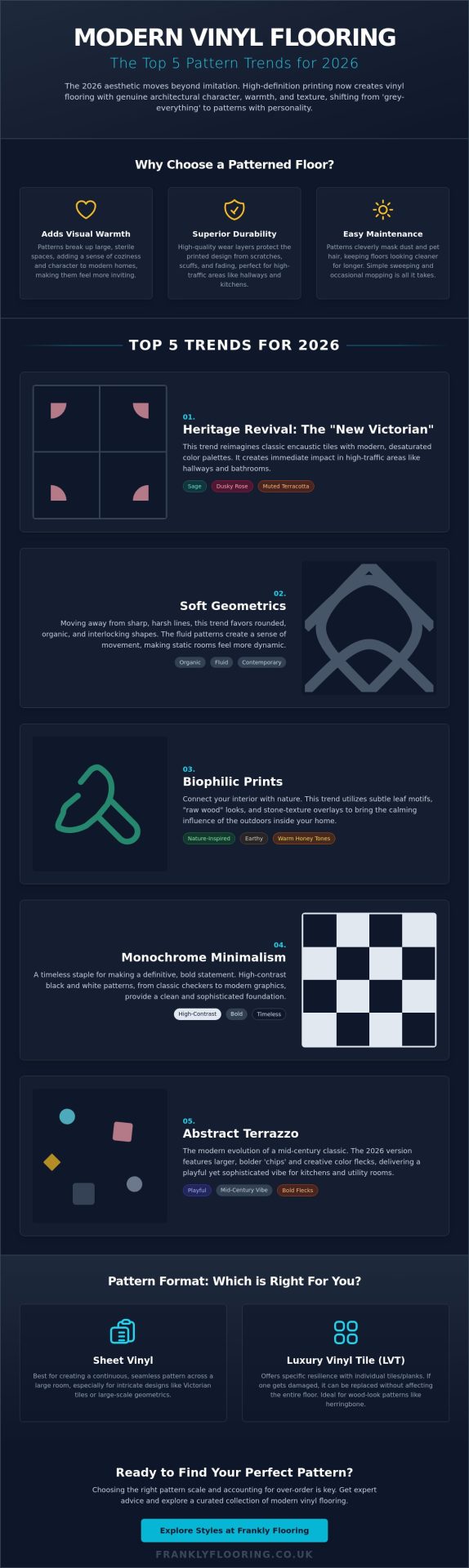
Top 5 Modern Vinyl Pattern Trends for 2026
Forecasting trends isn’t about chasing every passing fad. It’s about identifying which modern vinyl flooring patterns offer genuine longevity for your home. As we look toward 2026, the industry is moving away from sterile, repetitive designs in favor of patterns that feel hand-crafted or nature-inspired. This shift is supported by advances in sustainable vinyl manufacturing, which allows for richer textures and more complex prints without compromising on environmental standards.
The “New Victorian” style leads the charge by reimagining heritage encaustic tiles. Instead of the bright, primary colors of the past, 2026 favors desaturated tones like sage, dusky rose, and muted terracotta. Soft Geometrics are also rising in popularity. We’re seeing a move away from harsh, sharp triangles toward rounded, organic interlocking shapes that feel more fluid and less aggressive in a living space. These modern vinyl flooring patterns provide a sense of movement that can make a static room feel more dynamic.
Biophilic prints are another key trend, utilizing subtle leaf motifs and stone-texture overlays to bring the outdoors in. For those who prefer a bolder look, Monochrome Minimalism remains a staple, using high-contrast black and white patterns to make a definitive, Frank statement. Finally, Abstract Terrazzo is evolving. The 2026 version features larger ‘chips’ and bold color flecks, providing a contemporary mid-century vibe that works exceptionally well in kitchens and utility rooms.
Heritage Revival: The Victorian Tile Look
This trend is particularly effective in high-traffic areas like hallways and bathrooms where you want to create an immediate impact. Choosing a modern terracotta or desaturated blue can make a small space feel curated rather than cluttered. These classic patterns provide a timeless anchor for your home, especially when paired with high-quality furniture that shares a similar heritage feel.
Geometric Precision: Creating Visual Order
Modern 3D-effect patterns are excellent for adding perceived depth to a flat, featureless room. However, here is a Frank tip: avoid overly complex, small-scale geometrics in rooms that already have lots of busy furniture. It can create visual noise that makes the room feel smaller. For the crispest lines and most realistic finish, LVT flooring is the superior choice for these precise designs, offering the stability needed for complex layouts.
If you’re looking to refresh your space, choosing a balanced pattern is a reliable way to ensure your floor remains a foundational element of your home’s character for years to come.
Pattern vs. Scale: Choosing the Right Print for Your Room
Selecting from a range of modern vinyl flooring patterns is only half the battle. The real trick lies in mastering scale. A pattern that looks stunning on a hand-held sample can feel overwhelming when spread across sixty square metres. Conversely, a subtle print might disappear entirely in a large, sun-drenched lounge. The golden rule isn’t about following a strict formula; it’s about balance. While small patterns are traditional for small rooms, using a bold, large-scale print in a compact space can actually make the room feel more expansive by reducing the number of visible ‘seams’ or repetitions.
In narrow spaces, such as the classic UK galley kitchen, directional patterns are your best friend. Planks or geometric lines laid across the width of the room rather than the length can visually push the walls apart, making a cramped corridor feel significantly wider. When making these choices, we encourage you to look beyond the aesthetics. It is also wise to consider the health considerations of vinyl flooring regarding indoor air quality and VOCs, ensuring your stylish choice is also a safe one for your family.
Frankly speaking, you should never commit to a floor based on a digital image alone. Light behaves differently at floor level than it does on a vertical screen. Always order a sample and place it against your existing skirting boards and door bars. This allows you to see how the modern vinyl flooring patterns interact with your home’s natural light and architectural trim throughout the day.
Small Spaces: Bathrooms and Cloakrooms
Bathrooms and cloakrooms are often referred to as ‘jewel box’ rooms. Because these areas are self-contained, they are the perfect place to experiment with intricate, highly detailed patterns that might feel too ‘busy’ elsewhere. Vinyl’s inherent water resistance makes it the ideal canvas for these designs. If you have a windowless downstairs toilet, look for patterns with a light-reflecting base colour to brighten the space without needing extra lamps.
Large Spaces: Kitchen-Diners and Open-Plan Areas
The biggest risk in large, open-plan areas is pattern fatigue. If a complex design repeats too frequently over a massive surface, it can become visually exhausting. To avoid this, consider using ‘border’ patterns to define specific zones, such as a dining area or a kitchen island. This breaks up the visual field and adds a custom, high-end feel to the project. If you are planning a transition from a patterned utility room into a more traditional living space, you might consider how the design flows into engineered wood flooring for a sophisticated, textured contrast.
Sheet Vinyl vs. LVT: Which Pattern Format Wins?
Choosing between sheet vinyl and Luxury Vinyl Tile (LVT) isn’t just about the price tag. It’s about how the design is physically delivered to your subfloor. Sheet vinyl is the champion of seamless, continuous modern vinyl flooring patterns. Because it comes in large rolls, it can display complex, sweeping designs without the interruption of joints. This makes it a fantastic choice for intricate motifs or large-scale geometric prints that would be difficult to align using individual tiles.
On the other hand, LVT is the gold standard for ’tile-look’ patterns. If you’re aiming for a realistic stone or wood-effect layout, LVT provides the texture and individual plank definition that sheet vinyl can’t quite replicate. From a Frank perspective, the cost-benefit analysis is clear. Sheet vinyl is typically more affordable at the start. However, if you gouge a hole in it, you often have to replace the floor for the whole room. With LVT, you simply swap out the damaged tile. It’s a long-term value play for those who plan to stay in their property for years.
Installation is where the two formats truly diverge. Aligning modern vinyl flooring patterns across the seams of two sheets of vinyl requires a high degree of precision and often results in more wastage to get the match perfect. LVT is modular, meaning you have more control over the layout, though it takes longer to fit each piece individually to ensure the pattern remains crisp across the entire floor.
When to Choose Patterned Sheet Vinyl
Sheet vinyl is the logical choice for budget-friendly refreshes or rental properties where you need a quick, high-impact change. It’s also incredibly hygienic. Because there are no grout lines or joins for moisture and bacteria to hide in, it’s a top-tier option for bathrooms. To ensure a professional finish that stays flat, you’ll need to consider the subfloor preparation and whether you require accessories like a carpet gripper or specific adhesives to secure the edges in larger rooms.
When to Invest in Patterned LVT
If you want a floor that feels substantial and provides better sound insulation, LVT is the winner. It’s built for high-traffic ‘boots and all’ hallways where durability is non-negotiable. The rigid core of most modern LVT products handles heavy furniture better than softer sheet alternatives. If you’re still torn between a patterned look and a classic wood finish, you might also want to explore our guide on laminate flooring to compare durability and installation methods.
Ready to see these designs for yourself? Browse our full range of vinyl and LVT options to find the perfect match for your home.
How to Shop for and Maintain Patterned Vinyl Flooring
Buying modern vinyl flooring patterns online shouldn’t be a gamble. You need to look past the pretty picture and check the technical specifications to ensure the product matches your lifestyle. A Frank checklist starts with the wear layer. This is the transparent top coat that protects the design from fading and scuffs. For high-traffic areas like hallways, you want the thickest wear layer your budget allows. Next, check the slip rating. In wet areas like kitchens or bathrooms, an R10 rating is the baseline for safety. Finally, look at the warranty. A manufacturer’s confidence in their product usually tells you everything you need to know about its expected lifespan.
When you’re ordering, don’t just calculate the floor area and stop there. Patterned floors require more “over-order” than plain planks. You have to align the design at the seams or across tiles, which inevitably leads to more off-cuts. While 5% to 10% is standard for wood-look planks, we recommend 15% for complex, modern vinyl flooring patterns. This prevents the frustration of running short at the final corner and ensures you have a few spare pieces for future repairs.
Buying Tips: Getting it Right the First Time
Understanding pattern “repeats” is crucial for a realistic look. A repeat is the distance before the design starts again. If the repeat is too short, the floor can look artificial and repetitive across a large room. We always encourage you to read the technical specs for the R-rating, which measures slip resistance. Frankly Flooring prioritises transparency in these descriptions, giving you the raw data you need to make a sensible choice for your property.
Maintenance: Protecting the Print
Keeping your pattern vibrant for years is simple if you avoid a few common mistakes. Harsh chemicals, such as undiluted bleach or abrasive scouring pads, are the enemy of a vinyl floor. They can dull the finish and eventually wear down the protective layer that keeps the print crisp. Instead, use a pH-neutral cleaner and a damp mop.
If you do get a minor scratch, don’t panic. Modern matte finishes are excellent at diffusing light, making small imperfections much less noticeable than they would be on a high-gloss surface. This is one of the many reasons why the 2026 trend favors low-sheen, realistic textures. A bold floor is a smart investment in your home’s character, and with the right care, it will remain a foundational element of your interior for a long time.
Future-Proofing Your Home with the Right Pattern
Selecting a floor is about more than just covering a subfloor; it’s about setting the character for your entire home. We’ve explored how 2026 trends are moving toward heritage revivals and organic shapes, and why matching the scale of your print to your room size is vital for long-term satisfaction. Whether you opt for the seamless finish of sheet vinyl or the modular durability of LVT, the goal is a surface that balances aesthetic impact with practical resilience.
At Frankly Flooring, we provide honest, no-nonsense advice to help you navigate the many modern vinyl flooring patterns available today. As a family-run business with over 20 years of expertise, we prioritize integrity over high-pressure sales. We offer direct-to-door UK national delivery, making it easier than ever to transform your space with confidence. You don’t have to guess which specs matter; we’re here to provide the transparent data you need.
Browse our full range of modern vinyl patterns at Frankly Flooring and find a design that truly fits your lifestyle. Your next home improvement project is a chance to build a foundation that lasts for years.
Frequently Asked Questions
Is patterned vinyl flooring out of style?
Patterned vinyl is actually seeing a significant resurgence as we head into 2026. Homeowners are moving away from plain, neutral floors in favour of “Heritage Revival” styles like Victorian encaustic tiles. These modern vinyl flooring patterns add immediate architectural character to a room, making them a popular choice for those who want their floor to be a focal point rather than just a background.
Can I lay patterned vinyl over my existing floor?
You should avoid laying new vinyl directly over old flooring if you want a professional, long-lasting finish. Existing floors often have textures or imperfections that will “telegraph” through the new vinyl over time. For patterned designs, a perfectly flat subfloor is essential to ensure the lines remain straight and the joins stay invisible. It’s always best to strip back to the subfloor and prepare it properly.
How do I match patterned vinyl with my wallpaper or paint?
The most effective way to coordinate your room is to pull a secondary colour from the floor pattern and use it for your paint or wallpaper. If your floor has a complex Victorian motif, choose a muted tone from the design for your walls to create a cohesive look. This prevents the room from feeling cluttered and ensures the patterns don’t compete for attention or clash with your furniture.
Is patterned vinyl flooring more expensive than plain vinyl?
The price per square metre for patterned vinyl is usually comparable to plain options, but the total project cost is often higher. This is because modern vinyl flooring patterns require a larger “over-order” to account for pattern matching at the seams. You’ll likely need about 15% extra material to ensure the design aligns perfectly across the room, whereas plain floors only need about 5% to 10% for off-cuts.
How do I prevent pattern matching issues during installation?
Preventing installation issues starts with checking your batch numbers to ensure colour consistency across all rolls or boxes. Before you start, dry-lay the floor to see how the pattern falls against your main walls. This allows you to plan your cuts and ensures the most prominent part of the design isn’t sliced awkwardly at the doorway. Always order enough extra material to cover these alignment adjustments.
Which modern vinyl pattern is best for a small bathroom?
Intricate, small-scale patterns often work best in small bathrooms to create a “jewel box” effect. Because the floor area is limited, you can afford to be bolder with detail without overwhelming the space. Light-based geometric patterns are particularly effective in windowless cloakrooms as they help bounce light around, making the room feel brighter and more intentional rather than cramped.
Does patterned vinyl flooring fade in sunlight?
Modern vinyl is engineered with high-quality wear layers that include UV inhibitors to resist fading. While any material can eventually show signs of sun exposure over many years, quality vinyl is far more resilient than traditional carpets or natural wood. If your room gets intense, direct sunlight all day, using rugs or blinds during peak hours can further protect the vibrancy of your chosen pattern.
Is patterned LVT better than patterned sheet vinyl?
Neither is strictly “better” as the choice depends on your specific needs for the room. Patterned LVT is superior for high-traffic areas because it’s more durable and individual tiles can be replaced if damaged. Sheet vinyl is often the winner for bathrooms where a seamless, grout-free surface is more hygienic and provides a continuous, uninterrupted design across the entire floor.