
What if the floor that looks like high-end designer oak actually cost you less than a Saturday takeaway? Many homeowners assume that searching for cheap vinyl flooring uk wide means settling for something thin that dents under a chair leg or tears during a simple move. We understand the hesitation. It’s easy to feel overwhelmed by the confusing distinctions between sheet vinyl and LVT, or to worry that a budget price tag hides a mountain of delivery costs. You want a floor that looks premium but doesn’t require a professional fitter to get the job done right.
This guide will show you exactly how to find durable, stylish options that don’t compromise on quality. You’ll learn how to spot a reliable wear layer and select waterproof solutions that stay under the £10 to £15 per square meter mark. We’re going to strip away the marketing fluff to help you choose a floor that’s easy to install yourself and built to last, ensuring your home looks exceptional without the inflated price tag. It’s about making a strategic choice based on technical specs that actually matter for your daily life.
Key Takeaways
- Learn why the wear layer, rather than total thickness, is the critical technical spec that determines if your floor will withstand years of use.
- Discover how to navigate the cheap vinyl flooring uk market by identifying which rooms need high-performance waterproof specs and where you can safely save.
- Understand the “Frank” 10% rule for accurate measuring to prevent over-ordering and avoid paying for unnecessary waste.
- Find out why proper subfloor preparation is far more important than the price of the material for achieving a smooth, high-end finish.
- Uncover the secrets to sourcing high-end roll ends and designer remnants that offer premium durability at a significantly lower price point.
What Exactly Is ‘Cheap’ Vinyl Flooring in the UK Market?
Searching for cheap vinyl flooring uk wide often brings up images of the thin, plastic-looking rolls found in homes decades ago. Modern vinyl is a different beast entirely. It’s a multi-layered PVC product engineered for durability and style. If you look at what vinyl flooring is made of, you’ll see it includes a backing layer, a fiberglass core for stability, a high-definition printed design, and a protective wear layer. This construction makes it far more resilient than old-fashioned alternatives. It’s tough. It’s practical. It’s designed for real life.
Finding budget options isn’t just about the lowest sticker price. It’s about finding the sweet spot where the cost meets your specific needs. A floor that tears within six months is an expensive mistake, regardless of the initial saving. We focus on value for money. That’s the frank truth about budgeting; you want a product that balances an affordable entry price with a wear layer thick enough to handle your household traffic. Typically, the market is split between budget-entry rolls, mid-range cushion vinyl, and premium LVT. Understanding these brackets helps you avoid overpaying for unnecessary features.
Vinyl vs Lino: Clearing Up the Confusion
People often use “lino” as a catch-all term. Linoleum and vinyl are actually distinct materials. Linoleum is made from natural ingredients like linseed oil and wood flour. It’s eco-friendly, but it’s often pricier and requires more maintenance. Modern cushion vinyl is synthetic. This makes it naturally waterproof and incredibly easy to clean. It’s the ideal choice for British kitchens and bathrooms where spills are a daily reality. You get the look of natural stone or wood without the high price tag or the upkeep. Manufacturers can print almost any design on it, giving you total creative freedom on a budget.
Sheet Vinyl vs. LVT: Which Budget Is Right?
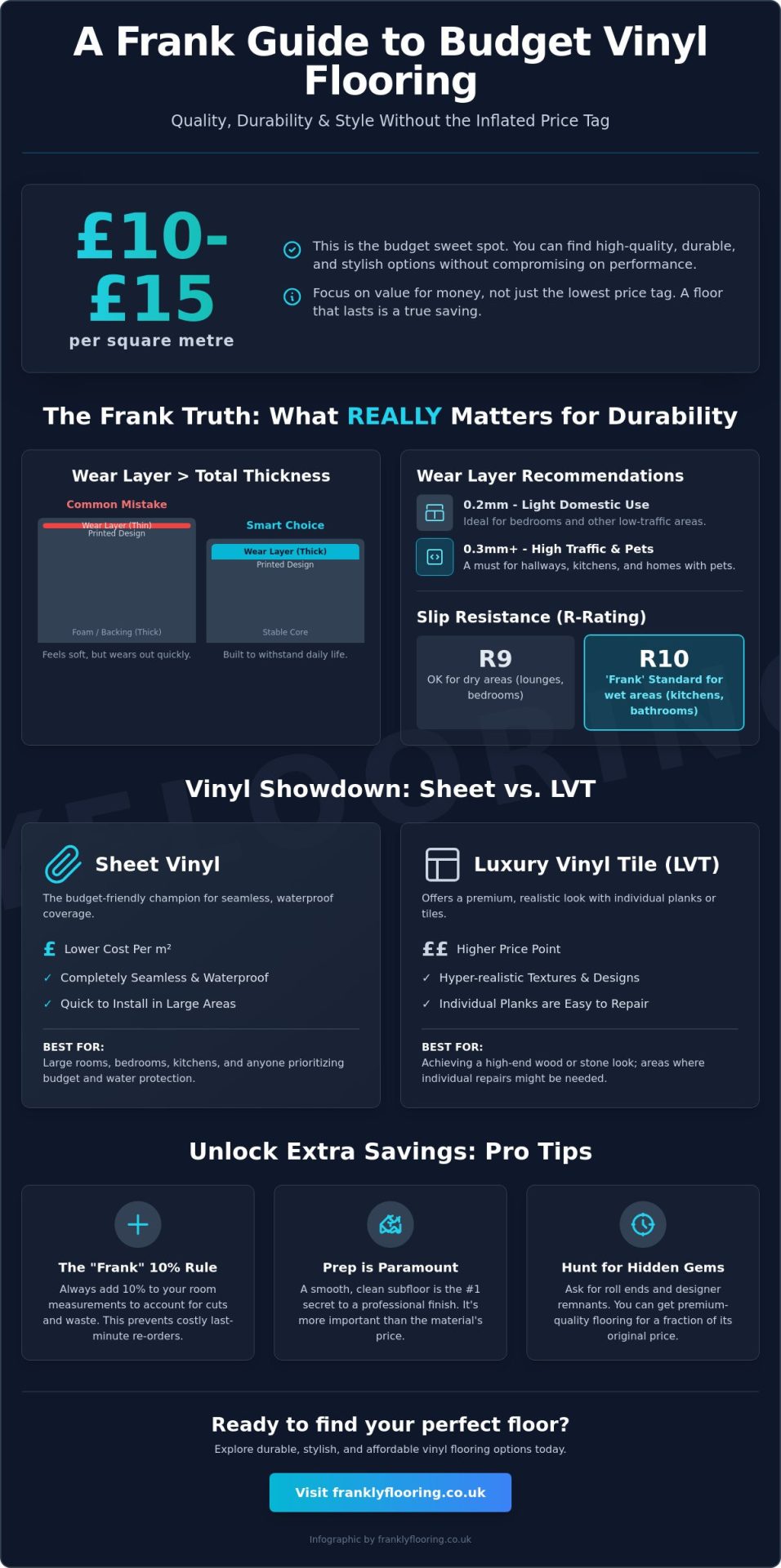
Choosing between sheet vinyl and LVT flooring usually comes down to your room size and your DIY confidence. Sheet vinyl comes in large rolls. This makes it the more affordable choice for covering large spaces with a seamless finish. It’s excellent for keeping water away from your subfloor. LVT consists of individual planks or tiles. It offers a more realistic texture and is easier to repair if a single piece gets damaged, but it carries a higher price point per square meter. If you’re watching the pennies, sheet vinyl is the winner for bedrooms where you want warmth underfoot without the cost of modular tiles.
The Frank Truth: How to Spot Quality in Budget Vinyl
When you’re browsing for cheap vinyl flooring uk deals, it’s easy to get distracted by total thickness. You might think a 4mm floor is automatically better than a 2.5mm one. That isn’t always true. Thickness often just means more foam, which feels soft but doesn’t actually protect the floor from scratches or heavy furniture. The real indicator of a floor’s lifespan is the wear layer. The wear layer is the transparent protective top coat. If this layer is too thin, the beautiful pattern underneath will wear away in months, regardless of how thick the backing is. We recommend looking for the highest wear layer your budget allows rather than just chasing a thick, squishy feel.
Safety is another area where we need to be candid. In the UK, we use ‘R’ ratings to measure slip resistance. While R9 is fine for a dry lounge, we consider R10 the ‘Frank’ standard for bathrooms and kitchens. It provides that extra grip when things get splashy. We also take safety seriously regarding the materials used. For those concerned about the chemical makeup of their home products, you can find official health information on vinyl chloride to understand the standards manufacturers must meet. The old myth that budget vinyl looks like a sheet of shiny plastic is dead. Modern digital printing and textured embossing mean even affordable options now have finishes that follow the wood grain or stone pits. It’s difficult to tell the difference once it’s on the floor.
Understanding the Wear Layer and R-Ratings
For light domestic use, a 0.2mm wear layer is common in budget ranges. If you have a busy hallway or pets, look for 0.3mm or higher. It’s a small jump in technical spec that makes a massive difference in longevity. Don’t settle for less in high-traffic areas if you want the floor to stay looking fresh. If you want to see how these specs look in practice, feel free to browse our vinyl collection for detailed breakdowns.
Felt Backing vs. Foam Backing: The Comfort Debate
UK homes, especially older terraces, often have subfloors that aren’t perfectly level. This is where felt backing shines. It’s thicker and more forgiving, helping to hide minor lumps and bumps in the floor beneath. It’s also significantly more tear-resistant, which is a lifesaver if you’re attempting a DIY fit and need to shuffle the vinyl into place. Foam backing offers a superior ‘cushion’ feel. It’s great for bedrooms where you want warmth and softness, but it requires a much smoother subfloor to look its best. Felt is usually the safer bet for the average DIY project.
Room-by-Room Guide: Where to Spend and Where to Save
Every room in your house has a different job. It makes sense that your flooring strategy should reflect that. When hunting for cheap vinyl flooring uk deals, you don’t need a heavy-duty commercial spec in a spare bedroom. You do, however, need a floor that can survive a flooded dishwasher in the kitchen. Being “Frank” about your room requirements allows you to stretch your budget further by spending where it matters and saving where it doesn’t. It’s about knowing which areas demand durability and which can get away with a purely aesthetic choice.
Utility rooms and hallways are the high-traffic arteries of your home. In a utility room, you’re dealing with heavy appliances, potential leaks, and muddy boots. This isn’t the place for the absolute thinnest option. We recommend choosing a floor with a slightly higher wear layer here to prevent the design from fading under the constant friction of foot traffic. If you go too cheap in a hallway, you’ll see a visible “pathway” worn into the pattern within a couple of years. Spend a bit more on the spec here to ensure the floor lasts as long as the rest of your renovation.
Conservatories require a frank assessment. Most budget-friendly vinyl isn’t built for the intense UV light and extreme heat fluctuations found in a typical UK conservatory. The material can fade or even ripple as it expands in the sun. If you’re determined to use vinyl in a sunroom, ensure it’s fully glued down with high-temperature adhesive. Even then, you should be aware that the lifespan might be shorter than in other parts of the house. For bedrooms, the opposite is true. These are low-traffic zones where you usually wear socks or go barefoot. It’s the perfect place to use the most affordable, cushion-backed options to save money without sacrificing comfort.
Kitchens and Bathrooms: Waterproofing is King
Sheet vinyl is often superior to laminate flooring in wet areas. While some laminates are water-resistant, they can still swell if moisture seeps into the joints. Sheet vinyl is one continuous, synthetic piece. It’s naturally waterproof from top to bottom. To keep it looking good, choose a mottled or stone-effect pattern. These are brilliant at hiding dried water spots and the occasional spill. Don’t forget the edges. A frank perimeter seal with high-quality silicone is the only way to ensure water doesn’t sneak under the vinyl and rot your subfloor.
Living Areas: Getting the Wood or Herringbone Look for Less
Herringbone is a dominant trend for 2026. Real parquet is stunning, but it’s expensive and difficult to maintain. Herringbone-effect sheet vinyl gives you that premium, architectural look for a fraction of the cost. It’s a clever way to add character to a lounge without the high-end price tag. If you’re connecting a vinyl lounge to a carpeted hallway, consider grey carpet transitions. The contrast between the sleek vinyl and soft carpet creates a professional, multi-textured feel that makes the whole home feel more expensive than it actually was.
How to Save More: DIY Fitting and Accessory Secrets
Saving money on cheap vinyl flooring uk projects involves more than just finding a low price per square metre. The real savings happen when you eliminate professional labour costs and avoid wasting expensive material. Fitting vinyl yourself is achievable for most homeowners, provided you approach the task with a bit of candour about your own DIY skills. It requires patience and the right tools. If you rush the preparation, even the most beautiful pattern will look amateurish once it is laid down.
Accuracy is your best friend during the planning stage. Rooms are rarely perfectly square, so we always recommend the “Frank” 10% rule. Measure your maximum length and width, then add 10% to the total to account for cuts and awkward corners. This prevents the nightmare scenario of being five centimetres short at the finish line. Once your material arrives, focus on the subfloor. A flat floor is more important than the vinyl’s price tag. Any grit, staples, or floorboard ridges will eventually “telegraph” through the vinyl, showing up as lumps or premature wear spots. Clean the floor thoroughly and ensure it is level before you even unroll the product.
When it comes to securing the floor, your method depends on the room size. For small bathrooms, heavy-duty double-sided tape around the perimeter is often sufficient. Larger areas require a spray adhesive or a trowel-applied glue for a permanent bond. If you have to join two pieces, use the “double-cut” method. Overlap the two edges, cut through both layers simultaneously with a sharp utility knife, and remove the waste strips. This creates a near-invisible seam that won’t lift over time. Finish the look with proper door bars and scotias to hide the expansion gaps and create a professional transition between rooms.
The Essential Accessory Checklist
Don’t fall into the trap of thinking accessories are optional extras. You should never skip the door bars or the carpet gripper if you are transitioning to a carpeted area. These components keep the vinyl under tension and prevent it from shifting. Be realistic about underlay, too. If your vinyl already has a thick felt or foam backing, adding an extra layer of underlay is often a waste of money and can make the floor feel too unstable. For the best results, you can find everything you need in our flooring accessories range.
Common DIY Pitfalls to Avoid
Acclimatisation is a non-negotiable step. Vinyl is sensitive to temperature and needs at least 24 hours to sit in the room where it will be fitted. This allows the material to expand or contract to the room’s environment, preventing “bubbling” or shrinking after it is glued down. While loose-laying is tempting for speed, it often leads to ripples in larger rooms. Be honest with yourself about the layout. If you are dealing with a complex L-shaped hallway with multiple door frames, that might be the moment to admit defeat and seek professional advice. It is better to pay for help on a difficult cut than to ruin a full roll of vinyl.
Why Frankly Flooring is the Candid Choice for Budget Vinyl
Choosing the right supplier is just as critical as picking the floor itself. At Frankly Flooring, we’ve built our reputation on over 20 years of family-run experience within the UK market. We don’t believe in high-pressure sales or burying technical flaws under marketing jargon. Our goal is to provide a candid, straightforward service that helps you secure the best cheap vinyl flooring uk has to offer without the usual stress. We operate with a level of integrity that larger corporate entities often lose, viewing your project as a foundational part of your home’s character.
One of the ways we provide exceptional value is through our dedicated ‘Bargains’ section. We use our industry connections to source high-end roll ends and remnants from premium ranges. These aren’t inferior products. They are simply the final pieces of larger rolls that allow us to offer designer-level durability and style at a fraction of the standard cost. When you combine these savings with our commitment to ‘Frank’ pricing, you get a clear, honest total at checkout. We don’t hide delivery surprises or tack on unnecessary fees at the last minute. Our national UK delivery service ensures your selection travels safely from our warehouse directly to your door.
Beyond the Floor: A Full Home Approach
A home is more than just a surface to walk on. It’s a collection of elements that need to work together. We often help customers coordinate their new vinyl with our quality furniture to create a cohesive look across the entire room. Our support team is here to provide a frank assessment of your needs, even if that means telling you a specific product isn’t right for your high-traffic hallway. We value long-term satisfaction over a quick win, ensuring you feel confident in every purchase you make from us. This commitment to a stress-free experience is a recurring marker of how we do business.
Ready to Refresh Your Home?
Updating your space shouldn’t feel like a gamble. We encourage you to browse our current vinyl collection and see the variety of textures and patterns available for 2026. If you’re unsure about a specific shade or how a wear layer feels, ordering samples is the easiest way to see the quality firsthand in your own light. It’s a simple, no-nonsense step toward a better home. Take your time to consider the technical specs we’ve discussed, then explore our range of cheap vinyl flooring today to find a solution that matches both your style and your budget.
Take the Next Step Toward Your New Floor
Upgrading your home doesn’t have to break the bank if you focus on the technical details that actually impact longevity. By prioritizing the wear layer over simple thickness and using the “Frank” 10% rule for measuring, you can avoid common pitfalls that lead to wasted money. Remember that a successful project starts with a flat subfloor and ends with a perimeter seal that protects your investment from moisture. Finding the right cheap vinyl flooring uk wide is simply a matter of balancing these practical needs with the styles you love. It’s about making a choice that stands up to daily life without exceeding your budget.
At Frankly Flooring, we bring over 20 years of family-run experience to every order. Our transparent “Frank” pricing ensures you won’t face hidden fees at checkout; our national delivery service brings your selection directly to your door. We take pride in helping you find high-quality solutions that fit your lifestyle. Whether you’re refreshing a small bathroom or tackling a full-house renovation, we’re here to provide the candid advice you need to get the job done right.
Browse our latest deals on cheap vinyl flooring today and start your project with total confidence.
Frequently Asked Questions
Is cheap vinyl flooring waterproof enough for a bathroom?
Yes, sheet vinyl is inherently waterproof because it’s made from synthetic PVC. Unlike materials with many joins, it doesn’t have seams that allow water to penetrate and damage the subfloor. To ensure full protection, you must apply a silicone seal around the perimeter of the room. This prevents water from sneaking under the edges and causing rot or mould over time.
How long can I expect a budget vinyl floor to last in a UK home?
A typical floor in the cheap vinyl flooring uk category should last between 10 and 20 years. The exact lifespan depends heavily on the thickness of the wear layer and the amount of foot traffic it receives. In a low-traffic bedroom, it’ll stay looking fresh for much longer than in a busy hallway. Proper maintenance is the key to extending its life.
Do I need underlay for sheet vinyl flooring?
You don’t usually need a separate underlay for modern sheet vinyl. Most products come with a built-in felt or foam backing that provides sufficient cushioning and warmth. Adding an extra layer of underlay can actually make the floor too soft. This increases the risk of heavy furniture puncturing or denting the surface. It’s better to focus on making your subfloor as smooth as possible.
Can I lay new vinyl over my existing floor to save money?
We don’t recommend laying new vinyl over an old floor. Even if the existing floor looks flat, any patterns, grout lines, or minor imperfections will eventually “telegraph” through to your new surface. This creates unsightly ridges and speeds up wear in those specific spots. Stripping the floor back to the subfloor is a bit more work, but it ensures a professional finish.
What is the difference between R9 and R10 slip resistance?
The primary difference is the level of grip provided in wet conditions. R9 is the lowest rating and is suitable for dry areas like lounges or bedrooms. R10 offers a higher level of slip resistance, making it the standard choice for kitchens and bathrooms where spills are common. Choosing R10 provides peace of mind for families with children or elderly residents who need extra stability.
How do I clean and maintain cheap vinyl to keep it looking new?
Maintenance is straightforward and requires nothing more than a soft brush and a damp mop. Use a pH-neutral cleaner designed for vinyl and avoid soaking the floor with excessive water. You should never use a steam mop. The intense heat can weaken the adhesive bond and damage the protective wear layer. Regular sweeping prevents grit from scratching the surface over time.
Can cheap vinyl flooring be used with underfloor heating?
Many cheap vinyl flooring uk options are compatible with underfloor heating, but there are strict limits. The surface temperature of the floor should never exceed 27°C. Excessive heat can cause the material to soften, discolour, or even warp. It’s vital to check the specific technical data sheet for your chosen product before you proceed with the project to ensure total safety.
Is sheet vinyl better than LVT for a tight budget?
Sheet vinyl is undeniably the winner if your primary goal is to save money. It is generally cheaper per square metre and can be fitted much faster than individual tiles or planks. While LVT offers a more modular look and easier repairs for single planks, sheet vinyl provides a seamless, waterproof finish that is perfect for large rooms. It’s the most cost-effective way to transform a space.