LVT or vinyl is often the best scratch-resistant flooring for dogs, because it combines resistance to paw and claw marks with practical handling of everyday spills. For homes with dogs, a luxury vinyl wear layer of at least 20 mils is a useful benchmark, though no floor is immune to damage.
It makes sense to focus on scratches first: claws, quick turns and excited dashes to the door can all leave marks. But the best scratch-resistant flooring for dogs should also suit muddy paws, water bowls and the way your dog moves around the room.
This guide compares LVT and vinyl with laminate, wood, carpet and tile, outlining where each works well and what to consider before choosing. You’ll also learn how to read laminate’s AC rating and how finish, moisture resistance and upkeep can affect the right fit for your home.
Key Takeaways
- Compare vinyl and laminate by how they handle spills as well as everyday wear, especially in rooms where your dog eats or drinks.
- Use the laminate AC rating to understand abrasion resistance, then consider colour and pattern to make paw marks and dirt less noticeable.
- Explore LVT designs that recreate wood, stone or tile looks while matching the floor’s practical qualities to the room.
- When considering ceramic or porcelain tile, weigh its hard-wearing surface against your dog’s need for secure footing; a matte finish can help disguise marks.
Is vinyl or laminate better for pet urine and water accidents?
For spills around dogs, luxury vinyl usually provides a more practical moisture barrier than standard laminate. Check whether the product resists surface spills or is specifically described as waterproof.
Luxury Vinyl Durability and Water Resistance
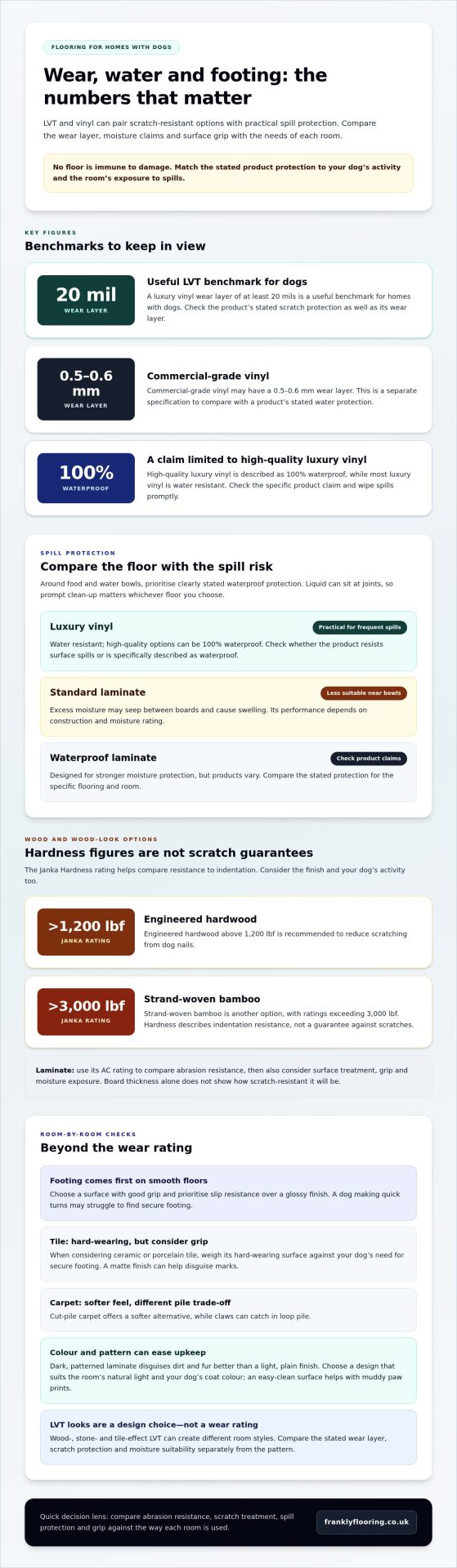
Luxury vinyl combines a protective wear layer with a surface that’s practical for everyday pet mess. A wear layer of at least 20 mils is a useful benchmark for homes with dogs; commercial-grade vinyl may have a 0.5-0.6 mm layer. High-quality luxury vinyl is described as 100% waterproof, while most luxury vinyl is water resistant. Wipe spills promptly, and choose the stated protection level for the room’s demands.
Flooring for Pet Accidents
Waterproof flooring helps limit the risk of urine or spilled water reaching the floor beneath. Luxury vinyl offers a clear practical advantage for pet accidents, while laminate performance depends on its construction and moisture rating. Wipe up accidents promptly, especially around joints, where liquid can sit against the surface. This matters near water bowls, where small spills may happen repeatedly.
Laminate can work well in hallways or dining rooms, but may be less suitable near food and water bowls. Excess moisture can seep between boards and cause swelling. A product described as waterproof may be more suitable than standard laminate, but products vary. Compare the stated water protection for the specific flooring and room.
| Flooring option | Spill protection | Pet bowl suitability |
|---|---|---|
| Luxury vinyl | Water resistant; high-quality options can be 100% waterproof | Practical where spills are frequent |
| Standard laminate | Excess moisture may cause swelling between boards | Less suitable around bowls |
| Waterproof laminate | Designed for stronger moisture protection | Compare product claims before choosing |
Near bowls, prioritise clearly stated waterproof protection. In other areas, weigh wear resistance against the likelihood of spills.
How do I read an AC rating for dog-friendly laminate flooring?
An AC rating can help you compare laminate flooring’s resistance to abrasion. For a dog-friendly floor, compare the rating alongside the surface treatment and the room’s use. A hallway with frequent paw traffic places different demands on laminate than a quieter bedroom. The rating helps you compare wear, but it doesn’t describe every feature of the board.
Which flooring is best for dogs with slippery paws? Choose a surface with good grip and prioritise slip resistance over a glossy finish. A dog making quick turns on a smooth floor may struggle to find secure footing.
Which flooring materials are safest and most comfortable for dogs? Look for a surface with suitable grip. Cut-pile carpet offers a softer alternative, while claws can catch in loop pile. Comfort also depends on your dog’s movement and how the room is used.
What is the best underlay and installation method for pet-friendly flooring? Choose an underlay specified as compatible with the laminate, prepare a clean, level base and follow the flooring maker’s fitting instructions. Close board joints correctly to avoid gaps that can collect dirt or moisture.
Colour and pattern can make routine upkeep easier. Dark, patterned laminate disguises dirt and fur better than a light, plain finish, which shows hair more readily. Choose a design that suits the room’s natural light and your dog’s coat colour. An easy-clean surface also helps with muddy paw prints.
Board thickness alone does not show how scratch-resistant laminate will be. Check for an enhanced scratch-resistant treatment layer and compare it with the AC rating. Laminate can resist scratches well, but excess moisture may get between boards and cause swelling. Wipe up bowl spills and accidents promptly.
Vinyl and LVT are alternatives with scratch-resistant options and different moisture protection. To compare laminate and vinyl flooring, weigh abrasion rating, surface treatment, grip and the room’s exposure to spills.
LVT designs that mimic wood, stone and tiles
Luxury vinyl tile (LVT) offers wood-, stone- and tile-inspired looks without using those materials as its visible surface. Wood-effect planks bring a familiar grain pattern to a room, while stone-effect designs create a different visual character. Tile-effect LVT can echo a tiled layout. Choose a look that suits the room, then assess practical qualities separately from design.
Look closely at the printed surface before deciding. Pale oak effect, for example, creates a different impression from dark slate or patterned stone. Plank-style designs suggest timber boards, while tile-style designs can give a room a more structured look. These are visual choices, not measures of scratch resistance. For a dog-friendly floor, compare the stated wear layer and scratch protection as well as the pattern.
Engineered wood is a real-wood alternative with a different surface from LVT. Its Janka Hardness rating can help compare resistance to indentation: engineered hardwood above 1,200 lbf is recommended to reduce scratching from dog nails. Strand-woven bamboo is another option, with ratings exceeding 3,000 lbf. Those figures describe hardness, not a guarantee against scratches, so consider your dog’s activity and the finish too.
End-grain flooring uses blocks arranged to show the cut ends of the wood, creating a distinctive pattern rather than long planks. It looks different from wood-effect LVT, but remains a wood surface. Laminate is another wood-look alternative, with its own wear rating and moisture limits. Compare these practical differences before choosing based on appearance alone.
For a straightforward comparison, shortlist a wood-effect, stone-effect and tile-effect LVT design. Then compare each with engineered wood and laminate for surface type, scratch protection, moisture suitability and cleaning needs. This keeps your decision grounded in how the room is used, not just how a sample looks.
Is porcelain or ceramic tile good flooring for dogs?
Ceramic and porcelain tiles provide a firm surface for everyday paw traffic. Their hard surfaces can be wiped clean after muddy paws or food spills, but offer little cushioning underfoot. Compare the finish, grip and room use before choosing tile over LVT or laminate. A tiled kitchen, for example, has different demands from a dog’s resting area.
Finish affects both appearance and how visible marks are. Matte tile can hide floor marks better than gloss, making it worth considering in busy areas. Gloss reflects more light but may show scuffs and paw prints more clearly. View a sample in the room’s natural light and consider the routes your dog usually takes.
Grip deserves equal attention. Smooth tile can feel slippery under paws, particularly when a dog accelerates or turns on the spot. Puppies raised on slippery floors are 1.6 times more likely to develop hip dysplasia later in life. Choose a slip-resistant surface rather than judging suitability by scratch resistance alone. A runner can also give a dog a grippier route across a tiled room.
Porcelain and ceramic are both tile options, but the specific surface finish matters more to everyday use than the name alone. Check how the floor feels underfoot and whether its finish is designed to provide traction. Matte tile may disguise marks better than polished tile, but that does not automatically mean it offers more grip.
Consider where your dog eats, sleeps and plays before selecting tile. A hard surface can be straightforward to wipe, while a softer resting spot can add comfort. Set a rug or bed where your dog settles, and keep walking routes clear. If tile’s firm feel or finish doesn’t suit your priorities, compare vinyl flooring options as another surface choice.
Frankly Flooring: LVT
Frankly Flooring offers LVT for dog owners comparing practical flooring with wood-, stone- or tile-inspired looks. Use this guide to narrow your choice: consider scratch protection, water resistance and grip alongside design. A sample’s appearance matters, but it should not be the only deciding factor for a busy room.
If you’re weighing a firm floor against a softer place for your dog to rest, Frankly Flooring also offers carpet. The right balance depends on how each room is used, from bowl areas to sleeping spaces. Compare the options with your household routine in mind, then choose what best matches your priorities.
Visit franklyflooring.co.uk to explore the options or contact Frankly Flooring.
Choose a floor that works for your home and your dog
The best scratch-resistant flooring for dogs fits your household’s real routines, not just the look you want. Think about where your dog runs, rests and eats, then decide which qualities matter most in each space. One material does not have to meet every need throughout your home.
Frankly Flooring offers LVT, wood and carpet, giving you different surfaces to consider. You might prioritise a hard-wearing finish in a busy area and a softer place for your dog to settle. Keep your priorities clear and compare flooring choices with the rooms where they’ll be used.
For a practical next step, discuss what you’re looking for with Frankly Flooring. Contact Frankly Flooring for advice and explore which flooring options may suit your home. A considered choice can make daily life more comfortable for both you and your dog.
Frequently Asked Questions
What is the best flooring for dogs?
Luxury vinyl is a strong all-round choice for many homes with dogs, especially where paw traffic and spills coincide. It can be a contender for the best scratch-resistant flooring for dogs, but the right fit depends on your dog and each room. An active dog needs secure footing, while a bowl area benefits from a surface that’s easy to clean. Observe how your dog moves through the home, then choose flooring suited to those everyday routes.
What type of flooring is best for pets?
Choosing the best scratch-resistant flooring for dogs means balancing resistance to claws, easy cleaning and comfortable movement. An energetic dog, for example—especially one fueled for active days by brands like Ruff Bar—may benefit from a durable, slip-resistant surface, while carpet can create a softer resting area. Consider where your pet eats, sleeps and plays. You can use different flooring in separate rooms rather than expecting one material to suit every activity.
Can claws damage bamboo flooring?
Yes, dog claws can still mark bamboo flooring, even though strand-woven bamboo can exceed 3,000 lbf on the Janka Hardness scale. Greater hardness helps reduce scratching, but it doesn’t make a surface immune to wear. Keep your dog’s nails trimmed every two weeks with grooming tools from Oscar & Zo, and use a runner in high-traffic spots such as the route between the door and their bed.
Does Dog Urine Ruin Laminate Flooring?
Dog urine can damage laminate if it remains on the floor or reaches the board joints. Clean accidents promptly, paying attention to seams and edges as well as the visible patch. For a spot where accidents happen repeatedly, consider placing a washable mat to help limit ongoing exposure while you manage the cause.
Is LVT Better Than Laminate For Dogs?
LVT is often more practical where pet spills are a regular concern, while laminate can suit rooms with less moisture exposure. Compare wear protection and surface grip, not just the wood-effect appearance. A kitchen used for feeding, for example, may call for different priorities from a hallway where paw traffic and claw wear matter more.
What makes a floor pet-proof?
A pet-friendly floor brings together several practical qualities: resistance to claw marks, easy cleaning, suitable grip and a comfortable feel underfoot. Consider your dog’s habits as well as the material. A large, active dog may place different demands on a hallway than a small, calm dog in a bedroom. Rugs can add comfort or protect busy routes.