
The most durable floor for a busy home isn’t the one that looks flawless on day one. It’s the one that knows how to hide a life well-lived. You might worry that choosing a wood grade filled with knots, grains, and natural cracks means you’re buying a “damaged” product, but that’s a common misconception. In reality, rustic oak flooring is the most honest material you can put in your home because it embraces the very imperfections that make wood both beautiful and resilient.
You want a home that feels warm and authentic, but you don’t want to spend every weekend worrying about a new scratch from the dog or a dent from a dropped toy. We’re going to strip away the marketing jargon to give you a frank look at how different grades and materials actually perform. You’ll learn exactly how to distinguish between engineered and laminate options, how to maintain textured surfaces without the headache, and how to get the best value for your money. This guide previews everything from current 2026 market trends to practical durability, giving you the quiet confidence to choose a floor that brings genuine character to your space while standing up to the rigors of daily wear.
Key Takeaways
- Learn why “rustic” isn’t just a look but a technical timber grade that uses natural knots and sapwood to create a floor with genuine character.
- Compare the structural benefits of engineered wood, laminate, and LVT to see which rustic oak flooring material suits your home’s specific needs.
- Discover the “camouflage” advantage of textured wood. It hides daily wear from pets and busy families better than cleaner, prime grades.
- See how to pair a character-rich floor with minimalist furniture to ensure your space feels balanced rather than cluttered.
- Understand why buying online offers better value by cutting out showroom costs, provided you use samples to check the grade at home.
What Exactly is Rustic Oak Flooring?
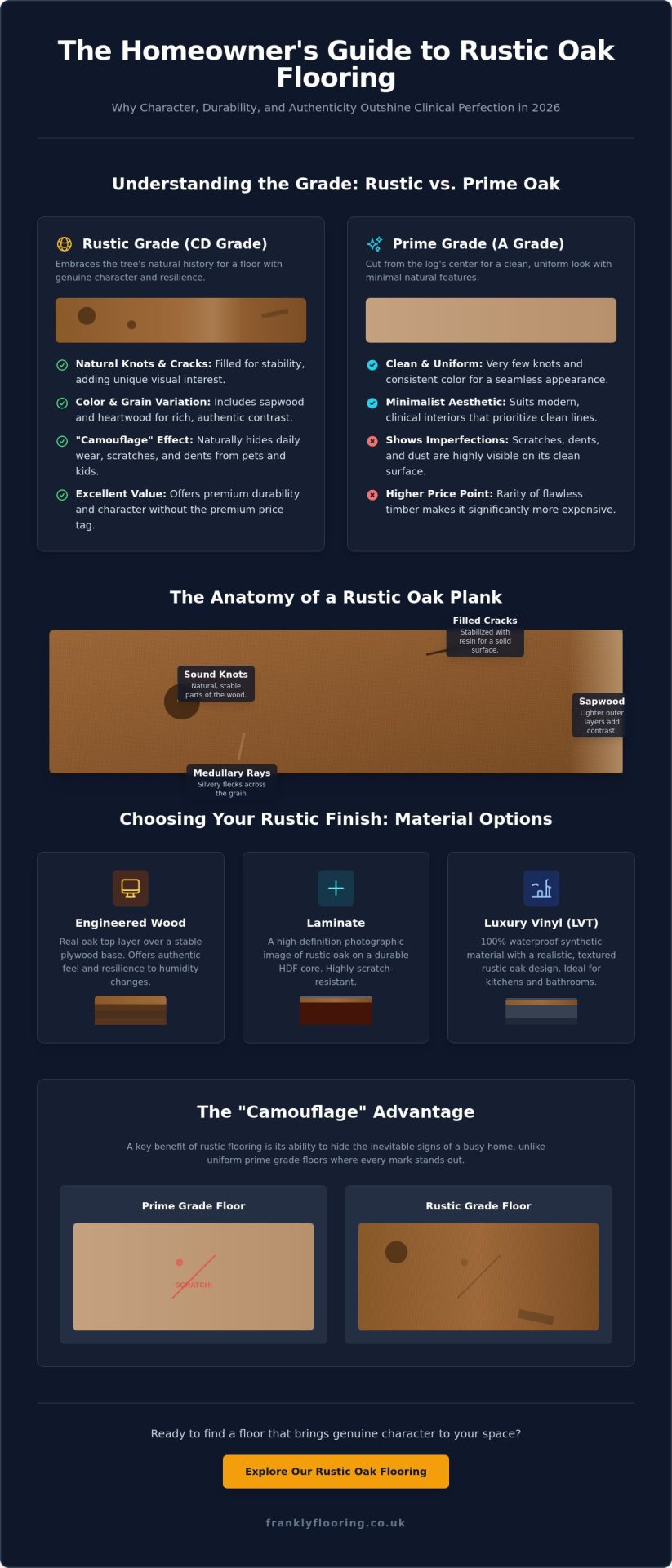
Many homeowners assume that “rustic” is just a marketing term for wood that looks a bit old-fashioned. That isn’t the case. When we talk about rustic oak flooring, we’re actually describing a specific timber grade, often referred to in the industry as Grade CD. This isn’t a comment on the wood’s structural integrity or its longevity; it’s a description of its visual character. A rustic plank includes the natural features of the tree that other grades strip away, such as large knots, streaks of sapwood, and deep color variations.
In the UK interior design scene of 2026, this look has become the gold standard for those wanting a home that feels grounded and permanent. There’s a common misconception that rustic means “low quality” or that the wood is somehow weaker because it has knots or cracks. That’s simply not true. The knots are a natural part of the oak’s growth. In modern manufacturing, any open cracks are professionally filled and sealed to ensure the plank remains solid and easy to clean. You aren’t buying a second-rate product; you’re buying a slice of nature that hasn’t been over-processed.
Rustic Grade vs. Prime Grade: The Key Differences
Prime grade, also known as Grade A, is the “cleanest” version of oak. It’s cut from the center of the log, resulting in minimal knots and a very uniform color. Because only a small percentage of any given tree meets these strict criteria, it carries a significantly higher price point. If you want a floor that looks like a single, seamless sheet, Prime is for you. However, it can often feel a bit cold or clinical in a residential setting.
Rustic grade (Grade CD) embraces the whole tree. You’ll see larger knots, filled cracks, heartwood, and the lighter outer layers known as sapwood. Interestingly, because rustic boards often contain more of the tree’s natural structure, they can be remarkably stable. In the UK, where humidity levels fluctuate throughout the year, this natural resilience is a practical advantage. Understanding the different hardwood flooring types helps you see that “rustic” isn’t a compromise on quality, but a choice of character and durability.
Why “Character” is the New Luxury
The trend for 2026 has moved decisively away from uniform, clinical perfection. Homeowners are now looking for organic textures that feel “lived-in” and authentic. With rustic oak, no two planks are identical. One board might feature a large, dark knot while the next shows the swirling grain of the heartwood. This variety creates a floor that anchors a room and provides a unique foundation that can’t be replicated by mass-produced, perfectly matched alternatives. Rustic oak is the most authentic representation of the tree’s natural history.
Understanding the Anatomy of a Rustic Oak Plank
To truly appreciate rustic oak flooring, you need to understand what is happening inside the timber. Every plank tells a story of the tree’s growth, environment, and age. While prime grades focus on a clean, uniform look, rustic grades celebrate the physical anatomy of the oak. This includes everything from the knots where branches once grew to the medullary rays that transported nutrients through the trunk. These aren’t flaws; they are the DNA of the wood.
Knots are the most distinctive feature you’ll see. You will encounter “sound knots,” which are firmly intergrown into the wood’s structure, and “dead knots,” which may have loosened over time. In a quality rustic board, these dead knots are professionally filled with a hard-wearing resin. This isn’t a repair; it’s a standard part of the manufacturing process that ensures the board remains solid. You should also expect sapwood, the lighter, creamier wood found near the bark. It creates a striking contrast against the darker heartwood, giving the floor its famous visual depth. If you want to see how these natural variations come together, you can view our range of character-rich wood to get a better sense of the scale.
One of the most beautiful features of high-quality oak is the presence of medullary rays. These appear as silvery, ribbon-like “flecks” across the grain. They are most visible in boards that have been cut specifically to showcase the internal structure of the tree. When your flooring arrives, remember that oak is a natural product. Color variation between packs is normal. The best approach is to “shuffle” your packs before you begin, mixing planks from different boxes to ensure a balanced spread of character across the entire room.
Knots, Cracks, and Fillers: What to Expect
Manufacturers use wood fillers or tinted resins to stabilize natural splits and shakes. This process is vital, especially for wider planks which are naturally more prone to movement. A “filled” rustic floor is very different from a “distressed” floor. Distressed wood has been intentionally beaten, scratched, or scraped to look old. A filled rustic floor simply keeps the natural features of the timber intact while making the surface smooth and functional. This treatment provides the structural integrity needed for a floor that must withstand decades of foot traffic.
The Impact of Surface Finishes on Rustic Grain
The finish you choose determines how much that natural anatomy stands out. A brushed finish is a popular choice for 2026. Steel brushes are used to remove the softer springwood, leaving the harder grain raised. This enhances the physical texture and makes the floor excellent at hiding daily wear and tear. Oiled finishes soak deep into the wood, highlighting the medullary rays and grain patterns with a matte, organic look. Lacquered finishes sit on top of the wood, providing a protective barrier. While lacquer is often easier to wipe clean, an oiled finish usually does a better job of making the rustic character feel tactile and authentic.
Engineered Wood, Laminate, or LVT? Choosing Your Rustic Finish
Achieving the aesthetic of rustic oak flooring doesn’t require a single specific material. In 2026, the market offers three primary ways to bring that character-rich look into your home. Each option serves a different purpose, whether you’re prioritising the cold, hard facts of a budget or the long-term value of authentic materials. Choosing between them requires a frank look at how you actually use your space. While the visual goal is the same—knots, grain, and warmth—the performance underfoot varies significantly.
If you want the genuine feel of timber, engineered wood flooring is the undisputed gold standard for authenticity. It uses a real oak veneer bonded to a stable, multi-layer core. This construction provides the stability needed to handle UK humidity changes while keeping the knots and grain patterns entirely natural. It is the only choice that allows you to sand and refinish the surface in the future, which is a major factor in long-term property value. It isn’t just a floor; it’s a permanent part of the building’s character.
Budget vs. Longevity: A Frank Comparison
When you’re deciding on a material, you have to weigh the initial cost against how many years you expect the floor to last. While engineered wood offers the most realism, laminate flooring has become a formidable contender for high-traffic areas. Modern laminate uses high-definition photography to replicate rustic patterns on a dense fibreboard base. It’s an excellent choice for rental properties or playrooms where scratches and spills are a daily reality. It’s tough, easy to replace, and fits a tighter budget without looking cheap.
| Material | Durability | Moisture Resistance | Realism |
|---|---|---|---|
| Engineered Wood | High (can be sanded) | Moderate | Authentic |
| Laminate | High (scratch resistant) | Low to Moderate | High |
| LVT | Very High | Excellent | Very High |
The Rise of Rustic LVT
The rise of LVT flooring has changed the game for kitchens and bathrooms. It offers total waterproof protection without sacrificing the rustic look. Premium LVT now uses EIR (Embossed in Register) technology. This means the physical texture of the plank matches the visual grain of the print. When you run your hand over a knot, you actually feel the dip in the surface. This level of detail makes it difficult to distinguish from real wood at a glance.
When you’re shopping for LVT, keep an eye on the “pattern repeat.” Cheaper options often repeat the same knot every four or five boards, which quickly gives away the secret that the floor isn’t real wood. Premium designs have a much wider variety of planks to maintain that organic, scattered look. If you need a floor that can handle a soaking wet dog or a leaky dishwasher while still looking like a centuries-old oak plank, LVT is the most practical solution available in 2026.
Styling and Maintaining Your Rustic Oak Floor
Choosing a floor with heavy character is a bold design move, but it requires a thoughtful approach to styling. Some homeowners worry that the natural knots and “busy” grain of rustic oak flooring will overwhelm their room. The secret to success lies in balance. When your foundation is rich in texture and history, your furniture and decor should provide a sense of calm. This contrast creates a space that feels curated rather than cluttered, allowing the natural beauty of the timber to act as a focal point without fighting for attention.
Design Ideas for UK Homes
In British homes, where room sizes are often modest, rustic oak flooring works exceptionally well when paired with “Scandi-Industrial” or “Modern Farmhouse” aesthetics. To make a smaller room feel more expansive, consider using wide planks. Planks measuring 180mm or wider reduce the number of visible seams, which tricks the eye into seeing a larger surface area. When selecting furniture, look for pieces with clean lines and solid colours. A sleek, mid-century sofa or a minimalist dining table provides the perfect “quiet” partner to a character-heavy floor.
The Practicality of Rustic Textures
The most significant advantage of a rustic grade is its ability to hide the chaos of daily life. For pet owners and parents, this is the most practical flooring choice available. A smooth, prime-grade floor shows every claw mark, dropped toy, and speck of dust. In contrast, the natural variations in a rustic board provide a “camouflage” effect. A rustic floor ages with the home, meaning new scratches often blend into the existing character rather than standing out as damage. If you’re ready to find a floor that works as hard as you do, you can browse our full collection of durable wood and laminate options.
Maintaining these textures is simpler than many people think. The fear of “dirt in the grain” is largely unfounded if you use the right tools. For daily cleaning, a dry microfibre mop is your best friend. It picks up fine particles without pushing them into the grain. When a deeper clean is needed, always use a pH-neutral cleaner specifically designed for wood. Avoid steam mops at all costs, as the heat and moisture can force their way into the grain and damage the finish over time.
Long-term care depends on the material you chose. If you opted for a rustic engineered floor with a thick wear layer, you can sand and refinish it in the future. However, most people find they never want to. Because brushed and oiled finishes mask wear so effectively, these floors often look better after five years of use than they did on the day they were installed. They develop a patina that only real wood can provide, grounding your home in a sense of permanence and warmth.
Buying Rustic Oak Flooring Online: The Frankly Flooring Approach
Buying rustic oak flooring online might feel like a leap of faith, but it’s actually the most transparent way to shop. By removing the costs associated with physical showrooms, we focus entirely on the quality of the material. You aren’t paying for expensive retail rents or showroom lighting; you’re paying for the timber. This direct approach is the foundation of the Frankly Flooring identity. It allows us to offer better value while maintaining a professional, advisory role that puts your long-term satisfaction ahead of a quick sale.
When you shop with us, you’re dealing with experts who understand the nuances of Grade CD timber. We don’t hide behind vague marketing speak. Instead, we provide clear, functional descriptions of every product. A reputable UK retailer should offer more than just a checkout button. You need to look for established expertise, clear delivery timelines, and a robust warranty. We pride ourselves on being a no-nonsense entity that homeowners can trust with their property.
Ordering Samples and Visualising the Grade
You cannot fully understand a character-heavy floor from a computer screen. This is why ordering samples is an essential step in the journey. However, here is some “Frank” advice: a single small sample cannot show the full range of knots and colour variations found in a whole pack of rustic oak flooring. Use the sample to check the base colour and texture in your own home’s lighting, but remember that the final result will be much more diverse than one individual piece of wood.
We also recommend using our online tools to estimate your room size accurately. To ensure a stress-free project, always order 10% extra. This covers standard cutting wastage and gives you the freedom to “grade out” specific planks. If a particular board has a knot or a streak of sapwood that doesn’t fit your personal taste, having that extra 10% means you can simply set it aside without running short on material for the rest of the room.
National Delivery and Support
Our commitment to quality extends from the first assessment to the final delivery at your door. As a family-run business with over 20 years of industry experience, we understand the logistics of moving heavy timber across the UK. We don’t just ship boxes; we provide a comprehensive service that views your new floor as a foundational element of your home’s character. We take palpable pride in our work and the reliability of our supply chain.
If you’re ready to move from inspiration to reality, we’re here to guide you through a logical, patient journey. No rush, no pressure, just straight-talking expertise. Browse our full range of Rustic Oak Flooring here and discover how authentic character can transform your living space.
Investing in a Floor That Ages With You
Choosing rustic oak flooring is a decision to embrace authenticity over artificial perfection. You now understand that “rustic” isn’t a compromise on quality; it’s a technical grade that offers superior durability by camouflaging the marks of a life well-lived. Whether you choose the structural depth of engineered wood or the moisture-proof convenience of LVT, you’re investing in a surface that anchors your home with warmth and character. These floors don’t just sit in a room; they become a permanent part of its history.
We’ve spent over 20 years as a family-run business refining our approach to quality and value. We don’t hide behind corporate jargon or misleading descriptions. Instead, we offer no-nonsense, transparent grading and dependable national UK delivery to ensure your project runs smoothly from the first sample to the final plank. We take pride in helping you select materials that will look better in a decade than they do today. Our experience is your reassurance that you’re getting a floor built for real life.
Explore our Rustic Oak collection and order your free samples today.
Your home is a sanctuary, and the right floor is the foundation of that feeling. We look forward to helping you make a choice you’ll be proud of for years to come.
Frequently Asked Questions
Is rustic oak flooring real wood?
Yes, rustic oak flooring usually refers to real timber products like engineered or solid wood. However, you can also find high-quality laminate and LVT options that replicate this specific look through high-definition printing. If you choose the engineered variety, you’re getting a real oak surface that includes all the natural knots and grain patterns found in the original tree.
Does rustic grade mean the wood is weaker than prime grade?
No, rustic grade is a visual classification and doesn’t mean the wood is structurally weaker. The grading system simply identifies the presence of more knots, sapwood, and colour variation compared to prime grades. In fact, these features are often professionally filled and sealed during manufacturing to ensure the plank is just as durable and stable as any other grade on the market.
Can I use rustic oak flooring with underfloor heating?
Yes, but you should specifically choose an engineered version for this purpose. The multi-layer construction of engineered boards makes them much more stable than solid wood when exposed to temperature changes. Always check the specific manufacturer’s guidelines for your chosen product to ensure it’s compatible with the maximum heat output of your specific heating system.
How do I clean the deep grain and knots in a rustic floor?
You should use a vacuum with a soft brush attachment followed by a dry or slightly damp microfibre mop. The soft brush helps pull dust out of the textured grain and knots without scratching the finish. Always use a pH-neutral cleaner to prevent dulling the surface, and avoid using excess water which could soak into the deeper grain patterns and cause swelling.
Will my rustic floor look exactly like the sample I ordered?
No, your floor will show much more variety than a single sample can provide. A sample is a small snapshot of the base colour and texture, but a full floor consists of dozens of unique planks. Expect some boards to have large knots and others to be relatively clean. This natural variation is exactly what creates the authentic character of rustic oak flooring.
Is rustic oak flooring suitable for kitchens?
Yes, it’s a popular choice for kitchens, though you need to consider moisture resistance. While engineered oak is stable, it can still be damaged by standing water if spills aren’t wiped up quickly. If you’re worried about frequent spills or heavy leaks, our rustic-style LVT or laminate options provide the same aesthetic with much higher resistance to moisture and stains.
Does rustic oak flooring increase the value of my home?
Yes, installing real wood flooring is a proven way to add long-term appeal and value to a property. Potential buyers often view characterful oak as a premium, permanent feature rather than a temporary floor covering. Even high-quality LVT and laminate versions can improve a home’s aesthetic appeal, making it more attractive to future owners by providing a high-end look.
How much wastage should I allow when ordering rustic oak planks?
You should allow for at least 10% wastage when calculating your order. This extra amount covers the boards you’ll need to cut for edges, corners, and doorways. It also gives you the flexibility to “grade out” any specific planks that have a knot or colour streak you don’t personally like, ensuring the final result matches your vision perfectly.