
Most outdoor rugs are essentially just expensive sponges designed to trap British rainwater and slowly rot your decking. It’s a blunt truth, but if you’ve ever stepped onto a soggy, mildew-scented mess three days after a light drizzle, you already know it. Finding high-quality outdoor rugs for patio areas is a challenge when many products are built for Californian sun rather than a typical English summer. You want an outdoor living room that feels sophisticated, not a floor covering that loses its colour and structural integrity before August arrives.
We’re here to be frank about what works and what doesn’t. You don’t need high-pressure sales tactics; you need a technical understanding of how different fibres handle moisture and UV exposure. This 2026 guide cuts through the jargon to help you select durable, easy-to-clean flooring that stays vibrant for years. We will explore the latest material innovations like PET and polypropylene, explain the impact of the 2025 fire safety amendments, and provide a clear path to a garden space that’s as practical as it is beautiful.
Key Takeaways
- Understand the technical differences between polypropylene and PET to choose a material that balances water resistance with a soft, recycled feel.
- Learn how to identify 2026 standard UV-stabilised outdoor rugs for patio use to ensure your colours don’t fade after a single sunny week.
- Identify why your patio surface dictates your rug choice, especially when it comes to preventing moisture traps on wooden decking.
- Get a realistic look at what “waterproof” actually means in the UK climate and how to properly deep clean your rug for longevity.
- Discover the Frankly Flooring approach to selecting garden accessories that prioritise technical craftsmanship and long-term durability over quick sales.
The Frank Truth About Outdoor Rugs for Patios
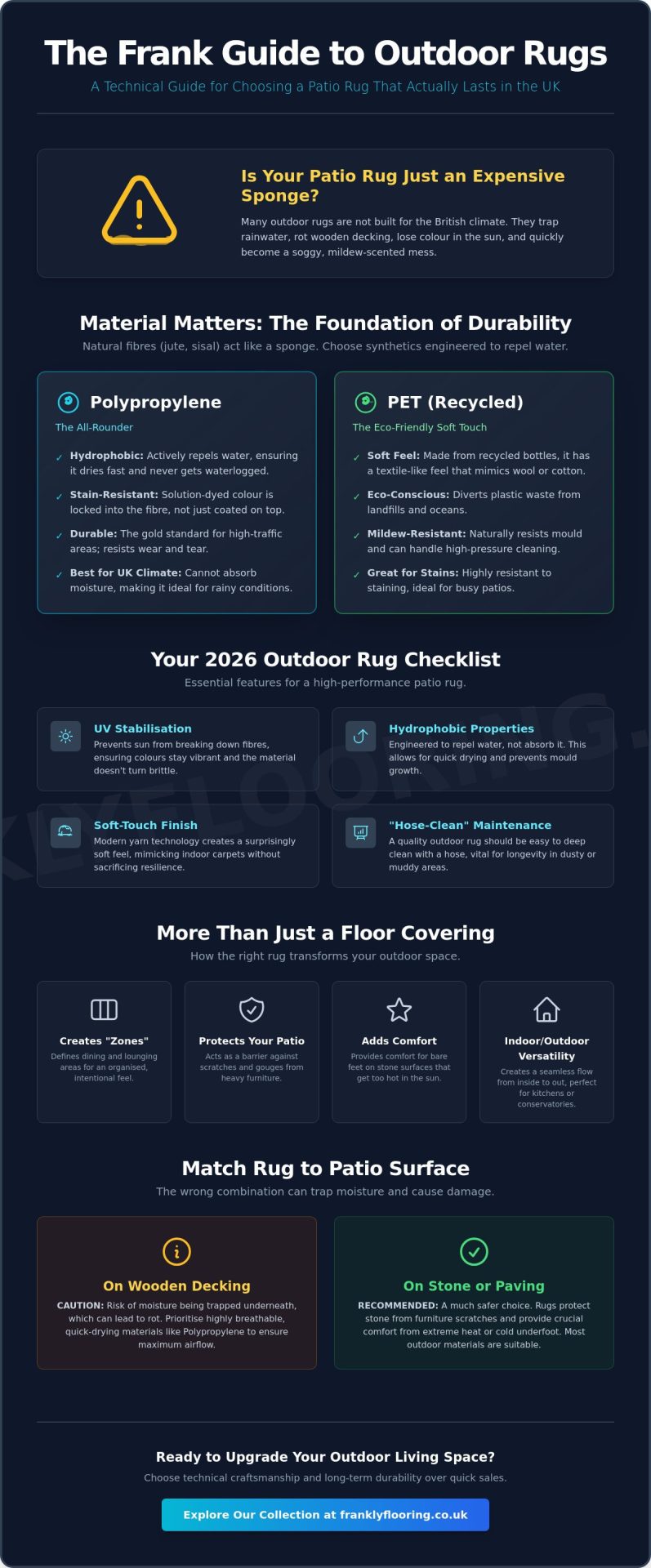
A rug isn’t just a decorative accessory you throw on the ground to look pretty for a weekend barbecue. When we discuss outdoor rugs for patio spaces, we are talking about a piece of technical equipment. Standard indoor rugs rely on natural fibres like wool or cotton which soak up moisture, trap bacteria, and eventually rot. An outdoor-ready rug is engineered from synthetic polymers, specifically Polypropylene, which is naturally hydrophobic. This means it repels water rather than inviting it in, allowing the piece to dry quickly after a typical British downpour.
By 2026 standards, any rug worth its salt must be UV-stabilised. Without this specific treatment during the manufacturing process, the sun’s rays break down the plastic bonds at a molecular level. Your vibrant navy or forest green rug becomes a dusty, brittle mess in a matter of weeks. We don’t believe in selling products that fail after one heatwave. A truly durable rug acts as the anchor for your furniture. It defines the space, turning a scattered collection of garden chairs into a cohesive living area that feels intentional rather than accidental.
There is a common misconception that outdoor rugs for patio use feel like walking on a recycled plastic bottle. That’s an outdated view. Technical advancements in yarn extrusion now allow for “soft-touch” finishes that defy their rugged origins. Modern weaving techniques create textures that mimic natural sisal, jute, or even soft cotton. You get the tactile comfort of an indoor carpet combined with the chemical resilience of a high-performance synthetic.
Why Your Patio Needs a Dedicated Rug
Large gardens often feel cold and uninviting without clear boundaries. A dedicated rug creates “zones,” effectively separating the dining area from the lounging spot. It also serves a practical purpose. Patios are expensive investments. Dragging heavy metal furniture across stone or wood can cause permanent scratches and gouges. A rug acts as a protective barrier while providing much-needed comfort for bare feet on hot afternoons when stone surfaces become too warm to handle.
Indoor/Outdoor Versatility
The beauty of these rugs is their versatility. They don’t have to stay outside. Because they are “hose-clean,” they are perfect for high-traffic kitchens or conservatories where pets and children frequently track in mud. If you have bi-fold doors, using the same style of rug inside and out creates a seamless transition. This visual trick makes your home feel twice as large by extending your interior design language into the fresh air. It’s a simple, honest way to get more value from your flooring choice.
Material Matters: Polypropylene, PET, and Beyond
Choosing the right material for your garden isn’t about finding the prettiest pattern; it’s about understanding chemical resilience. While natural fibres like jute or sisal look fantastic in a coastal-themed conservatory, they act like a sponge in an open garden. These organic materials trap moisture, which leads to mould, rot, and a structural failure of the weave within a single season. For a successful outdoor rugs for patio installation, you must prioritise hydrophobic materials that actively repel water rather than soaking it up.
Polypropylene: The All-Rounder
Polypropylene remains the gold standard for high-traffic outdoor areas. It’s a synthetic thermoplastic polymer that is naturally stain-resistant because the colour is added during the liquid stage of production, rather than being dyed onto the finished yarn. This process, known as solution dyeing, ensures the pigment is locked into the fibre itself. When these yarns are UV-treated, they become nearly immune to the bleaching effects of direct sunlight. Polypropylene is the superior choice for the British climate because its plastic-based fibres cannot absorb moisture, ensuring the rug never becomes waterlogged or heavy after a storm.
The Rise of Eco-Friendly PET Rugs
If you prefer a softer feel underfoot, PET (polyethylene terephthalate) is a compelling alternative. These rugs are crafted from recycled plastic bottles, which are melted down and spun into fine, flexible threads. Despite their origins, PET rugs have a surprisingly textile-like feel that mimics wool or cotton. They are naturally resistant to mildew and can handle high-pressure cleaning without losing their shape. Experts at the Good Housekeeping Institute Textiles Lab often highlight PET for its impressive resistance to staining and its ability to withstand heavy foot traffic without losing its aesthetic appeal.
Beyond the raw material, the way a rug is constructed dictates how quickly it will dry. Flatweave designs are generally the best choice for the UK. Because they lack a raised pile, there is nowhere for water to sit and stagnate. Textured or “shag” style outdoor rugs might look luxurious, but their deeper crevices trap dirt and moisture, significantly increasing the drying time. If you want a low-maintenance solution that you can simply hose down and forget, a tight flatweave is the most practical path forward. If you’re looking for a specific material that balances these technical needs, you can browse our curated selection of rugs that meet our strict durability standards.
Matching Your Rug to Your Patio Surface
Selecting outdoor rugs for patio use involves more than just picking a design that matches your garden furniture. You have to consider the technical interaction between the rug backing and the surface beneath it. Most retailers treat the patio as a static, indestructible base, but the reality is that your choice of flooring can significantly impact the lifespan of your stone, wood, or porcelain. Drainage is the most critical factor here. If water cannot escape from underneath the rug, you are essentially creating a microclimate that encourages rot, staining, and structural damage.
Rugs on Wooden Decking
Wooden decking is particularly vulnerable to moisture traps. If you place a heavy, non-breathable rug over timber, you prevent the wood from drying out after rain. This leads to soft spots and eventual rot that can compromise the safety of your entire deck. We recommend choosing a rug with a loose, breathable weave that allows air to circulate freely. It’s also vital to move your rug every few weeks. This prevents “picture framing,” where the wood under the rug remains a different colour than the sun-bleached areas around it. If you’re struggling with the maintenance of real wood, you might consider artificial grass as an alternative texture that handles moisture with far less fuss.
Stone and Porcelain Paving Considerations
Natural stone and modern porcelain tiles present a different set of challenges. Smooth porcelain is incredibly popular for 2026 garden designs, but it becomes dangerously slippery when wet. While the rug itself might be hydrophobic, it can slide across a wet tile like a puck on an air hockey table. You must use a dedicated outdoor rug grip to ensure the piece stays anchored. These grips are usually made of a perforated mesh that provides friction without trapping water against the stone.
Natural stone is porous. If a rug traps damp dirt against the surface for months, it can cause deep-seated organic staining that is almost impossible to remove. For non-porous patio slabs, the primary concern is managing the runoff. Ensure your rug isn’t blocking the natural fall of the patio; otherwise, you’ll end up with standing puddles that invite algae growth. A frank assessment of your drainage before you buy will save you hours of scrubbing later in the season. When you integrate outdoor rugs for patio areas correctly, they protect your investment rather than hiding a growing problem.
Maintenance and Longevity: Surviving the British Weather
When a retailer tells you that outdoor rugs for patio areas are 100% waterproof, they aren’t being entirely honest. While the synthetic fibres we discussed earlier won’t absorb water, the rug itself isn’t a magical force field. If you leave a rug sitting in a puddle for three weeks, it will eventually grow algae. The British weather is relentless. True longevity comes from active maintenance rather than passive hope. You need to treat your rug like a piece of high-performance gear that requires a bit of care to stay at its best.
Spills and bird droppings are inevitable. Don’t let them sit. Even on solution-dyed polypropylene, organic matter can eventually cause discolouration if baked in by the sun. A quick spray with a hose is usually enough to clear most debris before it becomes a permanent feature of your garden design. For deeper issues, you need a structured approach to cleaning that doesn’t damage the UV-resistant coating.
The 5-Step Cleaning Routine
You don’t need specialist equipment to keep your rug in top condition. Follow these steps twice a season to ensure it lasts for years:
- Shake and Vacuum: Start by shaking the rug to loosen grit. Yes, you can vacuum most outdoor rugs. Use a setting without a beater bar to avoid fraying the fibres.
- Initial Rinse: Use a standard garden hose to wash away loose dirt. Avoid high-pressure washers, as they can strip the protective treatments from the yarn.
- Soap Application: Mix a few drops of mild dish soap with lukewarm water. Use a soft-bristled brush to gently scrub any visible stains.
- Final Rinse: Hose the rug down thoroughly until the water runs clear and no soap suds remain.
- The Drying Phase: This is the most critical step. Never leave a wet rug lying flat on the patio. Hang it over a sturdy garden fence or a couple of chairs. Gravity helps the water drain out of the weave, preventing the musty smell associated with trapped moisture.
Winter Storage Secrets
The frank truth about winter is that you should bring your rug inside. While it might survive a frost, the constant damp of a British January will eventually lead to mildew growth underneath the backing. Before the first frost hits, give the rug a final deep clean and ensure it is bone-dry. Moisture trapped in the fibres during storage is the number one cause of rug failure.
When storing, always roll the rug with the pattern facing outwards. Never fold it. Folding creates permanent creases that can snap the synthetic backing over time. Use a breathable storage bag or an old bedsheet rather than airtight plastic, which can trap humidity and cause rot. If you’re looking for a durable replacement that can handle these maintenance steps with ease, you can view our range of hard-wearing rugs designed for the real world.
Choosing Your Perfect Patio Rug at Frankly Flooring
Generic retailers often sell garden accessories as an afterthought. At Frankly Flooring, we treat outdoor rugs for patio areas with the same technical respect we give to our premium indoor ranges. With 20 years of experience in the flooring industry, we’ve seen every trend and every product failure. We don’t just stock what looks good in a catalogue; we select rugs based on their weave density, UV resistance, and ability to withstand the erratic British climate. Our commitment is simple: we provide the straight-talking advice you need to make a purchase that lasts multiple seasons, not just one summer.
A rug should never exist in isolation. It is the canvas upon which you build your garden sanctuary. Once you’ve selected a durable base, you can confidently pair it with our quality furniture to create a space that feels like a true extension of your home. By choosing a UK-based expert, you gain access to a team that understands exactly what your patio will face, from July heatwaves to November frosts. We value long-term satisfaction over a quick win, ensuring every rug we sell meets a professional standard of craftsmanship.
Style Trends for 2026 Patios
The dominant trend for 2026 is the “seamless threshold.” Homeowners are moving away from the basic “plastic mat” look in favour of sophisticated, indoor-style textures that feel soft underfoot. We are seeing a surge in neutral palettes, such as oatmeal, stone, and sage, which mimic the look of natural wool. However, bold geometric patterns remain a staple for those looking to create a high-impact focal point. If you have already installed LVT flooring in your kitchen or dining area, choosing a rug with similar tones for the patio creates a visual bridge that makes both spaces feel significantly larger.
The Frank Guarantee
We don’t hide behind complex industry jargon or hidden fees. Our pricing is transparent, and our delivery across the UK is straightforward and predictable. We take pride in the technical depth of our products because we view them as foundational elements of your home’s character. You aren’t just buying a piece of fabric; you’re investing in a durable solution backed by two decades of flooring expertise. If you are ready to transform your garden with outdoor rugs for patio use that actually survive the rain, you can browse our latest collection of outdoor rugs today. We’re here to help you get it right the first time.
Invest in a Patio Space That Endures
Creating a functional outdoor living room requires more than just an eye for design. It demands a technical understanding of how materials interact with the elements. We’ve explored why hydrophobic fibres are non-negotiable and how matching your rug to your specific patio surface prevents long-term damage to your property. Finding the right outdoor rugs for patio use is about choosing a product that handles the British rain as gracefully as the summer sun. When you prioritise durability and proper drainage, your garden becomes a true extension of your home rather than a maintenance headache.
At Frankly Flooring, we bring over 20 years of experience as a family-run business to every product we select. Our expert-curated range is built specifically for our climate, ensuring you get honest quality without the high-pressure sales tactics. We offer national UK delivery on all orders, making it easier than ever to upgrade your exterior flooring with confidence. Find your perfect patio rug at Frankly Flooring and start building a garden space you can actually rely on. Your patio deserves a foundation that lasts.
Frequently Asked Questions
Can I leave my outdoor rug out in the rain?
You can leave a high-quality rug out in the rain, but you shouldn’t let it sit in standing water. While materials like polypropylene are hydrophobic and won’t absorb moisture, the gaps in the weave can trap water against your patio surface. After a heavy downpour, we recommend hanging the rug over a fence or chairs to allow gravity to pull the moisture out. This simple step prevents the backing from becoming a breeding ground for algae.
Do outdoor rugs get mouldy or mildewy?
Synthetic fibres are naturally resistant to mould and mildew, but the dirt that accumulates between them is not. If you don’t clean your rug regularly, organic matter like pollen, soil, and leaves will break down and rot within the weave. This is what causes that unpleasant musty smell. Keeping your outdoor rugs for patio areas free of debris is the best way to ensure they remain fresh and hygienic throughout the season.
Will an outdoor rug ruin my grass if I put it on the lawn?
Placing a rug on a lawn will eventually kill the grass underneath. A rug blocks the essential sunlight and oxygen that your lawn needs to survive, typically causing the grass to turn yellow within days and die shortly after. Additionally, moisture trapped between the rug and the soil can lead to fungal issues in your garden. We strongly advise sticking to hard surfaces like stone, decking, or paving for long-term placement.
How do I stop my outdoor rug from blowing away in the wind?
The most effective way to secure a rug is by anchoring it with heavy garden furniture like dining tables or sofas. If your rug is in an open area, use a dedicated outdoor rug grip or double-sided outdoor tape designed for masonry. These provide extra friction without damaging your patio. For very lightweight mats, rolling them up and storing them during high-wind warnings is the only honest way to prevent them from taking flight.
Can I use a pressure washer to clean my patio rug?
We don’t recommend using a pressure washer on your rug. While it’s tempting to use high-pressure settings for a quick clean, the force can easily shred the synthetic fibres or strip away the UV-protective coatings. A standard garden hose with a spray attachment and a soft-bristled brush is all you need. This gentler approach ensures the structural integrity of the weave remains intact for years rather than causing accidental damage in one afternoon.
Are outdoor rugs safe for pets and children?
Our outdoor rugs for patio use are perfectly safe for both pets and children. Synthetic fibres like PET and polypropylene are non-toxic and don’t shed like some natural wool alternatives. They are also incredibly easy to sanitise if pets have accidents or children spill food. Because these rugs are designed to be hose-cleaned, you can maintain a much higher level of hygiene than you could with a standard indoor carpet used in an outdoor setting.
How long do outdoor rugs usually last on a patio?
A well-maintained outdoor rug should last between three and five years in the British climate. Its lifespan depends heavily on how much direct UV exposure it receives and whether you store it properly during the winter months. Rugs left out year-round will fail much faster than those that are cleaned and kept in a dry shed during the coldest months. Investing in a UV-stabilised material from the start is the best way to ensure longevity.
Do I need an underlay or rug pad for an outdoor rug?
You should use an underlay or rug pad, especially on smooth surfaces like porcelain or polished stone. An outdoor-specific pad provides essential grip to prevent slipping and creates a small gap for air to circulate. This extra ventilation helps the rug dry faster and prevents moisture from being trapped against your patio slabs. It’s a small technical addition that significantly improves both the safety and the lifespan of your garden flooring.