
What if the biggest threat to your beautiful new floor isn’t the daily foot traffic, but the very furniture you bought to make the room feel like home? It’s a common frustration for UK homeowners who invest in high-quality finishes only to find a permanent gouge in their engineered wood or a grey scuff mark on their LVT within the first month. You’ve probably already tried those cheap, peel-and-stick felt pads, only to watch them slide off and leave a stubborn, sticky residue behind. Learning how to protect floors from furniture scratches isn’t just about sticking something to a chair leg; it’s about a smarter, more technical approach to your home’s foundation.
At Frankly Flooring, we believe in a direct approach to floor care that prioritises long-term results over quick, flimsy fixes. This guide provides the no-nonsense methods you need to keep your LVT, wood, and laminate floors looking pristine for years. We’ll walk you through choosing the right hardware for your specific flooring type, the benefits of strategic room layouts, and which materials offer the best natural resistance to wear. From invisible protection solutions to the technical nuances of floor durability, you’ll gain the confidence to furnish your space without the fear of causing damage.
Key Takeaways
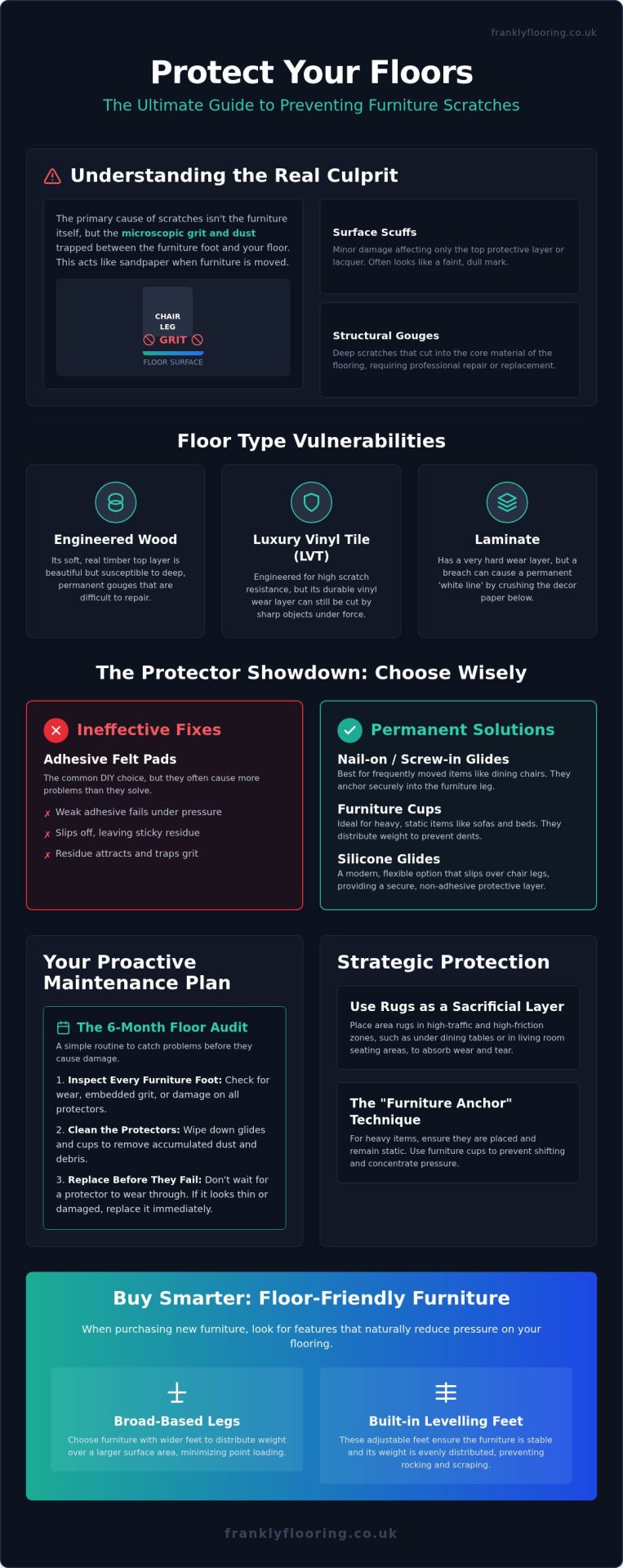
- Identify the real culprits by learning to distinguish between minor surface scuffs and the deep gouges caused by trapped grit under furniture feet.
- Discover how to protect floors from furniture scratches by choosing permanent nail-on or silicone glides over cheap adhesive pads that often slip off.
- Use rugs as a sacrificial layer in high-traffic zones and apply the “Furniture Anchor” technique to keep heavy items from shifting.
- Establish a simple six-month floor audit to inspect every furniture foot in your home and replace worn protectors before they fail.
- Learn what to look for when buying new furniture, such as broad-based legs and built-in levelling feet that reduce pressure on your flooring.
Why Furniture Scratches Happen (and Why Every Floor Type Is at Risk)
The first few weeks after installing a new floor are often called the honeymoon phase. Everything looks flawless, and the light reflects perfectly off the clean surface. It’s during this time that many homeowners forget about long-term maintenance, assuming their new investment is invincible. However, early protection is vital. Understanding how to protect floors from furniture scratches starts with recognising that damage rarely happens by accident; it’s usually the result of physics and a lack of preparation. Even the most expensive flooring can be ruined in an afternoon if you aren’t careful with your furniture layout.
Most people assume the furniture material itself causes the damage. While a sharp metal edge is certainly a threat, the real culprit is often microscopic grit trapped between the furniture foot and the floor. When you move a chair, that grit acts like sandpaper, grinding into the finish. We generally categorise this damage into two types: surface scuffs and structural gouges. Surface scuffs affect the protective lacquer or wear layer, while structural gouges bite deep into the material itself, often requiring professional repair or plank replacement. Point loading refers to the immense downward pressure exerted by heavy furniture when it’s concentrated onto the tiny surface area of a leg or castor.
Hardwood vs. LVT vs. Laminate: The Scratch Factor
Different materials respond to pressure in unique ways. Engineered wood is prized for its natural beauty, but its top layer of real timber is relatively soft. A deep gouge in wood is permanent; you can’t simply wipe it away, and spot-repairing a single plank without affecting the surrounding finish is notoriously difficult. Many UK homeowners now opt for LVT flooring because it’s engineered for high scratch resistance. While it’s incredibly durable, it isn’t scratch-proof. Sharp objects can still slice the vinyl wear layer if enough force is applied.
Laminate presents a different challenge. It features a very hard aluminium oxide wear layer that stands up well to daily use. However, if a heavy piece of furniture breaches this layer, you’ll often see the ‘white line’ effect. This happens when the protective coating is crushed, exposing the underlying decor paper and leaving a bright mark that’s impossible to hide. Because laminate cannot be sanded down, prevention is your only real strategy.
The Role of Grit and Dust in Floor Damage
Grit is the silent enemy of your flooring. In high-friction areas like dining rooms, where chairs are constantly tucked and untucked, dust and outdoor debris accumulate quickly. These tiny particles hitch a ride on the bottom of furniture feet, turning a simple chair leg into a grinding tool.
- Regular Sweeping: Removing debris before it gets trapped is the simplest way to prevent wear.
- Foot Inspection: Even soft felt pads can become abrasive if they’ve picked up enough household grit.
- Mat Placement: Using mats at external doors reduces the amount of sharp sediment entering the home.
It’s a common mistake to think that soft furniture feet are always safe. If the floor is dirty, even a rubber or felt protector will eventually hold onto enough debris to cause visible scuffing over time.
The Essential Toolkit: Choosing the Right Furniture Protectors
Most homeowners start their journey into how to protect floors from furniture scratches at a local DIY shop, grabbing the first pack of adhesive felt pads they see. It’s a common error. While these pads are inexpensive, the adhesive is rarely strong enough to withstand the constant lateral force of a dining chair being pulled out. Within a few weeks, the pad usually slips, leaving a stubborn, sticky residue on your floor that attracts the very grit we want to avoid. For chairs that see daily use, ‘nail-on’ or ‘screw-in’ glides are far superior. They physically anchor into the timber of the chair leg, ensuring the protector stays exactly where it should without budget-grade glues failing you.
For heavy items that don’t move often, such as sofas or beds, ‘cup’ protectors are the professional choice. These are small, shallow dishes made of rubber or heavy-duty plastic that sit under the furniture feet. They work by distributing the weight across a wider surface area, which effectively counters the point loading pressure that can dent even the toughest floors. If you’re currently choosing new pieces, browsing our quality furniture collections can help you identify styles with broad, stable bases that are naturally kinder to your home’s foundation.
Felt vs. Silicone vs. Rubber: Which Material Wins?
Felt remains the gold standard for chairs that move frequently. It allows for a smooth, silent glide across hard surfaces, though it does act as a magnet for pet hair and household dust. Silicone caps are the modern, almost invisible alternative for furniture with tapered legs. They stretch over the foot for a secure fit, providing a clean look without the need for adhesives. Rubber is your best bet for stationary pieces like wardrobes or sideboards. Its high-friction surface prevents furniture from ‘creeping’ across the room if someone leans on it, which is a frequent cause of unexpected scuffs.
Managing Castors and Rolling Office Chairs
Rolling chairs are a primary cause of surface failure in laminate flooring. Standard ‘twin-wheel’ plastic castors are far too hard; they trap grit and grind it directly into the wear layer as you move. Swapping these for rubber ‘rollerblade-style’ wheels is a simple, effective game-changer. They roll silently and won’t bite into the surface of your floor. If you prefer using a floor mat, polycarbonate options offer the best transparency and durability, though you must clean underneath them weekly to prevent trapped dust from acting as an abrasive.
Our advice is simple: always buy a few extra sets of whichever protector you choose. These materials are sacrificial by design. The moment a felt pad wears thin or a silicone cap splits, it needs replacing immediately. Keeping a small stock in a kitchen drawer means you can fix a failing protector before it has the chance to cause a permanent mark on your floor.
Strategic Protection: Rugs and Smart Layouts
Rugs are often viewed purely as decorative elements, but in a well-maintained home, they serve as a vital sacrificial layer. In high-traffic zones like dining rooms and hallways, a rug takes the brunt of the friction that would otherwise hit your flooring. When considering how to protect floors from furniture scratches, applying the “Furniture Anchor” technique is a simple, effective strategy. By placing at least the front legs of your sofa or armchairs onto the rug, you use the weight of the furniture to pin the rug in place. This prevents both the textile and the furniture from shifting, which stops the micro-movements that lead to surface scuffs.
There is a technical warning every homeowner should heed: beware of cheap rubber-backed rugs. Many budget options use synthetic backings that can cause a chemical reaction known as plasticiser migration. Over time, these chemicals leach into the floor finish, causing permanent yellowing or cloudiness that no amount of cleaning can fix. Regardless of the protection you use, the “lift, don’t slide” rule remains the gold standard. Even with the best pads installed, sliding a heavy piece of furniture can trap a stray piece of grit and grind it into the floor under the weight of the move.
Choosing the Right Rug for Floor Safety
Natural fibres like wool or sisal are excellent for floor protection due to their durability and weight. However, these materials can be surprisingly abrasive on their underside. To ensure total safety, always pair your rug with a high-quality felt rug pad. Unlike thin mesh alternatives, a dense felt pad provides a soft cushion that prevents the rug itself from acting like sandpaper against your wood or LVT. Beyond protection, a well-placed rug is a practical way to hide existing damage while preventing any further wear in that specific zone.
Layout Planning to Minimise Friction
Smart room planning can significantly reduce the risk of accidental damage. Creating clear “clearance zones” around heavy pieces ensures that people don’t have to squeeze past, which often leads to furniture being bumped or nudged. For those with traditional floorboards, placing heavy furniture directly over the floor joists is a clever technical move. This reduces the natural “bounce” or deflection in the floor, which in turn limits the rubbing motion between the furniture feet and the floor surface. You might also consider using “buffer” furniture, such as small side tables, to act as a barrier that prevents larger, heavier pieces from being frequently moved or knocked during daily life.
Maintenance Habits: The ‘Check and Replace’ Routine
Effective floor care is not a “set and forget” task. Many homeowners invest in high-quality protectors but then fail to check them for years, allowing the material to wear down until the furniture leg is once again in direct contact with the floor. To prevent this, we recommend establishing a six-month “Floor Audit.” Twice a year, take the time to physically inspect the feet of every chair, table, and sofa in your home. Learning how to protect floors from furniture scratches involves more than just the initial installation; it requires a commitment to ongoing maintenance to ensure those sacrificial layers are still doing their job.
If you discover a pad has slipped, you’ll likely find a patch of stubborn, sticky residue. Don’t reach for a metal scraper or a harsh abrasive pad, as these will cause more damage than the furniture itself. Instead, use a tiny amount of surgical spirit on a soft cloth to gently dissolve the adhesive. Always follow the “clean-first, protect-second” rule. Never apply new protectors to dusty or dirty furniture legs; the bond will fail almost immediately. You should replace your felt protectors the moment they appear flattened, thin, or “glazed” with a layer of compressed household dust.
Cleaning for Scratch Prevention
The best tool in your arsenal for daily maintenance is a high-quality microfibre mop. Unlike traditional string mops that can move grit around, microfibre lifts and traps the tiny particles that act like sandpaper under furniture. If you use a vacuum cleaner, you must be extremely careful with the “beater bar” setting. These rotating brushes are designed for carpets and can easily scuff the surface of engineered wood flooring or LVT. Always use the hard-floor setting to keep the brushes retracted. Pair this with a pH-neutral cleaner specifically designed for your floor type to keep the protective finish intact without leaving a dulling film.
The Quick-Fix Kit: Dealing with Minor Scratches
Even with the best habits, minor mishaps occur. For LVT and laminate, “touch-up” pens are available in various wood-grain shades to mask surface white marks. If you have real wood flooring, the “walnut trick” is a genuine industry secret for light scratches; rubbing the meat of a raw walnut over a shallow mark can often hide it using the nut’s natural oils. For deeper gouges, wax repair sticks offer a more permanent solution. However, if the damage is widespread across a large area, it might be time to call in a professional for a “screen and coat” service to restore the original lustre. If you are looking for new pieces that are built to last, browse our sturdy furniture collections designed with floor-friendly bases.
The Frankly Approach: Buying Floor-Friendly Furniture
When you’re shopping for new pieces, it’s easy to get distracted by fabric textures or timber finishes. However, the most technical decision you’ll make for your home’s longevity is the style of the furniture’s base. At Frankly Flooring, we advise looking for “broad-based” legs rather than “stiletto” styles. Thin, tapered legs concentrate the entire weight of a heavy sideboard or sofa onto a tiny surface area, making it significantly harder to manage how to protect floors from furniture scratches effectively. The more surface area a leg covers, the less pressure it exerts on a single point of your floor.
In many older UK properties, subfloors aren’t perfectly level. This is why furniture with built-in levelling feet is a superior choice for British homes. These allow you to adjust each leg individually, ensuring the piece sits flat and doesn’t wobble. A wobbling chair or table is a primary cause of surface scuffs because the uneven movement creates friction every time weight is applied. For maximum weight distribution, consider “sled” bases. Unlike individual legs, a sled base spreads the downward pressure across two long, flat rails, which is much kinder to your floor’s structural integrity.
Evaluating Furniture Legs Before You Buy
Solid wood legs are generally the easiest to protect because they accept nail-on glides and adhesive pads readily. Metal frames, while stylish, require more scrutiny before they enter your home. Always check the underside of metal legs for “burrs” or sharp edges left over from the manufacturing process; these can slice through a protective pad in days. Some of our curated furniture for British homes even arrives with pre-installed floor glides, saving you the hassle of retrofitting them yourself. If you’re buying hollow plastic or metal legs, ensure they have a solid plug at the bottom to provide a flat surface for protectors.
Selecting Durable Flooring for High-Furniture Areas
If you’re still in the planning stage of a renovation, choosing the right material is half the battle. LVT (Luxury Vinyl Tile) is often the “Frank” choice for high-traffic zones like dining rooms and kitchens. Its multi-layered construction includes a dedicated wear layer designed specifically to withstand the daily abuse of moving furniture. When comparing options, look for a thicker wear layer, typically 0.5mm or higher for domestic use, to ensure long-term resistance to scuffs.
Ultimately, a quality floor deserves quality protection. Don’t spend thousands on a beautiful new finish only to skimp on the accessories that keep it safe. By combining smart furniture selection with the maintenance habits we’ve discussed, you’ll ensure your home remains scratch-free and your investment stays protected for years to come.
Invest in the Future of Your Flooring
Protecting your home’s foundation doesn’t have to be a complicated or expensive endeavour. By moving away from flimsy, peel-and-stick pads and embracing a more technical approach to furniture glides and rug placement, you can avoid the permanent damage that grit and pressure often cause. A simple six-month audit of your furniture feet is the most effective way to catch wear before it reaches your floor surface. Learning how to protect floors from furniture scratches is a vital skill for any homeowner who values their property’s character and long-term value.
As a family-run UK business with 20+ years of industry experience, we understand the relationship between a quality floor and the furniture that sits on it. We provide direct-to-home national delivery on everything from scratch-resistant LVT to sturdy, floor-friendly pieces. Browse our range of floor-friendly furniture and durable flooring at Frankly Flooring to find the perfect match for your home. Your floors are the foundation of your home; give them the protection they deserve.
Frequently Asked Questions
What are the best furniture pads for hardwood floors?
High-density felt pads are the gold standard for real wood. They provide a soft buffer that allows chairs to glide without abrasion. For the best results, use nail-on or screw-in versions rather than adhesive ones. These stay physically anchored to the furniture leg, preventing the pad from sliding off and exposing the floor to sharp edges. This is a fundamental step in how to protect floors from furniture scratches effectively.
How do I stop my sofa from sliding on LVT or laminate?
Rubber furniture cups or non-slip pads are the most effective solution for stationary items. Unlike felt, rubber provides high friction that grips the smooth surface of LVT or laminate. This prevents the “creeping” motion that causes unexpected scuffs when people sit down. You can also use a heavy rug as an anchor. Placing the front legs of the sofa onto a rug with a quality non-slip underlay creates a stable barrier.
Can rugs actually scratch my floor?
The underside of certain rugs can be abrasive, especially those made from rough natural fibres like sisal or jute. Micro-movements between the rug and the floor can act like fine sandpaper over time. To prevent this, always use a dense felt rug pad. Avoid cheap rubber backings that contain chemicals that might react with your floor’s finish. A quality pad adds cushioning and keeps the rug perfectly still, protecting the surface beneath.
How do I get rid of deep scratches in engineered wood?
Deep gouges that penetrate the timber layer usually require a wax filler stick or a professional repair kit matched to your floor’s specific stain. For lighter surface marks, you can often use a touch-up pen or the natural oils from a raw walnut. If the damage is extensive across several planks, it might be necessary to replace the affected boards or seek a professional “screen and coat” service to restore the protective finish.
Are silicone furniture leg caps better than felt pads?
Silicone caps are often better for tapered or oddly shaped legs because they provide a tight, stretch-fit seal without messy adhesives. They are nearly invisible and won’t fall off like peel-and-stick pads. However, for chairs that move constantly, felt remains superior for its silent, smooth gliding action. Many modern silicone caps now feature a felt base, combining the secure fit of silicone with the floor-friendly movement of traditional felt.
How often should I replace my furniture protectors?
You should inspect your protectors every six months as part of a regular home maintenance routine. Replace them immediately if the felt appears flattened, thin, or has become glazed with a layer of compressed dust and grit. Once the protector loses its thickness, it no longer provides an effective buffer. Learning how to protect floors from furniture scratches requires this proactive approach; replacing worn pads is far cheaper than repairing a damaged floor.
What is the best way to move heavy furniture without scratching the floor?
The most reliable method is to lift the furniture entirely rather than sliding it. If lifting isn’t possible, use dedicated furniture sliders designed for hard floors; these usually have a hard plastic side for carpets and a soft felt side for wood or LVT. Always sweep the path thoroughly first. Even a tiny piece of grit trapped under a slider can cause a deep scratch when subjected to the weight of a heavy wardrobe.
Will office chair wheels ruin my laminate flooring?
Standard hard plastic wheels will eventually wear down the protective layer of your laminate. They trap dirt and grind it into the surface with every movement. To protect your investment, swap standard castors for “rollerblade-style” rubber wheels. These are much softer and roll silently without biting into the floor. Alternatively, use a clear polycarbonate floor mat to provide a durable, sacrificial barrier in your desk area.