
The floor that looks easiest to fit may not be the best choice for your room. If you’re weighing up karndean loose lay vs click, the key difference is how the finished floor is held in place, and what the subfloor needs to provide.
Loose-lay planks or tiles are fitted using the method specified for that product. Click planks lock together to create a floating floor. Both systems need suitable preparation, so don’t choose on the fitting label alone.
This guide compares the fitting methods, subfloor requirements and repair considerations for each system. It also explains how room layout can affect your choice and what to check in the product specification, including underlay, expansion gaps and underfloor heating. Use these points to narrow your options, then confirm the details for the exact product before you buy.
Key Takeaways
- Loose-lay and click LVT stay in place in different ways. Check the fitting instructions for the exact product you’re considering.
- Let your room and subfloor condition guide your choice. Both systems depend on meeting the manufacturer’s preparation requirements.
- Compare the fitting method, repair approach and product-specific restrictions before deciding which system suits your plans.
- Use this karndean loose lay vs click comparison to build a shortlist, then check accessories and other requirements in the product specification.
- Resolve unclear details in the manufacturer’s guidance before ordering, so the flooring matches your room and fitting plan.
Karndean Loose Lay vs Click: What Actually Differs?
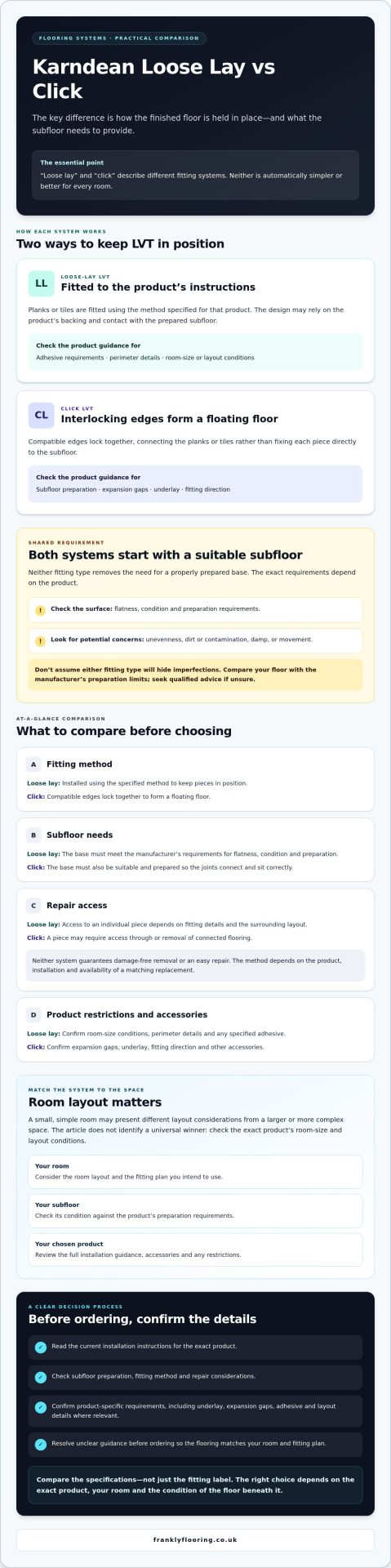
The main difference is how the flooring pieces are connected and kept in position. Loose-lay LVT is fitted using the method specified for that product. Click LVT has interlocking edges that join to form a floating floor. Requirements vary by product, so the fitting label alone isn’t enough to make a confident choice.
Both are types of LVT, part of the wider category of resilient flooring. For a practical comparison, look at the exact product’s installation instructions alongside your room, subfloor and fitting plan. Neither system is automatically right for every home.
How Karndean LooseLay is designed to be fitted
Loose-lay planks or tiles are designed to stay in position when fitted according to the product’s instructions. The method may rely on the product’s backing and contact with the prepared subfloor, but don’t assume every loose-lay floor is installed in exactly the same way. Before ordering, check the manufacturer’s current guidance for adhesive, perimeter details and any room-size or layout conditions.
How click LVT joins together
Click LVT has compatible edges that lock together, connecting the planks or tiles into a floating floor rather than fixing each piece directly to the subfloor. The base still matters: unevenness or an unsuitable surface can affect how the joints sit. Check the chosen product’s instructions for subfloor preparation, expansion gaps, underlay and fitting direction.
In short, “loose lay” and “click” describe different fitting systems, not a promise that one will be simpler or better in every room. For karndean loose lay vs click, compare the specific product specifications with the conditions in your home. A small, simple room may have different layout considerations from a larger or more complex space.
Before committing, read the full installation guidance for the product you’re considering. Check the permitted subfloor condition, required accessories and any restrictions that could affect your layout. This helps you avoid choosing a system that doesn’t suit the surface beneath it or your fitting plan.
Loose Lay vs Click LVT: Compare Fitting, Subfloor and Repairs
The practical differences come down to how the pieces are held in place, what the base needs and how a damaged piece might be accessed. These are general system distinctions, not a substitute for the installation instructions for the exact product.
| Consideration | Loose-lay LVT | Click LVT |
|---|---|---|
| Fitting method | Installed using the product’s specified method to keep pieces in position. | Compatible edges lock together to form a floating floor. |
| Subfloor | Must meet the manufacturer’s requirements for flatness, condition and preparation. | Also needs a suitable, prepared base so the joints can connect and sit correctly. |
| Repairs | Access to an individual piece depends on the fitting details and surrounding layout. | A piece may require access through or removal of connected flooring. The method depends on the product and installation. |
| Restrictions | Check requirements for room size, perimeter details and any specified adhesive. | Check requirements for expansion gaps, underlay, fitting direction and other accessories. |
Which system is more forgiving of an imperfect subfloor?
Neither system removes the need for a suitable, properly prepared subfloor. Before choosing, check whether the base is uneven, dirty or contaminated, damp, or subject to movement. The effect of each issue depends on the product, so compare the condition of your floor with the manufacturer’s preparation limits rather than assuming one fitting type will hide imperfections. If you’re unsure about the subfloor, seek qualified advice before proceeding.
Can loose-lay or click flooring be repaired more easily?
Loose-lay flooring may allow access to an individual piece, while the connected edges of click flooring can affect how a section is reached. Neither system guarantees damage-free removal or a straightforward repair. The method depends on the product design, fitting details and availability of a matching replacement. Keep the product information and, if advised, spare material for future reference.
For karndean loose lay vs click, pay particular attention to the selected product’s instructions for subfloor flatness and condition. The Resilient Floor Covering Institute (RFCI) offers broader industry information, but it doesn’t replace product-specific fitting guidance. You can also browse LVT flooring options and compare the specifications before ordering.
Is Loose Lay or Click LVT Better for Your Room?
There isn’t a universal winner. The right choice depends on how the room is used, the subfloor condition, your fitting plan and the instructions for the exact LVT product. A fitting label describes how the floor is assembled, but doesn’t confirm by itself whether a product suits a particular room or household.
The Resilient Floor Covering Institute describes loose-lay and floating, or locking, as distinct installation types. Use that difference as a starting point, then confirm the details in the manufacturer’s guidance.
| System | Potential advantages | Points to check |
|---|---|---|
| Loose lay | May suit a fitting plan where access to individual pieces is a consideration, depending on the installation method. | Confirm subfloor preparation, room-size limits, perimeter requirements and whether the product needs adhesive. |
| Click | Interlocking edges create a joined floating floor, which may suit some room layouts and fitting plans. | Check the specified subfloor condition, expansion requirements, underlay guidance and fitting direction. |
These are possible trade-offs, not guarantees of easier fitting, better performance or greater durability. For karndean loose lay vs click, compare the requirements for the specific product rather than relying on broad claims about either system.
What should you consider in busy family rooms?
Start with everyday use. Consider foot traffic, furniture, cleaning routines and how much upkeep your household can manage. Then check the exact product’s wear, cleaning and warranty information. Don’t assume the system category alone confirms suitability for pets, heavy use or spills. Look for those conditions in the product guidance and ask for clarification if needed.
What changes in kitchens, bathrooms and rooms with underfloor heating?
A room name doesn’t confirm that a product is suitable. Check whether the exact product is stated as suitable for the room and its expected moisture conditions. For underfloor heating, verify compatibility, temperature limits and fitting requirements in the manufacturer’s current instructions. These conditions can affect the permitted installation method, so don’t infer suitability from the fact that a product is LVT or uses a particular fitting system.
Before deciding, match the product to the room’s actual conditions, not just the look you want. Confirm the subfloor requirements, room suitability and any heating or moisture guidance for the chosen product. This gives you a more reliable basis for comparing systems than the fitting label alone.
How to Choose Between Karndean Loose Lay and Click
A fitting system is only one part of the decision. Work from the room and subfloor towards the exact product, then confirm the details before ordering. If you’re comparing karndean loose lay vs click, use the current manufacturer instructions to guide your final choice.
- Start with the room. Record its dimensions and how it’s used. Note door clearances, thresholds and transitions to adjoining flooring, as these can affect the finished height and layout.
- Assess the existing floor and subfloor. Identify the subfloor type and check its condition. Note uneven areas, contamination, signs of damp or movement, and anything else that could affect preparation. Compare what you find with the selected manufacturer’s requirements.
- Resolve uncertainties before fitting. If the subfloor appears unsuitable or you’re unsure how to assess it, seek advice from an appropriately qualified flooring professional before proceeding.
- Identify the exact product. Don’t rely on a general description of loose-lay or click LVT. Find the current fitting document for the specific product and confirm its room suitability and installation method.
- Check preparation and accessories. Confirm requirements for underlay, adhesive, trims or other compatible accessories. Check what the pack includes rather than assuming products with similar fitting systems need the same components.
- Review the retailer’s listing. Before placing an order, check current availability, delivery information and returns terms. Keep the product details and fitting instructions for reference.
Check the room, base and installation conditions
Room measurements are useful, but the existing surface matters just as much. A threshold or tight door clearance may need consideration alongside subfloor condition and moisture concerns. Don’t treat a surface as suitable just because it looks sound. It needs to meet the chosen product’s stated requirements. Get qualified advice if its condition is unclear.
Verify the product details before you buy
Read the current fitting guidance for the exact loose-lay or click product, including preparation limits and specific accessories. For broader background before comparing options, consult an LVT flooring guide. Then browse LVT flooring options and check each listing for product details, availability, delivery and returns information. Don’t assume one product’s instructions apply to another.
Buying Karndean Loose Lay or Click: Make the Next Step Clear
The best choice comes from matching the room and subfloor to the exact product, not choosing by fitting label alone. Before ordering, make sure you can answer these questions:
- Does the product suit the room? Check the manufacturer’s guidance for the room’s conditions, including any moisture or underfloor-heating requirements that apply.
- Is the existing subfloor suitable? Compare its type and condition with the product’s stated preparation requirements. If you’re uncertain, get appropriately qualified advice before proceeding.
- Are the fitting details clear? Confirm the installation method, preparation steps and required accessories in current product documents. Don’t assume underlay or adhesive is included or needed without checking.
- Have you checked the order details? Review the quantity required, current availability, delivery information and the retailer’s returns terms before checkout.
If any answer is unclear, pause and ask the retailer or manufacturer for clarification before placing your order. For a considered karndean loose lay vs click decision, the precise product instructions matter more than general assumptions about either system.
Questions to settle before placing an order
Think through the route from choosing a floor to getting it ready for fitting. Room dimensions and subfloor condition help establish what may be suitable; door clearances and thresholds can affect how the flooring meets adjoining surfaces. Then confirm the pack details and compatible accessories, and check the retailer’s current listing for delivery, availability and relevant terms. This review can help prevent avoidable surprises.
Browse LVT with the specifications in mind
Frankly Flooring is an online retailer selling flooring, including LVT. Check current product listings for available options and their details. Compare the stated style and format with the fitting information for the exact product. Don’t assume that every Karndean range is stocked or that products with similar appearances share the same installation requirements.
Frankly Flooring is a family-run business with over 20 years of flooring industry experience. Take time to review the specifications and ask for clarification if a product detail leaves you unsure. Explore available LVT flooring online and check each listing carefully before ordering.
Choose Your LVT with Confidence
The fitting label alone won’t determine the right choice. For karndean loose lay vs click, match the system to your room and subfloor, then use the exact product’s current instructions to confirm preparation, fitting requirements and accessories. If a detail is unclear, check before ordering rather than making assumptions.
Frankly Flooring is a family-run flooring business with over 20 years of industry experience, selling flooring online to customers across the UK. Check the product listing for the available details on each option. Frankly Flooring doesn’t provide fitting or showroom consultations, so confirm the product requirements and your fitting arrangements separately.
Ready to compare your options? Browse LVT flooring and compare the product details. Review the specification and choose the floor that fits your home and plans.
Frequently Asked Questions
What is the difference between Karndean LooseLay and click flooring?
LooseLay and click flooring use different methods to hold the floor in place. Loose-lay pieces are fitted using the product’s specified method, while click planks or tiles have compatible edges that lock together to form a floating floor. Both need a suitable subfloor. Preparation, perimeter requirements and accessories can vary, so check the current instructions for the exact product rather than relying on the system name alone.
Is Karndean LooseLay easier to fit than click LVT?
Not necessarily. Loose-lay flooring may involve fewer joining steps, but the surface still needs to meet the product’s preparation requirements and its fitting method must be followed carefully. Click LVT requires the edges to be connected correctly and may have specific requirements for underlay and expansion gaps. Room shape, subfloor condition and the chosen product all affect the work involved, so compare the instructions before deciding which seems more manageable.
Can Karndean LooseLay or click flooring be fitted over an uneven floor?
Neither system should be used to disguise an unsuitable or uneven subfloor. The base needs to meet the selected manufacturer’s limits for flatness and condition, or irregularities could affect how the flooring sits. Check for unevenness, contamination, damp or movement, then review the product’s preparation instructions. If you’re unsure how the existing floor measures up, seek advice from an appropriately qualified flooring professional before proceeding.
Does Karndean LooseLay need adhesive?
It depends on the specific product and installation conditions. Don’t assume all loose-lay flooring is installed entirely without adhesive, or that adhesive is always required. The manufacturer’s current instructions should explain whether adhesive is specified, where it should be used and whether there are room or perimeter conditions to consider. Check those details for the exact product before buying adhesive or planning the fitting.
Can click LVT be fitted in a bathroom or kitchen?
Check the exact product’s stated room suitability before using click LVT in a bathroom or kitchen. The room’s expected moisture conditions and the manufacturer’s fitting instructions both matter. A general description of LVT or a click system isn’t enough to confirm suitability. Review guidance on preparation, joints and any relevant restrictions. If the documents don’t answer your question, ask the manufacturer or retailer before ordering.
Can Karndean LooseLay or click flooring be used with underfloor heating?
Confirm compatibility for the exact product before proceeding. The manufacturer’s guidance should identify any temperature limits, preparation requirements and fitting conditions that apply when using underfloor heating. Don’t assume instructions for one loose-lay or click product also apply to another, even within the same brand. If the product documents don’t clearly address your heating system, ask the manufacturer for clarification before purchasing or fitting the floor.
Can you replace one damaged loose-lay or click tile?
It may be possible, but the process depends on the product and how the floor was fitted. A loose-lay piece may be accessible individually, while a click floor’s connected edges can affect how a tile or plank is reached. Removal may not be damage-free. Check the manufacturer’s repair guidance, and keep the product details and any spare material so you can identify a suitable match if a replacement is needed.
Which should I choose: Karndean LooseLay or click flooring?
Choose by matching the room, subfloor and fitting plan to the exact product’s instructions. Loose-lay and click describe different fitting systems, not a universal ranking of suitability or ease. Check the product’s room approval, subfloor preparation limits, accessories and any requirements for adhesive, underlay or expansion space. If you’re weighing up karndean loose lay vs click and a specification is unclear, request clarification before ordering.