The softest floor isn’t automatically the safest choice for every room. Carpet can feel more comfortable for floor-based play, while a hard surface may be simpler to clean after spills. Choosing child-safe flooring options means weighing these practical differences against how your family uses each space.
It’s understandable to want flooring that feels forgiving underfoot without becoming difficult to maintain. There’s no single best answer for every family: your child’s age and routines, the likelihood of spills, and whether the room is a kitchen, bedroom or playroom all matter.
This guide compares carpet, LVT, laminate and wood through everyday considerations such as surface feel, cleaning and installation. It explains the trade-offs, offers a room-by-room approach and highlights what to check before ordering online. Look beyond broad claims such as “anti-slip” and read the specific product’s surface, care and suitability information.
Key Takeaways
- Assess the whole room, not just the flooring material. Surface feel, grip, cleaning and installation all affect suitability.
- Compare carpet, LVT, laminate and wood by how they feel underfoot and how well their care requirements fit your routine.
- Hard flooring isn’t automatically unsuitable for children, and soft flooring isn’t risk-free. Consider spills, loose rugs and uneven transitions.
- Use a room-by-room shortlist to match child-safe flooring options to how bedrooms, living areas, hallways and kitchens are used.
- Before ordering, check product-specific surface, care and suitability details, then plan for the product’s installation requirements.
Child-safe flooring options: what should families consider first?
Choosing child-safe flooring options means looking beyond the material name. Consider how the surface feels underfoot, what happens when it gets wet, how easily it can be cleaned and whether the product suits the room and its installation conditions. Carpet, resilient flooring such as vinyl and LVT, laminate and wood each have different characteristics. This overview of flooring materials provides background on the main categories.
No floor prevents every fall or makes a room risk-free. Grip can change with spills, socks or footwear, while loose rugs and uneven transitions can create trip hazards. Flooring is only one part of household safety, alongside supervision and clear walkways. Check the specific product documentation for its surface, care, durability and installation guidance rather than relying on a general label or material name.
What does child-safe flooring mean in everyday use?
Start with the activities that happen in the room. Crawling, tumbling and floor-based play may make a softer feel appealing. Snack time, muddy shoes or frequent spills may make straightforward cleaning more important. Grip also deserves attention in areas where the floor could become wet. These priorities vary between households, and no surface replaces sensible supervision.
Which household needs should shape your shortlist?
Build your shortlist around your family’s routine, not a universal ranking. A crawling baby, an energetic toddler, older children and pets can all affect how often a floor needs attention. For each room, decide what matters most: a softer feel underfoot, simpler spill clean-up or a surface suited to heavier daily use. Then check the care instructions and installation requirements for each product.
Quick comparison: Use these points as prompts for the fuller comparison below, not as guarantees of performance.
- Carpet: Usually feels softer underfoot. Check cleaning instructions and how the product should be cared for when spills occur.
- LVT: A hard, resilient surface. Verify the product’s grip information, care guidance and suitability for the room.
- Laminate: A hard surface with product-specific cleaning needs. Check spill guidance and installation requirements.
- Vinyl: A resilient flooring category. Confirm the surface finish, cleaning directions and intended use.
- Wood: A hard surface with a natural feel. Check its finish, care instructions and suitability for your household routine.
Before choosing, compare product details and consider the subfloor and fitting method required. A useful shortlist balances comfort, grip, cleanability and durability with the way your family uses each room.
Carpet, LVT, laminate and wood: compare child-friendly flooring choices
Each flooring type has different day-to-day trade-offs. Use the table as a starting point, then read the product’s care and installation instructions. “Vinyl” covers a broad category, and finishes and guidance can vary from one product to another.
| Flooring | Surface feel | Spills and cleaning | What to verify |
|---|---|---|---|
| Carpet | Softer and warmer underfoot | Vacuuming and stain care depend on the carpet | Cleaning method, fibre and care instructions |
| LVT | Hard, resilient surface | Follow the product’s directions for routine cleaning and spills | Surface finish, care guidance and installation requirements |
| Vinyl | Hard, resilient surface | Cleaning guidance varies by product | Finish, intended use and care instructions |
| Laminate | Hard surface | Check how the product should be cleaned and how spills should be handled | Product-specific care and installation instructions |
| Wood | Hard surface with a natural feel | Care needs depend on the product and its finish | Finish, cleaning method and installation requirements |
When might carpet suit a child’s bedroom or play area?
Carpet may appeal in rooms where children sit, crawl or play on the floor because it feels softer underfoot. That doesn’t mean it prevents injuries. Think about whether your household can manage vacuuming and marks or spills, and check the product’s care guidance before choosing. Frankly Flooring’s carpet buying guide can help you compare practical considerations.
How do LVT, laminate and wood compare for family rooms?
These hard-floor categories may suit rooms where you want a surface that can be cleaned according to the product’s instructions. Don’t assume every option responds to spills in the same way: construction, finish and care requirements differ. Check the fitting guidance too, because suitability depends on the product and the conditions it requires. For a closer look at one category, read Frankly Flooring’s LVT flooring guide.
Cleaning products and flooring finishes are also part of the wider indoor environment. The World Green Building Council discusses flooring and indoor air quality.
The best choice depends on the household and the room, not on one flooring material being universally safest. To compare categories for your home, browse Frankly Flooring’s flooring options online and check each product’s details before ordering.
Is hard flooring unsafe for children? Understand the real trade-offs
No. Hard flooring isn’t automatically unsuitable for children, just as a soft surface isn’t risk-free. A fall can happen on any floor, and the material alone doesn’t tell you how likely a slip or trip is. A wet patch, dropped toy, curled rug edge or abrupt change in floor height can matter as much as the surface underfoot.
A floor’s everyday suitability depends on its surface and condition, spills and cleaning, footwear and play habits, loose items, transitions, and how well the product suits the room. Assess the whole space rather than labelling one flooring category safe and another unsafe.
What should parents know about slips, trips and falls?
Pay attention to practical hazards: wipe up spills promptly, clear toys from walkways and check that rugs don’t slide or have raised edges. Grip and cleaning needs vary with the finish, product condition and maintenance, so check the manufacturer’s information for intended use and care instructions. The UK Health and Safety Executive uses the Pendulum Test to assess slip potential; a PTV of 36 or above indicates low slip potential in that assessment, not a guarantee against slips at home.
Can softer flooring make a room safer?
A softer feel may be more comfortable for sitting, crawling and play, but it can’t guarantee protection from injury. Consider your child’s activities and whether the floor’s cleaning and maintenance needs fit your routine. Look beyond the surface too: furniture placement, clutter, rug edges and transitions between rooms all affect how the space is used. A cushioned surface doesn’t remove those considerations.
For example, a hard kitchen floor may be straightforward to wipe according to its care instructions, but spills still need attention. A softer floor in a play area may feel more comfortable for floor-based activities, yet marks and cleaning demands may be less convenient for some households. Neither example makes a material the right choice for every family.
Check product-specific information rather than relying on broad claims such as “non-slip” or “child-friendly”. Look for the stated surface finish, intended use, care guidance and any conditions that affect performance. If the flooring changes height at a doorway, consider how the transition will be finished. Uneven edges can create a trip point regardless of the material.
Safety also depends on household routines, including supervision and keeping play areas clear. Flooring can contribute to comfort and practical upkeep, but it can’t replace those measures or make a room risk-free.
How to choose child-friendly flooring room by room
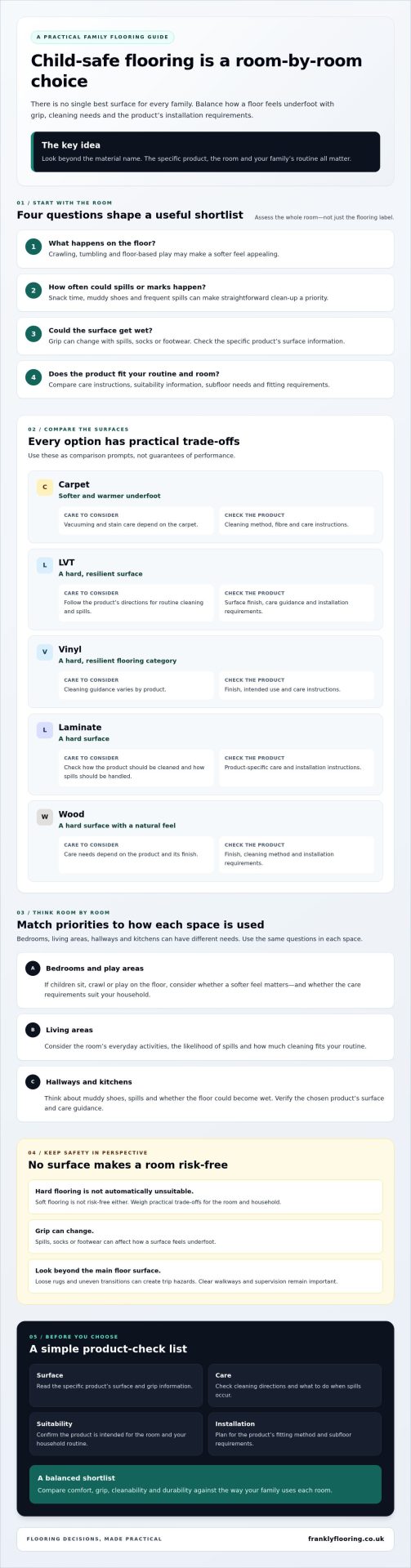
A practical shortlist starts with the room, not a favourite material. Bedrooms, living areas, hallways and kitchens see different activities, foot traffic and spills, so the same flooring may not suit every space. Use these steps to compare child-safe flooring options against your household’s routine.
- Assess how the room is used. Note whether children crawl, play on the floor, run through the space or eat there. Consider likely spills, pets and where toys or furniture could obstruct a walkway.
- Rank your priorities. Decide whether a softer feel, straightforward cleaning, surface grip or ease of upkeep matters most in that room.
- Shortlist suitable materials. Compare carpet, LVT, vinyl, laminate and wood against those priorities rather than choosing one type for the whole home by default.
- Verify the product details. Read its care instructions, intended use and installation requirements, including how edges and doorways should meet adjacent flooring.
A bedroom used for quiet play may call for different qualities from a kitchen where food and drinks are handled. Hallways need consideration of frequent traffic, footwear and loose rugs, while a living area may need to balance play space with furniture and regular cleaning. In every room, consider spills, transitions between surfaces and how easily you can keep the floor clear.
Which flooring questions should you ask for each room?
Ask what children actually do there and what kind of wear or mess is likely. Check the chosen product’s cleaning guidance and any stated limitations rather than assuming all floors in the same category are maintained alike. Look at doorways and floor edges too: will there be a change in height, or a rug that could shift? Include these details in your room assessment.
If samples are available, ordering them can help you judge colour and surface appearance in your home’s light and alongside existing finishes. A sample can’t replace checking the full product specifications, but it may help you make a more informed visual choice.
What should you check before ordering flooring online?
Measure the area carefully and confirm product specifications, required accessories and the seller’s delivery information before placing an order. Check whether the flooring calls for particular adhesives, underlay or subfloor preparation, and make sure the fitting plan follows the product guidance. Confirm suitability, installation and ongoing care for each product you choose.
Frankly Flooring sells flooring and accessories, but doesn’t provide installation. You’ll need to arrange fitting separately and make sure the person carrying it out has the relevant product instructions. To compare flooring categories and accessories for your shortlist, browse Frankly Flooring online.
Choose child-safe flooring options with a clear, practical shortlist
A useful shortlist is based on what each room needs, not on a claim that one material is safest for every family. Before deciding, check:
- Room use: Think about play, foot traffic, pets and where spills are likely.
- Surface preference: Decide whether a softer feel or a hard surface better suits the room.
- Care: Make sure the cleaning routine in the product instructions works for your household.
- Product specifications: Check the finish, intended use and any stated limitations.
- Installation planning: Confirm measurements, required accessories and how the floor will meet adjoining surfaces.
These checks narrow your options without relying on assumptions about an entire flooring category.
Which flooring category belongs on your shortlist?
If a softer-feeling surface matters most, consider carpet, provided its care requirements fit your routine. For a hard surface, compare LVT, vinyl, laminate and wood by the specific product’s finish, cleaning guidance and suitability for the room. Construction and maintenance can differ, so don’t assume products within the same category all respond to spills or wear in the same way.
Read the product information before deciding. A category can guide your search, but it can’t confirm whether a particular floor suits your room, household or fitting plans.
What is a sensible next step before you buy?
Shortlist the products that appear to match your priorities, then confirm room measurements, required accessories and the seller’s delivery information. Check installation instructions, including whether particular adhesives, underlay or subfloor preparation are needed. If you’re considering wood, Frankly Flooring’s engineered wood flooring guide can help you explore that category.
Frankly Flooring is a UK-wide online retailer of carpet, LVT, vinyl, laminate and wood flooring, along with flooring accessories. It’s a family-run business with over 20 years of flooring industry experience. Its category guidance can help you explore options, but product suitability still needs to be checked against the individual product details. Frankly Flooring sells flooring and accessories; it doesn’t provide installation.
Compare the specifications and care instructions for your shortlist before choosing. Browse flooring options at Frankly Flooring to explore products for your rooms and family routine.
Make a confident choice for your family home
The most suitable child-safe flooring options depend on the room, your child’s activities and the care routine you can manage. Carpet may suit a space where a softer feel matters, while LVT, vinyl, laminate or wood may better fit other household priorities. No material makes a room risk-free, so check the product’s surface, care instructions and installation requirements before deciding.
A room-by-room shortlist keeps the choice practical. Consider spills, cleaning, floor transitions and how the space is used every day, then compare product details rather than relying on broad claims about a flooring category.
Frankly Flooring is a UK-wide online retailer offering carpet, LVT, vinyl, laminate and wood, as well as flooring accessories. It’s family-run, with over 20 years of flooring industry experience. Browse the range at your own pace and compare specifications before choosing. Browse flooring options at Frankly Flooring to explore materials for your home. A considered choice can help your floors work more comfortably with family life.
Frequently Asked Questions
What is the safest flooring for children?
There isn’t one flooring type that’s safest for every child or room. The most suitable child-safe flooring options depend on surface feel, grip, cleaning needs, room use and the product’s installation requirements. Carpet may appeal where a softer feel matters, while hard flooring may suit a room where cleaning is a priority. Check the specific product details, and remember that clear walkways, prompt spill clean-up and supervision matter too.
Is carpet or hard flooring better for children?
Neither is automatically better; each has different practical trade-offs. Carpet feels softer underfoot, which some families prefer for bedrooms or play areas, but care and stain removal vary by product. Hard flooring can be easier to wipe according to its care instructions, but spills still need attention and the surface may feel less forgiving during floor play. Base your choice on the room, your child’s activities and the cleaning routine you can manage.
Can LVT flooring be suitable for a home with children?
Yes, LVT can be suitable for a family home if the particular product meets the room’s needs. Check its surface finish, cleaning instructions, intended use and installation guidance rather than assuming all LVT performs alike. Consider where spills may occur and how the floor will meet adjacent surfaces. LVT is a hard surface, so weigh comfort for floor-based play against routine upkeep before choosing it for a child’s room.
Is laminate flooring suitable for children’s bedrooms?
Laminate can be considered for a child’s bedroom if the product is appropriate for the room and its care requirements fit your household. Read the manufacturer’s guidance for cleaning, spills and installation, and check any stated limitations. Think about how your child uses the space, including crawling, play and dropped toys. If a softer feel is a priority, compare carpet too. There’s no single right answer for every bedroom.
What flooring is easiest to clean when you have children?
Hard flooring is often practical for wiping up everyday mess, but the easiest option depends on the specific product and its care instructions. LVT, vinyl, laminate and wood can have different cleaning requirements, so check which products and methods are recommended. Carpet usually needs a different routine, and stain care can vary. Whichever you choose, consider how promptly you can deal with spills and whether the maintenance fits your family’s daily routine.
How can I make a floor safer for a crawling baby?
Keep the floor clean, dry and clear of small objects, toys and other trip hazards. Check for loose rugs, raised edges and uneven transitions between rooms, and follow the flooring manufacturer’s care guidance. A softer-feeling surface may be more comfortable for crawling, but it doesn’t guarantee protection from injury. Choose based on the room and cleaning routine, and use appropriate supervision and wider household safety measures as your baby explores.
Are rugs safe on hard flooring in a home with children?
Rugs can introduce a slipping or tripping hazard if they move, curl or have raised edges, so check their position and condition regularly. Choose a rug and compatible non-slip underlay suited to the floor, following both products’ guidance. Keep rugs out of busy walkways where possible, and deal with spills promptly so the surface beneath doesn’t become slippery. A rug can soften a space, but it shouldn’t be treated as a safety guarantee.