
Trying to stop every gap in a wood floor can make matters worse. Wood naturally expands and contracts as moisture levels change, so the practical goal is to manage that movement, not lock the boards in place. If you’re asking how to prevent wood floor from gapping, remember that small, even gaps during a dry season may be normal, while persistent or uneven gaps can point to a problem.
It’s understandable to worry when your floor changes with the weather or heating. Careful product selection, preparation, fitting and steady indoor conditions can reduce the risk of avoidable gapping, although no wood floor is entirely immune to seasonal movement. This guide explains what causes gaps, what to consider before and during fitting, and how ongoing care can help keep conditions more stable. You’ll also learn how to distinguish expected seasonal changes from gaps that warrant professional assessment, rather than a quick cosmetic fix.
Key Takeaways
- Learn how to prevent wood floor from gapping by managing moisture and allowing for natural movement, rather than trying to hold boards rigidly in place.
- Understand how room humidity, subfloor moisture and installation preparation can affect gaps in different ways.
- Use humidity monitoring and steady indoor conditions to reduce environmental swings, while recognising they can’t eliminate all seasonal movement.
- Follow a practical checklist covering product selection, preparation, fitting guidance and everyday care.
- Compare solid and engineered wood as part of your decision, and recognise when persistent or uneven gaps need professional assessment.
How to prevent wood floor from gapping: understand what is normal
A small change between boards doesn’t automatically mean your floor has failed. Natural wood responds to moisture in the surrounding air: it can take in moisture and expand, then release moisture and contract as conditions change. The joints may therefore look tighter at one time of year and more visible at another. This movement is part of working with a natural material, not something prevention can eliminate entirely.
Expected seasonal gaps tend to be small and consistent; sudden, uneven or persistent gaps deserve closer investigation. That distinction is useful, but it isn’t a diagnosis. The size and pattern of a gap are only part of the picture, and its cause can’t always be identified by appearance alone.
Why do wood floor gaps appear?
Gapping means there’s visible separation between neighbouring boards, usually along their long edges or at the ends. It’s different from a surface scratch, a change in colour or a board that has lifted or distorted. This wood flooring overview explains why moisture matters: wood’s dimensions can respond to the conditions around it. The amount and pattern of movement vary, so not every gap has the same cause or remedy.
For example, joints may become more noticeable across a broad area during a drier period, then appear closer together when conditions become more humid. A gap confined to one spot may have a different explanation. Look at the overall pattern and whether it changes with the seasons, rather than assuming every visible joint signals the same problem.
When are gaps normal, and when are they concerning?
Small, fairly even gaps that appear during a dry spell and reduce as conditions change are more consistent with seasonal movement. By contrast, separation that appears suddenly, is concentrated in one area or remains open through changing seasons calls for closer assessment. The floor’s wider condition matters too.
Pay attention if gaps occur alongside boards that are lifting, cupping, buckling or otherwise changing shape. These signs may indicate an issue beyond ordinary seasonal movement, but they don’t identify its cause on their own. Moisture, the subfloor, preparation and fitting can all be relevant, and each may need a different response. Avoid filling or covering a gap before understanding why it’s there, since a cosmetic fix won’t address an underlying issue.
Photographs can help you record where gaps are and whether their appearance changes over time. Take them from the same angle, with both a wider view of the floor and close-ups. Note when you first noticed the separation and any changes in the room’s conditions. Images and a short description can’t establish a definitive diagnosis, however. Persistent or uneven gaps, particularly alongside distortion, warrant professional assessment.
Understanding what you’re seeing is the first step in how to prevent wood floor from gapping for avoidable reasons. The aim is to reduce unnecessary movement and installation risks, not to promise a floor with no seasonal change.
How moisture, indoor conditions, and installation affect wood floor gaps
Wood responds to moisture in both the room air and the materials beneath it. These influences are related, but they aren’t interchangeable. Managing indoor humidity won’t correct a damp subfloor, and a dry subfloor alone can’t prevent the room air from becoming very dry. Understanding both helps explain why gapping can develop and why there isn’t one fix for every floor.
Stable indoor conditions help wood flooring move more predictably, but they can’t remove its natural response to moisture. The National Wood Flooring Association (NWFA) discusses how moisture and temperature changes can contribute to flooring problems, including gaps. For a particular floor, follow its manufacturer’s guidance rather than relying on a single humidity target as a universal rule.
How indoor humidity affects wood flooring
Relative humidity describes how much moisture is in the air compared with the maximum it could hold at that temperature. In drier air, wood can lose moisture and contract; in more humid conditions, it can take up moisture and expand. This can change how visible the joints between boards are. The amount of movement depends on the flooring and the conditions it experiences.
In UK homes, seasonal habits can affect indoor conditions. Heating during colder weather may make indoor air drier, while ventilation, cooking, bathing and other daily activities can also influence moisture levels. A sudden change in heating or ventilation may shift conditions around the floor. A basic hygrometer can help you observe relative humidity over time, but a reading on its own doesn’t explain the floor’s full history or diagnose the cause of a gap.
Why subfloor preparation and acclimatisation matter
The subfloor has its own moisture condition, separate from the air in the room. If it hasn’t been assessed and prepared appropriately for the flooring, moisture may affect the boards from below. Unevenness, unsuitable conditions or preparation that doesn’t match the product can also contribute to problems. These are installation-planning issues, not something a household humidity reading can rule out.
Acclimatisation means allowing flooring to adjust to the conditions in the space where it will be fitted, as directed by the product’s installation instructions. It isn’t simply a fixed waiting period: the home should be at its intended, stable living conditions, and the flooring should be handled and stored as instructed. Follow the specific product guidance for timing and preparation.
When considering how to prevent wood floor from gapping, think beyond the boards themselves. Room conditions, subfloor moisture, site preparation and product instructions all form part of the picture. If you’re comparing options, browse wood flooring options with these practical considerations in mind. No wood construction can promise zero movement.
Which wood-floor gap prevention measures work best, and what are their limits?
No single measure can prevent every gap. The most useful approach is to reduce avoidable swings in room conditions, follow the flooring’s preparation instructions and investigate concerns before choosing a repair. Each measure helps with a different part of the picture. For example, monitoring the air can’t tell you whether a subfloor is dry or properly prepared.
Use this comparison to understand what each step can realistically do and when it matters:
| Measure | Purpose | Limitation | Suitable timing |
|---|---|---|---|
| Humidity monitoring | Shows how indoor relative humidity changes over time. | Doesn’t identify subfloor moisture or diagnose a gap. | Before and after fitting, especially as seasons change. |
| Consistent room conditions | Helps avoid abrupt changes in the environment around the boards. | Can’t stop natural movement or control every source of moisture. | During fitting and in everyday use. |
| Product-specific preparation | Aligns storage, acclimatisation and fitting conditions with the flooring instructions. | Can’t compensate for every site or moisture problem. | Before and during fitting. |
Humidity monitoring versus trying to control every fluctuation
A hygrometer gives you a clearer picture of indoor relative humidity than guesswork. Readings taken over time can show whether conditions are broadly steady or changing with heating, ventilation or seasonal weather. Use this information to guide sensible adjustments to the room, not to chase every short-lived fluctuation. There’s no universal target in this guide: check the flooring manufacturer’s instructions for the appropriate conditions for your product.
Steadier conditions make movement more predictable, but they don’t guarantee gap-free boards. A reading also says nothing by itself about moisture beneath the floor, how it was fitted or whether a particular gap has another cause.
Good preparation versus quick fixes after gaps appear
Before fitting, follow the product instructions for storage, acclimatisation and site conditions. This gives the flooring a suitable starting point, but it can’t correct an unsuitable subfloor or later changes in the home. After fitting, avoid sudden, unnecessary changes to heating and ventilation where practical. Stable conditions are a sensible aim, not a promise of zero movement.
Filler may disguise a gap temporarily, but it won’t address ongoing seasonal movement or an underlying moisture or fitting issue. A rigid repair can also be unsuitable if boards need room to move. If separation appears suddenly, is uneven or is getting worse, arrange an assessment before attempting a cosmetic repair. Understanding the cause is the sounder first step in deciding how to prevent wood floor from gapping for reasons that can be controlled.
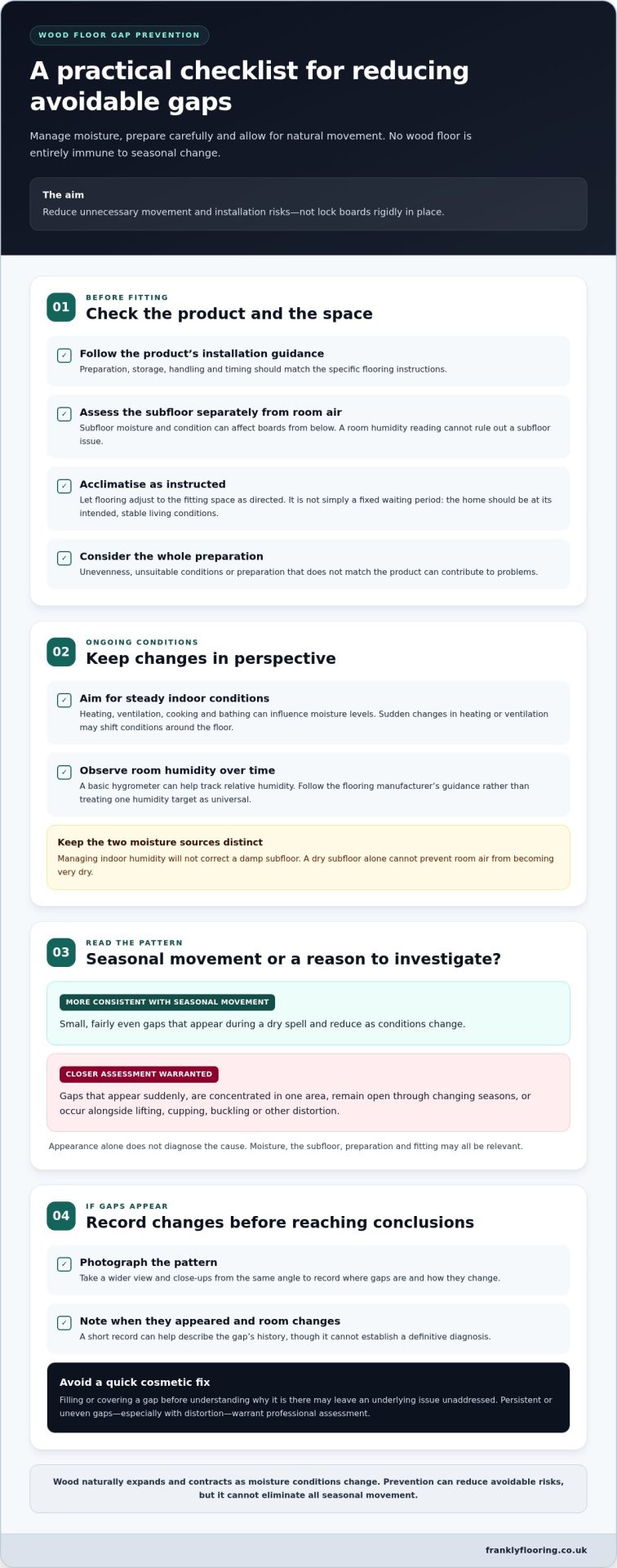
How to prevent wood floor from gapping before, during, and after fitting
Good results start before the first board is laid. Use this checklist to separate the preparation you can organise as a homeowner from technical checks that need a qualified flooring professional. The product’s own instructions should guide decisions about site conditions, preparation and fitting. The aim is to reduce avoidable risks, not to guarantee that natural wood will never move.
Before fitting: prepare the room and choose the right instructions
Confirm the exact flooring product and read its installation requirements before work begins. Room preparation and subfloor preparation are separate: stable conditions in the room don’t prove that the base is ready. Acclimatisation and storage directions also vary, so follow the product guidance rather than relying on a fixed waiting period. For help understanding the construction of engineered boards, see this engineered wood flooring guide.
- Choose with the room in mind. Consider the room’s expected use and conditions as you compare wood flooring options. Construction is one factor in your decision, not a promise that gaps won’t occur.
- Read the product instructions. Check the requirements for storage, acclimatisation, fitting method and site conditions. Keep the instructions available so everyone preparing and fitting the floor can work to the same guidance.
- Prepare the room. Make sure the space can be kept in the stable conditions specified for the product. Avoid scheduling the work while major building or decorating work is likely to leave the room unusually cold, damp or unsettled.
- Arrange the technical checks. A qualified flooring professional should assess whether the subfloor is suitable, including its condition, moisture and flatness. These checks can’t be replaced by a room humidity reading or a visual check from above.
- Follow the fitting requirements. The fitting method, board layout and allowance for expansion should follow the product instructions and the conditions at the property. Don’t fix boards rigidly in a way that prevents the movement the floor needs.
- Keep care consistent. After fitting, avoid abrupt, unnecessary changes to heating and ventilation where practical. Monitor room conditions and clean the floor in line with its care guidance.
After fitting: keep conditions steady and monitor changes
If gaps appear, note when you first saw them, where they are and whether other changes have occurred, such as lifting or distortion. Photographs taken from the same position over time can help show whether the pattern is changing. Observe how the gaps respond to seasonal conditions before attempting to fill them. Sudden, uneven or worsening separation needs assessment before cosmetic repairs.
Choosing a suitable floor is one practical part of how to prevent wood floor from gapping. Browse wood flooring options with the room’s conditions and the product’s preparation requirements in mind.
Choose wood flooring with movement in mind, then know your next step
Choosing between solid and engineered wood is one part of planning for a wood floor, not a way to guarantee that gaps won’t appear. Both are made with real wood and can respond to changing moisture conditions. The right choice depends on the room, the flooring instructions and what matters to you in the look and construction of the floor.
Solid or engineered wood: what should buyers consider?
Solid wood boards are made from wood throughout. Engineered boards combine a real wood surface with a constructed base beneath it. That difference affects how each product is made, but it doesn’t make either option immune to movement. For a fuller comparison of their construction and other buying considerations, read this guide to solid versus engineered wood flooring.
Before deciding, think about the room’s conditions and how the floor will be used, then read the specific product’s fitting and care instructions. Consider the appearance and feel you prefer, too. The product’s requirements should suit the home and planned preparation. Don’t rely on a broad claim that one type will prevent gapping: both choices need suitable conditions and careful preparation.
When should a changing gap be assessed?
Keep track of changes rather than judging a floor from one glance. A small gap that appears across the floor during a dry spell may behave differently from a sudden separation in one area. Note when the gap first appeared, whether it’s widening or recurring, and whether boards are lifting or distorted. These details provide useful context, but they can’t establish the cause without closer assessment.
Arrange a professional assessment if gaps are sudden, expanding, uneven or repeatedly returning, particularly if other changes to the boards are visible. Avoid filling or sealing the joints before the reason for the movement is understood. A repair that only disguises the gap may not address what is causing it, and the floor may need room to move naturally. Photographs taken over time can help record the pattern.
Knowing how to prevent wood floor from gapping comes down to sensible product selection, suitable preparation and attention to changes, not a promise of zero movement. If you’re weighing up options, take a look at wood flooring at Frankly Flooring and compare the choices with your room and priorities in mind.
Make your next flooring choice with confidence
A wood floor doesn’t need to stay perfectly unchanged to be a good choice for your home. The more useful goal is to understand how the room and product instructions shape its movement, then make a considered decision that suits your space. If you’re still researching how to prevent wood floor from gapping, keep the specific flooring guidance close as you plan your next step.
Frankly Flooring is a family-run online retailer with over 20 years of flooring-industry experience, offering real and engineered wood flooring. Browse the options online and compare their construction with your preferences and the needs of your room. No flooring choice can promise that natural wood will never move, but clear product information can help you plan for its care and fitting requirements.
Explore wood flooring at Frankly Flooring and compare the available options for your home.
Frequently Asked Questions
Can humidity control prevent gaps in a wood floor?
Humidity control can reduce avoidable changes in wood moisture, but it can’t guarantee that boards will never move. A hygrometer can help you track room conditions over time, which is more useful than relying on a single reading. For practical guidance on how to prevent wood floor from gapping, compare your readings with the instructions for your specific flooring, rather than applying one target to every product and home.
What humidity should a wood floor be kept at?
There isn’t one humidity figure that suits every floor, property and installation. Check the flooring manufacturer’s current instructions and consider the conditions required for both the room and subfloor. If the guidance gives a relative-humidity range, use the range for your specific product and situation. Avoid treating a number from general advice as a universal rule, particularly if the home’s conditions vary seasonally.
Can I fill gaps in a wood floor to stop them coming back?
Filler may conceal a gap for a time, but it won’t correct the conditions making boards move. If the gap changes with the seasons, a rigid repair may not be suitable because the boards may need room to move. Before choosing a repair, note whether the gap changes and check for other visible changes to the floor. Get an appropriate assessment first if the separation is new or worsening.
Does engineered wood flooring stop gapping?
No. Engineered wood has a different construction from solid wood, but it shouldn’t be considered immune to movement or gaps. The product, room conditions, subfloor and fitting all play a part. Before choosing, compare the specific flooring instructions with the room where it will be used. A general claim about one construction type can’t establish how a particular floor will behave in your home.
Should wood flooring acclimatise before it is fitted?
Follow the installation instructions for the exact flooring product and the conditions at the property. Some products may need time to adjust to the room before fitting, but preparation requirements differ. Don’t rely on a fixed number of days taken from general advice. Check the product guidance alongside any relevant site-condition checks, and keep the instructions available during preparation so they’re followed consistently.
Are gaps in a wood floor worse in winter?
Gaps may look more noticeable during winter if indoor conditions change as heating is used, but the season alone can’t tell you whether the floor has a problem. Look at the pattern: do gaps appear consistently, change over time or keep widening? Note whether boards are also lifting or changing shape. Comparing observations across different seasons gives more context than judging the floor on one cold day.
When should I worry about gaps between floorboards?
Arrange an assessment if gaps appear suddenly, grow, look uneven or return repeatedly, especially if boards are lifting or distorted. These signs don’t prove a particular cause, but they provide useful context for understanding what may be happening. Record when you noticed the gaps and take photographs from the same position as they change. That history can help distinguish a recurring pattern from a new or progressing issue.