
An engineered wood floor can look like solid timber on the surface, but that doesn’t automatically mean it can be sanded. So, can you sand and refinish engineered wood without exposing or damaging the layers beneath? The answer depends less on the floor’s label and more on how much real wood remains above its core.
It’s sensible to be cautious. Sand too deeply and you could go through the wear layer; leave the floor untouched and scratches, dullness or an ageing finish may remain. The key details are the thickness of the real-wood layer, the floor’s condition and its surface texture. As a general guide, a layer under 2.5 mm is usually considered unsuitable for sanding, though the right approach depends on the individual floor.
This article explains what to check, what sanding and refinishing can realistically improve, and which damage they can’t fix. You’ll also learn why textured boards need particular care and how to assess the floor before any material is removed. The aim is to make an informed decision, not a risky guess.
Key Takeaways
- Whether you can sand and refinish engineered wood depends on its real-wood wear layer and overall condition, not simply the board’s total thickness.
- Check the original product documents for the wear-layer specification before deciding whether sanding is suitable.
- Refreshing a finish is different from sanding: sanding removes wood, while deep gouges or structural problems may need a different solution.
- Record scratches, stains, loose boards and uneven areas to build a clear picture of the floor before choosing your next step.
- After refinishing, follow care instructions suited to the finish, clean up spills promptly and avoid abrasive cleaning methods.
Can you sand and refinish engineered wood flooring?
Yes, some engineered wood floors can be sanded and refinished, but it isn’t suitable for every board. The construction and condition of the individual floor matter. A board may look like solid timber on top yet have only a limited amount of real wood available for sanding. That’s why it’s important to understand the floor before removing its existing finish.
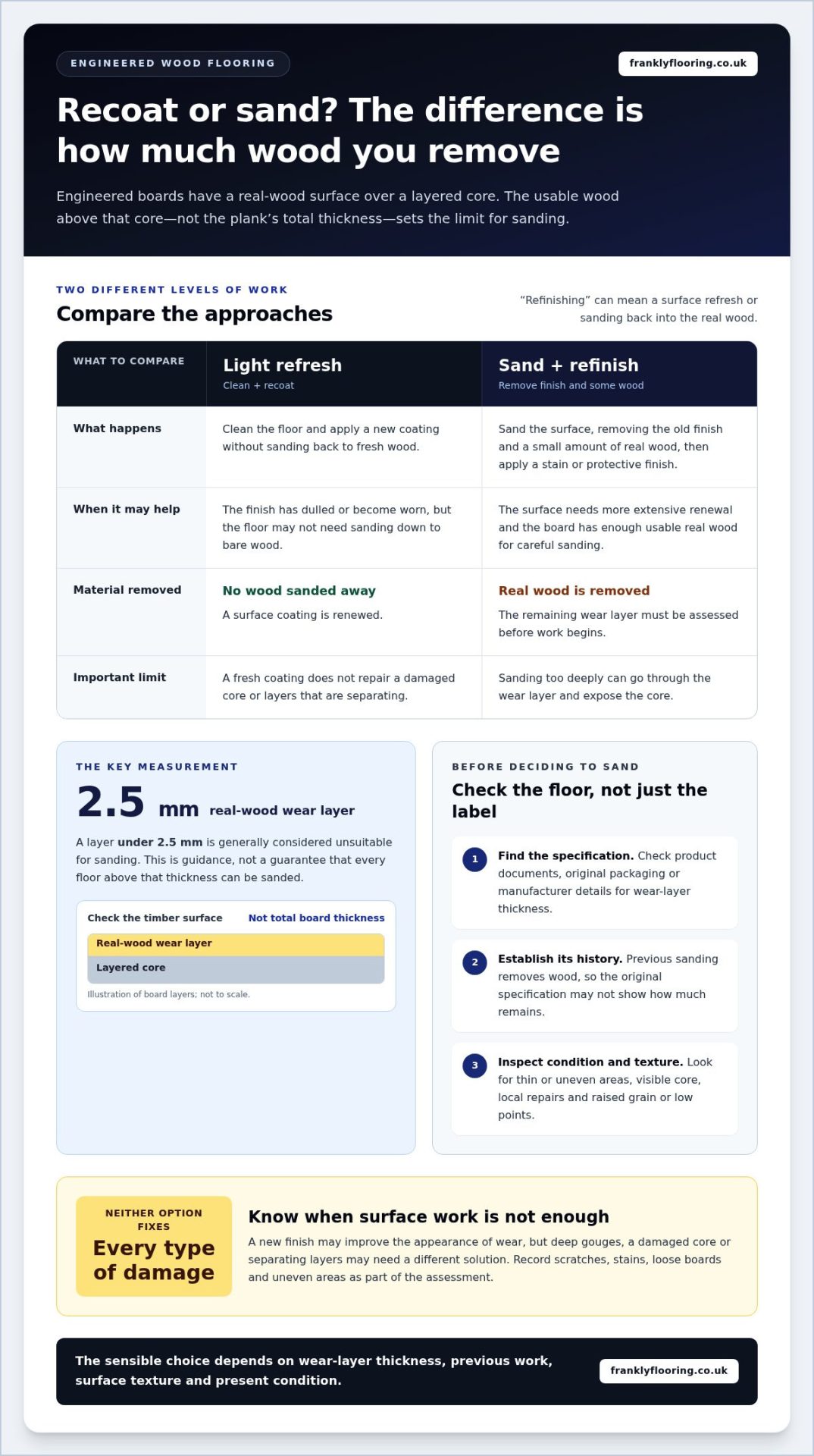
People often use “refinishing” to describe different kinds of surface renewal. It might mean cleaning the floor and applying a new coating, or sanding away the old finish and a small amount of wood before applying a new one. These are not the same level of work. Recoating refreshes the surface without sanding back to fresh wood; sanding removes material, so it requires a suitable wear layer and careful assessment.
The usable real-wood layer limits how much sanding is possible. If sanding removes that layer, it can expose the core underneath. The board’s total thickness alone doesn’t tell you how much sanding it can withstand.
What makes engineered wood different from solid wood?
Engineered wood has a real-wood surface bonded to a core made from layers of wood-based material. Solid wood, by contrast, is timber throughout. Sanding an engineered board affects only its real-wood surface, not the full thickness of the board, so the amount of usable wood on top is crucial. For more background on its construction and buying considerations, see the engineered wood flooring guide.
This construction can make engineered flooring a practical choice, but it doesn’t mean every product is equally suitable for sanding. Two floors can have similar-looking boards and different amounts of real wood at the surface. If you still have the original packaging, invoice or product documents, use them to identify the floor and its construction before deciding what work it needs.
What does refinishing actually involve?
A light refresh may involve cleaning and recoating a finish that has dulled or become worn, without sanding down to bare wood. A more extensive refinish may involve sanding the surface, then applying a stain or protective finish. The chosen approach affects how much material is removed and how the floor looks afterwards, so “refinishing” alone doesn’t describe the full process.
Neither approach can repair every kind of damage. A new surface finish may improve the appearance of wear, but it won’t restore a board whose core is damaged or whose layers are separating. Deep gouges and damage that reaches beyond the finish may also need more than a surface refresh. If you’re asking, “can you sand and refinish engineered wood?”, the sensible answer is yes, when the board has enough usable real wood and its condition supports the work. First establish what your particular floor is made of and what is damaged.
How the engineered wood wear layer determines sanding suitability
The key measurement is the thickness of the real-wood wear layer, not the total thickness of the board. The core makes up much of an engineered plank, but sanding removes material from the timber surface. A thick board can still have a thin wear layer, so its overall depth is no reliable guide to how much sanding it can take.
Published guidance can help put a specification in context, but it isn’t a guarantee for an individual floor. A wear layer below 2.5 mm is generally considered unsuitable for sanding, but that figure shouldn’t be treated as a promise that every board above it is suitable. Previous sanding, damage, surface texture and the floor’s condition all matter. Assess the actual construction and remaining material rather than relying on a single number.
Where can you find the wear-layer specification?
Start with the product paperwork, original packaging or the manufacturer’s product details. Look specifically for the wear-layer thickness, rather than the overall board thickness. If you’re comparing the two measurements, the engineered wood flooring guide explains why the distinction matters. If you can’t find the specification, don’t estimate it from the plank’s appearance; a convincing timber surface doesn’t reveal how much wood lies beneath the finish.
Why previous sanding changes the decision
Every sanding removes some real wood, so the original specification doesn’t tell the whole story if the floor has already been refinished. A board that began with a generous wear layer may have less usable material left than expected. Uneven wear or local repairs can also mean the remaining depth varies across the room.
Establish both what the product started with and what may have changed since. A floor with a documented wear layer above a published threshold could still be a poor candidate if it has been sanded before or is worn through in places. Conversely, a surface that looks tired may need only a finish refresh, rather than sanding back into the wood.
As you assess the floor, note any areas where the surface looks unusually thin, the core may be visible, or previous work has left boards uneven. Textured boards need extra care: the usable wood depth can differ between the low points and raised grain. These details help prevent one measurement from being treated as a complete verdict.
So, can you sand and refinish engineered wood? The wear-layer specification is a strong starting point, but it needs to be considered alongside the floor’s history and present condition. If you’re considering engineered wood for a future flooring project, you can explore the engineered wood flooring available from Frankly Flooring as a separate buying consideration.
When sanding engineered wood can help, and when it cannot
Sanding is most useful when the problem is in the finish or a shallow part of the wood surface, and the board has enough usable wear layer. It is not a cure-all. A mark that has cut through the timber, or a board that moves underfoot, needs a different assessment. Use the comparison below to distinguish surface wear from damage that may reach the board itself.
| Floor issue | What refinishing may do | What to watch for |
|---|---|---|
| Light finish wear | Cleaning or recoating may refresh a tired surface. | Check that the existing finish is suitable for the planned treatment. |
| Scratches | Fine marks may improve with a finish-focused refresh or careful sanding. | Deeper scratches can reach the wood and may remain visible. |
| Deep gouges | Sanding may soften the edges of a shallow mark. | It cannot replace wood removed by a gouge; sanding deeper risks thinning the wear layer. |
| Stains | Sanding may help if the mark is limited to the finish or surface. | A stain that has penetrated the wood may not disappear completely. |
| Structural problems | A new finish can improve appearance only. | Loose boards, movement, or exposed core need a repair or replacement assessment, not deeper sanding. |
Which surface problems might refinishing address?
A finish that has become dull, scuffed or lightly worn may be a candidate for cleaning or recoating. This refreshes the protective surface without removing much wood. Sanding may be considered for scratches that have entered the finish, but the depth of each mark and the remaining wear layer matter. Results can vary: sanding won’t necessarily remove every mark or make uneven wear disappear.
When is sanding unlikely to solve the problem?
If the real-wood layer is worn through and the core is exposed, sanding can’t put the missing timber back. A loose board needs its underlying cause addressed, while movement across an area can point to a problem beyond the finish. Neither issue is corrected by sanding the surface. If damage reaches through the veneer, or boards feel unstable, consider repair or replacement rather than removing more wood.
Finish renewal is not the same as repairing a damaged board. A new coating can change the surface appearance; it cannot restore missing material, bond separated layers or stabilise a floor that moves. That distinction matters if you’re asking, “can you sand and refinish engineered wood?” Even a floor with a suitable wear layer may not be a sensible candidate if its boards are damaged or unstable.
Look at the whole floor, not only the most noticeable mark. A few shallow scratches in an otherwise sound surface present a different problem from widespread deep gouges, stains that have soaked into the wood, or boards with visible core material. Note where the damage occurs and whether it affects one plank or several. This gives you a clearer basis for deciding whether a surface refresh, repair or replacement is the more realistic next step.
How to assess an engineered wood floor before sanding
A personal account of sanding one floor can’t tell you whether another is suitable. The product construction, its history and the type of damage all affect the decision. Work through a few checks before choosing a treatment. If you can’t establish what the surface is made of, don’t treat appearance alone as proof that sanding is safe.
Use this order to build a clearer picture:
- Identify the floor. Look for the manufacturer, product name or other identifying details on original paperwork, packaging or product records.
- Find the wear-layer specification. Check manufacturer information for the thickness of the real-wood surface, not just the total board thickness. If it’s unavailable, avoid guessing.
- Inspect the boards. Look for signs of previous sanding, deep scratches, repairs, areas that appear unusually thin, loose boards and uneven sections.
- Review the finish. Consider whether the issue is a dull or worn coating, marks in the wood itself, or damage to the board beneath.
Make a simple record as you go. Note where scratches and stains appear, whether any boards move, and where the floor looks uneven. Photos can help you compare areas and describe what you’ve found during an assessment. A single prominent mark may look like the main concern, but widespread wear or movement across several boards changes the picture.
A practical pre-sanding checklist
Gather the product details, check for evidence of earlier sanding and map visible damage before deciding. Then work out what needs attention: the finish, the wood surface or the board itself. If you can’t identify the floor or its wear-layer depth, pause rather than using a test patch or a power sander to find out. That could remove useful material before you know whether sanding is suitable.
DIY sanding or specialist assessment?
DIY sanding can go wrong quickly if a thin or previously sanded wear layer is mistaken for a deeper one. Consistent results also depend on controlling the equipment, removing material evenly and having a suitable finish plan. If the floor’s construction or condition is uncertain, don’t begin sanding until you have enough information to make a sound decision.
Equipment matters. A machine that removes material unevenly can leave dips or visible differences between boards, especially if the surface is already uneven or textured. Sanding also creates wood dust, so don’t treat it as an ordinary household cleaning job. Keep other people away from the work area and use appropriate dust-control measures and protective equipment; follow the machine and finish manufacturers’ instructions.
The assessment should lead to a clear decision: whether the finish may need refreshing, whether sanding is a realistic option, or whether the damage calls for another approach. If you’re considering a future floor rather than taking a risk with an uncertain one, browse engineered wood flooring options as a separate next step.
After refinishing: protect the floor or choose new engineered wood
Once the floor has been refinished, the right care routine depends on the finish used. A surface treated with one type of finish may need different care from another, so follow the finish manufacturer’s instructions rather than relying on a one-size-fits-all cleaning method. Gentle, regular cleaning and quick attention to spills can help limit avoidable wear, but they can’t prevent every scratch, dent or mark.
How to care for a refinished wood floor
Keep the routine simple and consistent. Remove loose grit with a gentle method, clean in a way that suits the finish, and avoid abrasive pads or harsh scrubbing that could mark the surface. Wipe up spills promptly rather than leaving moisture to sit on the boards. If you’re unsure how a particular cleaning method may affect the finish, check the manufacturer’s care guidance before using it.
Good habits help, but they aren’t a guarantee against damage. Grit, furniture movement, dropped objects and everyday foot traffic can all leave marks over time. Check the floor periodically so a small issue doesn’t go unnoticed, and distinguish a worn finish from damage to the wood itself before deciding what attention it needs.
When replacement may be the more sensible next step
Refinishing isn’t always the practical choice. If the wear layer is too thin, the surface has already been sanded heavily, or damage reaches through the wood to the core, removing more material may make matters worse. Deep damage, separated layers or boards that remain loose or uneven also point beyond a simple surface refresh. In those cases, compare repair and replacement options rather than treating deeper sanding as the answer.
If you’re considering a replacement, look beyond appearance. Compare the board construction and available surface-layer details, then consider how the room is used and what matters most in daily care. Solid wood and engineered wood have different constructions, so their value factors differ too. This comparison of solid wood and engineered wood value factors can help frame that choice.
The decision doesn’t need to be all or nothing. A suitable floor in sound condition may be worth keeping and maintaining; one with an exhausted wear layer or deeper board damage may be better replaced. If you’ve been weighing up whether you can sand and refinish engineered wood, let the floor’s condition guide the next step rather than its appearance alone.
For a future flooring choice, browse Frankly Flooring’s engineered wood flooring range and compare the options with your room’s needs in mind.
Make your next flooring decision with confidence
If you’re still asking, “can you sand and refinish engineered wood?”, let the floor’s documented construction and condition guide your decision, rather than pressure to make it look new at any cost. Sometimes keeping and caring for a suitable floor is the sensible choice. If its surface or boards are beyond a straightforward refresh, comparing replacement options can help you plan a more practical next step.
For future flooring, consider how the room is used, the look you want and the details that affect long-term suitability. Frankly Flooring is a family-run business with over 20 years of flooring-industry experience, and its online store offers engineered and real wood flooring.
Explore Frankly Flooring’s engineered wood flooring guide for further buying guidance and a clearer sense of what to consider next. Take the time to choose carefully, and you can move forward with a floor that suits your home and your priorities.
Frequently Asked Questions
Can engineered wood flooring be sanded more than once?
Yes, some engineered floors can be sanded more than once, but there’s no dependable fixed number for every board. Each sanding removes some real wood, so the remaining layer and any previous sanding both matter. A floor sanded before you bought the house may have less material left than its original specification suggests. Check product records and the floor’s current condition before assuming another sanding is safe.
How thick does the wear layer need to be to sand engineered wood?
There isn’t a universal thickness that guarantees a floor is suitable. The National Wood Flooring Association advises against sanding an engineered floor with a wear layer below 2.5 mm, but thickness alone doesn’t settle the question. Previous sanding, damage and surface texture also affect the usable depth. For textured boards, thickness at the lowest points matters. Use the manufacturer’s specification as a guide, then assess the individual floor.
Can you refinish engineered wood flooring without sanding?
Yes. If the finish is dull or lightly worn but the wood beneath is in sound condition, cleaning and recoating may refresh the surface without sanding back to bare wood. This is different from sanding, which removes material and may be needed to address wear in the surface itself. The right approach depends on the existing finish and the coating planned next, so follow the finish maker’s instructions.
Can engineered wood flooring be stained a different colour?
Sometimes, but the result depends on the existing finish and the condition of the real-wood surface. A coating may prevent stain from reaching the timber evenly, while sanding to remove it uses some of the limited wear layer. The wood species and previous treatments can also affect how colour appears. Don’t assume a darker stain will hide every mark; assess the surface and test the intended finish on a suitable sample first.
What happens if you sand through the engineered wood wear layer?
If sanding removes the real-wood layer, the core beneath may become exposed. That can leave a visibly different patch that cannot be corrected by adding more stain or finish, because the missing timber can’t be restored through coating. The affected board may need repair or replacement, depending on its construction and the extent of the damage. Stop if the core appears, rather than sanding further in an attempt to even the colour.
Can you sand engineered wood flooring yourself?
You can, but it’s a job that calls for experience, suitable equipment and close control. A sander can remove material quickly, and uneven passes may leave dips or cut through a thin or previously sanded surface. Mistakes can be difficult or impossible to reverse. Before starting, establish the floor’s construction and wear-layer depth, understand dust-control precautions, and plan how the surface will be finished afterwards.
How do you know if engineered wood flooring has already been sanded?
There may be clues, such as softened board edges, uneven surface height or a finish that looks different between planks, but none proves sanding happened. Wear, repairs and the original board design can create similar signs. Check invoices, product paperwork or records from previous owners for a history of refinishing. If the history remains unclear, avoid estimating how much wood is left from appearance alone and don’t sand until you can make a properly informed assessment.