
Grey wood isn’t the only way to create a current-looking room. For timeless flooring that won’t go out of style, consider natural tones and a classic plank look, or neutral, plain-colour carpet. These understated foundations work with changing décor, while details such as herringbone can add a more contemporary feel.
It’s understandable to hesitate over grey: a colour that once seemed like a safe choice can feel tiring when it dominates a room. You don’t have to avoid trends altogether; instead, use them in ways that are easier to live with over time. This article looks at flooring styles with lasting appeal, whether grey wood is still worth considering, and how to balance fresh details with versatile neutrals. Room use and underfoot feel can also help narrow your options, so the finished space feels considered rather than tied to a passing look.
Key Takeaways
- Choose natural tones and classic plank styles for a flexible foundation that can work with changing décor.
- Grey wood isn’t the only modern option: warm-toned herringbone can add pattern while keeping a refined feel.
- In homes with children or pets, weigh everyday wear and visible marks alongside colour and style.
- Use neutral flooring as a calm base, then bring current trends into details that are easier to update.
1. What flooring never goes out of style?
Classic flooring uses adaptable materials, natural colours and patterns that don’t overwhelm a room. For timeless flooring that won’t go out of style, consider wood-look planks, neutral carpet or laminate in a restrained finish. These choices provide a steady foundation for a living room, even as wall colours, furniture and accessories change.
Natural-toned plank flooring, neutral carpet and simple, large-scale patterns can suit both traditional and modern UK homes. Warm wood tones can complement original features in a period home, while pale oak-style planks create a clean look in a contemporary space. The principle is the same across flooring types: keep the base simple, then bring in stronger colours through furnishings.
In a small room, compare flooring samples with the walls and natural light before choosing. Pale, low-contrast colours can make the floor feel less busy, while laying planks along the room’s longest line can draw the eye through the space. Choose a plank width that suits the room, so the joints don’t dominate.
For an entryway, herringbone can add interest without relying on a loud colour. Its repeating arrangement creates a clear pattern, so let the flooring provide the detail and keep nearby finishes simpler. Chevron is another enduring pattern, used for over 200 years, though its angled lines create a different effect.
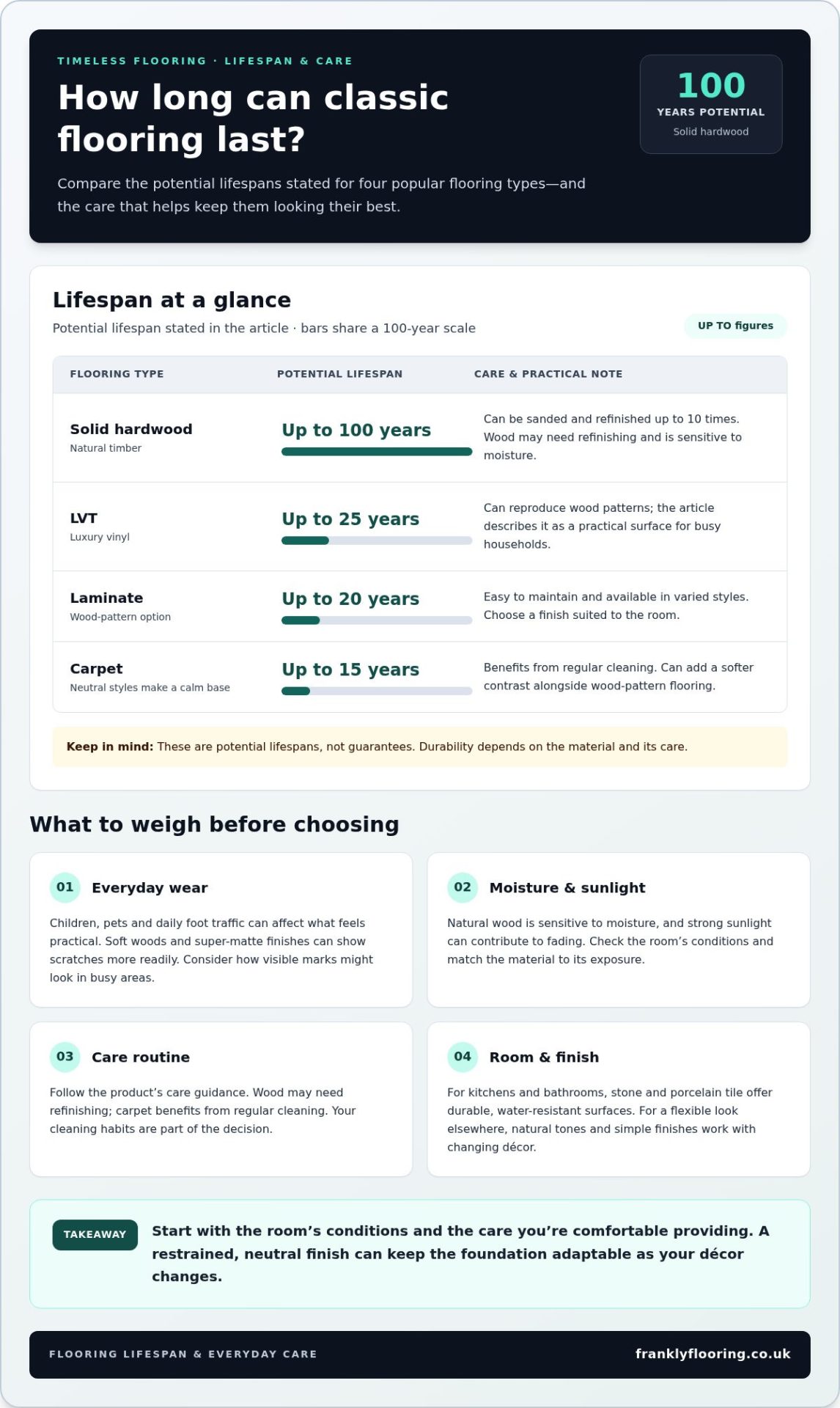
Durability depends on both material and care. Solid hardwood can last for decades, potentially up to 100 years, and can be sanded and refinished up to 10 times. LVT may last up to 25 years, laminate up to 20 years, and carpet up to 15 years. Follow the product’s care guidance; wood may need refinishing, while carpet benefits from regular cleaning.
There’s no single useful average cost for supplying and fitting every timeless floor. The total depends on the material, floor condition, room shape and pattern complexity. Herringbone, for example, requires more precise placement than straight planks.
To suit changing interiors, start with a classic colour and finish. A neutral floor lets you refresh a living room with paint, rugs or furniture instead of replacing the flooring.
2. Tired of hearing about grey wood floors?
Grey wood can still work in a room, but it isn’t the only enduring choice. Light natural oak, mid-tone herringbone and warm wood tones offer alternatives for traditional and contemporary interiors. Herringbone adds direction and pattern; a restrained colour and finish lets the layout provide interest without a strong stain.
Wood flooring comes in solid and engineered forms. Solid wood is made entirely from natural timber, such as oak or walnut. Engineered wood has a hardwood top layer over a synthetic core and backing, giving it a different construction beneath the natural surface. Natural wood can be sanded and recoated to refresh its appearance after years of use, so consider maintenance as well as the floor’s condition.
Laminate and luxury vinyl can reproduce wood patterns without using timber. Laminate is easy to maintain and comes in varied styles; luxury vinyl can offer a practical surface for busy households. Choose according to the room and the finish you want, rather than assuming every imitation suits every space. In kitchens, weigh cleaning needs and moisture exposure alongside appearance.
There’s no single useful UK average for supplying and fitting these flooring types. The total depends on the material, existing floor condition, room shape and layout. Herringbone requires more precise placement than straight boards. When comparing quotes, check what preparation and fitting work each includes.
To make wood-patterned herringbone feel settled rather than tied to a passing trend, pair a warm tone with simple walls and furniture. A living room can take a more prominent grain, while carpet in other rooms adds a softer contrast. If you like grey, use it as one element and add natural wood or warmer furnishings to avoid a grey-on-grey effect.
3. Trendy AND Timeless?
Oak, maple, ash and mahogany are classic hardwood choices, with grains and colours that suit both traditional and modern rooms. For lasting appeal, choose a straightforward finish over distressed texture, intricate parquet or very dark colouring. A lightly brushed surface adds texture without making hardwood flooring feel tied to a short-lived trend.
Children, pets and daily foot traffic affect which flooring is practical. Soft woods and super-matte finishes can show scratches more readily, so consider how visible marks might look in a busy hallway or kitchen. Weigh your household’s routine alongside appearance: a finish that disguises everyday wear may be more useful than a pristine look that needs constant attention.
Moisture matters, too. Natural wood is sensitive to moisture and may not suit underfloor heating, so assess the floor construction and material compatibility before choosing. For UK building requirements, don’t assume a floor covering alone determines compliance; the full floor build-up and heating system are relevant. Match the flooring to those conditions.
Stone and porcelain tiles can be timeless choices for kitchens and bathrooms. Their durable, water-resistant surfaces suit these rooms, while simple colours and layouts are easier to pair with changing fittings. If you are exploring professional fitting and sustainable techniques, specialist providers like eco-advanced-tiling.ie offer helpful expertise. In a bathroom, patterned tiles or textured vinyl can add personality without requiring a bold treatment throughout the home.
Subway tile offers another enduring route. It was created for New York’s subway in 1904, and its original format was 3”x6”. A classic brick layout has been used for more than 100 years. Choose a grout colour that complements the tile: a close match keeps the overall effect calm, while contrasting grout makes the grid more prominent.
Every material has trade-offs. Wood can react to moisture, softer finishes can show scratches, and strong sunlight can contribute to fading. Before choosing, consider the room’s exposure, your cleaning habits and how much visible wear you’re comfortable with. This practical check helps balance luxury, appearance and everyday use.
4. Timeless neutral flooring styles
Neutral flooring gives a room room to change without making the floor feel dated. Beige, taupe, soft grey and natural wood tones can sit comfortably alongside different wall colours and furniture styles. Choose a shade that suits the interior’s existing light and finishes rather than treating “neutral” as one fixed colour. Warm beige, for example, creates a different mood from cool grey.
Check undertones before settling on a sample. Compare it with skirting, kitchen units or a favourite piece of furniture in daylight and evening light. Matching warm undertones in the floor and walls can make a space feel cohesive; deliberate contrast, such as pale flooring with dark furniture, adds definition. Repeating one or two tones across adjoining spaces also helps connect the home.
Patterns can add character without relying on bold colour. A subtle grain, restrained plank variation or simple stone pattern keeps the surface interesting while leaving room for patterned rugs and artwork. Marble offers a familiar natural-stone look for a more formal interior, and specialist suppliers like Infinity Stone Inc. provide natural and engineered stone options that show how enduring these surfaces can be. Soft beige or taupe stone-effect tiles provide a quieter, contemporary alternative. Choose a pattern scale that won’t compete with prominent details, such as a veined worktop.
For a practical decision, shortlist two or three neutral tones, then compare samples beside the finishes they’ll meet. Consider how the flooring will connect the hallway to a living area, and whether a strong pattern would limit future furniture choices. The clearest takeaway is to keep the permanent surface calm and add personality through movable pieces. If you’re updating the room around a neutral floor, browse furniture options to help complete the interior.
Frankly Flooring: LVT
Frankly Flooring offers LVT as a practical alternative to natural wood. If you like the calm look of neutral planks but want to compare materials, consider how the floor’s colour and pattern will work with your room and changing décor. The range also includes wood and carpet, giving you different surface styles to consider for separate rooms or adjoining spaces.
LVT can suit a home where you want a wood-look finish but are considering options beyond timber. Keep your priorities in view: the appearance you want, the room’s daily use and how the floor will sit alongside existing furniture. A restrained pattern and natural-looking colour can help keep the overall scheme adaptable.
Explore Frankly Flooring’s options at franklyflooring.co.uk.
Choose a floor that fits the way you live
A floor is part of the room’s everyday backdrop, so make your final choice with real routines in mind. Consider where muddy shoes land, how much natural light reaches the space and which finishes you’re likely to keep. Compare samples beside your walls and furniture rather than judging a colour on its own. This simple step can help you choose timeless flooring that won’t go out of style and still feels right in your home.
Frankly Flooring offers LVT, wood and carpet to explore. The right fit depends on the room, the look you want and the demands of daily use, not simply what’s fashionable. A clear shortlist makes the decision easier and helps you focus on the details that matter to you.
For a considered next step, contact Frankly Flooring for flooring advice. Take your time, trust your priorities and choose a floor you’ll be glad to live with.
Frequently Asked Questions
Tired of hearing about grey wood floors?
Grey wood isn’t automatically out of date; the colours around it make a difference. If your flooring has cool grey tones, try pairing it with warm cream walls, natural textiles or timber furniture to soften the look. Before committing, view a sample beside your skirting and larger furnishings. This helps you judge whether the undertone works across the room, not just on a small screen.
Trendy AND Timeless?
A room can feel current without depending entirely on one trend. Keep the permanent surface relatively restrained, then introduce bolder colours through rugs, cushions or artwork, which are easier to change. A classic floor with a contemporary rug, for example, can refresh a living space without requiring the same style in every room. Consider how the look will work with furniture you already own.
What flooring never goes out of style?
No flooring choice is completely immune to changing tastes, but simple designs tend to remain adaptable. Natural-looking plank floors, understated stone effects and plain neutral carpet can work with different furniture and wall colours. Consider how adjoining rooms meet, too: a consistent tone through a hallway and living area can feel more settled than several competing patterns.
What flooring materials are considered timeless and unlikely to go out of style?
Wood, neutral carpet, LVT and classic stone-look surfaces are all versatile starting points. The right material depends on the room and how it’s used. A soft carpet may suit a quiet sitting room, for instance, while a hard surface can be easier to coordinate with a dining area. Compare colour, texture and pattern together rather than choosing by material name alone.
Are hardwood floors a timeless choice for UK homes?
Hardwood can be a lasting choice when its appearance and care needs suit your household. Its natural grain creates variation, so no two boards look exactly alike. Consider how the room is used, the floor’s exposure to moisture and whether you’re comfortable maintaining a natural surface. In a period property, existing architectural details can help guide the wood tone and board style.
Which wood floor colours and finishes are least trend-dependent?
Natural mid-tones and straightforward finishes are generally easier to pair with changing décor than highly distinctive treatments. Compare oak-like shades with your wall paint, doors and furniture before choosing. A finish that leaves the grain visible can preserve the floor’s character without making it the room’s only feature. Avoid choosing solely from a trend image that doesn’t reflect the light in your home.