
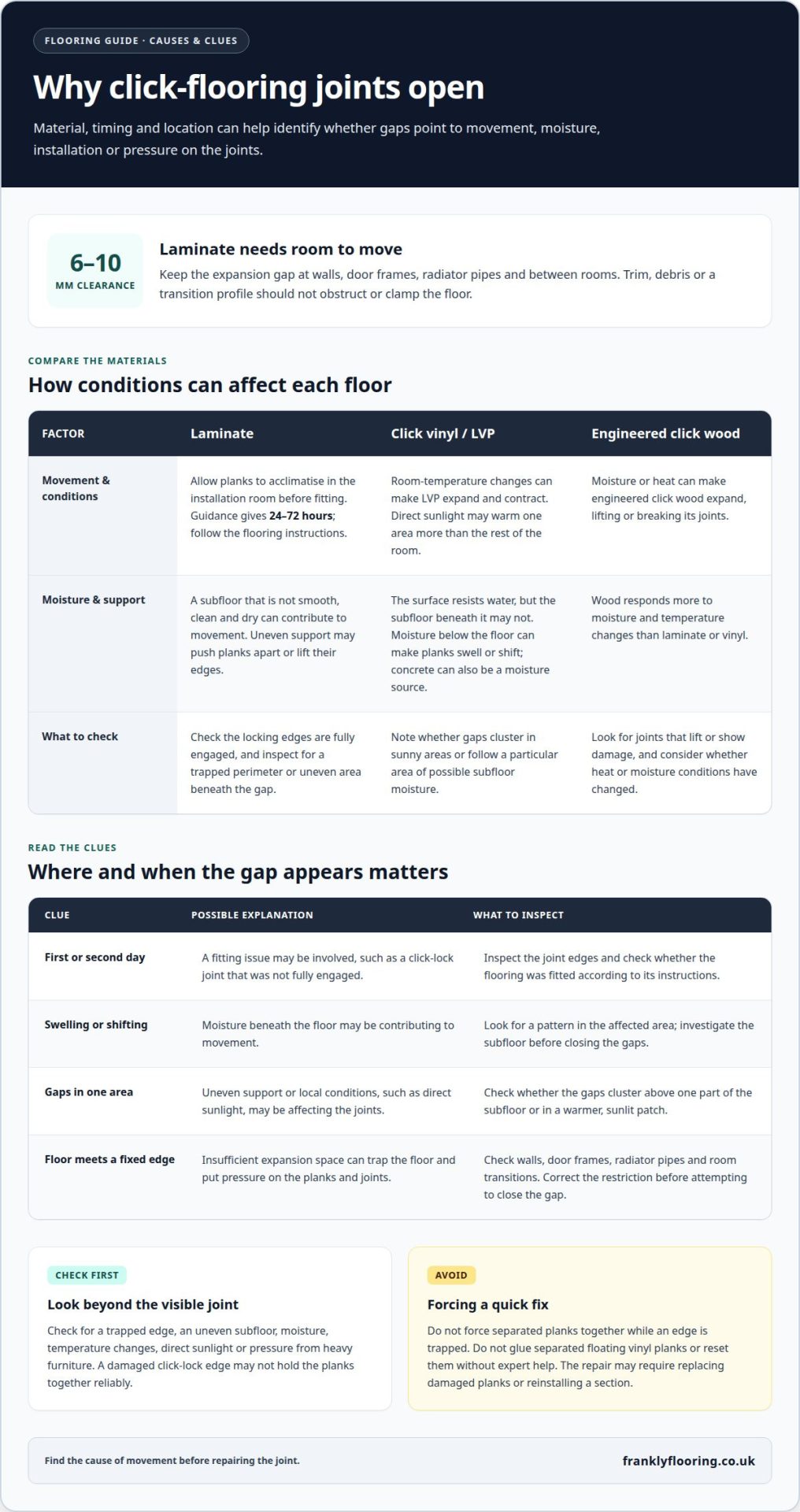
Gaps between click-flooring planks usually point to movement, an uneven subfloor or a locking joint that hasn’t engaged properly. The answer to why your click flooring is separating may also be inadequate expansion space, moisture or temperature changes, or pressure from heavy furniture. Laminate needs an expansion gap of 6 to 10 mm, including at walls, door frames, radiator pipes and between rooms.
It’s frustrating when a floor that should sit neatly together develops visible gaps. Where and when the separation appears can offer useful clues: a joint that opens soon after fitting may have a different cause from gaps that emerge after changes in room conditions or everyday use.
This guide explains how to narrow down the likely cause, what to check on laminate and click vinyl, and when a repair may be appropriate. You’ll also learn what to avoid, so you don’t put more strain on the flooring before addressing the underlying problem.
Key Takeaways
- Use where and when gaps appear to narrow down whether the cause is installation, movement beneath the floor or pressure on the joints.
- Allow laminate to acclimatise in the room before fitting, and make sure the subfloor is smooth, clean and dry.
- Look for moisture and temperature changes that may be making planks swell, shift or lift at the joins.
- Don’t glue separated floating vinyl planks or reset them without expert help; the right repair depends on the cause and may involve replacing damaged planks or reinstalling a section.
Installation practices and expansion gaps
Click flooring needs space to move as conditions change. If expansion gaps are planned poorly, planks may come under pressure or joints may separate.
-
Check Floor Movement at Expansion Gaps
Inspect the floor edges, door frames, radiator pipes and room transitions for clearance. Laminate needs a 6 to 10 mm expansion gap at walls, between rooms, around radiator pipes and at door frames. To fix gaps between click flooring planks, identify whether the floor is trapped before attempting repairs. A transition profile can cover an opening, but shouldn’t prevent the floor from moving.
-
Address Over-Expansion
Check where the flooring meets a fixed edge, such as a wall, door frame or pipe. If planks have no room to expand, pressure can make them buckle or pull apart. Don’t force separated planks together while an edge is trapped. Fixing the restriction matters more than closing the visible gap, or the joint may separate again.
-
Prevent Planks from Separating Again
Before refitting flooring, plan clearance at every perimeter and transition, rather than only along the longest wall. Keep the required gap clear of trim, debris and other obstructions. For laminate, allow 6 to 10 mm at walls, between rooms, around radiator pipes and at door frames. This answers how to prevent click flooring from separating again: preserve movement space and avoid locking planks against fixed objects.
-
Create Clear Gaps at Transitions
Check thresholds between rooms and doorways before laying the next row. A transition strip should cover the expansion gap without clamping the planks. Leave clearance around radiator pipes, and make sure skirting or beading doesn’t press down on the floor. Follow the instructions for the specific flooring, especially at room boundaries or where the layout changes.
Excessive movement can put wood flooring’s click-lock mechanisms under pressure and break them. Allowing for movement when planning the installation is essential.
What can cause gaps in laminate flooring?
Laminate gaps can result from poor acclimatisation, uneven support, moisture changes or locking joints that were never fully engaged.
-
Acclimate Flooring Before Installation
Leave laminate in the room where it will be installed before fitting. Guidance gives 24 to 72 hours for the planks to adjust to room temperature and humidity; another recommendation is at least 2 to 3 days. Keep the packs in the installation room, and follow the flooring instructions. Fitting planks straight from a colder storage area can leave them adapting after installation, which may affect the joints.
-
Inspect the Locking Mechanisms
Check whether each plank’s locking edge is fully engaged. Incomplete click-lock joints can separate, particularly if a gap appears on the first or second day. Other possible causes include insufficient expansion space, temperature changes, excessive weight and direct sunlight. An uneven subfloor can also push planks apart or lift their edges, so don’t assume every gap means a joint is damaged.
-
Identify the Cause of Separation
Note when and where the gap appeared, then look for a pattern. Separation on the first or second day may point to a fitting problem, such as a locking mechanism that wasn’t fully engaged. Swollen or shifting planks may indicate moisture beneath the floor. An uneven subfloor can push joints apart, so check whether gaps cluster above one area. These clues can help distinguish fitting issues from moisture problems, although both may contribute.
-
Check for Damaged Click-Lock Joints
Inspect the exposed joint for broken, chipped or distorted edges. A joint that remains intact may close again once the cause is corrected, but a damaged locking edge can’t reliably hold the planks together. Repairs may involve replacing damaged planks or reinstalling a section. Don’t force joints together before addressing the underlying cause. For a replacement, browse laminate flooring options.
Effects of moisture and temperature changes
Track where gaps appear and note changes in room conditions. Moisture and temperature can move flooring and strain click joints.
-
Assess Temperature Changes and Direct Sunlight
Compare separating planks with areas exposed to direct sunlight, such as beside a south-facing window. Sunlight can warm one patch more than the rest of the room, while room-temperature changes make LVP expand and contract. Without room to move, pressure can make joints lift or open. Note whether gaps cluster in sunny areas or appear across the floor.
-
Account for Temperature and Humidity Changes
Look for signs that moisture or changing humidity coincides with shifting joints. LVP resists water, but the subfloor beneath it may not, and moisture there can make planks swell or shift. Excess moisture or temperature changes can cause engineered click wood to expand, lifting or breaking its joints. Wood responds more to these conditions than laminate or vinyl, so the flooring material matters.
- Investigate possible moisture beneath the flooring before closing gaps. A damp subfloor can move planks even when the visible LVP surface is water-resistant. Concrete can also be a source of moisture, so consider a moisture barrier when installing LVP over concrete. Check whether swelling or shifting follows a particular area rather than assuming the click joint alone is at fault.
- Consider how the floor is installed before choosing a repair. Click-lock joints can lift under expansion when excess moisture or heat combines with insufficient movement space. Fully bonded tongue-and-groove joints and a bonded subfloor installation are unlikely to move over time with moderate moisture and temperature changes. If conditions remain unstable, pressing the planks together won’t address the cause of the movement.
Possible causes of click-floor separation include an uneven subfloor, direct sunlight, insufficient expansion space, excessive weight, temperature fluctuations, lack of acclimation and locking mechanisms that weren’t fully engaged. Consider these alongside moisture and heat rather than treating a visible gap as proof of one particular cause. Checking which conditions apply can help you focus on what may be affecting the joints.
Reasons click vinyl flooring separates
Click vinyl can separate when the subfloor, installation or room conditions strain its joints. Work through these checks before deciding whether to refit any planks.
- Check the subfloor beneath the affected area. It should be level, dry and clean before LVP is installed. A dip or raised spot can make planks flex underfoot, pushing joints apart or lifting their edges over time. If gaps keep appearing above one uneven area, don’t assume the locking joint is the only cause.
- Look for signs of moisture, particularly over concrete. LVP resists water, but moisture beneath it can still make planks swell or shift. Consider a moisture barrier when installing LVP over concrete. Address the moisture source and assess the subfloor before closing separated joints, or the same movement may happen again.
- Check how the planks were fitted and whether they had time to acclimate. LVP planks should be acclimated before installation, and click-lock flooring needs a smooth, flat base. Forcing planks together can damage the joints; fitting them without room to expand can lead to gaps or buckling later. Also consider whether sunlight or temperature changes affect the area.
- Take up and reinstall separated sections only after identifying and correcting the cause. Don’t glue floating LVP planks or lift and reset them without expert help. A repair may involve re-levelling the subfloor, replacing damaged planks or reinstalling a section. The extent of the damage and the condition beneath the floor will guide the repair.
- Read the specific product warranty before making a claim. UK click-flooring warranties don’t have one universal set of terms; check whether the document covers defects in the locking mechanism and what it says about installation, subfloor preparation and moisture. For a replacement project, explore vinyl flooring options suited to your room and fitting requirements.
Frankly Flooring
If your checks suggest replacement makes more sense than another repair, Frankly Flooring offers flooring options to consider. Once you’ve identified the cause of the separation, weigh whether to replace the affected flooring or choose a different surface for the room.
For example, carpet may suit a room where a softer floor is a priority. The right option depends on how you use the space and the finish you want, not simply on the presence of gaps. Frankly Flooring offers flooring and furniture, so you can consider the room as a whole without assuming replacement is the answer to every separated joint.
If you’d like to explore flooring options, browse the range at Frankly Flooring.
Choose the next step with confidence
Once you understand why your click flooring is separating, you can make a more informed decision about the room. A recurring gap doesn’t automatically mean the whole floor needs replacing. But if the joints are damaged or the underlying cause keeps returning, choosing a different surface may be more practical than repeatedly closing the same gaps.
Consider how you use the room, the finish you prefer and the demands placed on the floor. Frankly Flooring offers LVT, Wood and Carpet, giving you different flooring categories to consider if replacement is the right choice. The best next step depends on the condition of your existing floor and what you want from the space.
If you’re ready to discuss your options, contact Frankly Flooring for help. A clear conversation can help you move forward with a choice that suits your home.
Frequently Asked Questions
Why Is My LVP Coming Apart?
LVP joints can come apart if the subfloor is uneven, moisture shifts the planks or the locking edges are damaged. Dragging heavy appliances across the floor and constant pressure in busy walkways can also strain the seams. To investigate, ask yourself, “why is my click flooring separating?” Note whether gaps follow a heavily used route or cluster above a damp or uneven area.
How much expansion gap should click flooring have around the edges?
For laminate, leave a 6 to 10 mm expansion gap at the perimeter, including walls, door frames and radiator pipes. Click vinyl also needs room around its edges, but the required clearance depends on the specific flooring. Follow that product’s fitting instructions rather than applying the laminate measurement to vinyl. A transition should cover the gap without trapping the floor.
Can temperature or humidity changes cause click flooring gaps?
Yes. Temperature changes can make LVP expand and contract, while excess moisture can make planks swell or shift. Wood flooring responds more to moisture and temperature changes than laminate or vinyl. If you’re still asking, “why is my click flooring separating?”, consider whether gaps appear after room conditions change or are concentrated in one area.