
A soft carpet may feel cosy underfoot, but it can hold back heat from an underfloor heating system. When choosing carpet versus wood for underfloor heating, keep the combined carpet and underlay at or below 2 tog, and the floor surface beneath either covering should not exceed 27°C. Engineered wood is generally more stable than solid wood when temperatures change.
Carpet and wood can both be used with underfloor heating, but they transfer heat differently. Carpet’s insulating pile can slow heat transfer, while wood type and board thickness affect how quickly warmth reaches the room. That difference matters when weighing comfort against responsiveness.
This comparison looks at heat-up time, insulation, tog limits and temperature control. It also explains why engineered wood is generally more suitable than solid wood, and what to consider before choosing a floor covering.
Key Takeaways
- For wood over underfloor heating, engineered boards are generally a steadier choice than solid wood; thickness and temperature control matter.
- Keep carpet and underlay at a combined rating of no more than 2 tog to allow heat to pass through effectively.
- Carpet’s insulating effect can slow heat transfer, so consider how quickly you want the room to warm.
- Keep the floor surface beneath carpet or wood at or below 27°C, and factor in how carpet can affect temperatures between the floor and covering.
What is the best flooring for underfloor heating?
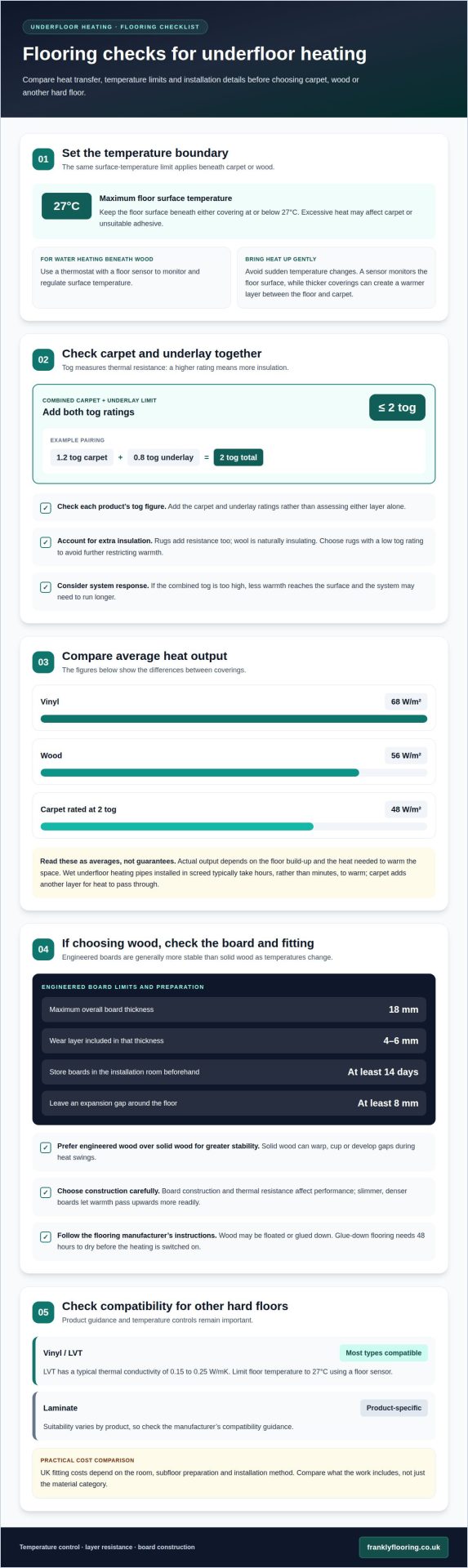
The best choice in an underfloor heating carpet vs wood comparison depends on heat transfer, room comfort and the floor covering’s construction. Engineered wood is generally more stable than solid timber as temperatures change. Keep the floor surface beneath wood or carpet at or below 27°C. Engineered boards should be no thicker than 18 mm overall, including a 4-6 mm wear layer.
Solid wood can warp, cup or develop gaps during heat swings. Most wood flooring can work with underfloor heating, but board construction and thermal resistance affect performance. Slimmer, denser boards let warmth pass upwards more readily. Before fitting engineered boards, store them in the installation room for at least 14 days, and leave an expansion gap of at least 8 mm around the floor.
For water underfloor heating beneath wood, use a thermostat with a floor sensor to monitor and regulate surface temperature. Bring the system up gently to avoid sudden temperature changes. Wood can be fitted using different methods, including floating or glue-down installation; follow the flooring manufacturer’s instructions. Glue-down flooring needs 48 hours to dry before the heating is switched on.
Vinyl is another hard-flooring option, and most vinyl flooring is compatible with underfloor heating. LVT has a typical thermal conductivity of 0.15 to 0.25 W/mK. Its floor temperature should also be limited to 27°C using a floor sensor. Laminate suitability varies by product, so the manufacturer’s compatibility guidance matters in this flooring comparison.
UK fitting costs for carpet and wood depend on the room, subfloor preparation and installation method. Carpet costs vary with the underlay and fitting required; wood costs depend on the board type and how it is installed. Compare what the work includes, not just the material category. This gives the underfloor heating carpet vs wood comparison a practical basis, rather than relying on a headline price alone.
Temperature swings can damage wood, while excessive heat may affect carpet or unsuitable adhesive. Keep the floor temperature controlled, and choose coverings and adhesive suitable for underfloor heating. This is central to making an informed underfloor heating carpet vs wood choice.
| Flooring | Compatibility | Key consideration |
|---|---|---|
| Engineered wood | Generally suitable | Thickness and temperature control |
| Solid wood | More vulnerable to movement | Temperature changes |
| Vinyl or LVT | Most types compatible | Floor sensor and temperature limit |
| Laminate | Product-specific | Manufacturer’s compatibility guidance |
Choose engineered wood for a timber finish, or vinyl for a hard surface. In either case, check product compatibility and consider the heating system’s controls.
Carpet and underlay tog limits
Choose a carpet and underlay combination with a low combined tog rating to help heat pass through. Tog measures thermal resistance: a higher rating means more insulation between the heating system and the room. Add the carpet and underlay ratings together, rather than judging either covering alone. For example, a 1.2 tog carpet paired with 0.8 tog underlay reaches the 2 tog limit.
Choose carpet and underlay with a combined tog rating within the recommended limit. Underlay choice can affect how readily heat passes through the floor, so check its suitability for underfloor heating. Check the product information for each layer and add their tog values before choosing a pairing. Wool is naturally insulating, so weigh its comfort against how readily heat passes through the complete floor covering.
Carpet and underlay add thermal resistance above the pipes or heating elements. If their combined tog rating is too high, less warmth reaches the surface and the system may need to run longer. A carpet can feel comfortable while still reducing heat output. Rugs add insulation too, so choose ones with a low tog rating to avoid further restricting warmth.
The surface temperature beneath carpet or wood should not exceed 27°C. This limit matters because a floor sensor monitors the surface, while thicker coverings can create a warmer layer between the floor and carpet. Keep the floor temperature within the limit and choose coverings designed for underfloor heating. That helps reduce excessive heat exposure to carpet, underlay and adhesive.
For wood, British Standard 8201:2011 gives guidance relevant to wood flooring. For carpet, follow the carpet and underlay manufacturers’ compatibility instructions and use their stated tog figures. Those product details help you find out whether a particular combination suits the heating system.
For a softer finish, consider carpet options for your room, keeping the combined tog rating in view.
Carpet heat-up time and insulation
In an underfloor heating carpet vs wood comparison, carpet pile and underlay create resistance between the heat source and the room. This insulation can slow heat transfer, so the surface may take longer to feel warm than it would under a thinner covering. The system has to move heat through each layer before it reaches the room. Thick carpet can therefore affect responsiveness and useful heat output.
Average heat output figures show the difference between coverings: wood is 56 W/m², carpet rated at 2 tog is 48 W/m², and vinyl averages 68 W/m². These figures help compare materials, but don’t describe every room or heating system. Output also depends on the floor build-up and the heat needed to warm the space. This makes the underfloor heating carpet vs wood comparison about more than the surface material alone.
The heating system’s construction also affects warm-up time. Wet underfloor heating pipes installed in screed typically take hours, rather than minutes, to warm. Carpet adds another layer for heat to pass through. It can still be used, but the system may respond more slowly when switched on or adjusted.
Wood’s performance depends on its construction. Engineered wood generally conducts radiant warmth well, and slimmer, denser boards allow heat to pass upwards more quickly. Solid wood may need more insulation beneath it than engineered boards. Whichever wood covering you choose, steady heating helps avoid sudden changes that can affect timber, and controlling the floor surface temperature remains important.
Sheet vinyl is another option to consider. Its continuous surface has no joins between pieces, while vinyl tiles have multiple material layers and a different construction. Sheet vinyl provides a continuous covering; carpet, by contrast, has a pile that retains more warmth within the floor covering.
When weighing underfloor heating carpet vs wood, balance carpet’s comfort against heat transfer and system response. The screed, covering thickness and heating controls all influence how quickly warmth reaches the room.
Carpet’s effect on underfloor heating temperatures
Carpet acts as an insulator, so it slows warmth transferring from the floor into the room. The heating system may need to run longer to reach the same room temperature as it would beneath a thinner covering. That doesn’t mean the floor should be made hotter to compensate. Keep the surface beneath carpet or wood at or below 27°C.
A temperature difference can develop between the heated floor and carpet. Carpet fitted over a wooden floor can add 15°C to the temperature between the floor and carpet. This makes the layers above the heating relevant, not just the room thermostat setting. A floor sensor helps monitor and regulate floor surface temperature, protecting the timber beneath the covering.
Solid wood is vulnerable to temperature swings, which can contribute to warping, cupping or gaps. Carpet on top restricts heat transfer further, so the room may take longer to warm. Avoid sudden temperature increases. Bring the underfloor heating system up gently, allowing the wood and covering to adjust gradually.
Keep the carpet and underlay’s combined tog rating within 2 tog. That limit reduces thermal resistance through the covering. A thick rug adds another insulating layer, so choose a low-tog option or leave heated areas uncovered. For example, a rug placed over the main heated floor area can restrict warmth more than one positioned away from it.
Floor coverings also affect system calculations. Include carpeted rooms when the underfloor heating system is designed, because the covering changes how much heat reaches the space. A floor sensor controls the temperature at floor level, while carpet affects how warmth transfers above it. These are related but distinct considerations, and both matter when setting up the heating.
For a carpeted room, prioritise a suitable combined tog rating and controlled floor temperature. Explore carpet choices with these heating considerations in mind.
Frankly Flooring: Wood
Frankly Flooring offers wood flooring for a natural timber finish and carpet for a softer feel. Use the comparison above to decide which surface suits your room, preferred heating response and comfort needs. If you prefer wood, engineered boards are generally more stable as temperatures change than solid wood. With carpet, pay attention to the combined tog rating of the carpet and underlay.
Frankly Flooring also offers furniture to help complete the room once you’ve chosen your floor covering. The right flooring depends on the balance you want between warmth underfoot, heat transfer and the look of the space. You don’t need to use one material throughout the home: different rooms can suit different flooring.
For help exploring wood or carpet options, contact Frankly Flooring.
Make the next flooring choice with confidence
The right underfloor heating carpet vs wood choice starts with how you use each room. Consider the feel you want underfoot, how quickly you expect the space to respond, and whether a softer finish matters more than a hard surface. These everyday preferences can help narrow your options before you look at specific flooring.
Consider the room as a whole, too. A bedroom may call for a different feel from a kitchen or living area, and you don’t have to use one covering throughout your home. Frankly Flooring offers wood, carpet and LVT, so you can explore different materials for a consistent look or a room-by-room approach.
Once you’ve identified what matters most, take the next step at a comfortable pace. Contact Frankly Flooring for advice and discuss which flooring direction best suits your home. A considered choice can bring comfort and character to the room for years to come.
Frequently Asked Questions
Which is more energy efficient over underfloor heating, carpet or wood flooring?
Wood generally lets heat pass through more readily, while carpet’s insulating pile can slow transfer. Efficiency also depends on the room’s heat demand, floor construction and heating controls, so the covering alone does not determine energy use. For example, a well-insulated room with suitable engineered wood may respond differently from a draughty room with thick carpet, even with similar heating settings.
What thermal resistance limits apply to carpet and underlay over underfloor heating in the UK?
The combined tog value of carpet and underlay should not exceed 2 tog. Add the ratings for both layers before selecting them: a carpet rated at 1.3 tog with underlay rated at 0.7 tog reaches the limit. Include any additional floor covering, such as a rug, in your decision because extra insulation can restrict warmth reaching the room.
Which wood flooring types work best with underfloor heating: engineered, solid or laminate?
Engineered wood is generally the most stable wood option because its construction is less prone to movement as temperatures change. Solid wood is more vulnerable to warping, cupping and gaps, so it is not usually recommended. Laminate suitability depends on the individual product. For example, in a room where heating levels change, engineered boards are more stable than solid timber.
What is the maximum floor surface temperature for carpet and wood over underfloor heating?
Keep the floor surface at or below 27°C beneath either carpet or wood. A floor sensor can monitor and regulate this temperature, helping prevent the floor finish from overheating. This matters particularly under carpet, which can trap heat above the floor. A room thermostat alone measures room air, so it doesn’t replace floor-temperature monitoring.
What installation and operating steps protect wood flooring over underfloor heating?
Acclimatise engineered boards in the installation room for at least 14 days, and leave an expansion gap of at least 8 mm around the floor. Follow the flooring manufacturer’s fitting instructions, including drying time for adhesive where relevant. Use a floor sensor, bring the heating up gradually, and avoid sudden temperature changes that can stress the timber.