
Removing old carpet adhesive from concrete means more than scraping off the glue. Clear residue that could interfere with the next floor, then prepare the concrete or screed so it is clean and reasonably level. Scrape away suitable residue, remove dust and use a compatible floor-levelling compound where there are dips or uneven patches.
It is easy to assume the floor is ready to cover once the adhesive is off. In practice, tacky residue, dust and shallow hollows can affect how the next flooring sits or bonds. The right approach depends on the adhesive’s condition and whether your new floor needs a bonded or floating installation.
This guide explains how to recognise water-soluble and stubborn carpet glue, choose a practical removal method, and prepare the surface after scraping or grinding. You’ll also learn when old adhesive may be a concern and how to tell whether the cleaned floor needs levelling before the next flooring step.
Key Takeaways
- Use a small water test to help distinguish water-soluble residue from adhesive that needs a different approach.
- Match the removal tool to the glue: brittle residue and tacky patches behave differently under a scraper.
- When using a commercial remover, follow its directions and allow the stated dwell time before scraping.
- Learn what to look for before levelling, including whether the next floor can accommodate some remaining residue.
How do I level out the cleaned surface after removing carpet glue?
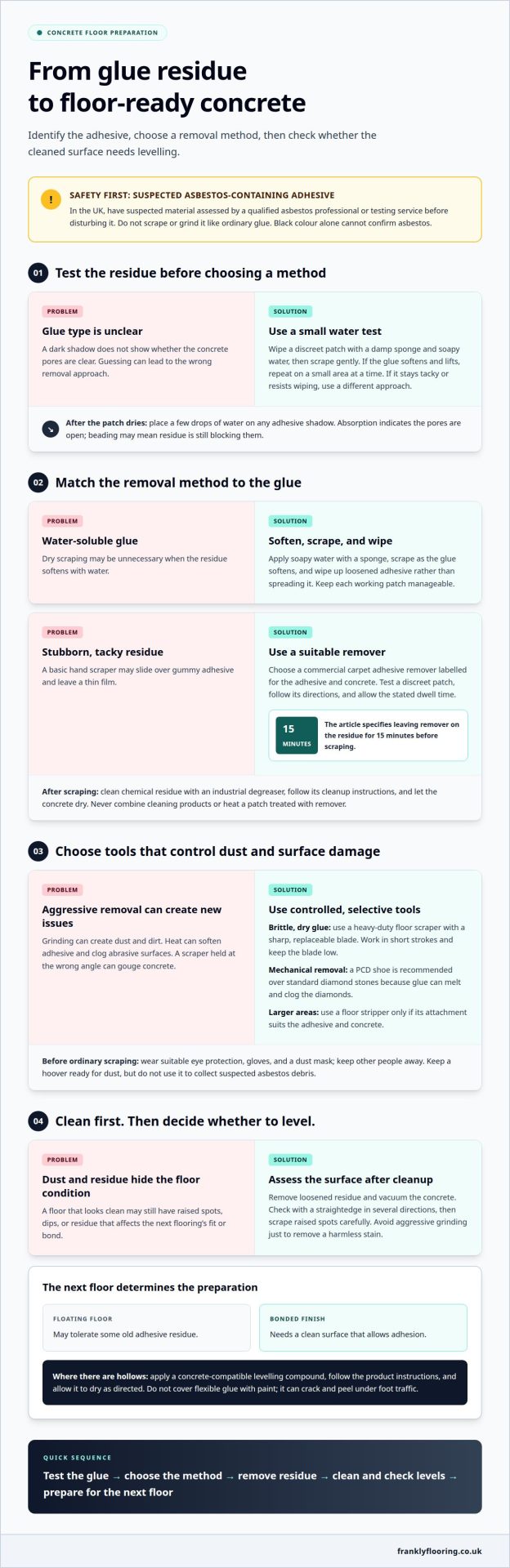
In the UK, suspected asbestos-containing adhesive should be assessed and handled under applicable asbestos-control requirements, not scraped or ground like ordinary glue. Black colour alone cannot confirm asbestos. Before disturbing the material, arrange for a qualified asbestos professional or testing service to assess a sample.
- Choose the scraper for the glue. A heavy-duty floor scraper with a replaceable, sharp blade can lift brittle, dry adhesive from concrete. Work in short, controlled strokes, keeping the blade low to avoid gouging the surface. A basic hand scraper may slide over gummy residue, leaving a thin film behind.
- Protect yourself before scraping. Wear suitable eye protection, gloves and a dust mask, and keep other people away from the work area. Scraping can break dried glue into fragments; grinding creates more dust and dirt. Keep a hoover ready, but don’t use it to collect suspected asbestos debris.
- Use powered tools selectively. A floor sander or grinder can remove stubborn residue, but it may create dust and heat. Heat can soften adhesive and clog abrasive surfaces. For mechanical removal, a PCD shoe is recommended over standard diamond stones because glue can melt and clog the diamonds. Use a floor stripper for larger areas only when its attachment suits the adhesive and concrete.
- Clean before assessing the levels. Remove loosened residue and vacuum the concrete so dust doesn’t disguise dips or ridges. Check the surface with a straightedge in several directions. Scrape raised spots carefully; don’t grind aggressively just to remove a harmless stain.
- Level for the next flooring step. Apply a concrete-compatible levelling compound to hollows, following its product instructions and allowing it to dry as directed. The required preparation depends on the next floor: a floating floor may tolerate some old residue, while a bonded finish needs a clean surface that allows adhesion. Don’t cover flexible glue with paint; it can crack and peel under foot traffic.
Identifying water-soluble and stubborn adhesives
Test a small patch before choosing a removal method. How the glue responds to water can help distinguish residue that wipes away from adhesive that needs scraping or a remover.
Identify the Adhesive Type
Start with a damp sponge on a discreet patch of adhesive. Water-soluble glue softens and wipes away with soapy water or washing-up liquid; stubborn residue stays tacky or resists wiping. A dark shadow alone does not show whether the concrete pores are clear.
- Wipe the test patch with soapy water, then scrape gently. If the glue lifts, repeat the method across a small area at a time.
- Let the patch dry, then place a few drops of water on any adhesive shadow. If water absorbs, the pores are open; if it beads, residue may still block them.
Loosen Adhesive with Water or Heat
Use water first on residue that responds to the damp test. Avoid heating unidentified old adhesive: some older products may contain PAHs, and suspected hazardous material needs specialist handling. Steam and boiling water are not safe shortcuts for unknown glue.
- For water-soluble residue on concrete, apply soapy water with a sponge and scrape as it softens. Keep the working patch manageable, and wipe up loosened glue rather than spreading it.
- For stubborn residue, choose a commercial carpet adhesive remover labelled for the surface. Apply it as directed, leave it for 15 minutes before scraping, then clean chemical residue with an industrial degreaser.
- After the remover and degreaser, let the concrete dry and repeat the water-drop test. Beading means the pores remain blocked; absorption indicates the surface is more open for the next preparation step.
Never combine cleaning products or heat a patch treated with remover. Follow the product label, ventilate the room and control the scraper to avoid damaging the concrete.
Commercial carpet adhesive remover
When removing old carpet adhesive from concrete, a commercial remover can soften residue that resists scraping. Choose a product suitable for both the adhesive and the surface, as chemical residue may affect preparation for the next flooring.
- Read the product directions first. Choose a remover labelled for carpet adhesive and concrete. Check its application method, ventilation requirements and cleanup instructions before opening it. Don’t assume a product intended for another surface will behave the same way on a concrete floor.
- Prepare a small test area. Apply remover to a discreet patch, following the label. Check whether the glue softens and whether the concrete changes appearance. Testing a small area first helps you see how the product behaves before treating the whole floor.
- Apply evenly to the residue. Use the applicator specified on the container and keep the treatment within a manageable area. Avoid soaking surrounding walls or leaving pools of remover, which can make softened adhesive harder to collect cleanly.
- Allow the stated dwell time. Leave chemical carpet adhesive remover on the residue for 15 minutes before scraping. Don’t scrape too early, as the adhesive may remain bonded. Don’t leave it longer than the product directions allow.
- Scrape and collect the softened glue. Use a floor scraper to lift residue without gouging the concrete. Gather loosened adhesive as you work instead of spreading it across clean patches. Repeat the application only as directed if stubborn areas remain.
- Clean away chemical residue. After scraping, clean the concrete with an industrial degreaser, then remove cleaning residue according to its instructions. Let the floor dry before assessing it. Chemical strippers are unsuitable if you plan to paint, because residue can interfere with primer adhesion.
- Match the method to the next finish. Before removing old carpet adhesive from concrete with chemicals, consider whether the new finish needs a strong primer or adhesive bond. If it does, avoid chemical stripping and use a method that leaves the surface suitable for that coating. Follow the flooring and adhesive instructions.
Removing carpet adhesive from concrete and screed
Concrete and screed need a clean, stable base, but the removal method must suit both the glue and the next flooring. Follow these steps in order.
- Assess the adhesive before disturbing it. If old glue may contain PAHs, don’t heat it; suspected PAH-containing adhesive should be handled by a specialist. Avoid grinding or scraping until you’ve dealt with that concern. For ordinary residue, identify loose edges and start with controlled mechanical removal.
- Work in manageable patches. A heavy-duty scraper can lift brittle, dry glue; gummy residue may need a different method. Remove material gradually and avoid gouging softer screed. DIY removal can take several hours, so work in sessions rather than rushing across the whole floor.
- Choose grinding equipment carefully. Mechanical grinding creates dust and dirt, so use appropriate protective equipment and keep a hoover available. A PCD shoe is recommended over standard diamond stones for carpet glue, as heat can melt adhesive and clog the diamonds. Don’t grind blindly into the screed.
- Collect loosened residue as you go. Keep scraped adhesive and any water used for cleaning contained, rather than spreading it over cleared areas. One practical approach is working in a half-hour or hour-long session, then collecting debris before the next patch.
- Clean and inspect the base. Vacuum concrete dust after adhesive removal. A dark shadow may remain, but check whether water absorbs or beads on it: beading indicates blocked pores, while absorption suggests they’re open. Apply a concrete dustproofer after removing residue and dust.
- Prepare for the new floor. Floating floors, such as laminate or parquet, may not require every trace of old adhesive to be removed. Other floor finishes can need a cleaner, more even surface. Fill depressions with a suitable levelling compound, following its instructions, then let the floor dry before proceeding. For the next room’s finish, explore carpet options.
Frankly Flooring: Carpet
Once the concrete or screed is clean, dry and suitably level, Frankly Flooring offers carpet for your project. Choose based on the room, how you use it and the feel you want underfoot. If you’re comparing materials, carpet, LVT and wood each offer a different look and feel. Furniture can help complete the room once you’ve chosen your flooring.
Before choosing a floor covering, use the preparation steps above to identify any remaining residue and address uneven areas. This helps you choose based on the floor’s condition and the flooring requirements, rather than covering a problem that could affect the result.
For a straightforward conversation about choosing carpet for your space, contact Frankly Flooring.
Choose the next floor with the finished surface in mind
Let the flooring you choose guide the final preparation. Before settling on a finish, consider how the room is used and what the cleaned base needs to support. Taking care when removing old carpet adhesive from concrete puts you in a better position to choose a covering that suits the surface.
Frankly Flooring offers carpet, LVT and wood, giving you different options to consider for your home. Think about the look and feel you want, then choose flooring that fits the room and your plans for it.
If you’re ready to explore your next flooring choice, contact Frankly Flooring to discuss what you’re looking for. A clear next step can make the change from stripped floor to finished room feel much more manageable.
Frequently Asked Questions
Is old carpet adhesive harmful to your health?
Unknown ingredients or dust created during removal can be a concern. Some older floor adhesives may contain hazardous substances, and appearance alone cannot establish what is present. Avoid sanding, grinding or heating material you suspect may be hazardous. Keep people away from the affected area and seek a professional assessment before disturbing it, particularly if the adhesive is old or its history is unclear.
Removing old carpet adhesive: Is it really necessary?
Not always. How much adhesive to remove depends on the flooring system. A floating floor may accommodate some sound, firmly attached residue, but raised or loose patches can affect how evenly it sits. Flooring that must bond directly to the substrate needs a surface suitable for that bond. Check the flooring and adhesive instructions, and remove anything that would prevent the specified preparation.
What type of adhesive is stuck underneath?
A small, discreet test can offer clues, but it cannot identify the adhesive definitively. Water-soluble residue may soften with a damp sponge, while glue that stays tacky or resists wiping may need mechanical removal or a suitable remover. Note the colour, texture and response to moisture, but do not rely on any one clue to determine its chemical make-up.
How to identify old carpet adhesive on concrete, including black mastic and bitumen?
Black, tar-like residue may look like bitumen or mastic, but its colour and texture cannot confirm what it is or whether it contains asbestos. If asbestos is a possibility, do not scrape, sand or take a sample yourself. Leave the material undisturbed and arrange an assessment by a competent asbestos professional. Testing, not visual inspection, is needed to establish what the material contains.
Can a floor scraper, grinder or shot blaster remove carpet adhesive from concrete?
A scraper or grinder can remove suitable adhesive, but each method has limits. A scraper gives you control on small patches; grinding tackles tougher residue but produces dust and may affect the concrete. Shot blasting is more aggressive, so its suitability depends on the substrate and required finish. Use dust controls and protective equipment, and do not disturb suspected asbestos-containing material.
How to clean and prepare concrete after removing carpet adhesive?
Collect residue and dust, then clean the floor using a method compatible with the removal product and the next flooring system. If you used chemical remover, remove its residue as directed: leftover chemicals can interfere with primer adhesion. Let the concrete dry before checking for loose particles, raised edges or hollows. Apply levelling compound only where needed, following the product instructions.