
The hardest-wearing floor isn’t automatically the best flooring for a busy family home. LVT or vinyl can suit shared areas where spills and easy cleaning are part of daily life, while carpet adds warmth and a softer, quieter surface to bedrooms and play spaces. Choose for how each room is used, not simply for who lives in the house.
Children, pets, muddy shoes and dropped snacks all put different demands on a floor. Weigh comfort against everyday care: this guide compares carpet, LVT, vinyl, laminate, wood and tile for warmth, noise, cleaning and wear. You’ll see where each option can work well, which trade-offs to consider and why choosing flooring room by room can make family life easier.
Key Takeaways
- Match flooring to each room’s demands: comfort and quiet may matter most upstairs, while easy care can be the priority in busy shared spaces.
- Weigh the trade-offs between soft carpet, practical vinyl options, laminate and wood, especially around spills, pets and everyday wear.
- Laminate can suit some family rooms, but moisture exposure and water left at the joins call for prompt attention.
- Use the decision guide to narrow down suitable flooring by comfort, warmth, noise and cleaning needs.
Carpet for comfort, warmth and sound insulation
Carpet gives bedrooms and living spaces a softer, warmer feel than hard flooring. Its fibres soften footsteps and help reduce noise, which can be useful in flats and multi-storey homes. It also creates a more comfortable surface for children playing on the floor, while colour, texture and pile add character to a room.
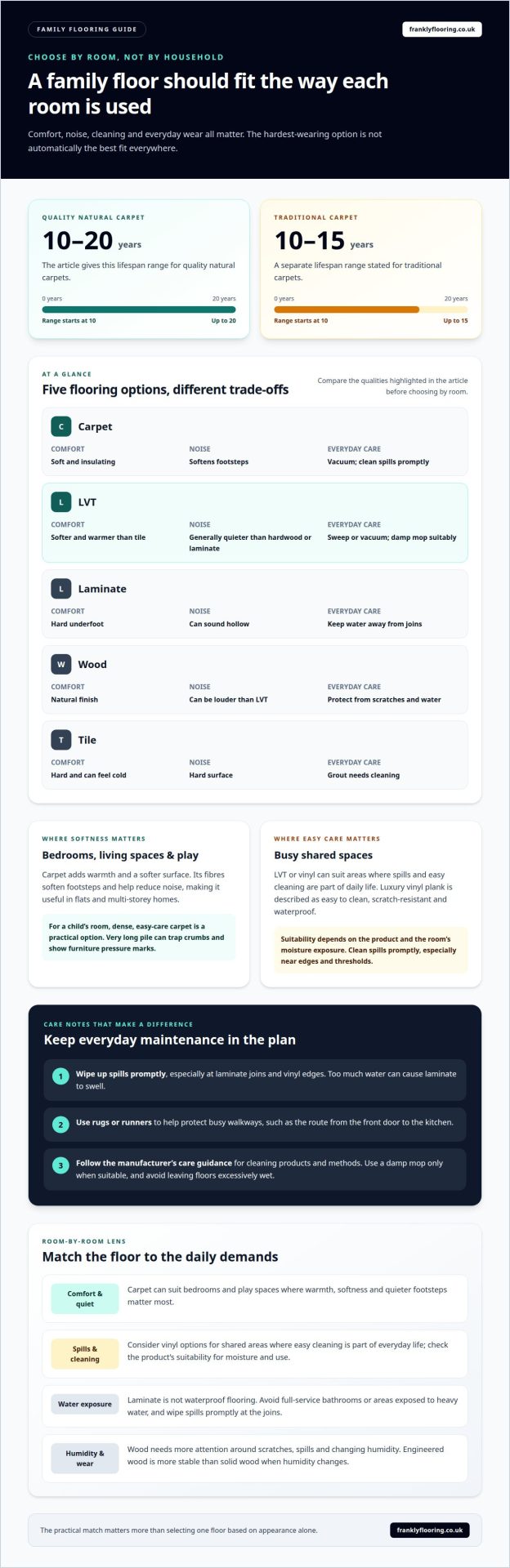
On stairs, a carpet runner can add comfort and grip while leaving the stair edges visible. In a child’s room, dense, easy-care carpet is a practical option: very long pile can trap crumbs and show furniture pressure marks. Natural carpet offers insulation, and quality natural carpets can last 10-20 years. Traditional carpets typically last 10-15 years.
Factor care into your choice. Mud, food and pet accidents can stain carpet, so deal with spills promptly and vacuum regularly. Carpet also needs periodic deep cleaning. Entrance matting can help limit dirt brought in from outside, and following the manufacturer’s care recommendations helps maintain the carpet’s appearance.
Flooring affects both sound and underfoot comfort. Carpet softens footsteps, while LVT is generally quieter underfoot than hardwood or laminate, which can sound hollow. Tiles work with underfloor heating, but the heating system should be planned from the start.
| Flooring option | Comfort and warmth | Noise | Everyday care |
|---|---|---|---|
| Carpet | Soft and insulating | Softens footsteps | Vacuum; clean spills promptly |
| LVT | Softer and warmer than tile | Generally quieter than hardwood or laminate | Sweep or vacuum; damp mop suitably |
| Laminate | Hard underfoot | Can sound hollow | Keep water away from joins |
| Wood | Natural finish | Can be louder than LVT | Protect from scratches and water |
| Tile | Hard and can feel cold | Hard surface | Grout needs cleaning |
Choose carpet where warmth, softness and quieter play matter most, and consider whether its cleaning needs fit your family’s routine.
Cleaning and maintenance
In a busy kitchen or hallway, muddy shoes, pet paws and dropped drinks can quickly test a floor’s durability. Luxury vinyl plank is described as easy to clean, scratch-resistant and waterproof, making it a practical option for busy family homes. Still, clean spills promptly, especially near edges and thresholds. For everyday dust, sweep or vacuum, then use a suitable damp mop. Follow the product’s care instructions to protect its finish.
Vinyl, laminate and LVT are generally straightforward to clean: sweep or vacuum to remove everyday dust and dirt. The right method depends on the product, so check its recommended uses, maintenance requirements and installation method. Use a damp mop only when suitable for that flooring, and avoid leaving it excessively wet. Rugs and runners can help protect busy routes, such as the path from the front door to the kitchen.
Real wood needs more attention when spills, pets and changing humidity are part of daily life. Wood can expand and contract as humidity changes, particularly in busy kitchens and other humid areas. Engineered wood is more stable than solid wood when humidity changes, but scratches, water exposure and humidity can still affect it. Whether it can be sanded and refinished depends on its wear-layer thickness.
- Wipe up spills promptly, especially on laminate joins and vinyl edges.
- Use rugs or runners to shield busy walkways from everyday wear.
- Follow the flooring manufacturer’s care guidance for cleaning products and methods.
For an easy-to-clean surface in a busy shared space, explore vinyl flooring options. Choose according to the room’s moisture exposure and daily use, then keep to the recommended routine. That practical match matters more than selecting a floor based on appearance alone.
Which flooring is easiest to keep clean?
For routine cleaning, LVT, laminate and sheet vinyl are straightforward: sweep or vacuum away everyday dust and dirt. In a hallway, that means clearing grit tracked in from outside. In bathrooms and kitchens, choose flooring designed for the room’s moisture conditions. Porcelain or ceramic tile resists water and stains, but grout lines also need cleaning.
Laminate can be a budget-friendly choice for lounges, bedrooms and hallways. Its surface can resist everyday scratches and stains, and the range of designs makes wood-look finishes easy to find. However, too much water can cause laminate to swell. Wipe spills promptly, especially at the joins, and remember that water-resistant laminate is not the same as waterproof flooring.
For high-traffic spaces, compare the product’s wear rating and features with your household’s needs. A hallway crossed in muddy shoes has different demands from a bedroom with light foot traffic. Laminate can suit busy rooms, but may not last as long as engineered wood or LVT. It is not suitable for full-service bathrooms or areas exposed to heavy water.
Engineered wood has a real wood surface, but scratches, spills and humidity call for more care than LVT. Tile is hard-wearing and easy to clean, though it can feel cold and hard underfoot. LVT offers resistance to everyday wear and moisture, depending on the product. Match the material to the room instead of expecting one floor to suit every space.
There is no single UK cost per square metre for every floor and fitting project. The total depends on the material, room area, product specification and fitting requirements. Subfloor preparation and work around edges or thresholds can also affect fitting costs. Compare the full project scope, not just the floor area.
Factors for choosing family-friendly flooring
Start with your household’s routine, then choose flooring by room. A living room used for floor play has different needs from a hallway crossed in muddy shoes. Luxury vinyl tile is softer and warmer underfoot than ceramic tile, and generally quieter than hardwood or laminate. Carpet brings softness to bedrooms, while hard-wearing surfaces can suit busy shared areas. Consider comfort, cleaning and likely wear together.
Noise matters in flats and multi-storey homes. Carpet softens footsteps, while LVT can be quieter than laminate, which may sound hollow underfoot. Colour also affects daily upkeep: a mid-tone hallway floor can disguise dust, pet hair and marks better than a very pale or dark design. Rugs and runners can protect busy routes, but position them to avoid trip hazards.
If floors may get wet, consider slip resistance. Safety vinyl options provide slip resistance, while ceramic and porcelain tiles can become slippery when wet. Low VOC emissions are another consideration, but don’t infer emissions from a floor’s appearance or material name. Compare the product’s published emissions details and intended applications.
Subfloor condition affects the finished floor. Accurate measuring, moisture checks, preparation and careful fitting all matter. LVT needs a smooth subfloor for a refined finish. Follow the flooring manufacturer’s specifications for installation and preparation, especially when replacing an uneven or moisture-affected floor.
- Choose warmth and sound control for living rooms and bedrooms.
- Prioritise durability and easier cleaning in hallways and family spaces.
- Match slip resistance and moisture suitability to each room’s use.
For a practical option in busy rooms, explore vinyl flooring and compare its suitability with your household’s needs.
Frankly Flooring
Frankly Flooring offers carpet, LVT, vinyl, laminate and wood flooring for different rooms and family routines, alongside furniture and flooring accessories. Compare materials according to comfort, noise, cleaning and moisture needs. Carpet may suit spaces where softness and warmth matter; LVT can be a practical option for busy shared areas. The right balance depends on how your household uses each room and the care you’re prepared to give it.
Use the points in this guide to identify the qualities that matter most, then explore Frankly Flooring’s range with those priorities in mind. If you’re ready to discuss your flooring needs, contact Frankly Flooring.
Make your next flooring choice with confidence
Choosing the best flooring for a busy family home is about making everyday routines work better, not just refreshing a room’s appearance. Think about how your household moves through each space, what you want underfoot and how much upkeep fits into your week. Narrow your preferences by room, then compare materials and finishes against those priorities.
Frankly Flooring offers LVT, wood and carpet, giving you different materials to consider as you shape that shortlist. The choice can also sit alongside the furniture and character of your home, rather than being made in isolation. If you’d like to talk through the options for your home, contact Frankly Flooring for advice. A considered choice now can help your rooms feel better suited to family life for years to come.
Frequently Asked Questions
What Flooring is Best for Children and Pets?
A combination often works best: use a resilient hard floor in busy shared areas and carpet where softness matters. Frankly Essentials LVT is scratch-resistant and suitable for residential and light-commercial interiors, while carpet gives children a softer surface in bedrooms. Pets bring claws, hair and muddy paws, so consider cleaning routines alongside comfort. No single material suits every room or household.
Which Flooring Lasts the Longest?
Well-maintained solid wood flooring can last for decades, while whether engineered wood can be sanded and refinished depends on its wear-layer thickness. Its lifespan still depends on protection from scratches, water and humidity changes. Carpet and laminate have different wear patterns, so foot traffic, cleaning and product specifications matter. For any material, careful subfloor preparation and following its care guidance help maintain its appearance.
What flooring is best for a busy family home in the UK?
The best flooring for a busy family home depends on how each room is used. Consider LVT for shared spaces where easy cleaning is a priority, carpet for bedrooms where a soft surface matters, and wood where you want a natural look. For kitchens and bathrooms, check that the flooring is suitable for the room’s moisture conditions. Choosing room by room can balance comfort, upkeep and durability better than using one material throughout.
How do LVT, laminate, engineered wood, carpet and porcelain tile compare for durability and comfort?
LVT is generally quieter and softer underfoot than tile, and resistance to everyday wear depends on the product. Laminate can resist everyday scratches and stains, but excess water may cause swelling. Engineered wood offers a genuine wood surface, though scratches and moisture need attention. Carpet is soft and helps reduce noise; porcelain tile is hard-wearing but can feel cold and hard.
Which flooring is most scratch-resistant and suitable for children and pets?
There isn’t one clear winner across all products. Frankly Essentials LVT is scratch-resistant; laminate can resist everyday scratches, and porcelain or ceramic tile is also scratch-resistant. Tile may feel hard for play, while wood can show scratches from pets or heavy furniture. Compare each product’s intended use and care needs, then consider where children play and pets spend most of their time.
What flooring is waterproof and best for kitchens, bathrooms and hallways?
Sheet vinyl is described as waterproof and easy to clean, while LVT’s moisture resistance depends on the product. Porcelain and ceramic tile may be options for moisture-prone rooms, though grout needs cleaning. LVT or laminate can handle frequent foot traffic in hallways, but laminate can swell if exposed to too much water. Match the flooring to the room’s conditions.