
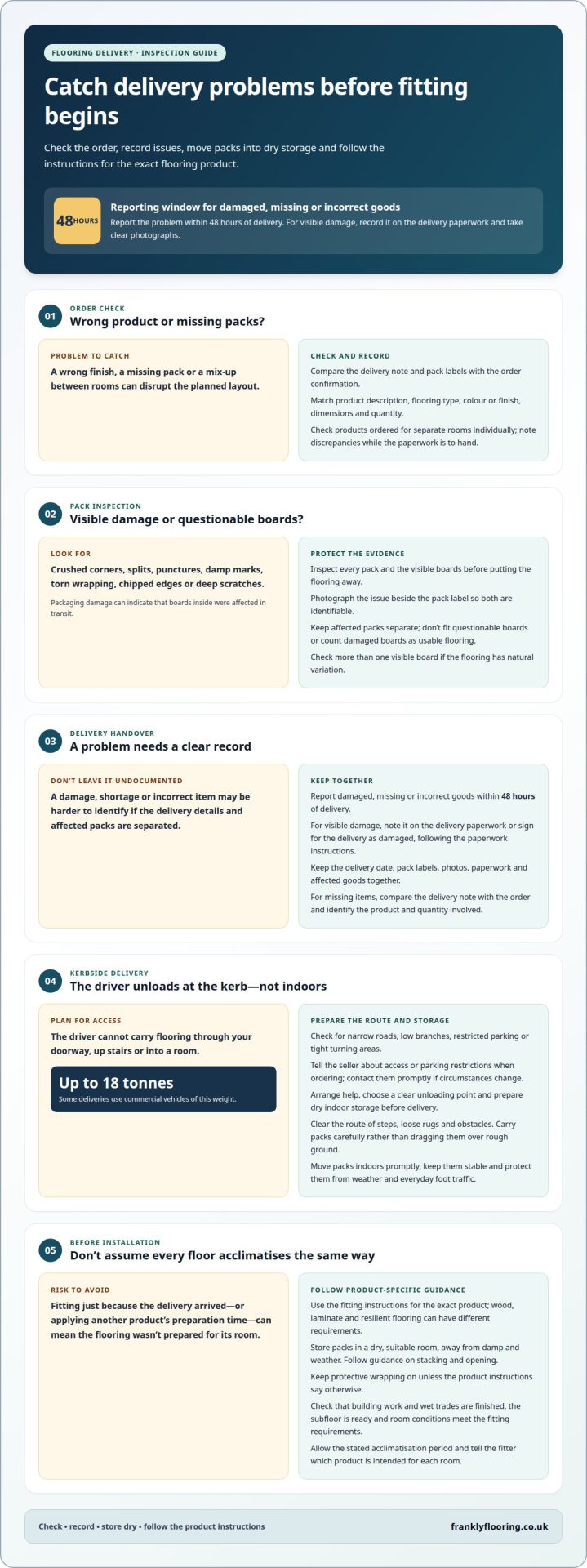
A flooring delivery isn’t ready for fitting just because it has arrived. Knowing what to do when flooring delivery arrives means checking every pack for damage, missing items or the wrong product, then reporting any problem within 48 hours. Photograph visible damage and note it on the delivery paperwork.
Plan how the flooring will get indoors: deliveries are made to the kerbside, so arrange a safe way to move the packs into dry storage. Don’t rush straight to fitting. Some flooring needs to acclimatise first, and the timing and conditions depend on the product.
This guide explains how to check your order, what to do if something’s wrong, how to handle the move indoors and where acclimatisation fits into the process. A little care on delivery day can help you spot issues early and prepare the flooring properly before installation.
Key Takeaways
- Know what details to record so a delivery problem can be reported clearly and promptly.
- Plan the route indoors and storage spot before unloading, especially for bulky packs.
- Check the flooring’s product guidance to understand whether acclimatisation is needed and what conditions it requires.
- Compare pack labels and visible condition with your order to catch mismatches before fitting begins.
What should I do if anything arrives damaged, missing or incorrect?
Knowing what to do when flooring delivery arrives starts with checking the goods against your order before fitting. Compare the delivery note, product labels and quantities, then inspect the packs for visible damage. The number of extra packs you need depends on the room, pack coverage, laying pattern and expected cuts. Don’t count damaged boards as usable flooring.
Checking the Delivery Against the Order
Check that the products and quantities match your order confirmation. A wrong finish or missing pack can disrupt your planned layout, so compare each product description and label, including items ordered for different rooms. Check the pallet and paperwork before putting the flooring away, and note any discrepancy while the delivery details are to hand.
Inspecting Packs for Damage and Defects
Inspect the packaging and visible boards for damage or defects. Look for crushed corners, splits, punctures, damp marks, chipped edges or deep scratches. Photograph any issue beside the pack label so the product and damage are identifiable. Keep affected packs separate from undamaged stock, and don’t fit questionable boards while you resolve the issue. Check more than one visible board if the flooring has natural variation.
Reporting Damaged or Missing Goods
Report damaged, missing or incorrect goods within 48 hours of delivery. For visible damage, record it on the delivery paperwork or sign for the delivery as damaged, then take clear photographs. If an item is missing, compare the delivery note with your order and identify the product and quantity involved. A clear record of what to do when flooring delivery arrives includes the delivery date, pack labels and photos of the issue. Keep the paperwork and affected goods together, and don’t book a fitter until the flooring has arrived and been checked.
Kerbside delivery and moving flooring indoors
UK flooring deliveries are made to the kerbside, not inside your home. The driver cannot carry the flooring through your doorway, up stairs or into a room. Arrange help before the estimated delivery date, and plan where the packs will go once unloaded. Please note that some deliveries use commercial vehicles weighing up to 18 tonnes, so access and parking space matter.
Check access to your property before ordering. Narrow roads, low branches, restricted parking or a tight turning area can make access difficult for a large vehicle. Tell the seller about access problems and parking restrictions when ordering, rather than waiting until the vehicle arrives. If a restriction changes, contact the seller promptly so the delivery arrangements can be considered before the scheduled date.
Choose a clear unloading point close to the entrance, then prepare a dry indoor storage area. Delivery staff leave flooring at the kerb, so arrange enough help to move the packs safely indoors. Clear the route of steps, loose rugs and other obstacles. Carry packs carefully rather than dragging them over rough ground, which can tear packaging or knock corners.
Once unloaded, move the flooring indoors promptly and place it in a dry, suitable area protected from the weather. Keep the packs stable and out of the way of everyday foot traffic. Before signing the paperwork, look over the visible load and record any damage on the delivery note, following the instructions on the paperwork. If the pallet is left in an agreed safe place, choose a spot that drivers can find, protected from the elements and out of plain sight. That preparation makes the kerbside handover and move indoors more straightforward.
Acclimatising flooring before installation
Acclimatisation gives flooring time to adjust to the conditions where it will be fitted. The required approach depends on the product, so follow its fitting instructions rather than assuming every floor needs the same treatment. Wood, laminate and resilient flooring can have different preparation requirements. Whoever fits the floor should use the instructions for that exact product, not a general rule taken from another floor.
Once indoors, place the packs in a dry, suitable room, away from damp and exposure to the weather. Keep them stable and follow the packaging guidance on stacking and opening. Don’t open packs or remove protective wrapping unless the product instructions say to. This helps protect the flooring while it adjusts to the room’s conditions.
Room conditions matter. Make sure the space is at the stage required for fitting, with building work and wet trades finished and the subfloor ready. A cold, damp room may differ from conditions once the heating is in use, so follow the product guidance and consider how the room will be used. Don’t start fitting just because the delivery arrived early or the driver has unloaded the order.
Before confirming a fitting date, read the product instructions and allow the stated acclimatisation period. If the delivery is damaged or the packs have been stored somewhere unsuitable, resolve the issue before work begins. Delays can affect the fitting schedule, but rushing preparation risks avoidable problems later. Keep the instructions with the order and make sure the fitter knows which product is intended for each room. Follow the product’s guidance on any special heating or storage requirements rather than making assumptions based on another floor. This is more reliable than applying the same acclimatisation time to every delivery.
How do I inspect flooring packs for damage, defects and the correct product?
Start with the order confirmation and compare each pack label with the product description. Match the flooring type, colour or finish, dimensions and quantity shown on your order. If you’ve ordered different products for separate rooms, group the packs by room and check each label separately. This can catch mix-ups before packs are opened or boards are laid.
Examine the outside of every pack before moving it into storage. Look for crushed corners, splits, punctures, damp patches or torn wrapping, which can indicate that boards inside were affected in transit. Photograph any concern beside the pack label so the product and damage are clear in the same record. Keep the delivery paperwork with the photographs.
Check visible boards for clear defects such as cracks, chipped edges, deep scratches or obvious surface marks. Compare several boards rather than judging from one alone, particularly if the flooring has a varied natural appearance. Document a visible defect before treating the board as waste. Keep affected packs separate from undamaged stock, and don’t fit questionable boards while you resolve the issue.
Finally, check that the delivered quantity matches the order and that no listed pack is missing. If the delivery includes several labelled packs, note any gaps and identify the product description involved. Record the delivery date, pack labels and the nature of each problem. Report damaged, missing or incorrect goods within 48 hours of delivery, with clear photographs and the relevant paperwork details. Complete these checks before booking a fitter; once boards are cut or fitted, it can be harder to show their original condition. A careful pack-by-pack inspection gives you a clear record of what arrived and what needs attention before installation begins.
Frankly Flooring
Frankly Flooring is a useful next step when you’re planning a room update and need to choose flooring or furnishings. Its range includes carpet and furniture, so you can consider the room as a whole while deciding what suits your home. Before placing an order, use the product information to understand what you’re buying and keep the details handy for delivery day. That makes it easier to match arriving packs with the order and prepare for storage and fitting.
If you’d like to discuss your order or products, contact Frankly Flooring.
Make your next flooring decision with confidence
Knowing what to do when flooring delivery arrives is part of planning a room update, not an afterthought. First, choose flooring that suits the room’s use and the finish you want. Frankly Flooring offers LVT, wood and carpet, giving you different materials to consider as you plan your space. Match your choice to the room, then keep the product details close as your project moves towards fitting.
If you’re weighing up your options or need delivery advice for a flooring order, contact Frankly Flooring for delivery advice. A clear plan now can make the next stage easier to organise. Choose carefully, prepare at a sensible pace, and move ahead when you’re ready.
Frequently Asked Questions
Questions about delivery?
Some orders may arrive in separate consignments rather than as one complete delivery. Accessories can be sent directly by the manufacturer or arrive later, and different flooring products may leave separate warehouse locations. If an accessory or another product is absent, compare your order details with the delivery paperwork before treating it as missing. This can help you distinguish a split delivery from an incomplete order.
If Something Doesn’t Go to Plan?
If a delivery problem occurs, keep the affected packs and packaging available while you document it. Take clear photographs of the issue, the pack label and any relevant paperwork. Report damage, missing goods or an incorrect product within 48 hours of delivery. Avoid fitting or disposing of affected items before reporting them, as keeping them accessible helps show what arrived and what needs resolving.
What happens if I’m unavailable to accept the delivery?
If you’re not home when the driver arrives, a redelivery fee may apply. Arrange for someone to be present if possible, and make sure they know where the flooring should be left and how to record visible damage. If nobody can accept the delivery, check the delivery details to understand what happened and what arrangements are needed next.
What should I check when flooring is delivered?
Check that the product descriptions and quantities match your order, then inspect the packaging for signs of impact or moisture. For example, look more closely at a pack of wood flooring with a crushed corner before putting it into storage. Keep products or room allocations separate, and compare each label with the order details. This makes later checks easier when your order includes more than one flooring type.
What should I do if flooring delivery is short, damaged or incorrect?
Record the problem and report it within 48 hours of delivery. For a short order, note which product and quantity are absent; for damage, photograph the affected area and pack label; for an incorrect product, capture its label beside the order description. Keep the paperwork and affected goods together, and hold off fitting them while the issue is being addressed.
How should I record and report flooring delivery problems to the supplier?
Make a concise record with the delivery date, product description, pack label and the specific issue. Take well-lit photographs that show both the problem and the packaging, then include those details when reporting it. For visible damage, note it on the delivery paperwork or sign for the delivery as damaged. Send the report within 48 hours so the details are recorded promptly.