
Getting the storage conditions right is part of getting the floor ready to fit. To understand how to store flooring before installation, keep unopened wood flooring in its original boxes, flat, in a warm, dry room where it will be installed. Leave the boxes there for 24 to 48 hours to acclimatise, and follow the flooring manufacturer’s instructions if they set different requirements.
It’s easy to assume sealed boxes can wait anywhere until fitting day, but garages, sheds and damp or unfinished rooms can expose flooring to conditions that may affect it. The right approach depends on the material: wood, laminate, LVT and vinyl can have different storage and acclimatisation needs. This guide explains what to check in the installation room, where to position unopened boxes and how to prepare for fitting. You’ll also learn why a stable temperature, a dry room and the manufacturer’s instructions matter when planning how to store flooring before installation.
Key Takeaways
- Allow engineered hardwood to acclimatise in the fitting room for at least 72 hours; floating engineered wood has a specific 48-hour temperature-acclimatisation step.
- Keep wood flooring away from damp or unfinished rooms, and make sure wet trades are complete before storing it there.
- Consider how temperature and humidity in the installation room may affect flooring, especially wood, laminate and LVT.
- Use the instructions for your specific flooring to resolve differences in storage position, packaging and acclimatisation time.
What Should You Check Before Installation?
Check the flooring type, room conditions and product instructions before setting an acclimatisation schedule. Preparation varies for engineered wood, hardwood, laminate, LVT and vinyl.
-
Review Acclimatisation Needs by Flooring Type
Identify the material, then follow its product instructions for acclimatisation. Wood, laminate and LVT can change size as temperature and humidity shift, so don’t assume the same schedule suits every flooring type.
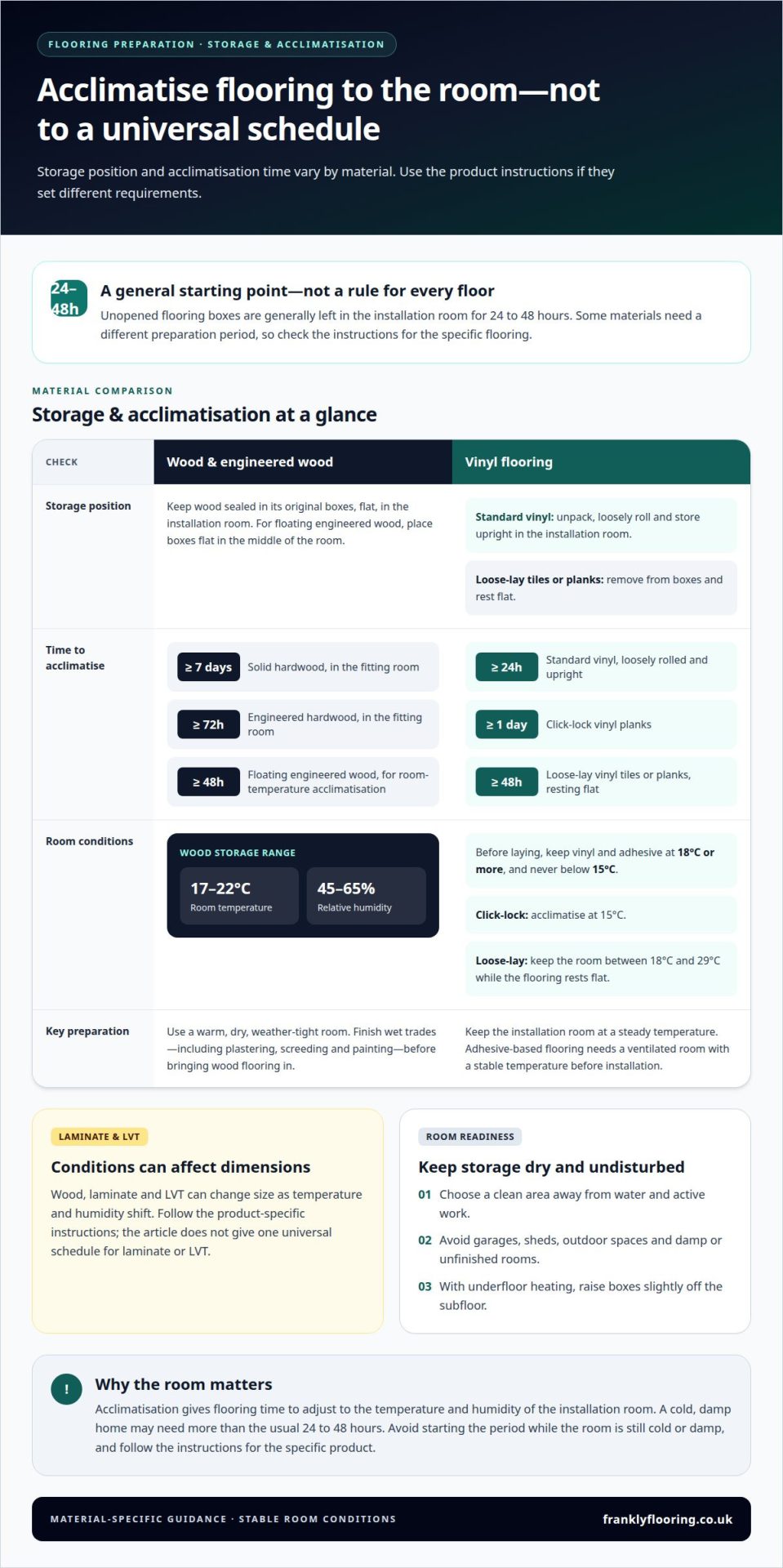
For wood, aim for a storage room between 17 and 22°C, with relative humidity between 45 and 65%. Solid hardwood should acclimatise in its fitting room for at least 7 days. Engineered hardwood needs at least 72 hours there, while hardwood planks may need several days to adjust to the home’s temperature and humidity.
For floating engineered wood, leave boxes flat in the room’s middle for at least 48 hours before installation, allowing the planks to acclimatise to the room temperature.
-
Check Room Temperature for Vinyl Acclimatisation
Prepare the room temperature before acclimatising vinyl, and distinguish the product type before choosing a method. Vinyl flooring should be unpacked, loosely rolled and stored upright in its installation room for at least 24 hours.
Before vinyl is laid, keep both the flooring and adhesive at 18C or more, and never below 15C. Click-lock vinyl planks should acclimatise at 15°C for at least a day. Loose-lay vinyl tiles or planks need a different approach: remove them from their boxes, rest them flat for at least 48 hours, and keep the room between 18°C and 29°C.
-
Confirm Flooring Storage Time Before Installation
Plan storage around the product’s acclimatisation instructions, rather than treating one duration as a universal maximum. Unopened boxes are generally left in the installation room for 24 to 48 hours to acclimatise, but some materials require a different preparation period.
For example, solid hardwood needs at least 7 days, while engineered hardwood needs at least 72 hours. Those are acclimatisation periods, not a promise that every flooring type can be stored indefinitely under any conditions. Keep the room’s temperature and humidity suitable, and use the manufacturer’s instructions to determine the correct timing for the specific product.
Storing unopened flooring boxes in the installation room
Prepare the installation room before bringing flooring inside. Keep the packaging and position matched to the material, especially for wood and vinyl.
-
Keep Flooring in Its Original Boxes
Leave wood flooring sealed in its original boxes while it acclimatises. Choose a warm, dry, weather-tight room, not a garage, shed or outdoor space. Finish wet trades, including plastering, screeding and painting, before storing wood there. Moisture from unfinished work can compromise storage conditions, even when the boxes remain closed.
Before delivery, clear a clean area away from water and active work. Remove dust and debris from the floor so you have a clean surface for positioning the packs and can spot signs of moisture.
-
Store Engineered Wood Boxes Flat
Lay engineered wood boxes flat rather than leaning them against a wall or standing them on end. A level position supports the packs evenly during storage and acclimatisation. Keep them in the installation room, with enough space to access them without dragging them across the subfloor.
For floating engineered wood, place the boxes flat in the middle of the room during acclimatisation. Keep them away from damp edges, open windows and areas where other trades are still working.
- Store vinyl differently from boxed wood. Remove vinyl flooring from its packaging, then keep it loosely rolled and upright in the room where it will be fitted. Don’t leave it tightly packed or handle it like engineered wood boxes. Keep the installation room at a steady temperature, and keep the flooring and adhesive warm before laying.
- Account for underfloor heating before placing packs. If the room has underfloor heating, raise flooring boxes slightly off the subfloor during storage so they don’t rest directly on the heated surface. Position them securely without blocking access to heating controls or trapping them beneath other materials.
Keep the room weather-tight and completely dry throughout storage. If painting, plastering or screeding is still underway, wait until the wet work is finished before bringing wood flooring into the room.
Why Do Some Flooring Materials Need Acclimation?
Acclimatisation gives flooring time to adjust to the temperature and humidity of its installation room. Use these checks to prepare the flooring and its surroundings.
- Allow for changes in wood, laminate and LVT. These materials can change size as room temperature and humidity shift. A plank delivered from a cold vehicle into a warm room may respond differently from flooring already kept in stable indoor conditions. Acclimatisation helps the material adjust before it is fixed or laid, reducing the difference between its stored condition and the room where it will be used.
- Keep the room’s conditions steady while flooring adjusts. Wood responds to both temperature and moisture in the air, so sudden changes can affect its dimensions. A cold, damp home may need more than the usual 24 to 48 hours for flooring to acclimatise. Avoid starting the period while the room is still cold or damp, as the material would be adjusting to conditions that may change again before fitting.
- Prepare suitable conditions for vinyl and its adhesive before laying. Keep both at 18C or more, and never below 15C. Adhesive-based flooring also needs a ventilated room with a stable temperature before installation. For example, don’t bring cold vinyl into a room and immediately begin laying it. Let the material reach the room’s conditions first, following its product-specific acclimatisation instructions.
- Consider the whole installation room, not only the flooring packs. Damp air, cold surfaces and changing temperatures can affect how materials settle before fitting. If the home remains cold or damp, allow extra acclimatisation time rather than relying automatically on a 24 to 48-hour period. Keep the room ventilated where adhesive-based flooring is planned, and avoid introducing sharp temperature changes before installation.
Checking the specific flooring manufacturer’s requirements
Read the instructions supplied with your flooring before setting a storage or acclimatisation schedule. Product type and fitting method can affect the preparation required.
- Find the product’s installation instructions and identify its material, fitting method and acclimatisation conditions. Note whether the flooring must stay boxed, lie flat or be unpacked. For example, floating engineered wood boxes should lie flat in the room’s middle for at least 48 hours before installation. Don’t assume another wood product follows the same timing.
- Compare the stated temperature and humidity with the installation room. Wood flooring storage conditions are 17 to 22°C and 45 to 65% relative humidity. Vinyl and its adhesive should be kept at 18C or more before laying, and never below 15C. Click-lock and loose-lay vinyl have separate acclimatisation steps, so match the instructions to the exact format.
- Check whether the instructions cover the subfloor as well as the flooring. Hardwood needs a smooth, clean subfloor, as debris or surface imperfections can affect the finished result. Finish wet work, such as screeding or painting, before storing wood in the room. A dry, weather-tight space helps maintain the conditions the product requires.
- Use the manufacturer’s timing when it differs from a general rule. Unopened boxes are often stored in the installation room for 24 to 48 hours, but solid hardwood needs at least 7 days to acclimatise. Engineered hardwood needs at least 72 hours. Check whether the product instructions specify a longer period, a different room position or another treatment before fitting.
Use these checks to narrow down the right floor for your room, then explore flooring options.
Frankly Flooring
Frankly Flooring is a useful next step if you’re choosing flooring and planning its arrival. Once you understand the storage conditions and acclimatisation needs, compare them with your room and project schedule. Choose a product that suits the space and allow time to prepare before fitting.
Frankly Flooring offers LVT, wood, laminate, vinyl and carpet, along with furniture and flooring accessories, so you can consider the wider room as you make your selection. Before ordering, use the product instructions to plan where it will be stored and how long it needs to adjust. This helps you coordinate delivery with room preparation.
For help with your flooring choice, contact Frankly Flooring.
Plan the next step with confidence
Before arranging delivery, consider how your flooring choice fits the room, any work still underway and the time available before fitting. Knowing how to store flooring before installation is useful, but it’s just as important to plan when the room will be ready to receive it. This connects storage decisions with the wider project, rather than treating delivery as a separate task.
If you’re deciding between LVT, wood or carpet, choose a material that suits the space, then plan around its product instructions. Browse Frankly Flooring’s range to compare options and get ready for your project. A clear plan helps you coordinate the product, room preparation and fitting schedule without rushing.
For help thinking through your flooring storage plans, contact Frankly Flooring for storage advice. Take the next step when you’re ready, with a plan that suits your home.
Frequently Asked Questions
How should laminate flooring be stored before installation?
To store laminate flooring before installation, start with the manufacturer’s instructions. Keep the packs in the installation room, protected from damp, cold conditions and sudden temperature changes. Laminate can change size as temperature and humidity shift, so avoid storing it in a garage or shed. For example, arrange delivery once the room is dry and ready, then follow the product’s packaging and acclimatisation directions.
How should solid wood flooring be stored before fitting?
Store solid wood in its original boxes, laid flat in a warm, dry room where it will be fitted. Keep it out of garages, sheds and outdoor spaces, and finish wet trades such as plastering and screeding first. The storage room should be weather-tight and completely dry. Solid hardwood needs at least 7 days to acclimatise in the fitting room before installation.
How should engineered wood flooring be stored before installation?
Keep engineered wood in its original packaging, laid flat in the room where it will be installed. For floating engineered wood, place the boxes flat in the middle of the room while it adjusts to the room’s temperature. Allow at least 48 hours before installation for this method. Engineered hardwood needs at least 72 hours in its fitting room, so distinguish the product and fitting instructions.
Should flooring acclimatise before installation, and for how long?
Yes, acclimatise flooring when its product instructions require it, because wood, laminate and LVT can respond to temperature and humidity changes. The duration depends on the material and product: solid hardwood needs at least 7 days, while engineered hardwood needs at least 72 hours. Hardwood planks may take several days to adjust. Use the flooring’s own instructions to plan the fitting date.
What temperature and humidity should flooring be stored at before fitting?
For wood flooring, keep the room between 17 and 22°C, with relative humidity between 45 and 65%. Vinyl has different temperature requirements: keep the flooring and adhesive at 18C or more before laying, and never below 15C. These figures apply to different materials and stages, so don’t use the wood storage range instead of the instructions for vinyl.
Should flooring be stored in its packaging or opened before installation?
The right way to store flooring before installation depends on its material. Keep wood flooring in its original boxes, laid flat. Vinyl is different: remove it from its packaging, then store it loosely rolled and upright in the installation room. For laminate, follow the product instructions to determine whether packs should remain sealed or be opened during acclimatisation.