
Old carpet can be recycled in the UK, but it usually cannot go in your household recycling bin. The available options vary by area, so ask your council whether it collects carpet and what preparation it requires. Consider reuse before disposal.
A worn or dated carpet may seem to have reached the end of its useful life, but clean carpet in good condition may be reused. Material that cannot be reused may still be suitable for recycling or energy recovery, depending on the processes available locally.
This guide explains the role of Carpet Recycling UK, how to prepare old carpet for reuse or disposal, and what may happen at reuse, recycling and energy recovery facilities. It also covers how separating carpet into its components can help with handling, and how some carpet may be recycled into products such as insulation or sports pitches.
Key Takeaways
- Find out whether your local council accepts carpet, as household collection and disposal options can vary across the UK.
- Assess whether the carpet is clean and in good enough condition for reuse before arranging disposal.
- Learn how separating carpet components can make handling easier and what reuse, recycling or recovery may involve.
- Discover which carpet types may be turned into products such as insulation or sports pitches, and where new carpet choices fit into your plans.
Can carpet be recycled?
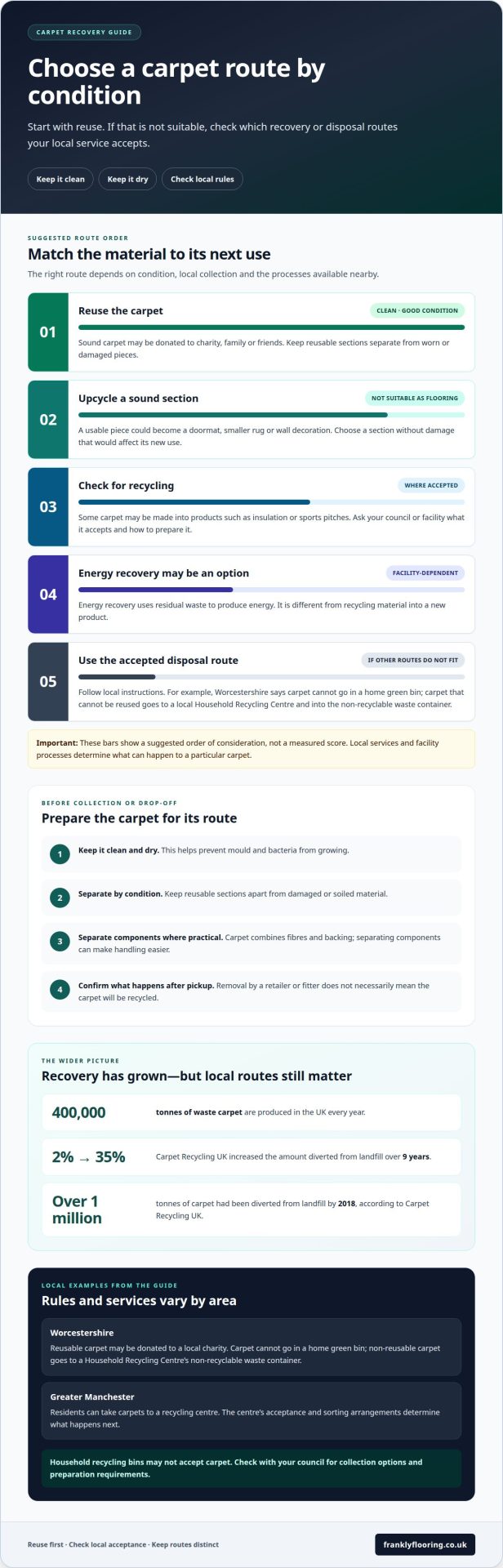
- Start by identifying the likely route: reuse, recycling, energy recovery or disposal. Old carpet can be recycled in the UK, but collection options vary. Ask your local council whether it collects carpet, as household recycling bins may not accept it. The UK produces 400,000 tonnes of waste carpet every year.
- Carpet is difficult to break down in landfill because it combines materials, including fibres and backing, that can be hard to separate after disposal. Carpet backing mostly consists of latex and PVC. Discarded carpet can take years to decompose in landfill, so keeping reusable material out of the waste stream matters.
- Ask about removal before arranging carpet work. Retailers or fitters may take away old carpet as part of the arrangement, but removal does not necessarily mean it will be recycled. Ask what disposal route they use and whether the carpet is separated for recovery. Council collection may be another option.
- Prepare carpet carefully for collection or disposal. Keep it clean and dry to help prevent mould and bacteria from growing. Where practical, separate it into its components to make handling easier. Keep reusable sections in good condition and separate from damaged or soiled material.
- Choose a recovery route where possible. Carpet Recycling UK increased the amount of carpet diverted from landfill from 2% to 35% over 9 years. By 2018, Carpet Recycling UK reported diverting over one million tonnes of carpet from landfill. These figures show how recovery has grown, though the route for an individual carpet depends on local collection and facilities.
Carpet Recycling UK
- Use Carpet Recycling UK as a point of context when considering carpet recovery. It had 100 members from across the carpet industry, reflecting involvement beyond household collection alone. That membership figure does not mean every carpet can enter the same process. Your practical first step is still to identify whether your carpet is being reused, recycled, recovered for energy or disposed of.
- Distinguish an organisation’s reported progress from the route available for your carpet. Landfill-diversion figures describe sector-wide progress, not a guarantee that a particular council, retailer or facility will accept your material. A collection service and a recycling outcome are not the same thing.
- Before arranging collection, note whether the carpet is clean, dry, reusable or damaged, and whether its backing remains attached. These details help describe the material being handled. Because carpet combines different components, separating them can make disposal easier. Don’t assume one recovery route suits every piece.
- Ask the collection service what happens after pickup. Find out whether usable carpet is directed towards reuse, recyclable material is separated, or the load goes to another disposal route. This helps you understand the likely outcome without treating industry-wide work as a promise about a local service.
- Use Carpet Recycling UK’s reported record to understand why diversion matters, then check your local options. Ask whether your council accepts carpet and what preparation it requires. If collection is unavailable, consider reusing sound sections before disposal, keeping them separate from dirty or damaged pieces.
Carpet reuse, recycling and energy recovery facilities
- Start with reuse if the carpet remains clean and in good condition. Old carpet can be donated to charity, family or friends who need it. In Worcestershire, reusable carpet may be donated to a local charity. Keep usable sections separate from worn or damaged pieces so they’re easier to assess and pass on.
- If carpet cannot be reused as a full floor covering, consider a small upcycling project. A sound section could become a doormat, smaller rug or wall decoration. Choose a piece without damage that would affect its intended use, then cut it to size. This gives the material another purpose before disposal.
- Use a local recycling centre when that route is available. In Greater Manchester, residents can take carpets to a recycling centre. Separate reusable pieces first, then keep the remaining carpet together for transport. A recycling centre’s acceptance and sorting arrangements determine what happens after arrival, so follow its local instructions for the correct container.
- Recycling and energy recovery are different processes. Recycling turns material into another product; energy recovery uses residual waste to produce energy. Energy recovery does not mean the carpet has been recycled into new material. The facility’s available process and the carpet’s condition influence its destination.
- Use household disposal routes that match local rules. In Worcestershire, carpet cannot go in a home green bin. Carpet that cannot be reused needs to go to a local Household Recycling Centre and into the non-recyclable waste container. Don’t place it with garden waste or assume that a recycling-centre visit means material recycling.
- Before choosing a route, sort each section by condition and likely use. Donate sound carpet, upcycle suitable offcuts, and separate the remainder for the route accepted by your local facility. This helps keep reusable material distinct from waste and clarifies whether reuse, recycling, energy recovery or disposal is appropriate.
Which types of carpet can be recycled in the UK?
- Many types of carpet have the potential to be recycled into new products, including sports pitches and insulation. However, that does not mean every local facility accepts every carpet. Separate the material’s recycling potential from the collection options where you live, and sort it before arranging disposal.
- Identify what you have, such as broadloom carpet, carpet tiles or offcuts. These are different formats, not guaranteed recycling categories. Where practical, keep pieces from the same carpet together. A clear description helps explain what you’re handing over, while clean, dry material is easier to keep in suitable condition for its next route.
- Consider the carpet and its backing as distinct components. Carpet backing mostly consists of latex and PVC, and separating carpet into its components can make disposal easier. Don’t assume the pile and backing will follow the same recovery process. Note whether the backing remains attached, then follow your local collection or facility’s sorting instructions.
- Check the carpet’s condition before prioritising recycling. A clean, intact section may be suitable for reuse, while damaged material may need a recycling or disposal route. For example, a usable offcut could become a smaller rug; remaining material may be considered for products such as insulation or sports pitches. Keep reusable pieces separate.
- Ask your council whether it accepts carpet and how it wants the material prepared. The fact that nearly all types can be recycled into new products does not confirm acceptance at every site. If you’re replacing worn carpet, explore carpet options as a separate next step, after planning the old material’s reuse or disposal.
Frankly Flooring: Carpet
If you’re planning a replacement, Frankly Flooring offers carpet to help you choose a new floor covering. You can also explore its furniture range as you plan the room.
Consider the room’s use, the look you want and how new carpet will work with existing flooring or furniture. If you’re weighing up alternatives, Frankly Flooring also offers LVT and wood. The right choice depends on the room and your priorities, not on one material being suitable everywhere.
Plan the old carpet’s reuse or disposal separately from choosing its replacement. First identify a suitable route for the removed material, then choose flooring that works for your home. Explore carpet and related flooring options at Frankly Flooring.
Plan your next flooring choice
Deciding whether you can recycle old carpet in the UK is one part of planning a room change. Next, consider how you want the space to look and feel, then choose a floor covering suited to everyday use. Keeping disposal separate from the new flooring decision makes both easier to manage.
Frankly Flooring offers carpet, LVT and wood, giving you different flooring materials to consider for your home. The right option depends on the room, your preferences and how you use the space. Think through those priorities, then explore the range at Frankly Flooring.
If you’re ready to discuss flooring options, contact Frankly Flooring for advice. A clear plan for the room and the old carpet puts you in a good position to move forward with confidence.
Frequently Asked Questions
What is carpet waste?
Carpet waste includes discarded floor coverings, damaged sections and leftover offcuts. It may contain carpet fibres and backing made from different materials. For example, a spare piece cut during fitting becomes waste if it has no further use. Sound, usable carpet can instead be kept for reuse.
Can old carpet be recycled in the UK?
Yes, old carpet can be recycled in the UK, and nearly all types can be made into new products, including insulation and sports pitches. Recycling depends on a suitable collection and processing route being available. Before disposal, separate carpet from other household waste where practical, and keep reusable sections aside so they can be considered for another use first.
Where can I recycle old carpet near me in the UK?
Your local council’s waste and recycling information is the starting point for finding a nearby route. Councils may offer collection, direct residents to a Household Recycling Centre, or explain which container to use. The accepted route differs by area. For example, Greater Manchester residents can take carpets to a recycling centre, while local instructions determine how each load is handled.
Do UK household waste recycling centres accept carpet?
Some centres accept carpet, but the correct disposal point can vary locally. In Worcestershire, carpet that cannot be reused goes to a Household Recycling Centre’s non-recyclable waste container, rather than a home green bin. This illustrates why acceptance at a centre doesn’t always mean the carpet enters material recycling. Follow the disposal category set for your local facility.
How much does carpet recycling or disposal cost in the UK?
There is no single price for every UK carpet-disposal route. The cost depends on how the carpet is collected or removed, and whether removal is included in an arrangement with a retailer or fitter. Council collection and taking carpet to a centre are separate options, so check whether the relevant local service charges a fee.
Can carpet be reused or donated instead of recycled in the UK?
Yes. Carpet in good condition can be passed on to a charity, family member or friend who can use it. A clean, intact spare section may suit a small room or another practical purpose. Carpet that is not suitable as a full floor covering could also be upcycled into a doormat or smaller rug before disposal.