
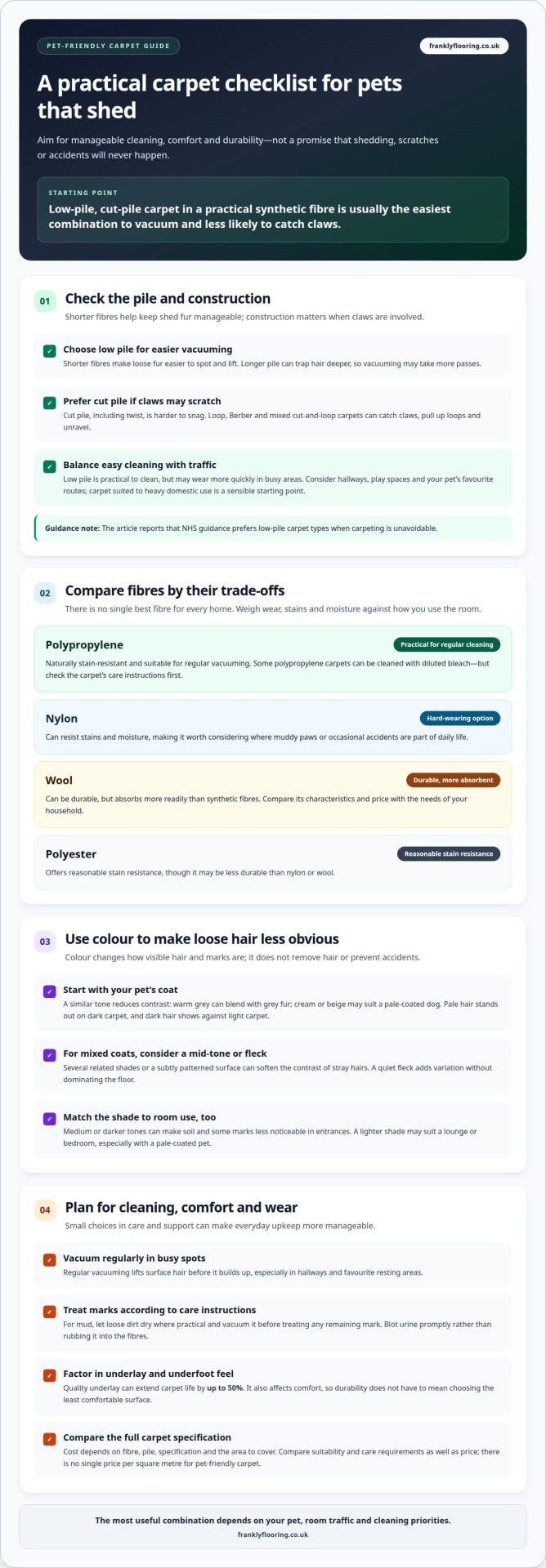
No carpet is truly pet-proof, but the best carpet for pets that shed is usually a low-pile, cut-pile style made from a practical synthetic fibre. Shorter fibres make loose fur easier to spot and vacuum, while cut pile is less likely than loop pile to catch claws.
The goal is a floor that’s manageable day to day, not a promise that shedding, scratching or accidents will never happen. Colour can help: a shade close to your pet’s coat makes loose hair less noticeable, while a darker tone may disguise some marks.
This guide explains how pile, material and colour affect carpet in a pet-owning home, including the trade-offs between polypropylene, nylon and wool. You’ll also see why no single option suits every household, and what to consider if your pet scratches as well as sheds.
Key Takeaways
- Balance stain resistance and straightforward cleaning with the comfort you want underfoot; no carpet can prevent every scratch or accident.
- For active households, consider how pile construction handles claws and wear, not just how it looks when new.
- A carpet shade close to your pet’s coat can make loose fur less noticeable, while pattern and tone also affect how everyday marks show.
- Compare carpet fibres by their durability, stain resistance and absorbency to find the trade-off that suits your home.
Why Choose a Pet Friendly Carpet?
A pet-friendly carpet balances stain resistance, comfort and manageable cleaning. For shedding pets, polypropylene and other synthetic fibres can make regular vacuuming more straightforward.
Balancing Cleanability and Comfort
Stain-resistant carpet can help manage muddy paws and accidental spills, while a comfortable pile gives pets a warm place to rest. The right balance depends on your household: soft carpet may feel inviting, but longer fibres can trap fur and make cleaning harder. Consider how often your pet tracks in mud, sheds or scratches before choosing a pile.
Easy-Clean and Bleach-Cleanable Carpets
Synthetic carpets are often easy to clean, and polypropylene is naturally stain-resistant. Some polypropylene carpets can be cleaned with diluted bleach, which may help with stubborn marks. However, that does not mean every carpet is bleach-safe. Follow the carpet’s care instructions, as other fibres may need different treatment.
For pet hair, low-pile synthetic fibres such as polypropylene are practical options. Their shorter surface is easier to vacuum regularly, helping lift shed fur before it becomes embedded. Longer pile can trap loose hair deeper between fibres, so vacuuming may take more passes. A regular routine also helps keep visible fur under control.
There is no single UK price per square metre for pet-friendly carpet. Cost depends on the fibre, pile and carpet specification, as well as the area you need to cover. Polypropylene and wool, for example, have different characteristics and prices, so compare each carpet’s suitability as well as its cost.
For mud, let loose dirt dry where practical, then vacuum it before treating any remaining mark according to the carpet’s care instructions. Blot urine promptly rather than rubbing it into the fibres. Regular vacuuming removes surface hair and helps stop it building up in busy areas, such as hallways and favourite resting spots.
What is the best carpet for pets?
The best carpet for pets that shed is usually low-pile and cut-pile, such as twist, because it’s easier to vacuum and less likely to catch claws. NHS guidance prefers low-pile carpet types when carpeting is unavoidable.
Loop, Berber and mixed cut-and-loop carpets can snag claws. Scratching may pull up loops, loosen threads and cause unravelling. Cut pile is harder to snag, making it a more practical construction for cats and dogs that scratch.
Durability depends on the fibre and household traffic. Nylon is hard-wearing and can resist stains and moisture. Wool can also be durable, but absorbs more readily than synthetic fibres. Polyester and polypropylene offer reasonable stain resistance, though they may be less durable than nylon or wool. In a home with children and pets, carpet suited to heavy domestic use is a sensible starting point.
Consider how the carpet feels underfoot, too. A deep, luxurious pile may feel soft, but shorter fibres are easier to vacuum. Low-pile carpet can wear more quickly in busy areas, so weigh cleaning ease against the demands of hallways, play spaces and your pet’s favourite routes. That balance will help you find the best carpet for pets that shed in your home.
Underlay affects comfort and wear. Quality underlay can extend carpet life by up to 50%, helping it cope with repeated footsteps and pet activity. A supportive layer also changes the feel underfoot, so durability doesn’t have to mean choosing the least comfortable surface.
No single UK brand or range suits every pet-owning home. Compare carpet ranges by pile construction, fibre and suitability for heavy domestic use, rather than choosing by name alone. To compare options, explore carpet options alongside these practical considerations.
Choosing a carpet colour to match pet fur
A carpet close to your pet’s coat colour makes shed hair less noticeable between vacuuming. A warm grey carpet, for example, can blend with a grey cat’s fur, while cream or beige may suit a pale-coated dog. Strong contrast has the opposite effect: pale hair stands out on dark flooring, and dark hair shows against a light carpet. Matching tones won’t remove pet hair, but they can make everyday shedding less obvious.
For pets with mixed-colour coats, consider a carpet with several related shades rather than a single flat colour. A mottled or subtly patterned surface can soften the contrast of stray hairs. Choose a pattern that works with the room: a busy design may compete with other furnishings, while a quiet fleck adds variation without dominating the floor. Use your pet’s main coat colour as a starting point.
Room use matters, too. In an entrance where muddy paws come in, a medium or darker colour can make soil and some marks less noticeable than a very pale carpet. Darker colours can also disguise stains such as mud or pet urine, but they won’t prevent accidents or replace prompt cleaning. In a bedroom or lounge, a lighter shade may suit the room, especially if your pet has pale fur and sheds where it rests.
Before settling on a colour, compare it with your pet’s coat and the room’s furnishings. A black dog on a pale carpet will leave visible hairs; a cream dog on a similar-toned carpet creates less contrast. If your pets have different coat colours, a mid-tone or mixed shade may be a practical compromise. Colour affects how visible the hair is, while pile and regular vacuuming affect how easily it can be removed.
Carpet materials for homes with pets
Fibre affects how carpet handles shed fur, stains, moisture and daily wear. Polypropylene is naturally stain-resistant and suits regular vacuuming, making it a practical option for busy living areas. Some pet-friendly carpet collections include carpets made from 100% polypropylene. It can also be cleaned with a diluted bleach solution, but follow the carpet’s care instructions before using any cleaning product.
Nylon is another hard-wearing option. Compared with wool, it can resist stains and absorb less moisture, which may help in rooms where muddy paws or occasional accidents are part of life. Polyester offers reasonable stain resistance, but is generally less durable than nylon or wool. In a hallway used by children and pets, fibre durability may matter more than choosing the softest feel.
Wool and wool-mix carpets can offer durability and stain resistance, but wool absorbs more readily than synthetic fibres. That matters if spills need prompt attention or pets often come in from wet outdoor spaces. SmartStrand is a manmade fibre described as durable and stain-resistant, with pet owners in mind. Compare each fibre’s strengths with the messes and foot traffic typical in your home.
No material prevents shedding or scratching. Instead, choose carpet suited to heavy domestic use, then pair its fibre with a pile that fits your cleaning routine. A darker shade or one close to your pet’s coat can make loose hair less obvious, but won’t remove it. Regular vacuuming is still necessary with polypropylene, nylon, polyester and wool.
For a practical shortlist, weigh stain resistance against wear, absorbency and the feel you want underfoot. Explore carpet options to compare materials for your home.
Frankly Flooring: Carpet
Frankly Flooring offers carpet for households weighing pile, fibre and colour against everyday pet hair and wear. Use the guidance above to narrow your priorities: low-pile cut pile may make vacuuming easier, while the right fibre depends on how you balance stain resistance, durability and comfort.
Use those priorities to compare carpet options for the rooms your pets use most. A busy hallway may call for a hard-wearing carpet, while a bedroom might put more emphasis on softness and colour. If carpet isn’t right for every room, consider LVT or wood as alternative flooring options.
For a considered next step, contact Frankly Flooring to discuss your carpet choice.
Make a Choice That Fits Your Home
Choosing the best carpet for pets that shed means finding a surface you can live with every day, rather than chasing a completely pet-proof finish. Before deciding, consider where your pet spends time, how much upkeep suits your routine, and how the floor will work with the rest of the room. A carpet that works in a quiet bedroom may not suit a busy entrance.
Frankly Flooring offers carpet, LVT and wood, giving you different flooring options for your home. Keep carpet where comfort matters and consider another surface in a room where cleaning is a bigger priority. The aim is a practical fit for your household, not a one-size-fits-all answer.
If you’re ready to explore the next step, contact Frankly Flooring for carpet advice. A considered choice can make your home work better for both you and your pet.
Frequently Asked Questions
Is there such a thing as a pet-proof carpet?
No carpet can prevent every scratch, shed hair or accident. “Pet-friendly” means a more manageable choice, not an indestructible surface. A dog that charges through the hall, for example, puts different demands on carpet than a cat that mainly sleeps in one room. Regular vacuuming and prompt attention to spills remain important for keeping any carpet in good condition.
What Type of Carpet is Best if You Have Dogs and Cats?
Low-pile cut-pile carpet is a sensible starting point for a home with dogs and cats. It avoids exposed loops that claws can catch, and its shorter surface is easier to maintain around favourite resting spots. If children also use the room, look for carpet suited to heavy domestic use, then balance durability with the comfort you want underfoot.
What is the Best Colour Carpet for Dog and Cat Owners?
Choose a shade close to your pets’ coat colours, or a mixed shade that works with more than one coat. A lightly flecked mid-tone, for example, can soften the contrast from both pale and dark hairs. Consider the room, too: a darker carpet may make muddy marks less noticeable in an entrance, while a lighter shade may suit a bright living space.
What is the best flooring for pets?
The best flooring depends on how your pets use each room and whether comfort or easier hair removal matters more. Carpet gives pets a warm, grippy surface, while hard flooring can make loose fur easier to spot and sweep. Frankly Flooring offers carpet, LVT and wood, so you can consider different surfaces for different rooms rather than using one material throughout your home.
Is loop pile or cut pile carpet better for dogs and cats?
Cut pile is generally the more practical choice for pets with claws because it has fewer loops to snag. Twist pile is one cut-pile construction to consider. Loop pile may stand up to wear, but a scratching cat or playful dog can pull loops and loosen threads. If your pet scratches carpets, prioritise a construction without exposed loops.
Which carpets resist pet stains, odours and moisture?
Polypropylene is naturally stain-resistant, while nylon can resist stains and absorb less moisture than wool. Wool is more absorbent, so spills may need quicker attention. No fibre removes the need to clean accidents promptly: blot liquid rather than rubbing it deeper, then follow the carpet’s care instructions. To manage odours, cleaning residue from the affected area matters as much as the fibre choice.