
What if the floor you choose today is the very thing that makes your home feel dated and cold by this time next year? It’s a common worry, especially when you’re faced with an endless sea of LVT and carpet samples that all start to look the same. Staying ahead of flooring trends uk 2026 isn’t about chasing every passing fad; it’s about understanding the shift toward tactile authenticity. We know it’s exhausting to navigate the noise of sustainability claims while trying to find a surface that doesn’t feel like a sterile showroom.
In the spirit of total candor, we promise to provide an expert look at which styles are actually worth your investment and which are just marketing hype. You’ll gain a clear understanding of why the UK is moving away from cool greys toward the warmth of honey oak and terracotta. This guide covers everything from the durability of textured vinyl to the lasting value of engineered wood. We’ll show you exactly how to pair these materials with your furniture to create a home that feels both grounded and sophisticated.
Key Takeaways
- Learn why “Warm Minimalism” is replacing cool greys with honey-oaks and rich caramels to create a more inviting, grounded home atmosphere.
- Discover how to use statement patterns like herringbone and mixed-width planks to add an artisanal, bespoke feel to any room.
- Identify truly sustainable materials, such as engineered wood and sisal, that align with the most important flooring trends uk 2026 without falling for marketing hype.
- Understand the practical benefits of modern LVT and patterned vinyl, which offer functional luxury and high durability for high-traffic areas like kitchens and bathrooms.
- Master the “Frank” rule for mixing wood grains and layering rugs to ensure your new flooring perfectly complements your existing furniture.
The Shift to Warmth: Why 2026 Flooring Trends are Moving Away from Cool Greys
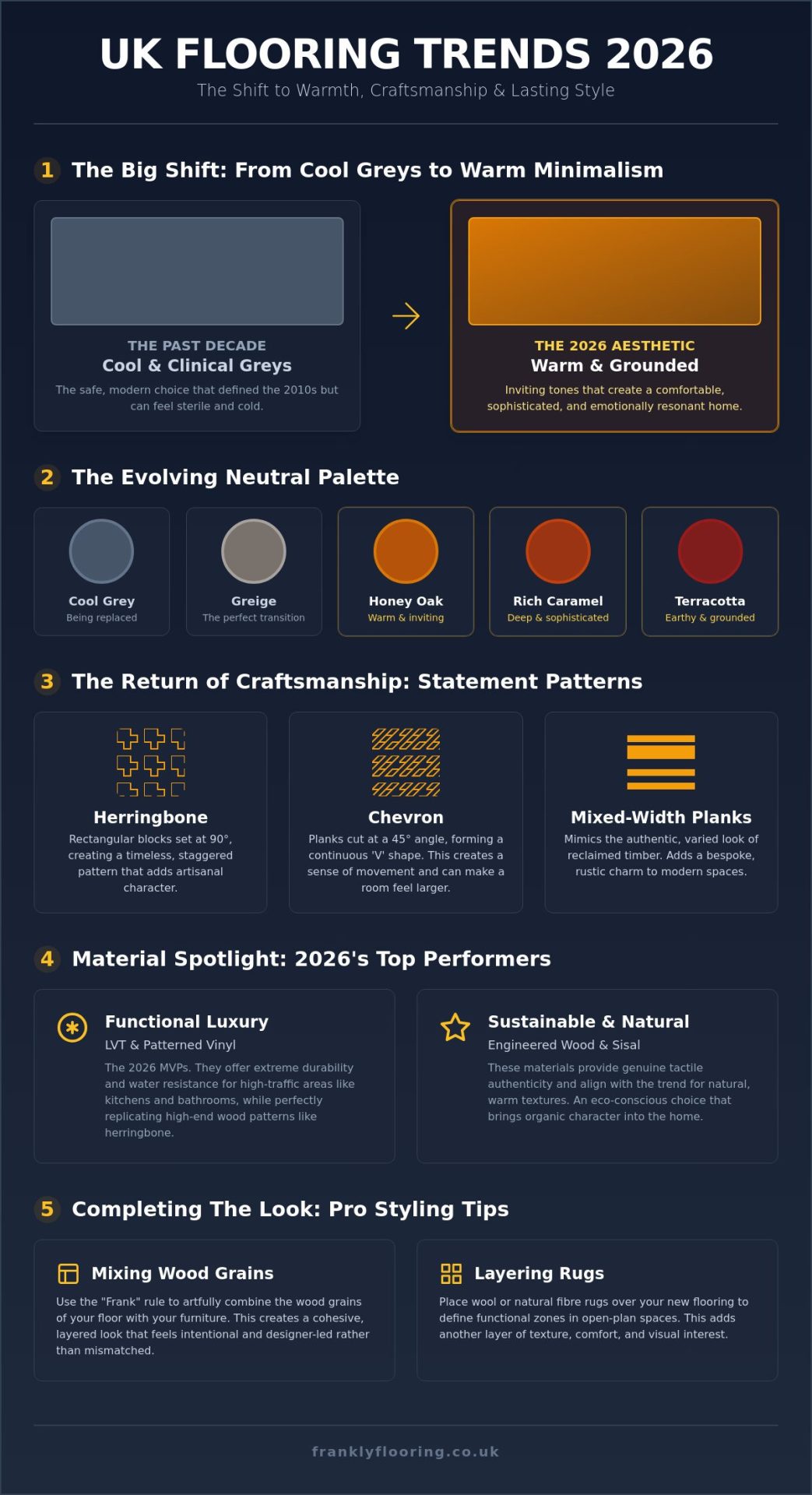
For nearly a decade, grey was the undisputed king of British interiors. It was the safe choice for resale and a hallmark of modern design. However, the flooring trends uk 2026 represent a decisive break from this cool, sometimes clinical aesthetic. We’re seeing a return to the hearth. Homeowners are swapping out icy tones for honey-oaks, rich caramels, and deep chestnuts. This isn’t just a whim of fashion. It’s a response to how we use our homes. We want warmth. We want comfort. A grey floor often fails to deliver that, especially under the flat, grey light of a typical British afternoon.
The Evolution of the Neutral Palette
The shift is gradual. You don’t have to jump straight into dark, heavy timbers to stay current. Many are finding success with “Greige,” a clever hybrid that retains the neutrality of grey but adds the soul of beige. It serves as the perfect transition for those updating a modern space. Warm Minimalism is the balance between clean lines and cosy, organic textures. By choosing a floor with a slight golden or red undertone, you create a foundation that feels alive. It’s about moving away from the flat, painted look of older laminates toward materials that show genuine character and depth.
Creating a Grounded Aesthetic with Earthy Tones
Earthy palettes like terracotta and ochre are no longer reserved for rustic cottages. In 2026, these tones are being used in sleek, urban apartments to provide a grounded feel. When the floor has a bit of visual weight, the rest of the room feels more stable and intentional. Texture is the secret weapon here. A brushed or hand-scraped finish on your wood or LVT adds depth that prevents warm tones from looking like a 1970s throwback.
When you explore Sustainable flooring, you’ll find that natural materials like oak and sisal naturally carry these warm, varied pigments. They pair beautifully with stone worktops or wool rugs, creating a layered look that feels high-end. Beyond aesthetics, these warmer palettes are a superior investment for property value. They create an immediate emotional connection with potential buyers, suggesting a home that is well-cared for and inherently inviting. Choosing these tones now ensures your property remains attractive and relevant for years to come.
The Return of Craftsmanship: Herringbone, Chevron, and Statement Patterns
Geometric patterns aren’t just for period properties anymore. In 2026, they’re the primary tool for adding character to new-builds and open-plan renovations. Using a pattern allows you to “zone” a room without building walls. For instance, a herringbone hallway that transitions into straight planks in the lounge clearly defines the space. It’s a hallmark of the flooring trends uk 2026. We’re seeing homeowners move away from uniform, factory-line aesthetics in favour of floors that look like they were laid by a master craftsman.
Let’s be frank about the practicalities. Patterns are bold. If your room is already cluttered or features busy wallpaper, a herringbone floor might make the space feel chaotic. Standard planks are often a better, more “quiet” choice for high-traffic family rooms where the floor needs to be a backdrop rather than the star. However, if you have a minimalist room that feels a bit soulless, a statement pattern is exactly what’s needed to add warmth and architectural interest.
Herringbone vs Chevron: Which Pattern Suits Your Space?
The technical difference is in the cut. Herringbone uses rectangular blocks set at 90 degrees to each other. Chevron planks are cut at a 45-degree angle to create a continuous “V” shape. Generally, chevron tends to make a small room feel larger because the sharp lines draw the eye forward, creating a sense of movement. High-quality herringbone flooring is now accessible in LVT and laminate formats. This means you get the artisanal look without the complex maintenance or high price tag of solid timber parquet.
Bespoke Layouts: Mixed Widths and Checkerboard
We’re seeing a rise in “randomised” mixed-width planks. This mimics the look of reclaimed timber where every board was unique. It’s an approach that feels more authentic than uniform boards. This shift toward timber-based aesthetics is supported by the Timber in construction roadmap, which highlights the UK’s commitment to using more sustainable wood products in our buildings.
For those feeling bolder, the modern checkerboard is making a comeback. Using two-toned LVT or vinyl in a hallway creates a high-impact entrance that’s incredibly easy to clean. If you’re unsure which pattern fits your lifestyle, it’s worth looking at our range of LVT and wood options to see how these textures look in a real-world setting. Patterns are a long-term commitment, so choosing one that complements your furniture is essential for lasting satisfaction.
Sustainable and Natural Choices: The Rise of Sisal and Engineered Wood
The demand for “conscious flooring” has moved from a niche interest to a primary driver in the flooring trends uk 2026. Homeowners are no longer just looking at the price tag; they’re asking about Volatile Organic Compounds (VOCs) and the environmental footprint of their choices. This shift is about more than just being “green.” It’s about creating a healthy indoor environment where the air is as clean as the aesthetic. We’re seeing a genuine move toward materials that offer longevity rather than a quick, five-year fix.
Engineered Wood Flooring: Longevity Meets Ecology
Engineered wood has become the go-to sustainable alternative to solid timber. While solid hardwood is beautiful, it is prone to warping in the unpredictable British climate. Engineered boards solve this with a multi-layer construction that provides exceptional stability against humidity and temperature changes. This design also uses fewer slow-growing hardwoods, making it a more responsible choice for the planet.
One of the biggest benefits is the ability to sand and refinish the surface. This makes it a “lifetime” floor that can evolve with your home. For those interested in the technical nuances of wear layers and core materials, our engineered wood flooring guide provides a deep dive into what makes a quality board. These choices align perfectly with broader Interior design trends for 2026, which prioritise grounded, character-rich spaces over sterile minimalism.
The Appeal of Natural Fibre Carpets
We’re seeing a massive resurgence in natural fibres like sisal, seagrass, and jute. In bedrooms and lounges, the trend has shifted away from synthetic plushness toward the raw, tactile appeal of Berber and sisal weaves. These materials are biodegradable, sustainably harvested, and require minimal chemical processing. Sisal is particularly favoured for stairs and hallways because of its incredible durability and slip resistance.
However, we have to be frank about the reality of maintenance. Natural fibres are tough, but they aren’t invincible. Sisal is notoriously absorbent. A spilled glass of red wine or a cup of tea can leave a permanent mark because the fibres soak up moisture so quickly. If you have a busy household with young children or pets, you might want to reserve these materials for lower-risk rooms like a home office. When setting up your workspace, you can learn more about flexible 6-month internet options from Broadband Freedom to stay connected during your home improvement project. Understanding these practical trade-offs is essential for ensuring your investment adds long-term value to your property.
Functional Luxury: Why LVT and Patterned Vinyl are the 2026 MVPs
In a busy home, the real luxury isn’t just how a floor looks. It’s how little you have to worry about it. While we’ve discussed the move toward warmth and craftsmanship, the flooring trends uk 2026 are equally defined by a demand for “Functional Luxury.” This is where high-end aesthetics meet the rugged durability required for modern life. Luxury Vinyl Tile (LVT) and patterned vinyl have become the Most Valuable Players because they allow you to have that “designer” look without the constant fear of scuffs, spills, or water damage.
Let’s be frank about the kitchen. It’s the heart of the home, but it’s also a high-risk zone for flooring. We often see homeowners torn between laminate and LVT. Here is the honest truth: for wet areas like kitchens, utility rooms, and bathrooms, LVT is the smarter investment. While modern laminate is durable, it’s still susceptible to swelling if a dishwasher leaks or a bowl of water sits for too long. LVT is entirely waterproof. It provides peace of mind that natural timber simply can’t match in a splash zone.
The LVT Revolution: Authentic Textures
The reason LVT is dominating 2026 is “Registered Embossed” technology. This isn’t the flat, shiny plastic of the past. The manufacturing process now aligns the physical texture of the tile with the visual grain of the wood or stone print. When you run your hand over it, you feel the knots and the grain exactly where you see them. For a deeper dive into the technical side of these materials, our what is LVT flooring guide explains exactly why these layers are so resilient. It’s also the perfect partner for underfloor heating, as it transfers heat efficiently without the risk of cracking or gapping.
Bold Patterned Vinyl: The Statement Utility
We’re seeing a massive trend for “Maximalist” patterned vinyl in smaller, functional spaces. Utility rooms and downstairs toilets are the perfect places to experiment with bold Moroccan or Victorian-inspired designs. These patterns add immediate personality to a room that might otherwise feel purely utilitarian. It’s also a “frank” choice for pet owners, as patterned floors are incredibly forgiving when it comes to hiding muddy paw prints or stray hairs between cleans. To complement a high-impact interior entrance, many homeowners also invest in quality external paving from Wolverhampton Driveways Ltd to create a cohesive look from the curb to the kitchen. To keep the space feeling modern rather than cluttered, we suggest balancing a bold, patterned floor with neutral walls and simple cabinetry.
If you’re ready to upgrade your home’s durability without sacrificing style, you can explore our full range of LVT and vinyl options to find the perfect match for your project.
Completing the Look: Pairing 2026 Floors with Furniture and Rugs
Selecting your material is only half the battle. To truly master the flooring trends uk 2026, you must consider how that surface interacts with the rest of your room. A floor doesn’t exist in a vacuum. It’s the foundation of your home’s character, but it’s the layers you place on top that transform a house into a home. We often see beautiful installations that feel slightly “off” because the furniture and textiles haven’t been chosen to complement the new undertones.
The Art of Layering Rugs
One of the most effective ways to add warmth to hard LVT or wood floors is through the “Layered Look.” In 2026, we’re seeing a move away from single, small rugs in favour of expansive, textured layers. A popular technique involves pairing a large, neutral sisal rug as a base with a smaller, patterned wool rug on top. This doesn’t just look sophisticated; it’s a practical way to define “zones” in open-plan living and dining areas without the need for physical partitions.
Rugs also act as a protective barrier in high-traffic seating areas. When selecting quality furniture, consider it the anchor for your flooring design. A heavy sofa or a dining table needs a soft buffer to prevent indentations or scratches over time. It’s a simple step that preserves the longevity of your investment while making the room feel more intentional and finished.
Mixing Wood Tones with Confidence
The “Frank” rule on mixing wood grains is straightforward: stay within the same temperature family. You don’t need your coffee table to be an exact match for your oak floor. In fact, the 2026 trend for “tonal mixing” encourages using different shades of the same wood family to create depth. If your floor has a warm, honey-oak undertone, look for furniture with similar golden or caramel notes. Avoid the clash of pairing a cool, ashy-grey wood with a warm, reddish-brown mahogany.
If you’re worried about a specific piece of furniture clashing with your floor, use a rug as a visual buffer. This break in the wood-on-wood contact allows the two different grains to coexist without competing for attention. Finally, pay attention to the legs of your furniture. In 2026, we recommend choosing pieces with felt-bottomed or tapered legs that distribute weight evenly. This is especially important for LVT and engineered wood to avoid pinpoint pressure marks. Ultimately, choosing a floor should reflect your actual lifestyle, not just a magazine spread. Pick a surface that can handle your pets, your kids, and your morning coffee spills, and you’ll never regret the investment.
Building a Foundation That Lasts Beyond the Season
The shift toward warmth, craftsmanship, and functional luxury marks a significant turning point in British interiors. By moving away from sterile greys and embracing the rich textures of honey-oak, herringbone patterns, and sustainable natural fibres, you’re doing more than just following flooring trends uk 2026. You’re creating a home that feels intentionally grounded and resilient. Whether you choose the technical precision of engineered wood or the waterproof reliability of LVT, the goal is to find a surface that supports your lifestyle without requiring constant worry.
As a family-run business with over 20 years of expertise, we’re here to provide the transparent advice you need to make an informed investment. We believe in technical craftsmanship and honest guidance over high-pressure sales. From the first spark of inspiration to the final delivery, we prioritise your long-term satisfaction and the character of your property. We offer direct UK-wide delivery on all LVT, wood, and carpets to ensure your project stays on track.
Ready to find the perfect foundation for your space? Browse our full range of 2026 flooring trends at Frankly Flooring. Your home is your most personal project; it deserves a floor that is as reliable as it is beautiful.
Frequently Asked Questions
Is grey carpet out of style for 2026?
Cool, clinical greys are largely being replaced by warmer neutrals such as oatmeal, biscuit, and “greige.” While grey remains a functional choice, the current move is toward earthy tones that create a more inviting atmosphere. If you prefer grey, we suggest choosing a version with warm yellow or red undertones to ensure your room doesn’t feel cold under British light.
What is the most durable flooring for a busy UK household in 2026?
Luxury Vinyl Tile (LVT) remains the most durable option for high-traffic homes. It offers exceptional scratch resistance and is completely waterproof, which is essential for the unpredictable nature of family life. For those following flooring trends uk 2026, LVT provides the ideal balance of a high-end aesthetic and a surface that can withstand heavy daily use without failing.
Can I use LVT flooring with underfloor heating?
Yes, LVT is an excellent partner for underfloor heating systems. Its thin profile and high thermal conductivity allow heat to pass through quickly and evenly without the risk of the material warping. You should always check that your chosen product is rated for the specific temperature of your system, which is typically a maximum of 27 degrees Celsius for most vinyl products.
Is herringbone flooring more expensive to install than straight planks?
Intricate patterns like herringbone or chevron generally require more time and precision to lay, which increases the labour involved. You also need to account for higher material wastage, typically around 10 to 15 percent, compared to the standard 5 percent for straight planks. While the initial investment is higher, the artisanal finish often adds a more significant boost to your property’s resale value.
What are the most sustainable flooring options available in the UK?
Engineered wood and natural fibres like sisal or wool are the most sustainable choices currently available. Engineered wood uses significantly less slow-growing hardwood than solid timber, while sisal is a fast-growing, biodegradable plant fibre. Choosing products with low VOC finishes ensures your new floor supports a healthy indoor environment while minimising its total environmental footprint.
How do I choose the right underlay for my 2026 flooring choice?
The correct underlay depends on your subfloor and the specific material you are installing. For carpets, a high-density PU foam offers the best balance of comfort and thermal insulation. If you’re laying LVT or laminate, you require a specialized, high-compression underlay that prevents the joints from bouncing or clicking when you walk across the room.
Are patterned vinyl floors practical for kitchens?
Patterned vinyl is one of the most practical choices for a kitchen because it’s waterproof, easy to mop, and incredibly forgiving. The busy designs are excellent at masking small crumbs or water spots between cleans. It’s a “frank” solution for homeowners who want a high-impact, decorative look in a room that experiences constant spills and heavy foot traffic.
What is the best flooring for a home with pets and children?
A high-quality LVT with a thick wear layer is the superior choice for homes with pets and children. It resists stains from accidental spills and won’t show the scratches that claws or plastic toys can leave on natural timber. For those keeping up with flooring trends uk 2026, modern LVT mimics the look of real wood so accurately that you don’t have to compromise on style to get a floor that survives daily life.