
You might think the most important part of buying living room rugs uk is picking a pattern you love, but starting with style is often where homeowners go wrong. A rug is more than a decorative accessory; it’s a functional anchor that needs to work in harmony with your flooring. We know how frustrating it is to invest in a beautiful piece only to find it looks like a lonely postage stamp in a large room or slides dangerously across your hard floors.
It’s a common headache, but it’s one we can help you avoid. We’ve spent over 20 years learning exactly what makes a rug last, and we’re here to give you the frank truth about what works. You’ll discover how to choose the right size to anchor your furniture, which materials handle spills in high-traffic areas, and how to protect your expensive wood or LVT from scratches and scuffs.
We’ll also look at the 2026 shift toward earthy tones like mushroom and gentle olive, alongside the updated fire safety standards that prioritize natural, low-chemical textures. From initial material selection to the final placement, this guide ensures your living room feels cohesive, soft, and built to last.
Key Takeaways
- Learn how to avoid the most common design mistake by mastering the “Frank” rule for sizing, ensuring your rug anchors your furniture rather than floating awkwardly.
- Discover how the right living room rugs uk act as a protective barrier for your wood or LVT flooring, shielding high-traffic zones from daily wear and tear.
- Understand the technical differences between resilient wool and family-friendly polypropylene so you can choose a material that balances luxury with practical maintenance.
- Get expert advice on pairing rugs with specific floor types, including how to prevent slips on laminate and avoid the common pitfalls of layering rugs over existing carpets.
- Find out how to decode online spec sheets by using GSM to judge density and learning how to account for lighting differences when viewing colours on a screen.
Why Living Room Rugs are the Foundation of British Interior Design
A living room without a rug often feels like a collection of furniture floating in space. In many UK homes, especially those with modern open-plan layouts, a textile floor covering serves as the essential anchor that pulls your sofa, armchairs, and coffee table into a single, cohesive conversation zone. Without it, the room feels unfinished and lacks a sense of purpose. Frankly speaking, you can spend thousands on high-end furniture, but if it’s just sitting on a bare floor, the design won’t feel grounded.
Beyond the looks, there are significant thermal and acoustic benefits. With the UK’s older housing stock and the growing trend toward hard flooring, rooms can often feel echoey or chilly underfoot. Choosing the right living room rugs uk helps absorb sound and provides an extra layer of insulation. It’s a simple, effective way to make your home feel much more inviting during a cold British winter. It isn’t just about decoration; it’s about comfort and making the space liveable.
The Aesthetic Power of the Living Room Rug
Rugs are the most versatile tool in your design kit. They allow you to introduce colour and texture without the permanence of painting a wall or replacing your entire carpet. In 2026, we’re seeing a strong move toward earthy tones like clay, mushroom, and gentle olive. A rug lets you trial these trends easily. In open-plan spaces, rugs are vital for defining zones. By placing a rug under your seating area, you create a visual boundary that tells the eye where the relaxation zone begins and the walkway ends. If your room lacks a natural focal point, like a fireplace, a well-chosen rug can step in and fill that gap.
Practical Protection for Your Subfloor
Protecting your investment is just as important as the style. Heavy furniture legs can easily cause permanent scratches on engineered wood flooring or even dent your lvt flooring if pieces are shifted frequently. A quality rug acts as a buffer. It takes the brunt of the foot traffic and the weight of the furniture, preserving the floor underneath. This is especially important in rental properties. Using a rug to safeguard high-traffic paths is the smartest way to protect your deposit and keep the landlord happy. It’s about being practical today to avoid expensive repairs tomorrow.
Getting the Scale Right: Sizing and Placement Strategies
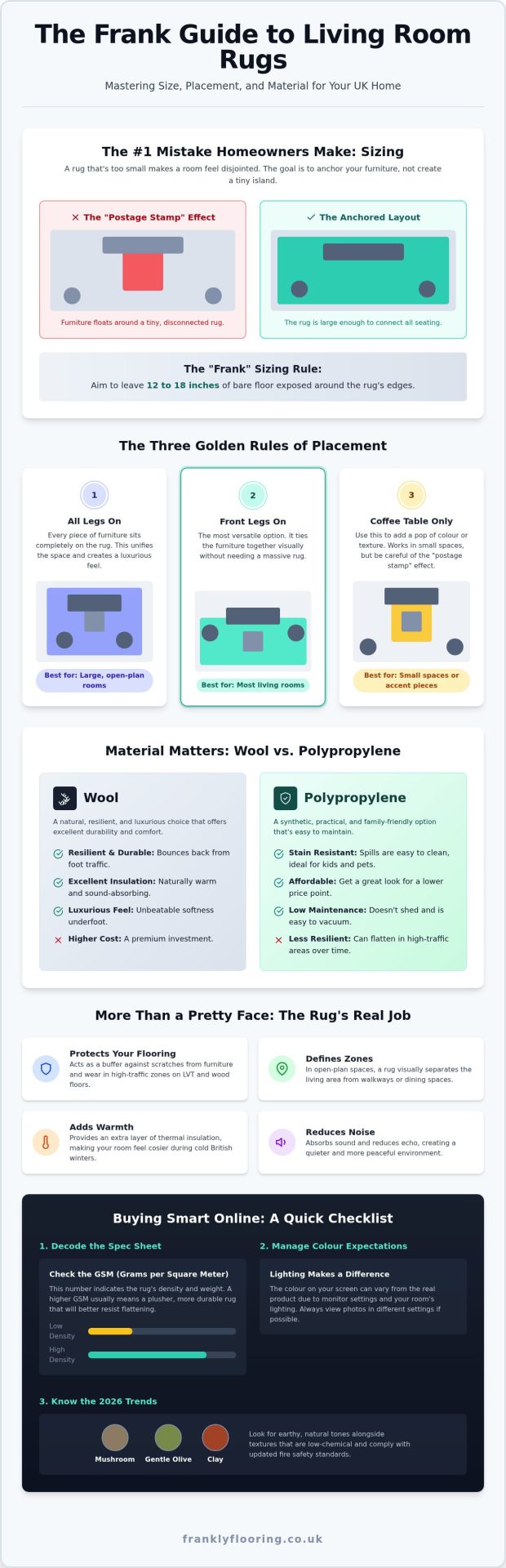
When browsing for living room rugs uk, the most common mistake is picking a size that’s too small. We see it all the time. A homeowner falls in love with a pattern but settles for a compact size to save a bit of money. Frankly, a tiny rug makes even the most expensive room look disjointed and cheap. It creates a “postage stamp” effect where your furniture looks like it’s floating on an island rather than being part of a cohesive design. The golden rule is simple: if in doubt, go bigger.
To avoid this, you need to measure your space with precision. Aim to leave between 12 and 18 inches of bare floor exposed around the edges of the rug. This creates a frame that highlights your LVT or wood flooring while still providing that soft, grounded feel in the centre. Before you hit the checkout, grab some masking tape. Map out the dimensions of the rug on your floor. This physical outline helps you visualize how the rug interacts with your walkways and furniture before you commit to the purchase. While you’re focusing on the physical footprint, don’t ignore what’s inside the fibres. Selecting an environmentally preferable carpet or rug material ensures your home remains healthy while looking great.
Standard UK rug sizes usually fall into categories like 120x170cm or 160x230cm. A 120x170cm rug is often best as an accent in a very small lounge, while the 160x230cm is the workhorse of the average British semi-detached home. If you’re unsure which size works best for your specific room, you can browse our curated rug range to see how different dimensions look in real-world settings.
The Three Golden Rules of Placement
Choosing where your furniture sits on the rug defines the room’s energy. In large, open-plan spaces, the “All Legs On” approach is best. This means every piece of furniture in the seating group sits entirely on the rug, creating a distinct room-within-a-room. For most standard lounges, the “Front Legs Only” rule is the sweet spot. It connects the furniture to the rug without requiring a massive, custom-sized piece. Avoid the “Floating” look, where no furniture touches the rug, unless you’re using a very small accent piece for a specific decorative purpose.
Adapting to Your Furniture Layout
Your sofa type dictates your rug needs. A corner sofa requires a larger rug that extends at least 20cm past the sides to maintain visual balance. If you have a traditional three-piece suite, centre the rug with your main focal point, usually the fireplace or the TV unit. This symmetry creates a sense of calm and order. Always ensure the rug is wide enough so that when you’re sitting on the sofa, your feet are comfortably on the textile, not the cold floor.
Material Matters: Choosing the Right Fabric for UK Households
Selecting living room rugs uk usually starts with a colour or pattern, but the material is what determines if you’ll still love that purchase in three years. Each fibre has a specific job. Wool is the gold standard for longevity. It contains natural lanolin, which creates a built-in stain barrier and allows the fibres to bounce back after being crushed by heavy furniture. If you’re looking for an investment piece that lasts a decade, wool is the frank choice. However, it does shed initially, which is a natural characteristic often left out of high-pressure sales pitches.
For busy households with children or pets, polypropylene is our top recommendation. It’s a synthetic workhorse that is often bleach-cleanable and incredibly resistant to fading. You get the look of a premium textile without the constant worry of a spilled glass of red wine. If your priority is pure softness, polyester and microfibre rugs offer the plushness of a cloud underfoot, though they don’t always have the structural resilience of wool or polypropylene in high-traffic walkways.
If you prefer a rustic or coastal aesthetic, jute and sisal are excellent natural options. They bring a unique, organic texture to a room. Just be aware that these aren’t the softest choices for lounging on the floor, and they can be tricky to clean if they get wet. It’s also worth noting that rugs can trap pollutants and allergens like dust mites and pet dander. Choosing the right material and maintaining it properly is as much about your home’s air quality as it is about the decor.
Synthetic vs Natural Fibres
Natural fibres like wool and jute offer unmatched character and eco-friendly credentials, but they often come with a higher price tag. Synthetics provide incredible value and durability. If you’re dealing with “muddy paws” daily, a high-quality synthetic rug will likely serve you better than a delicate natural weave. In sun-drenched conservatories or south-facing lounges, synthetic fibres also tend to hold their colour longer than natural dyes, which can fade under intense UV exposure.
Understanding Pile Height
Pile height is a practical decision, not just a stylistic one. Short pile rugs are the easiest to vacuum and are generally better for allergy sufferers because they don’t hide as much dust. Deep pile or “shaggy” rugs offer maximum comfort and a luxury feel, but they require more maintenance to keep them looking fresh. Flatweave rugs have no pile at all. These are the ideal choice for placing under dining tables or in very high-traffic zones because they are durable, easy to clean, and furniture slides over them without snagging.
The Perfect Pair: Matching Your Rug to Your Flooring Type
Most people choose living room rugs uk based on the pattern or colour they see on a screen. They rarely think about the floor underneath until the rug is delivered and starts sliding across the room. A rug doesn’t exist in a vacuum; it interacts with your subfloor every time you walk on it. If you’ve recently installed laminate flooring, a rug is a smart way to prevent furniture legs from causing unsightly scratches. However, without the right preparation, that same rug can become a slip hazard or even cause permanent damage to your investment.
One of the most common issues we see involves Luxury Vinyl Tile (LVT). Many cheap rugs use a rubber or latex backing to prevent sliding. Over time, the chemicals in these backings can react with the surface of the LVT, leading to permanent yellow discolouration. It’s a frustrating mistake that’s easily avoided by choosing the correct underlay. Frankly, an underlay is non-negotiable. It provides the necessary grip for safety, adds a layer of comfort, and acts as a breathable barrier between the rug and the floor. You can view our range of rugs and accessories to find the right combination for your specific floor type.
Hard Flooring Considerations
When placing a rug on wood or LVT, the backing material is your first priority. Avoid heavy rubber backings and opt for natural jute or woven foundations instead. To add extra cushion and prevent “creeping,” we recommend a felt or dual-grip underlay. This is particularly useful if you want to manage the transition height. A thick rug on a hard floor can create a significant lip that’s easy to trip over. A tapered underlay helps smooth out this transition, making the room safer for children and elderly residents.
Soft Flooring (Rug on Carpet)
The “Rug on Carpet” debate is a classic in British interior design. Some people love the layered look, while others think it’s a recipe for disaster. If you’re placing a rug over an existing carpet, contrast is your best friend. A rug with a similar texture or colour to the carpet beneath it will just look like a patch. Go for a different pile height or a bold pattern to create a clear visual boundary. The main technical challenge here is bunching and ripples. Because carpet has a “nap” or direction, the rug will naturally want to move along with it. To fix this, you need specialized “carpet-to-rug” grippers that use tiny hooks to lock the two textiles together, ensuring the surface stays flat and trip-free.
Buying Rugs Online: How to Ensure Quality and Longevity
Buying living room rugs uk online can feel like a bit of a gamble. You can’t reach through the screen to feel the pile or check the weight of the backing. To bridge that gap, you need to become an expert at reading the technical spec sheet. Look specifically for the weight, often listed as GSM (grams per square metre). This is the most reliable indicator of density. A higher GSM generally means more material has been used, resulting in a rug that feels more substantial and resists flattening over time. If a listing hides this information, it’s usually because the rug is thinner than it looks in the photos.
Colour is the next hurdle. Every phone and laptop screen has a different brightness setting, which can make a “mushroom” tone look like a “clay” tone. When you’re browsing, try to view the product photos on at least two different devices. You should also consider your room’s lighting. A rug that looks bright in a studio-lit photo will appear much darker in a north-facing UK lounge with limited natural light. We also suggest performing a “Frank” check on the construction details. Look for close-up photos of the edges. Quality rugs feature reinforced binding or surging that prevents the edges from fraying within the first few months of use.
When your rug arrives, don’t worry about a slight “new rug smell” or edges that curl up. This is just off-gassing from the packaging and tension from being rolled tightly for delivery. Simply back-roll the rug or place a few heavy books on the corners for 24 hours to settle the fibres. It’s a normal part of the process for high-quality textiles.
Maintenance and Cleaning Tips
Once your rug is down, your goal is to keep it looking fresh. The golden rule of vacuuming is to avoid the beater bar on looped or delicate weaves. Those rotating brushes can snag the fibres and cause premature fuzzing. For emergency spills, remember: blot, don’t rub. Rubbing pushes the liquid deeper into the backing and can damage the pile structure permanently. We also recommend rotating your rug every six months. This ensures even wear from foot traffic and prevents one side from fading faster due to sun exposure through your windows.
Why Order from Frankly Flooring?
We’ve spent over 20 years in the industry, and we’ve seen every high-pressure sales tactic in the book. At Frankly Flooring, we do things differently. We offer transparent pricing with no hidden delivery costs across the UK, so the price you see is the price you pay. Our range is carefully curated; we only stock living room rugs uk that meet our strict standards for technical craftsmanship and long-term value. We’re a family-run business, which means when you ask for advice, you’re talking to people who actually know flooring and care about the long-term character of your home.
Ready to Ground Your Living Room Design?
Choosing the right textile for your home is a balance of technical specs and personal style. We’ve looked at why sizing is the most critical decision you’ll make and how material choices can either simplify your life or add to your maintenance list. Whether you’re protecting brand-new LVT from scratches or layering a pattern over an existing carpet, the right choice ensures your space feels intentional and complete.
Finding the best living room rugs uk doesn’t have to be a guessing game when you focus on weight, density, and proper underlay. As a family-run UK business with over 20 years of flooring expertise, we’re here to help you get it right the first time. We offer direct-to-door national delivery on our entire collection, so you can skip the high-pressure sales tactics and shop with confidence.
Frankly, your perfect floor is just a few clicks away. Browse our full range of quality living room rugs and take the first step toward a more comfortable, cohesive home. Your project deserves a finish that lasts.
Frequently Asked Questions
What is the most durable rug material for a living room with pets?
Polypropylene is the most durable choice for households with pets. It’s a synthetic fibre that resists moisture and can often be cleaned with a mild bleach solution if needed. Unlike some natural fibres, it doesn’t absorb odours as easily and stands up to “muddy paws” without staining. If you want the longevity of a wool rug but have active dogs, look for high-density synthetic blends that offer a balance of softness and resilience.
How do I stop my living room rug from sliding on wood floors?
You should always use a dedicated anti-slip underlay to stop a rug from sliding on hard wood floors. A felt or dual-grip underlay is the best option because it provides a physical barrier and extra cushioning. Avoid cheap, thin rubber mats that can sometimes perish and stick to your floor’s finish. A quality underlay keeps your living room rugs uk safely in place while also protecting the wood from the abrasive underside of the rug.
Can I put a rug over a carpet in my lounge?
You can certainly put a rug over a carpet, but you need to use a specialized “carpet-to-rug” gripper to prevent it from bunching. Carpet has a natural direction or “nap” that causes rugs to creep across the room as you walk on them. Using a gripper with tiny hooks keeps the surface flat and safe. It’s a great way to add a splash of colour or define a zone without replacing your entire floor.
What size rug do I need for a 3-seater sofa?
A 160x230cm rug is the standard minimum for a typical 3-seater sofa, but a 200x300cm size often looks more balanced. The rug should be wide enough to extend at least 20cm past the sofa’s arms on both sides. This ensures your feet land on the textile when you’re sitting down. Using the “front legs on” rule helps anchor the furniture and prevents the rug from looking like a small, floating island in your lounge.
How often should I professionally clean my living room rug?
Most living room rugs uk should be professionally cleaned every 12 to 18 months to remove deep-seated grit that regular vacuuming misses. If you have pets or a high-traffic household, you might want to schedule a clean once a year. Between professional visits, regular maintenance like blotting spills immediately and rotating the rug will extend its life. This prevents the fibres from becoming permanently crushed or matted in specific walkways.
Is a wool rug worth the extra cost compared to synthetic?
A wool rug is worth the extra cost if you’re looking for a long-term investment that lasts 10 years or more. Wool has natural resilience and a built-in stain barrier thanks to its lanolin content. However, synthetic options like polypropylene offer better value for high-spill areas or rooms with heavy sun exposure. If you’re likely to change your decor every few years, a high-quality synthetic rug provides a stylish look without the premium price tag.
Will a rug damage my LVT or laminate flooring?
A rug won’t damage LVT or laminate flooring if you use a breathable, non-rubber underlay. The main risk to LVT is plasticiser migration, where chemicals in rubber-backed rugs react with the floor and cause permanent yellow staining. On laminate, the danger is grit trapped under the rug acting like sandpaper. Using a quality felt or dual-grip underlay prevents these issues, keeping your subfloor in pristine condition while providing extra warmth and acoustic benefits.
How do I get the creases out of a new rug?
You can get creases out of a new rug by back-rolling it tightly in the opposite direction for a few hours. Once laid flat, place heavy books or furniture on the corners and edges for 24 to 48 hours to help the fibres settle. If the rug was rolled tightly for delivery, it just needs a bit of time and gravity to relax. Avoid using a steam iron, as excessive heat can damage synthetic fibres or shrink natural ones.