Navigating the world of flooring can feel like wading through an alphabet soup of acronyms. LVT, LVP, SPC… it’s easy to get lost and wonder if you’re just looking at a more expensive version of the vinyl from your grandmother’s kitchen. You might be asking yourself, “Does it look authentic?” or “Is it actually durable?” Frankly, these are valid questions. So let’s cut through the noise and answer the fundamental question: what is LVT flooring? It’s one of the most popular and versatile materials on the market today, but only if you understand what you’re actually buying.
This guide is our honest, straightforward answer. We’re going to break down exactly what Luxury Vinyl Tile is made of, explore the different types available, and discuss its real-world benefits without the usual sales fluff. We’ll show you where it shines in a modern British home and how it stacks up against other popular choices like laminate. By the time you’ve finished reading, you’ll have the clarity and confidence to decide if LVT is the right foundation for your space, from the initial subfloor preparation to the final, seamless fitting.
Key Takeaways
- This guide answers what is lvt flooring by breaking down its multi-layered design, explaining how it achieves both its impressive durability and realistic appearance.
- Discover the key differences between ‘Click’ and ‘Glue Down’ LVT, helping you decide on the best fitting method for your specific room and subfloor.
- Uncover the practical, real-world benefits of LVT, from its water-resistant properties to its hard-wearing nature, making it a sound choice for busy areas of your home.
- Move past common misconceptions about vinyl. We tackle the myths head-on to give you the confidence to choose LVT for your project.
Deconstructing LVT: What Is It Actually Made Of?
Let’s start with the basics. LVT stands for Luxury Vinyl Tile. It’s a sophisticated, multi-layered floor covering designed to offer the stunning look of natural materials like wood or stone without the associated drawbacks or maintenance. If your mind immediately goes to the thin, curling sheet vinyl of yesteryear, it’s time for a reset. Modern LVT is a robust, premium product, worlds away from its predecessors in both quality and construction. So, to truly understand its value, we need to answer the core question: what is LVT flooring actually made of?
The secret to its impressive performance lies in its clever, multi-layered construction. Each layer has a specific job, and together they create a floor that is durable, beautiful, and practical.
The Anatomy of an LVT Plank: A Layer-by-Layer Breakdown
Think of an LVT plank as a high-tech sandwich. Each component plays a crucial role in the final product’s look, feel, and longevity.
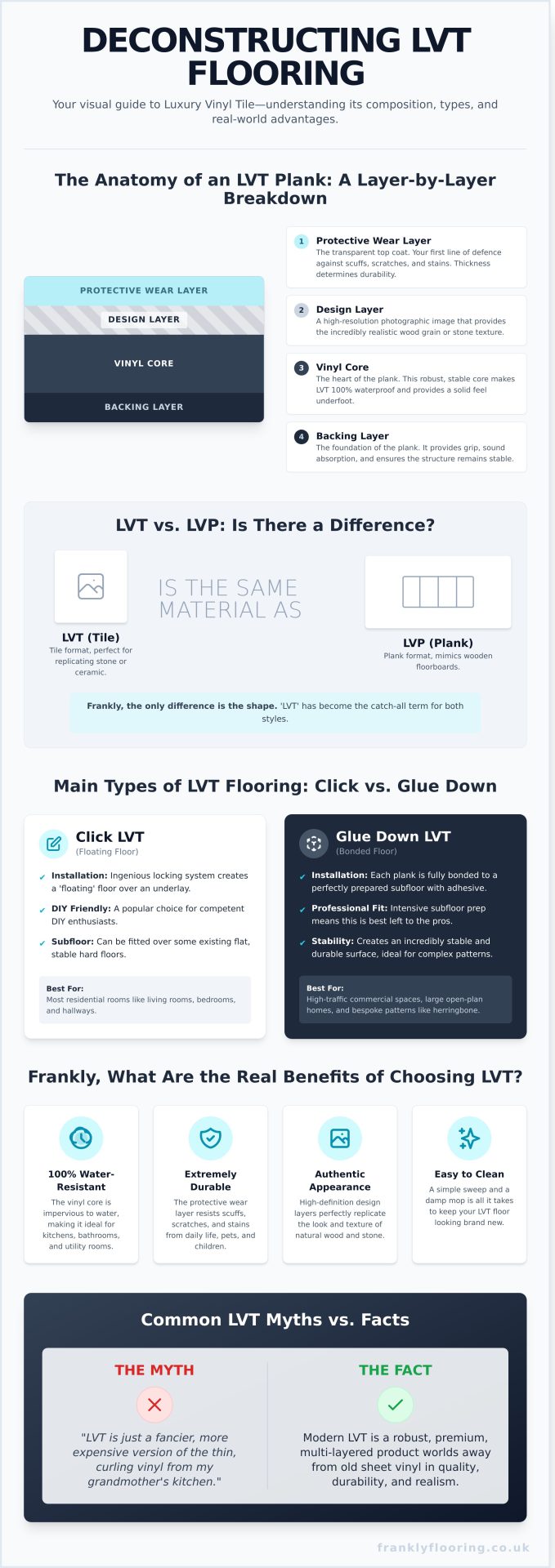
- The Protective Wear Layer: This is the transparent top coat, your first line of defence against daily life. It shields the floor from scuffs, scratches, and stains, and its thickness is a key indicator of the floor’s overall durability in busy homes.
- The Design Layer: Here lies the aesthetic appeal. A high-resolution photographic image is printed onto this layer, providing the incredibly realistic wood grain or stone texture that LVT is known for.
- The Vinyl Core: This is the heart of the plank, providing stability and structure. This robust core is what makes LVT 100% waterproof and gives it a solid feel underfoot, a significant evolution from older forms of vinyl composition tile which lacked this modern resilience.
- The Backing Layer: This is the foundation of the plank. It provides grip, helps with sound absorption, and ensures the entire structure remains stable once fitted to your subfloor.
LVT vs. LVP: Is There a Difference?
You’ll often see the terms LVT and LVP (Luxury Vinyl Plank) used, which can be confusing. Frankly, the material itself is identical. The only difference is the shape it comes in.
LVT is produced in a tile format, perfect for replicating stone or ceramic looks in kitchens and bathrooms. LVP comes in a plank format to convincingly mimic wooden floorboards in living areas and hallways. Over time, ‘LVT’ has simply become a convenient, catch-all term that the industry and customers use for both styles. So, whether you’re choosing a tile or a plank, you’re getting the same layered, hard-wearing technology.
The Main Types of LVT Flooring: Click vs. Glue Down
Now that you have a clearer idea of what is LVT flooring, the next practical question is how it’s fitted. LVT comes in two primary types, defined by their installation method: Click and Glue Down. Frankly, the right choice isn’t just a matter of preference; it depends on your subfloor, the room in question, and your confidence in tackling a DIY project.
Choosing the correct type is crucial for a floor that not only looks great but lasts for years. Let’s break down the differences.
Click LVT (Floating Floor)
As the name suggests, Click LVT planks and tiles feature an ingenious locking system. Each piece clicks securely into the next, creating a ‘floating’ floor that sits on top of an underlay without being permanently fixed to the subfloor. This makes it a popular choice for competent DIY enthusiasts and allows for fitting over some existing hard floors, provided they are flat and stable. It’s an excellent, straightforward solution for most residential rooms like living rooms, bedrooms, and hallways.
Glue Down LVT
Glue Down LVT involves fully bonding each plank or tile directly to a perfectly prepared subfloor using a strong adhesive. This method creates an incredibly stable and durable surface, a key benefit noted by industry bodies like the World Floor Covering Association for high-traffic environments. While it demands more intensive subfloor preparation and is best left to professional fitters, its stability makes it the go-to choice for commercial spaces or large, open-plan homes. It is also essential for creating bespoke patterns like herringbone, where every piece must be held rigidly in place.
| Feature | Click LVT | Glue Down LVT |
|---|---|---|
| Installation Method | Planks click together (floating) | Bonded to subfloor with adhesive |
| DIY Friendliness | High (with basic skills) | Low (professional fitting recommended) |
| Stability | Good | Exceptional |
| Best For | Most residential rooms | High-traffic areas, large spaces, custom patterns |
What is Rigid Core LVT (SPC)?
Rigid Core is an evolution of Click LVT, engineered for even greater performance. The ‘SPC’ stands for Stone Plastic Composite-a core layer made from a blend of limestone powder and stabilisers. This creates a board that is significantly denser, more rigid, and less prone to dents from dropped items. It is also far more stable against temperature changes, making it ideal for conservatories or rooms with large windows and direct sunlight. Explore our huge range of Click and Rigid Core LVT flooring to see the quality for yourself.
Frankly, What Are the Real Benefits of Choosing LVT?
We’ve covered the technical side of what LVT flooring is, but let’s be frank-what you really want to know is what it can do for your home. Why is it one of the most popular and practical flooring choices in the UK today? The answer lies in a combination of resilience, style, and straightforward common sense. It’s not just about what it’s made of; it’s about how it performs in a real, busy household.
Incredibly Durable and Hard-Wearing
Life is tough on floors. From pet claws and children’s toys to shuffling furniture and constant foot traffic, a floor needs to be resilient. LVT is built for this. Its secret is a transparent, commercial-grade wear layer that protects the design beneath from scratches, scuffs, and stains. This is why it’s not only perfect for busy hallways and kitchens at home but is also trusted in demanding commercial spaces like shops and offices-a true testament to its toughness.
100% Waterproof for Peace of Mind
Here’s a simple, game-changing fact: LVT is completely waterproof. Because it’s made from vinyl, spills, splashes, and moisture are no threat at all. This gives you the freedom to have a beautiful wood or stone effect in rooms where you’d never risk the real thing, like bathrooms, kitchens, and utility rooms. Unlike laminate, which can swell and warp, or real wood that can stain, LVT offers total peace of mind. A spilled drink is just a simple wipe away.
Stunningly Realistic Designs
Forget any old-fashioned ideas about vinyl flooring. Modern LVT uses advanced high-definition printing and texturing technologies to create astonishingly realistic finishes. Many quality ranges feature ‘Embossed in Register’ (EIR) texture, which means the surface grain you feel underfoot perfectly matches the printed wood or stone design you see. Whether you want the warm, rustic charm of oak planks, the cool elegance of slate tiles, or a modern polished concrete look, the variety is immense and the quality is exceptional.
Easy to Clean and Maintain
Your time is valuable, and you shouldn’t have to spend it on complex floor care. LVT is wonderfully low-maintenance. Its solid, non-porous surface requires nothing more than a regular sweep or vacuum to remove dust, followed by an occasional wipe with a damp mop. There’s no need for expensive waxes, oils, or polish. This sealed surface is also more hygienic, as it doesn’t trap dust or allergens, making it an excellent choice for allergy sufferers and families with pets.
Where to Use LVT Flooring: A Room-by-Room Guide
One of the greatest strengths of Luxury Vinyl Tile is its sheer versatility. It’s built to handle the demands of modern life, making it a sound choice for almost any room in the house. Understanding what is LVT flooring is the first step; the next is picturing how its unique benefits can transform your own home. Let’s walk through the key areas where LVT truly excels.
Kitchens and Bathrooms
Frankly, these are the rooms where LVT was born to perform. Its 100% waterproof construction provides complete peace of mind against splashes, spills, and moisture. Unlike the cold shock of ceramic tiles, LVT feels significantly warmer and softer underfoot. Many styles also feature a textured, slip-resistant surface, adding a crucial layer of safety. Better still, everyday messes are incredibly easy to wipe clean, keeping your floor looking pristine with minimal fuss.
Living Rooms and Hallways
As the busiest thoroughfares in your home, hallways and living rooms demand a floor that can withstand constant foot traffic. LVT’s tough, protective wear layer is designed exactly for this, resisting the scuffs, scratches, and impacts of daily life. For an added touch of comfort, it’s perfectly compatible with underfloor heating systems, creating a cosy and inviting atmosphere. With a vast array of authentic wood and stone effects available, you can achieve a high-end look without compromising on practicality.
Bedrooms and Conservatories
In spaces designed for relaxation, comfort is key. LVT offers a quieter and warmer feel underfoot than laminate flooring, helping to soften acoustics and add a touch of cosiness to your bedroom. For conservatories, where temperatures can fluctuate dramatically throughout the day, we recommend a Rigid Core LVT. Its enhanced dimensional stability prevents the planks from expanding or contracting, ensuring a flawless finish that lasts. This adaptability makes it a smart, long-term investment for even the most challenging rooms.
Ready to see the possibilities? Find the perfect style for your room in our LVT flooring collection.
Common LVT Myths and Misconceptions
When considering a new floor, it’s easy to get bogged down by outdated information. Frankly, there’s a lot of confusion surrounding Luxury Vinyl Tile, and these myths can prevent homeowners from choosing a truly fantastic, practical product. Let’s clear the air and address some of the most common concerns we hear.
Myth 1: ‘It’s just expensive, old-fashioned vinyl.’
This is perhaps the biggest misunderstanding, and it comes from lumping LVT in with traditional sheet vinyl. The simple truth is they are fundamentally different. Sheet vinyl is a thin, single layer of material, whereas LVT is a highly engineered product built in multiple layers. This robust construction-including a rigid core, a design layer, and a tough wear layer-gives it superior stability and durability. Understanding what is LVT flooring means recognising it as a modern solution, far removed from the lino of decades past.
Myth 2: ‘It looks cheap and plasticky.’
We understand the concern. Early versions of vinyl flooring certainly didn’t do much for realism. However, modern LVT is a world apart. The secret lies in the high-definition photographic layer, which captures the character of real wood or stone with incredible accuracy. Many premium ranges also feature ’embossed in register’ textures, where the surface feel precisely matches the visual grain or pattern. The result is a floor that looks and feels remarkably authentic. But don’t just take our word for it; the best way to judge is to see the quality for yourself with a sample.
Myth 3: ‘LVT is bad for the environment.’
As homeowners become more eco-conscious, this is a valid question. Thankfully, manufacturers have made significant strides in sustainability. Many reputable LVT brands now incorporate recycled materials into their products. Furthermore, its exceptional durability means a much longer lifespan than many other flooring types, reducing the cycle of replacement and waste. Most modern LVT products are also phthalate-free and have low VOC (Volatile Organic Compound) emissions, contributing to healthier indoor air quality for your family. It’s a choice you can feel good about for years to come.
Frankly, Is LVT the Right Choice for Your Home?
By now, you should have a clear picture of Luxury Vinyl Tile. It’s far more than just a practical choice; its sophisticated layered construction delivers remarkable durability, while its aesthetic versatility makes it a stunning addition to almost any room. We hope this guide has provided a straightforward answer to the question, what is lvt flooring, and helped you see past the common myths to its true potential.
Choosing a new floor is a significant decision, and you deserve honest guidance. As a family-run business with over 20 years of experience, we pride ourselves on transparent pricing and expert advice. Why not see the quality for yourself? We deliver free samples right to your door. Ready to see the difference? Browse our extensive range of LVT flooring online. We’re here to help you find the perfect foundation for your home.
Frequently Asked Questions About LVT Flooring
What is the main difference between LVT and laminate flooring?
When people ask what is LVT flooring, they often compare it to laminate. The main difference is the core material. LVT is made from PVC vinyl, making it 100% waterproof and ideal for bathrooms or kitchens. Laminate has a high-density fibreboard (HDF) core, which can swell if exposed to significant moisture. Frankly, for areas prone to spills and splashes, LVT is the more durable and reliable choice, offering peace of mind where laminate cannot.
How long does LVT flooring typically last in a home?
In a typical home, you can expect high-quality LVT flooring to last between 15 and 25 years, sometimes even longer with proper care. The key factor is the thickness of the protective wear layer-a thicker layer offers greater resistance to scratches and scuffs from daily foot traffic. We always recommend choosing a product with a wear layer appropriate for the room’s usage to ensure you get the best possible longevity from your new floor.
Can you use a steam mop on LVT flooring?
We strongly advise against using a steam mop on LVT flooring. The intense heat and moisture can penetrate the seams between the planks, weakening the adhesive on glue-down tiles and potentially causing the vinyl layers to warp or peel over time. Using a steam mop will almost certainly void your manufacturer’s warranty. A simple pH-neutral cleaner and a damp mop are all you need to keep your LVT looking its best and protect your investment.
Do you need underlay for LVT flooring?
Whether you need underlay depends entirely on the type of LVT you choose. Glue-down LVT is fitted directly onto a perfectly prepared subfloor, so no underlay is used. However, ‘click’ or ‘floating’ LVT systems often require a specific LVT underlay to support the locking mechanism and provide acoustic benefits. Some modern rigid core LVT products even come with a pre-attached underlay, which can simplify the fitting process.
Is LVT flooring cold or noisy to walk on?
LVT is surprisingly comfortable underfoot. It feels warmer and softer than stone, ceramic tile, or even laminate because its vinyl composition doesn’t conduct cold as readily. While not as quiet as a thick carpet, it has inherent sound-dampening properties that reduce the ‘click-clack’ noise often associated with hard flooring. This makes it a great, practical solution for busy family homes where both comfort and durability are important.
Can you install LVT flooring over existing tiles or floorboards?
It is sometimes possible to fit LVT over existing hard floors like tiles, but we approach this with caution. The existing surface must be completely level, secure, and clean. Any imperfections, such as grout lines on tiles, will need to be smoothed over with a levelling compound to prevent them from showing through the LVT over time. For a guaranteed seamless and long-lasting finish, proper subfloor preparation is always the most reliable path.