
By 2026, the UK market for luxury vinyl flooring is projected to outpace traditional laminate by a significant margin because homeowners are finally ditching the idea that vinyl has to look plastic. You likely want a floor that handles a dropped mug of tea or a pair of wet Wellies without warping, but you don’t want your hallway looking like a budget lino job from 1982. It is completely natural to feel overwhelmed by technical talk regarding 0.5mm wear layers or subfloor imperfections that might ruin the final finish.
We believe in being refreshingly direct about what you are buying. This guide provides the frank truth about selecting a floor that mimics natural oak or slate while remaining entirely waterproof and durable. We will explain exactly what you are paying for, from the difference between sheet vinyl and luxury tiles to the essential preparation needed for a seamless fit. You will get a clear, straightforward path to a beautiful home without any high-pressure sales tactics or hidden extras.
Key Takeaways
- Understand how modern vinyl flooring has evolved from basic lino into a high-definition, durable solution for every room in your British home.
- Learn the frank differences between sheet rolls and Luxury Vinyl Tiles (LVT) to determine which format offers the best long-term value for your project.
- Discover why the wear layer is more critical than overall thickness and how to identify the correct rating for heavy-traffic areas.
- Avoid the common pitfall of ‘telegraphing’ by learning how proper subfloor preparation ensures a seamless, professional finish.
- Master the basics of accurate measuring and why ordering samples is essential to see how colours behave under your home’s specific lighting.
What is Modern Vinyl Flooring? (The Frank 2026 Overview)
Modern vinyl flooring has moved far beyond the thin, bubbly sheets found in 1970s kitchens. Today, it is a sophisticated, multi-layered synthetic product engineered for performance. The core usually consists of polyvinyl chloride (PVC) mixed with stabilisers and pigments to create a durable base. On top of this sits a high-definition photographic layer, which is then protected by a clear, hard-wearing surface. To understand the technical build, What is vinyl flooring? provides a detailed breakdown of these specific layers and the manufacturing history behind them.
To be frank, the industry has changed. We no longer see the repetitive, flat patterns of the past. By 2026, printing technology has reached a point where 4K textures can replicate the grain of European oak or the cool touch of Italian slate with startling accuracy. It’s the UK’s most popular choice for wet rooms, such as bathrooms and utility spaces, because it offers a level of moisture resistance that natural materials simply cannot match. We don’t view it as a fake version of wood. It’s a practical, waterproof alternative designed specifically for the chaos of a busy family home.
Frankly Flooring believes in choosing the right tool for the job. If you have a house full of muddy paws or children prone to spilling juice, you need a floor that doesn’t require constant worrying. This material is built to withstand the pressure of daily life while maintaining a premium look that lasts for decades.
Vinyl vs Lino: Clearing Up the Confusion
True Linoleum is a natural product made from linseed oil, pine rosin, and cork dust, first patented in 1860. It’s a different beast entirely from vinyl flooring, which is 100% synthetic. In the UK, “Lino” has become a colloquial term used to describe almost any flexible floor covering, but the two materials behave very differently under pressure. While lino is biodegradable and eco-friendly, it requires regular sealing to stay water-resistant. Vinyl is naturally waterproof from the moment it is fitted. It won’t rot or warp if a pipe leaks, making it a far more reliable choice for modern British plumbing.
Why Vinyl is the Practical Choice for 2026
For most homeowners, the decision comes down to three factors: moisture, warmth, and upkeep. Vinyl is 100% waterproof, which gives it a significant advantage over laminate or solid timber. If you fit a wooden floor in a bathroom, you’re inviting trouble. Vinyl solves that problem instantly. It’s also much warmer underfoot than stone or ceramic tiles. While a slate tile might sit at a chilly 12 degrees Celsius on a winter morning, vinyl typically maintains a surface temperature closer to 18 degrees, making those early morning trips to the kettle much more pleasant.
Maintenance is straightforward. You don’t need expensive oils or specialised waxes. A simple sweep and a damp mop with a pH-neutral cleaner will keep it looking fresh for its entire 25-year residential warranty. We advise avoiding steam mops, as the intense heat can eventually weaken the adhesive bonds over time. Stick to the basics, and the floor will take care of itself. It’s an honest, hard-working material that doesn’t demand your weekends are spent on hands and knees scrubbing grout lines.
Sheet Vinyl vs Luxury Vinyl Tiles (LVT): Which Format Wins?
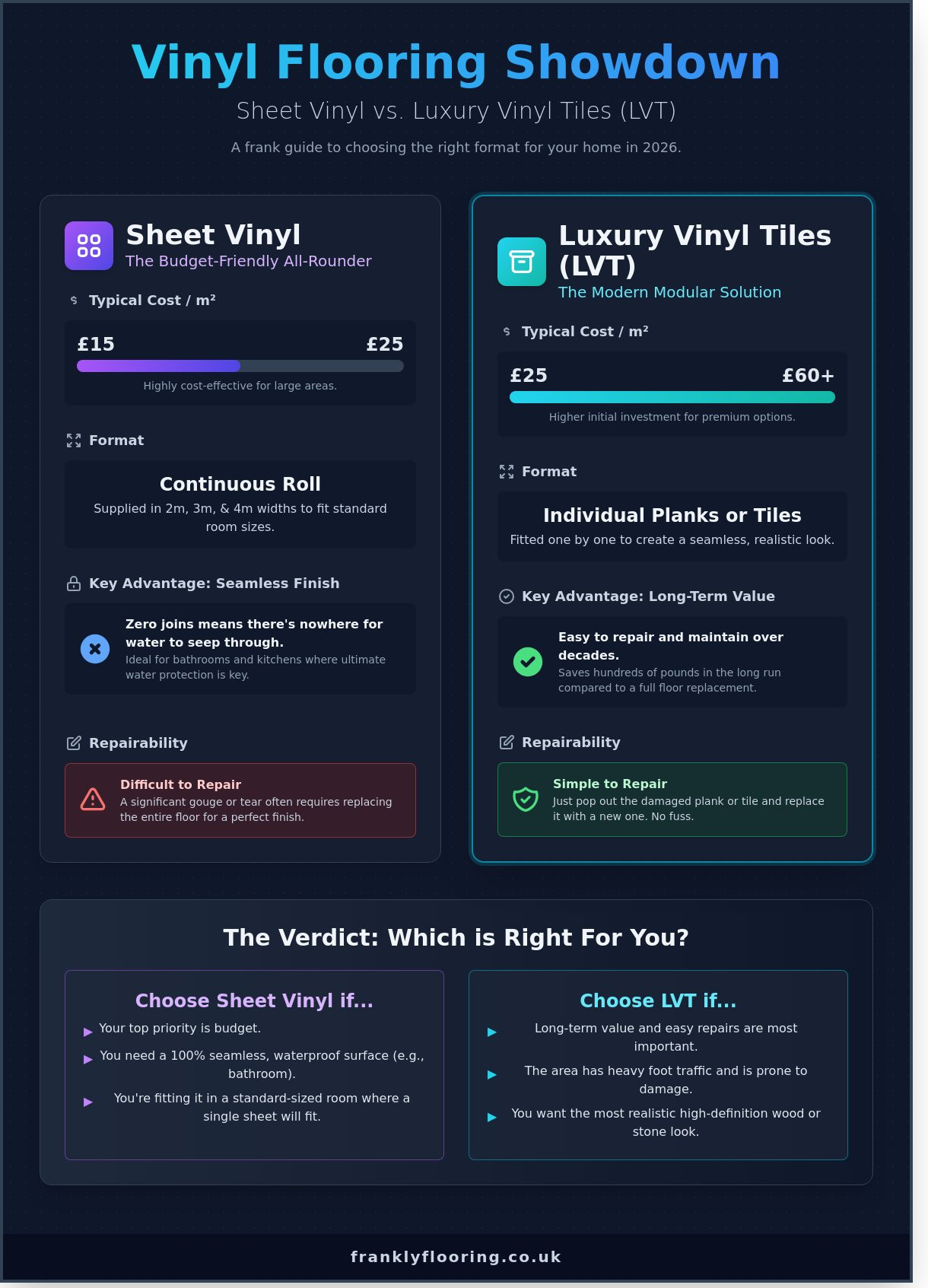
Choosing the right format of vinyl flooring often comes down to a balance between your immediate budget and the long-term demands of your home. We see many customers torn between the traditional roll and the modern modular tile. To be frank, both have their place, but they serve very different purposes. Sheet vinyl is a continuous piece of material, while LVT consists of individual planks or tiles that we fit one by one to create a seamless look.
The cost implications are the first thing most people notice. You can pick up a decent sheet vinyl for £15 to £25 per square metre. LVT, however, usually starts at £25 and can easily exceed £60 per square metre for premium brands. While the initial price of sheet vinyl is lower, LVT often provides better long-term value. If you gouge a hole in a sheet floor, you usually have to replace the entire room to get a perfect finish again. With LVT, we simply pop out the damaged plank and click or glue a new one in its place. It is a straightforward fix that saves you hundreds of pounds in the long run.
Sheet Vinyl: The Budget-Friendly All-Rounder
Sheet vinyl remains a staple in UK homes because it is incredibly practical. We typically supply it in 2m, 3m, and 4m widths. These specific sizes are designed to minimise or completely eliminate seams in standard British bathrooms and kitchens. Having no joins means there is nowhere for water to seep through, which is why it stays a top choice for splash-prone areas. You will usually choose between two types of backing:
- Felt-back vinyl: This is more forgiving if your subfloor isn’t perfectly smooth. It provides better thermal insulation and feels slightly warmer underfoot.
- Foam-back vinyl: This offers more “bounce” and acoustic cushioning. It is ideal for upstairs rooms where you want to dampen the sound of footsteps.
This format is best suited for small bathrooms or rental properties where you need a clean, fresh look without a massive investment. It is a functional, honest product that does exactly what it says on the tin.
Luxury Vinyl Tiles (LVT): The Premium Alternative
If you want a floor that guests will mistake for real oak or stone, LVT is the winner. The aesthetic advantage comes from the realistic textures and bevelled edges. These tiny grooves between tiles create shadows that mimic the depth of natural materials. You have two main fitting options: “click” systems, which float over the subfloor, and “glue-down” versions, which are bonded directly to a prepared surface. For a deeper look at how this compares to other hard floors, you can read our LVT vs Laminate Flooring guide.
Quality is also a matter of safety and health. We only source materials that meet strict standards, especially regarding the chemicals used in manufacturing. A 2016 study by the NCBI highlighted concerns regarding phthalates in vinyl flooring, which led to much tighter regulations across the industry. Today, the high-quality LVT we fit is produced with much safer, phthalate-free plasticisers, ensuring your indoor air quality remains high.
LVT is the superior choice for high-traffic hallways and open-plan living areas where you want a “wow” factor that lasts for 20 years or more. If you want to see the difference in person, visit our showroom to feel the textures for yourself. We can show you exactly how each format handles daily wear and tear before you make a decision.
The Technical Bit: Wear Layers, Slip Ratings, and Durability
When you browse samples in a showroom, it is tempting to judge quality by how thick the plank feels between your thumb and forefinger. This is often a mistake. While the total thickness of the plank helps with subfloor hide and height matching, it does not dictate how well the floor resists the daily grind of family life. The real hero is the wear layer. A wear layer is the transparent top coating that protects the design from scratches and scuffs. If this layer is too thin, your beautiful floor will look tired within three years, regardless of how thick the core is underneath.
We believe in being direct about what you are paying for. Choosing the right vinyl flooring requires a look at the technical specifications rather than just the price tag. In the UK, most residential products range from a 0.2mm to a 0.55mm wear layer. This might sound like a negligible difference, but in terms of longevity, it is the difference between a floor that lasts five years and one that stays pristine for twenty. Higher quality products also address modern health concerns. A 2019 study by Duke University highlighted the presence of harmful SVOCs in vinyl flooring manufactured with older, less regulated methods. By choosing modern, high-specification options from trusted British suppliers, you ensure your home environment remains safe for children and pets.
Understanding Wear Layers for Longevity
For low-traffic areas like a guest bedroom that sees use only 15 nights a year, a 0.2mm to 0.3mm wear layer is perfectly adequate. However, we frankly wouldn’t recommend this for your main living areas. For hallways, kitchens, and stairs, a 0.5mm wear layer or above is essential. This thicker coating acts as a robust insurance policy for your floor. It provides a deeper buffer against grit, pet claws, and the 1,500 kg of pressure exerted by a heavy fridge being moved for cleaning. Investing in a 0.55mm layer typically adds a 15 or 20 year residential warranty to your purchase, providing peace of mind that a budget 0.2mm product simply cannot offer.
Slip Resistance and Safety Standards
Safety is not an area where you should cut corners, especially in British bathrooms where humidity levels are consistently high. Slip resistance is measured on an “R” scale, ranging from R9 to R13. Most domestic vinyl flooring carries an R10 rating. This means the surface has enough friction to prevent accidents in areas that occasionally get wet, such as a kitchen where a stray splash from the sink is common.
- R10 Rating: The standard for most UK homes, providing a balance between easy cleaning and sufficient grip for bathrooms and kitchens.
- R11 Rating: Offers a more pronounced texture. This is often required for utility rooms or commercial settings where floors stay wet for longer periods.
- Textured Surfaces: High-quality vinyl uses “embossed-in-register” technology. This follows the grain of the wood or stone pattern, providing a tactile, slip-resistant surface that looks authentic.
If you are fitting out a wet room or a high-use commercial utility space, you should look specifically for safety vinyl. These products often incorporate aluminium oxide or silicon carbide particles into the wear layer to ensure a permanent slip-resistant finish. It is a straightforward choice: prioritise the R rating in any room where you might find yourself walking with damp feet. We prefer to get these technical details right at the start so your floor remains a foundational asset to your home for decades.
When undertaking such commercial projects, it’s also the perfect time to update facility signage and graphics. For custom safety decals and trade show materials that complete a professional refurbishment, many businesses turn to design experts like Graphic Cabin.
Preparation and Fitting: The Secret to a Seamless Finish
The hard truth about vinyl flooring is that the finish depends entirely on what lies beneath it. You could buy the most expensive, high-end product in our showroom, but if your subfloor is uneven, the result will look amateur. We often talk about “telegraphing” in the trade. This happens when tiny imperfections, such as a stray 2mm grit particle or a slightly raised floorboard nail, eventually press through the material. Over 12 to 18 months, these bumps become visible on the surface, ruining the sleek look you paid for and causing premature wear.
Frankly, deciding whether to tackle this yourself or hire a professional depends on the room’s complexity. If you are fitting a simple, square utility room with no tricky cuts, you might manage it with the right DIY Flooring Accessories. However, for hallways with multiple door frames or bathrooms with pedestal sinks, a professional fitter is an investment in your home’s value. A botched DIY job often costs 30% more to fix than the original fitting fee would have been.
Subfloor Preparation Lingo
If you have wooden floorboards, ply-boarding is mandatory. We use a minimum of 6mm flooring-grade plywood to create a flat, stable surface. This prevents “gapping,” where the natural movement of floorboards causes the vinyl to pull or tear. On concrete bases, we apply a self-levelling screed. This liquid compound smooths out dips and ridges to create a glass-like finish. Before any adhesive touches the floor, we conduct a moisture test using a hygrometer. If the relative humidity (RH) is above 75%, the adhesive will likely fail, leading to bubbles and lifting.
The Fitting Process: What to Expect
Acclimatisation is a step you cannot skip. You must leave your vinyl in the room where it will be fitted for at least 24 to 48 hours. This allows the material to adjust to the local temperature, typically between 18 and 22 degrees Celsius. If you fit it while it is cold, it will expand as the room warms up, causing unsightly ripples. During the fitting, we use the “scribe and cut” method. This involves using a specialist knife and a steady hand to follow the exact contour of your skirting boards and pipes for a snug, professional fit.
- Adhesive: Best for rooms larger than 12 square metres or high-traffic areas like kitchens. It ensures the floor stays perfectly still.
- Loose-lay: Suitable for smaller rooms like downstairs WCs. It is quicker to install but relies on the weight of the material and perimeter grip to stay in place.
Getting the preparation right is the only way to ensure your floor lasts its full 15 or 20-year lifespan. If you are unsure about your subfloor’s condition, we can provide an honest assessment during a home visit.
Buying Vinyl Flooring Online: The Frankly Flooring Way
Buying vinyl flooring online shouldn’t feel like a gamble. Many large corporate retailers rely on glossy, computer-generated renders and high-pressure countdown timers to force a quick sale. We do things differently. As a family-run UK business, we prioritize the longevity of your project over a quick transaction. We know that a floor is the foundation of your home’s character, and getting it right requires a bit of honest, practical preparation.
Precision is your best friend when ordering. Use a metal tape measure for every calculation; fabric tapes can stretch, leading to errors of up to 15mm over a 5-metre span. You must measure the absolute widest and longest points of your room, making sure to account for every alcove, doorway, and bay window. If your room isn’t a perfect square, treat it as a series of rectangles and add them together. Accuracy at this stage prevents the frustration of being one plank short on fitting day.
Choosing a local, family-run specialist beats the ‘big box’ experience because we provide accountability. You aren’t just an order number in a database; you’re a homeowner we want to help. We understand the specific nuances of UK housing, from Victorian floorboards to modern screeds, and we’re here to offer the kind of advice a corporate chatbot simply can’t replicate.
The Benefit of Samples
Digital screens are notorious for distorting tones. A shade that looks like warm oak on your tablet might arrive looking like cool ash because of your screen’s backlight. Our straightforward sample service lets you see the true colour and feel the texture of the vinyl flooring in your own environment. Place your samples against your skirting boards and furniture under both natural morning light and your evening lamps. This ensures the material works with your home’s unique lighting conditions before you commit to a full order.
Your 2026 Vinyl Flooring Checklist
- Check 1: Have you measured the widest and longest points, including all recesses and doorways?
- Check 2: Is your subfloor clean, dry, and level? A deviation of more than 3mm over a 2-metre area can cause clicking or uneven wear.
- Check 3: Have you chosen the correct wear layer? A 0.5mm wear layer is ideal for high-traffic kitchens, while a 0.3mm layer is often sufficient for bedrooms.
Getting your 2026 flooring project right first time
Choosing a new floor shouldn’t be a gamble. You now understand that whether you pick the seamless finish of sheet vinyl or the rugged versatility of LVT, technical specs like R10 slip ratings and a 0.55mm wear layer are what truly matter for longevity. We’ve spent over 20 years as a family-run business learning that proper subfloor preparation is the only way to avoid a poor finish. It’s why we focus on giving you the straight facts rather than a high-pressure sales pitch. Buying vinyl flooring online is straightforward when you have a team that values honesty over a quick win.
We’ve built our reputation on transparent advice and reliable service. We provide national UK delivery on our entire range of floors and accessories, ensuring your materials arrive safely at your door. You’re choosing a foundation for your home that needs to stand up to daily life for the next decade. We’re ready to help you get it laid right. Shop our honest range of Vinyl Flooring at Frankly Flooring
Take your time to browse our collection and find the style that fits your space. We’re here to help whenever you’re ready to start your home’s transformation.
Frequently Asked Questions
Is vinyl flooring better than laminate for kitchens?
Vinyl is generally better for kitchens because it’s completely waterproof. While laminate is durable, its wood-fibre core can swell and blow if spills aren’t dried within 30 minutes. In a busy kitchen where 100% moisture resistance is vital, vinyl flooring is the more reliable choice for long-term durability. It won’t peel or warp even if your dishwasher leaks or a drink is dropped during the dinner rush.
How long does vinyl flooring typically last?
A standard vinyl floor typically lasts between 10 and 20 years if it’s fitted correctly and maintained well. If you opt for a premium LVT with a 0.55mm wear layer, many manufacturers provide a 25-year residential guarantee for your peace of mind. Regular sweeping and avoiding harsh chemicals will ensure your floor stays looking new for at least 15 years without needing a costly replacement or professional restoration.
Can I lay new vinyl flooring over my old floor?
You can often lay vinyl over existing hard surfaces like ceramic tiles or wood, provided they’re flat, dry, and securely fixed. If the old floor has grout lines deeper than 3mm, we apply a smoothing compound to prevent those lines showing through the finish. We don’t recommend fitting over carpet, as the 10mm pile will cause the new floor to flex and crack. Taking the time to prep properly ensures a much better result.
Is vinyl flooring waterproof or just water-resistant?
Most modern vinyl flooring is 100% waterproof rather than just water-resistant. This means it can handle standing water for 24 hours or more without any structural damage or swelling. It’s the reason we recommend it for 90% of bathroom projects where splashes and high humidity are a daily occurrence. You can mop it thoroughly without worrying about the planks delaminating, making it a truly practical choice for a busy family home.
Do I need underlay for my vinyl flooring?
Whether you need underlay depends entirely on the type of vinyl you’ve selected for your home. Many click-system planks come with a 1mm acoustic backing already built-in, so adding more would actually make the floor too bouncy. For glue-down options, we focus on the subfloor preparation instead, ensuring it’s level to within 2mm over a 2-metre area. This creates a seamless, solid finish that feels firm and quiet under your feet.
How do I clean and maintain my new vinyl floor?
Cleaning is a simple process involving a daily sweep and a weekly mop with a pH-neutral solution. Don’t use steam mops, as the 100-degree heat can damage the protective wear layer or melt the adhesive over time. Using felt pads under heavy furniture can reduce the risk of deep scratches by about 80%. It’s about being proactive; a little bit of regular care goes a long way in protecting your investment for years.
Is vinyl flooring suitable for underfloor heating?
Vinyl is perfectly compatible with underfloor heating, provided the system doesn’t exceed 27 degrees Celsius. It’s an efficient heat conductor, which is why it’s chosen for 75% of new-build ground floor installations across the UK. It provides a comfortable, even temperature that makes cold winter mornings much more bearable. Just ensure the heating has been commissioned properly before you start the fitting process to avoid any sudden temperature shocks to the material.
Why is my vinyl flooring bubbling or lifting at the edges?
Bubbling or lifting is usually caused by trapped moisture in the subfloor or a lack of expansion gaps during fitting. If a 5mm gap wasn’t left around the room’s edge, the floor will hit the wall and lift as it expands with temperature changes. Poor subfloor preparation accounts for roughly 70% of these preventable installation issues. It’s why we always insist on a thorough moisture test before we begin any work in your home.