
A beautiful floor is a foundational element of your home’s character, but a pattern as intricate as herringbone wood flooring can easily become a structural headache if you prioritize aesthetics over engineering. It’s a common mistake to assume that all oak planks are created equal. In reality, the success of your project depends entirely on matching material stability to the specific environment of your home. Whether you’re worried about the floor warping or simply feeling overwhelmed by different wood grades, you deserve a straight-talking assessment before you invest.
We believe in being completely frank about what works and what doesn’t. You want a timeless, high-value result without the fear of gapping or the nagging suspicion that you’re overpaying for lower quality. This guide provides the honest truth about material stability and the specific finishes that stand up to daily life. We’ll walk you through the essential technical requirements, from moisture control and acoustic performance to the 2026 shift toward warmer, natural tones. You’ll gain the clarity needed to choose a floor that offers both lasting style and genuine substance.
Key Takeaways
- Compare solid and engineered wood construction to ensure your floor remains stable despite the UK’s shifting humidity.
- Learn why European Oak is the benchmark for high-quality herringbone wood flooring and how plank size dictates the room’s final feel.
- Understand the technical necessity of subfloor preparation and the complex layout methods required to achieve a perfectly balanced pattern.
- Master a maintenance routine that protects your investment by identifying the common cleaning tools that can cause irreversible damage.
What is Herringbone Wood Flooring? Beyond the Aesthetic
At its core, herringbone wood flooring is a parquet style defined by the arrangement of uniform rectangular blocks. Unlike standard straight planks that run parallel to your walls, these blocks are laid at 90-degree angles to each other. The Herringbone pattern is remarkably ancient; it was first engineered by the Romans for their roads because the interlocking blocks distributed weight more effectively and resisted shifting. By the 16th century, this practical engineering moved indoors to French chateaus, evolving into the refined flooring style we recognize today. It’s a design that functions as a structural tool for your eyes. Because the pattern points in multiple directions, it creates a sense of movement that can make a cramped hallway feel significantly more expansive.
The UK wood and laminate flooring market generated revenue of USD 2,900.1 million in 2024 and is expected to grow steadily through 2030. This growth isn’t just about fashion. It’s about the enduring value of materials that feel permanent. Herringbone is technically a sub-category of “parquet” flooring, a term that covers any decorative pattern made from small wood blocks. While many people use the terms interchangeably, understanding the specific geometry of herringbone is the first step toward a successful installation.
Herringbone vs Chevron: Don’t Make a Costly Mistake
In the spirit of being frank, we should clarify the difference between herringbone and chevron before you buy. It’s a common mistake to think they’re the same, but the geometry is entirely different. Herringbone blocks have square ends and meet at a 90-degree angle, creating a “broken” zig-zag. Chevron blocks are cut at a 45-degree angle to create a continuous “V” or arrow shape. You’ll likely pay more for Chevron because the precision mitre cuts result in higher material wastage during production. Herringbone offers a more textured, staggered look that feels more authentic in a traditional British home.
Why Herringbone is Trending in 2026
Why is herringbone wood flooring everywhere in 2026? Homeowners are moving away from cold, grey synthetics and embracing “quiet luxury.” This trend prioritizes high-quality, natural materials that feel grounded and calm. The pattern is a chameleon; it grounds a minimalist new-build just as well as it restores a Victorian terrace. Beyond the aesthetics, it’s a smart financial move. Buyers in 2026 view high-quality wood flooring as a permanent upgrade, which adds measurable resale value to a property compared to standard carpets or laminates.
Engineered vs Solid Wood: The Frank Reality for UK Homes
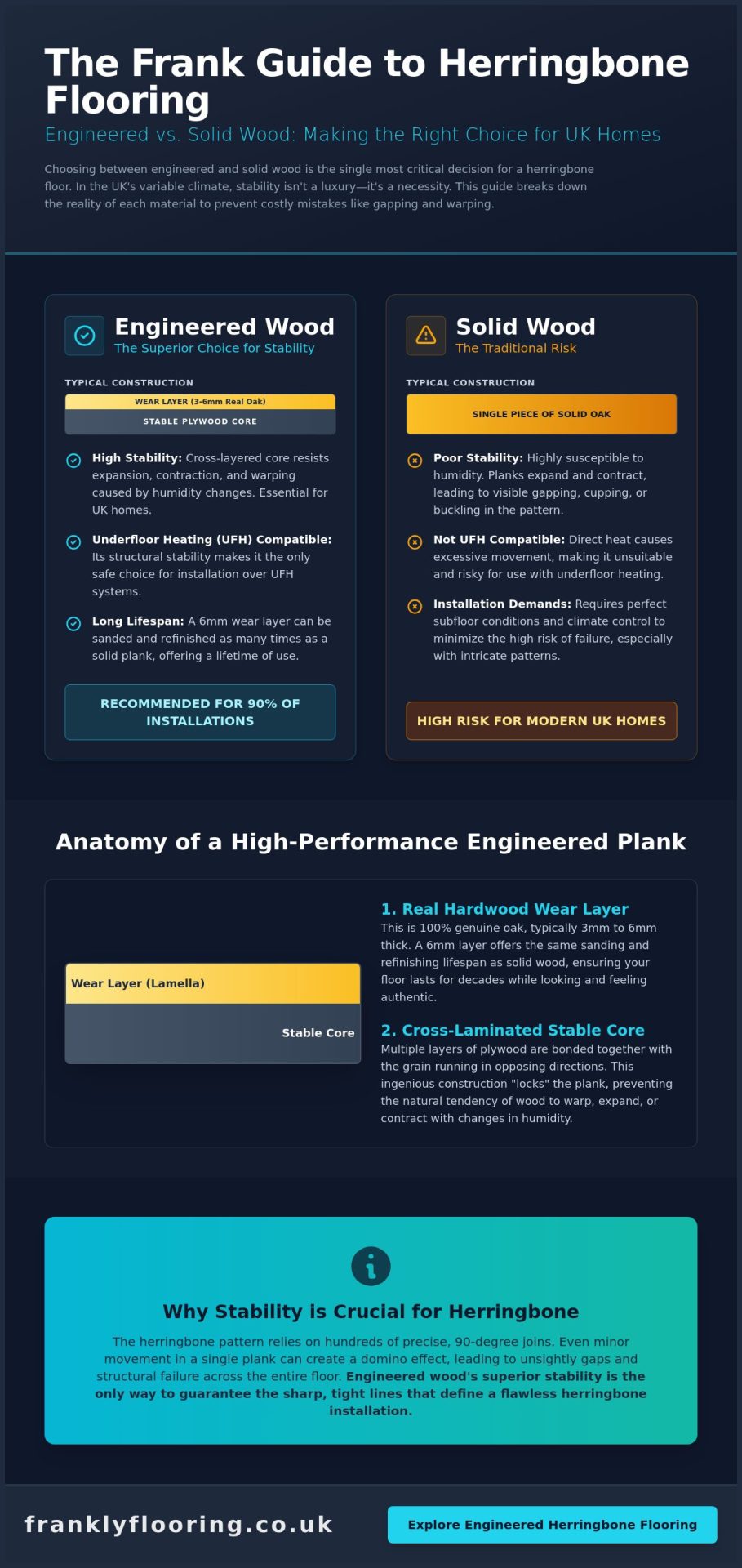
Choosing between solid and engineered wood is the most critical decision you’ll make for your project. While solid wood is often viewed as the traditional choice, it’s essentially a natural sponge that reacts to every change in humidity. In the UK’s variable climate, solid planks expand and contract significantly. When you’re dealing with the intricate 90-degree joins of herringbone wood flooring, even minor movement can lead to visible gapping or structural buckling. This is why we recommend engineered wood for roughly 90% of modern residential installations.
Engineered wood isn’t “fake” wood. It’s a high-performance material consisting of a genuine hardwood top layer bonded to a stable core. This study on engineered wood flooring properties highlights how modern manufacturing techniques create a product that resists the natural urge of timber to warp. You get the exact same aesthetic and feel underfoot as solid oak, but with a level of reliability that solid timber simply cannot match in a centrally heated home.
The Anatomy of an Engineered Herringbone Plank
The quality of your floor depends on the wear layer, also known as the lamella. This top slice of oak usually ranges from 3mm to 6mm. A 6mm wear layer can be sanded and refinished just as many times as a solid block, effectively lasting a lifetime. Below this sits the core, typically made from high-quality birch plywood or a cross-layered softwood. By gluing these layers with the grain running in opposite directions, the plank becomes structurally “locked.” It cannot expand or contract with the same force as solid wood, which is vital for maintaining the tight lines of a herringbone wood flooring pattern. If you’re looking for quality materials that stand the test of time, you can browse our selection of wood flooring to see these specifications in practice.
Compatibility with Underfloor Heating (UFH)
If you have underfloor heating, the debate is over. Engineered wood is the only safe option. Solid wood dries out too quickly when heated from below, leading to cracks and failed joints. Engineered planks distribute heat more evenly and remain stable as long as you keep the floor temperature under 27°C. For a deeper dive into the technical specs and how to choose the right thickness, read our Engineered Wood Flooring: The Frank 2026 Guide. It covers everything from thermal resistance to the best adhesives for a permanent bond. This ensures your home stays warm without compromising the integrity of your floor’s structure.
Choosing Your Style: Grades, Finishes, and Species
Picking the right species is the first step toward a successful project. While walnut and maple have their fans, European Oak remains the gold standard for herringbone wood flooring in 2026. It’s dense, takes stain beautifully, and offers the structural integrity required for small block patterns. In 2026, we’re seeing a decisive shift away from cool greys toward warmer, natural tones like honey and caramel, which highlight the organic beauty of the grain. Beyond the wood itself, the geometry of the plank dictates the final atmosphere. A classic 70x350mm block provides a traditional, intricate feel. If you want a more contemporary look, larger “modern” formats like 120x600mm can make a room feel less busy and more expansive. We often find that homeowners overlook how light interacts with the pattern; installing the blocks so they point toward the main light source highlights the natural grain and depth of the wood.
Pattern definition also relies on the edge of the plank. A “square edge” creates a seamless, flat surface that looks like a single sheet of wood. However, we usually recommend a 4V bevel. These tiny chamfered edges create a subtle shadow line between every block, ensuring the iconic zig-zag pattern remains visible even in low light. Without this definition, the intricate layout can sometimes get lost in a sea of uniform colour.
Understanding Wood Grades: Select, Natural, and Rustic
The “grade” of the wood refers to its visual character, not its quality or durability. Being frank about your aesthetic goals will save you from a costly mismatch.
- Select (AB Grade): This is the cleanest option. You’ll see minimal knots and very little colour variation. It’s perfect for modern, minimalist interiors where you want the pattern to be the star without the distraction of natural imperfections.
- Natural (ABC Grade): This is a balanced middle ground. It features some colour variation and small, healthy knots. It looks like real timber without feeling overwhelming.
- Rustic (CDE Grade): This grade embraces the tree’s history. Expect large knots, filled cracks, and significant colour shifts. It’s the ideal choice for period properties or anyone wanting a floor with an immediate sense of age and character.
Lacquered vs Oiled Finishes: Which is More Practical?
The finish you choose determines your Saturday morning cleaning routine. A UV Lacquer acts as a hard-wearing shield. It’s a “sealed” approach that’s incredibly practical for high-traffic kitchens or hallways because spills sit on the surface. Natural Oil is different; it soaks into the wood fibres, offering a breathable, matte look that feels more authentic underfoot. While oiled floors age gracefully, they require periodic re-oiling to maintain their protection. If you have pets or a busy household, a brushed texture is a wise addition. By brushing away the softer springwood, the surface becomes harder and much better at hiding the inevitable scratches of daily life.
Installation and Subfloor Prep: The Parts Others Skip
Installing herringbone wood flooring isn’t a weekend DIY project for the faint of heart. While a standard plank floor is relatively straightforward, a herringbone layout is easily two to three times more complex. This isn’t just marketing talk to encourage professional fitting; it’s a matter of basic geometry. If your first row is off by even a fraction of a millimetre, that error multiplies across the room. By the time you reach the far wall, the pattern will be visibly crooked. Precision is the only way to avoid a result that looks amateurish.
Professional floorlayers use the “centre line” method to prevent this drift. They snap a chalk line down the exact middle of the room and build the pattern outward from that spine. This ensures the “peaks” of the zig-zag are perfectly balanced. You also need to account for significant wastage. Because of the many diagonal cuts required at the perimeter, you must order 10-15% more material than your measured square footage. Finally, never rush the process. Your wood must acclimatise in the room where it will be laid for at least 48 to 72 hours. This allows the timber to reach equilibrium with the room’s temperature and humidity before it’s fixed in place.
Subfloor Requirements: Level, Dry, and Clean
A herringbone pattern is unforgiving of lumps and bumps. We follow a strict rule: the subfloor must be level to within 3mm over a 2-metre span. If your floor has a dip, the small blocks will “bridge” the gap, leading to vertical movement and annoying squeaks. Moisture is the other silent killer. You must test concrete screeds and wooden subfloors with a calibrated hygrometer before laying a single block. For those transitioning between different floor types, choosing the right Carpet Gripper and matching transition bars is essential for a professional, flush finish between your new wood and adjacent rooms.
Glue-Down vs Click-System Herringbone
You’ll see two main types of herringbone wood flooring on the market: glue-down and click-system. Click-system boards are often marketed as DIY-friendly, and while they’re easier to assemble, they often lack the solid feel of a bonded floor. We usually recommend a fully bonded installation using professional adhesive. This creates a “hollow-free” sound underfoot and provides superior stability, especially over underfloor heating. It turns the floor into a single, structural mass that feels permanent and high-quality. If you’re ready to start your project with the right materials, you can shop our full range of wood flooring today.
Maintenance and Longevity: Keeping the “Frank” Promise
Investing in herringbone wood flooring is a commitment to the long-term character of your home. To ensure that investment matures well, you need a maintenance routine that prioritizes protection over aggressive cleaning. Daily care is simpler than many retailers suggest. A quick sweep with a soft-bristled broom or a vacuum set to the hard-floor setting is usually enough to remove abrasive grit. For deeper cleaning, use a microfibre mop that’s barely damp to the touch. If you can see standing water on the surface after mopping, you’re using too much. Wood is a natural material that reacts to moisture; excess water can seep into the 90-degree joints, causing the edges of your blocks to swell or “cup.”
We need to be direct about the “No-Go” list. Never use a steam mop on your wood floor. The high-pressure steam forces moisture deep into the grain and can dissolve the adhesives holding your engineered layers together. Similarly, avoid generic supermarket floor cleaners that contain wax or ammonia, as these leave a dulling residue that’s difficult to remove. When life happens and a drink spills, follow the 30-minute rule. While modern finishes are resilient, natural oak is porous. Wiping up liquids within half an hour prevents the moisture from penetrating the finish and staining the timber beneath.
Long-Term Care for Oiled vs Lacquered Floors
The finish you selected in the earlier stages of your project dictates your long-term strategy. Oiled floors are wonderfully forgiving because they can be refreshed without sanding. Every 12 to 24 months, a simple application of maintenance oil can restore the lustre and protective barrier. Lacquered floors are different. They act as a hard shield that eventually wears down in high-traffic areas. Instead of a full sand-back, you can often “screen and recoat” a lacquered floor every 5 to 7 years to keep it looking new. To prevent deep gouges in the first place, always use felt pads under the legs of your Quality Furniture. This small step is the most effective way to protect the intricate pattern from heavy movement.
Why Choose Frankly Flooring for Your Herringbone Project?
We’ve spent over 20 years as a family-run business in the UK flooring industry, and we’ve seen every trend come and go. Our “Frank” approach means we prioritize integrity over a quick sale. If we believe a specific herringbone wood flooring product isn’t suitable for your subfloor or your lifestyle, we’ll tell you. We provide national UK delivery and direct-to-consumer pricing, stripping away the overheads of high-pressure showrooms. You get professional-grade materials and technical expertise from a team that views your floor as a foundational element of your home’s identity, not just another transaction.
Invest in a Floor That Stands the Test of Time
Choosing the right herringbone wood flooring shouldn’t feel like a gamble. By now, you understand that engineered stability is the key to a successful UK installation and that subfloor preparation is the one step you can’t afford to skip. Whether you’ve settled on a clean Select grade or a characterful Rustic finish, the most important thing is that your choice matches both your home’s environment and your daily lifestyle. We’ve spent over 20 years as a family-run business helping homeowners avoid the common pitfalls of poor material selection and rushed installation prep.
Our commitment to you is simple: transparent, direct-to-consumer pricing and honest advice without the high-pressure showroom tactics. We provide national UK delivery on all our products, ensuring that high-quality materials are accessible wherever you’re located. It’s about providing a stress-free experience from the first sample to the final plank. Ready to find the perfect match for your property? Browse our full range of Herringbone Wood Flooring and order your samples today. You’re now equipped with the technical knowledge to build a floor that brings genuine character and lasting value to your home.
Frequently Asked Questions
Can I install herringbone wood flooring in a kitchen or bathroom?
Yes, you can install engineered herringbone wood flooring in a kitchen, provided you manage spills quickly. The stable core handles the temperature shifts of a kitchen well. However, we strictly advise against installing it in bathrooms. High humidity and the risk of standing water will eventually cause even the best engineered boards to fail. For wet areas, consider LVT alternatives that mimic the wood look without the risk of rot.
How much extra wood should I order for a herringbone pattern?
You should order 10% to 15% extra to account for wastage. The intricate 90-degree joins mean you’ll make far more diagonal cuts at the perimeter of the room than you would with straight planks. If your room has several alcoves or a fireplace, aim for the higher end of that scale. It’s much safer to have half a pack left over for future repairs than to run short mid-installation.
Is herringbone wood flooring more expensive than standard planks?
Yes, herringbone wood flooring is generally more expensive than standard straight planks. The manufacturing process for the smaller, precision-cut blocks is more intensive, leading to higher material costs. Additionally, the installation takes significantly longer because of the complex layout and the volume of cuts required. While the initial investment is higher, the measurable resale value it adds to a property often justifies the upfront cost for many UK homeowners.
Can herringbone wood flooring be installed over existing tiles or laminate?
You must remove existing laminate, but you can sometimes install over tiles if they’re perfectly flat and sound. The subfloor needs to be structural and level to within 3mm over a 2-metre span. Laminate is a “floating” floor and is too unstable to act as a base. If you’re laying over tiles, you’ll need to check the height of your doors and ensure the surface is clean and dry before applying adhesive.
How do I clean herringbone wood flooring without damaging the finish?
Use a soft-bristled broom or a vacuum on the hard-floor setting for daily grit removal. For a deeper clean, a microfibre mop that’s barely damp is the safest choice. We can’t be more direct about this: avoid steam mops at all costs. The heat and moisture will damage the finish and could cause the layers of your herringbone wood flooring to separate. Always use a dedicated wood floor cleaner rather than generic supermarket products.
What is the best underlay for engineered herringbone wood flooring?
The best underlay for engineered wood is a high-density, firm material specifically designed for wood flooring. If you’re using the glue-down method, you won’t use a traditional underlay as the boards are bonded directly to the subfloor. For floating installations, choose an underlay with a built-in moisture barrier and a high TOG rating if you have underfloor heating. A firm base is essential to prevent the joints from flexing and creaking.
Does herringbone flooring make a small room look smaller or larger?
Herringbone flooring actually makes small rooms look larger. The “V” shape of the pattern creates a sense of movement and leads the eye toward the walls, which creates an illusion of width. For the best results in a compact space, choose a medium-sized block and ensure the pattern points toward the main window. This helps the light follow the grain, making the room feel bright, open, and far more expansive.
Can I install herringbone wood flooring myself as a DIY project?
We don’t recommend herringbone as a DIY project unless you have significant experience in floor laying. The margin for error is incredibly slim. A mistake of just one millimetre at the start of the room will grow into a massive gap by the time you reach the other side. Professional fitters use specific layout techniques and specialized tools to ensure the pattern remains square. It’s a complex task where professional expertise pays for itself.