Choosing the cheapest artificial grass on the market is often the most expensive mistake a homeowner can make. It’s a classic case where a low upfront price tag masks poor UV resistance or a backing that falls apart after a single winter. You’ve likely spent hours scrolling through search results for the artificial grass cost uk residents are currently paying, only to feel more confused than when you started. It’s perfectly natural to worry about hidden fees or whether a DIY job will end up looking like a botched carpet fitting.
We believe in total candor when it comes to your garden. This guide provides a transparent, no-nonsense breakdown of what you should plan for in 2026. We’ll strip away the industry jargon to show you exactly where your money goes, from the raw material quality to the essential extras like weed membranes and waste disposal. By the end, you’ll have a realistic budget and the confidence to choose the right pile height for your family’s needs. This is about making an informed choice for a lawn that lasts, rather than just a quick fix that fades.
Key Takeaways
- Learn to navigate the 2026 price brackets for budget and luxury options to establish a realistic baseline for your garden transformation.
- Discover why pile density often outweighs pile height when determining the durability and long-term value of your lawn.
- Compare the total artificial grass cost uk projects incur when weighing up professional fitting against the savings of a DIY approach.
- Identify the essential “hidden” extras, from weed membranes to specialized edging, that prevent costly repairs further down the line.
- Understand how a direct-to-consumer approach offers high-end materials without the usual showroom markups.
Understanding Artificial Grass Costs per m2 in the UK
Calculating the artificial grass cost uk homeowners face starts with the sticker price, but that’s rarely the final figure. In 2026, global shipping rates and raw material scarcity have stabilized, yet import duties continue to influence the base cost of synthetic turf. It’s a complex market where a low price per square metre can sometimes lead to a higher total bill if you don’t account for how the material is actually sold and delivered. While the headline price per square metre might look attractive on a product page, the reality of your project’s total cost is shaped by the physical dimensions of the rolls and the inevitable waste created during the cutting process.
The history of artificial turf shows how far we’ve come from the hard, abrasive surfaces of the 1960s to the soft, polyethylene fibers used today. This evolution in material science is exactly what dictates the price tiers we see now. Modern manufacturing allows for varying levels of density, softness, and realism, each coming with its own price point. Understanding these tiers is the first step in building a budget that reflects your garden’s actual needs rather than just a best-guess estimate.
The Three Tiers of Artificial Turf Pricing
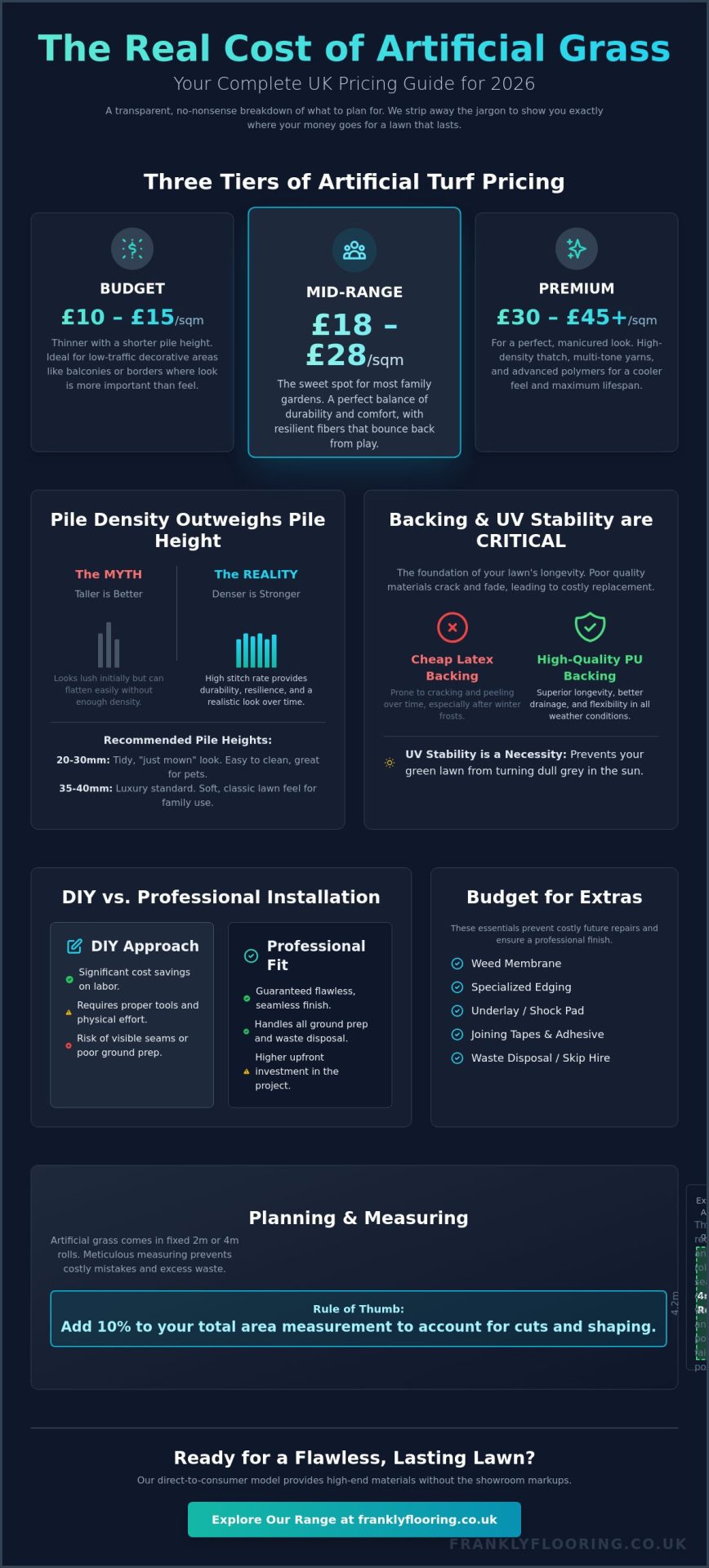
- Budget (£10–£15/sqm): These products are usually thinner with a shorter pile height. They’re ideal for low-traffic areas, such as balconies or small decorative borders, where the visual “green” is more important than a soft underfoot feel.
- Mid-Range (£18–£28/sqm): This is the sweet spot for most family gardens. You’ll find a balance of durability and comfort, with fibers designed to bounce back after children or pets have played on them.
- Premium (£30–£45+/sqm): At this level, you’re paying for high-density thatch and multi-tone yarns that mimic the look of a perfectly manicured lawn. These products often use advanced polymers that stay cooler in the summer sun and offer the longest lifespan.
Calculating Your Total Area and Wastage
Precision is your best friend when measuring a garden. Most artificial grass is manufactured in fixed roll widths of 2m or 4m. If your lawn is 4.2m wide, you’ll likely need to purchase two rolls and create a seam, or buy a much larger 4m roll and accept a significant amount of waste. This is why we recommend always adding 10% to your total square footage when planning your budget. It’s a small buffer that accounts for trimming around curved flower beds or irregular corners without leaving you short at the finish line.
Investing in a slightly larger roll often saves money by eliminating the need for expensive joining tapes and adhesives required for multiple seams. It’s about finding the most efficient way to lay the material while minimizing the number of seams across your new lawn. A single, seamless piece of grass not only looks better but also removes the most common failure point in any installation.
Choosing Quality: How Pile Height and Materials Impact the Price
Most people assume a taller grass is a better grass. It’s a common misconception that often inflates the artificial grass cost uk homeowners expect to pay. While height contributes to the visual “lushness,” it’s actually the stitch rate and pile density that determine how long your lawn stays upright. Density is essentially the weight of the yarn per square metre. More yarn means more resistance to foot traffic and a more realistic appearance over time. When you’re comparing options, don’t just look at the length of the blades; look at how many stitches are packed into every centimetre.
UV stability isn’t a luxury; it’s a necessity in the UK. Without it, your green lawn will turn a dull grey within a few seasons as the sun breaks down the plastic polymers. Similarly, the backing material serves as the foundation of the entire product. Cheap latex backings can crack and peel over time, while high-quality polyurethane (PU) backings offer better drainage and superior longevity. While we value the convenience of synthetic turf, scientific research on artificial lawns highlights the importance of choosing high-quality, long-lasting products to reduce the frequency of replacement and environmental impact.
Pile Height: Is Taller Always Better?
- 20mm–30mm: This range offers a tidy, “just mown” aesthetic. It’s much easier to clean, making it a practical choice for pet owners who need to manage waste efficiently.
- 35mm–40mm: This is the luxury standard. It provides that classic, soft-to-the-touch lawn feel that most families want for their main garden area. It’s thick enough to hide the backing but short enough to maintain its structure.
- 45mm+: Be wary of ultra-tall piles. Unless the density is exceptionally high, these long fibers tend to “lie down” under their own weight, leading to a matted look that’s difficult to brush back up.
Material Science: Polyethylene vs. Polypropylene
Polyethylene (PE) is the industry standard for a reason. It’s soft, realistic, and durable enough for daily family use. Polypropylene (PP) is stiffer and more abrasive. It’s often used in budget ranges or as a “thatch” layer—those curly brown fibers at the base—in premium products to provide extra support for the taller PE blades. If you need ultimate resilience, Nylon is the most robust material available. It handles heat and heavy use better than anything else, though it’s typically found at the top end of the market. If you’re unsure which material fits your specific garden layout, you can browse our curated range of artificial grass to see the differences in texture and density for yourself.
DIY vs. Professional Installation: Comparing the Real-World Costs
Deciding between a professional team and a weekend of hard labor is the biggest factor in your total project spend. While the artificial grass cost uk homeowners pay for just the materials remains consistent, the installation fee can double or triple that initial investment. It’s a choice between convenience and sweat equity. If your garden is a simple square with good drainage, DIY is a viable path to significant savings. However, if you’re dealing with slopes, complex curves, or boggy soil, a professional’s expertise becomes a form of insurance against future failure.
The Professional Quote Breakdown
A professional quote isn’t just for laying the grass; it’s for the earthworks. Industry averages in 2026 suggest that a professional installer’s day rate typically falls between £300 and £600. Most teams spend 70% of their time on excavation and sub-base preparation. They’ll remove roughly 75mm to 100mm of topsoil, replace it with a compacted layer of MOT Type 1, and finish with a smooth layer of sharp sand. This structural foundation ensures your lawn doesn’t sink or ripple. A pro also handles the technical finishing, such as invisible seams and secure pinning, which are the hallmarks of a high-quality transformation.
The DIY Budget Checklist
If you choose the DIY route, remember that “supply-only” doesn’t mean “no extra costs.” You’ll need to budget for tool hire and waste management. You’ll likely need a skip for the old turf, a turf cutter to save your back, and a vibrating plate to compact the stone layers. Don’t forget the logistical cost of bulk bag deliveries for your aggregates. For a standard 40sqm garden, a solo DIYer should expect to spend at least three full days of intense physical labor to complete the project from first dig to final brush.
A poor sub-base is the most common reason for artificial grass failure. If the ground isn’t compacted correctly, you’ll see dips and puddles within the first year. Fixing a sunken lawn often requires lifting the entire turf and starting the groundworks from scratch, which wipes out any initial DIY savings and significantly increases the total artificial grass cost uk projects end up requiring. Be honest about your own skill level and the time you have available before you commit to the dig.
The ‘Hidden’ Extras: Budgeting for Edging, Underlay, and Waste
The artificial grass cost uk residents calculate often fails to include the peripheral materials that actually hold the project together. While the turf is the star of the show, it relies on a supporting cast of aggregates, membranes, and fixings to stay functional. Ignoring these “hidden” extras during the planning phase is a recipe for budget creep. A professional finish isn’t just about the quality of the green fibers. It’s about what lies beneath and around them to ensure the lawn doesn’t shift, sink, or become overrun by weeds within the first twenty four months.
Waste disposal is frequently the least glamorous part of the budget, yet it’s often the most surprising. Removing existing turf and soil creates a staggering amount of heavy waste. A standard 6 yard skip in 2026 typically costs between £200 and £250. For larger gardens, you might need two. If you’re doing the work yourself, don’t underestimate the physical volume of dirt you’ll need to move before the first bag of stone even arrives at your property; for insights into professional skip solutions, you can visit Bin Hire Melbourne to see how they handle residential waste.
Groundwork and Drainage Materials
- Crushed stone and sand: You can’t just lay synthetic turf on top of soil. You’ll need a compacted sub-base of MOT Type 1 and a finishing layer of sharp sand to provide stability and drainage.
- Geotextile membranes: Skipping the weed membrane is a costly mistake. This heavy duty fabric prevents seeds in the soil from germinating while still allowing water to pass through to the ground below.
- Shock pads: These are an optional extra usually costing between £5 and £10 per sqm. They’re worth the investment if the lawn is a dedicated play area for children, as they provide a critical fall height safety rating and a much softer landing.
Finishing Touches and Maintenance
Your lawn needs weight to stay flat and look natural. Kiln dried sand is brushed into the pile to act as an “infill.” This sand weighs the grass down, protects the backing from UV rays, and keeps the individual blades standing upright. Without it, the grass will ripple and move over time. You’ll also need to budget for jointing tape and high strength adhesive for any seams. These small items seem insignificant, but for a garden with multiple curves and joins, the cost of specialized glue and tape adds up quickly. To get everything you need in one place, you can buy artificial grass and accessories directly from us to keep your project on track.
Once the lawn is down, maintenance is minimal but not zero. A stiff broom or a specialized power brush is essential for keeping the pile from matting in high traffic zones. While you’ll save a fortune on petrol for the mower and seasonal fertilizers, a small annual budget for cleaning solutions is wise if you have pets, as this helps manage odors and keeps the fibers looking fresh for a decade or more.
Investing in Quality: Why Frankly Flooring Offers the Best Value
The Frankly Flooring approach is built on a simple premise: you shouldn’t have to pay for an expensive showroom when you’re buying for your garden. By operating as a direct-to-consumer business, we remove the heavy overheads that typically inflate the artificial grass cost uk homeowners see at local retail parks. This doesn’t mean we compromise on material quality. Instead, we focus our investment on high-density fibers and durable backings that we’ve vetted through two decades of industry experience. We believe that professional-grade materials should be accessible to everyone, not just those with a luxury budget.
We prioritize absolute transparency in every transaction. When you reach the checkout, you won’t find any hidden surprises or “admin fees” tacked onto the end of your order. You get a clear, honest breakdown of your turf, any necessary adhesives, and the delivery costs upfront. This level of candor helps you stick to the budgets we discussed in earlier sections. It ensures your garden transformation remains a source of pride rather than financial stress. Whether you’re a trade professional or a first-time DIYer, we provide the technical support needed to ensure your installation is a success from day one.
Buying Online with Confidence
Our national delivery network is designed to be efficient and reliable. We’ve spent 20 years refining our logistics to ensure that bulky rolls of turf arrive at your doorstep in perfect condition, regardless of where you are in the UK. Being a family-run business means we take a personal interest in every project. We provide the same level of detailed advice to a homeowner as we do to our largest commercial clients. You can explore our full artificial grass range to see current 2026 pricing and compare density levels for yourself.
Complete Your Home Project
A garden transformation is often just one part of a larger home improvement journey. Many of our customers look to create a seamless transition between their indoor and outdoor living spaces. Using consistent, high-quality materials throughout your property adds a sense of character and longevity that cheaper alternatives simply can’t match. If you’re planning an indoor-outdoor flow, you might consider our engineered wood flooring for a natural look in the lounge that leads out to the lawn. For high-traffic entryways and kitchens that see a lot of “garden to house” foot traffic, our laminate flooring offers the durability needed to handle the occasional bit of grit or moisture. We’re here to guide you through every selection, ensuring your home looks as good as it feels.
Plan Your Perfect Garden Transformation
Planning a garden renovation requires more than just picking a pretty shade of green. You’ve seen how pile density and material choice impact longevity, and why cutting corners on the sub-base is a risk that rarely pays off. By accounting for the necessary extras like weed membranes and waste disposal from the start, you avoid the common pitfalls that inflate a project’s budget. Understanding the total artificial grass cost uk projects require in 2026 allows you to invest with confidence in a lawn that actually lasts.
At Frankly Flooring, we draw on over 20 years of experience as a family-run business to bring you professional-grade materials without the retail markup. Our direct-to-consumer model and national UK delivery network mean you get high-end quality delivered straight to your door. We’re here to provide the honest advice and reliable products you need to get the job done right the first time. Browse our range of quality artificial grass today and take the first step toward a lawn you’ll be proud of for years to come. Your dream garden is closer than you think.
Frequently Asked Questions
Is artificial grass cheaper than a real lawn over 10 years?
Artificial grass generally becomes more cost-effective than natural turf after the five to seven year mark. While the initial investment is higher, you eliminate the ongoing costs of petrol for mowing, seasonal fertilizers, and significant water usage during the summer months. Over a decade, the lack of maintenance expenses often offsets the upfront artificial grass cost uk homeowners pay to transform their space.
How much does it cost to install artificial grass on top of concrete?
Installing over concrete is typically less expensive than ground based projects because the structural foundation is already in place. You won’t need to pay for heavy excavation or bulk stone aggregates. However, you must budget for a high quality shock pad or specialized underlay to ensure proper drainage and to prevent the hard texture of the concrete from showing through the turf fibers.
Can I save money by laying artificial grass myself?
You can significantly reduce your initial project spend by handling the labor yourself, as professional installation often accounts for more than half of a total quote. The trade off is the intense physical work and the risk of a poor finish. If you choose the DIY route, ensure you follow a strict sub-base preparation guide to avoid the costly repairs associated with sinking or poor drainage later on.
What is the average cost for a small (20sqm) garden in the UK?
A small 20sqm garden project involves a wide range of budgets depending on whether you choose a budget or premium grass tier. For a project of this size, the total artificial grass cost uk residents see is heavily influenced by the ease of access to the garden and the amount of existing turf that needs removing. A simple DIY job for a small area is the most accessible way to upgrade a compact outdoor space.
Does dog-friendly artificial grass cost more than standard turf?
Pet specific installations usually carry a higher price tag due to the advanced materials required for hygiene and durability. Dog friendly turf features a specialized backing designed for rapid drainage and is often paired with antimicrobial infills to manage odors. While the material is more expensive, it’s a necessary investment to ensure the lawn remains clean and usable for the whole family.
How much should I budget for skip hire when removing old turf?
You should set aside roughly £200 to £250 for a standard skip in 2026. This is a typical rate for a single week of hire for a medium sized skip, which is usually enough for a standard garden excavation. Prices can fluctuate based on your specific region and the weight of the soil you’re removing, so it’s wise to get a local quote before you start digging.
What is the difference in cost between 30mm and 40mm pile height?
The price gap between 30mm and 40mm pile heights is driven by the total weight of the yarn used rather than just the length of the blades. A 40mm pile is generally more expensive because it requires more material to maintain its density and soft feel. If you want a luxury, cushioned lawn, the extra investment in a taller, denser pile is usually worth the added comfort underfoot.
Are there any hidden maintenance costs I should know about?
While day to day upkeep is minimal, you should budget for periodic infill top ups and specialized cleaning solutions. Over several years, the kiln dried sand infill can settle or wash away, requiring a fresh application to keep the blades standing upright. If you have pets, an annual treatment with a turf deodorizer will help maintain a fresh environment without the need for expensive professional cleaning services.