Your home should be a sanctuary for your dog, not a high-speed skating rink where every turn risks a joint injury. When you’re staring at scratched floorboards or trying to scrub the smell of a “mistake” out of the carpet, it’s natural to ask: is lvt flooring good for dogs? The short answer is yes, but only if you know exactly what technical specifications to look for. Most people buy for the colour and pattern; however, for a pet owner, the real value lies in the depth of the wear layer and the quality of the grip.
We understand that you want a floor that looks beautiful without feeling like you’re constantly policing your pet’s every move. This guide provides a direct, no-nonsense breakdown of why luxury vinyl is the superior choice for canine companions. We will show you how to avoid the “Bambi on ice” effect by choosing the right PTV slip ratings and explain why a 20 mil wear layer is the professional standard for long-term scratch resistance. From managing claw noise to blocking urine odours, here is everything you need to know to make an informed, reliable choice for your home.
Key Takeaways
- Discover why LVT is the most practical flooring choice for UK dog owners, offering a balance of durability and hygiene that carpet and real wood cannot match.
- We break down exactly why is lvt flooring good for dogs by focusing on the 0.55mm wear layer, the technical standard required to resist scratches from heavy claws.
- Learn how to identify PTV slip ratings of 36 or higher to prevent “Bambi on ice” moments and protect your dog from joint injuries on slippery surfaces.
- Understand the vital difference between waterproof and water-resistant materials to ensure “accidents” and wet dog smells don’t soak into your subfloor.
- Get a frank checklist for ordering samples so you can test the texture and grip in your own home before committing to a full purchase.
Is LVT Flooring Good for Dogs? The Frank Verdict
The short answer is a resounding yes. If you are looking for the most practical flooring for UK dog owners, LVT is the clear winner. It manages to do something that most materials fail at; it balances your desire for a stylish, high-end home with the chaotic reality of living with a four-legged friend. While no floor is 100% indestructible, Luxury Vinyl Tile comes closer than anything else on the market today. It provides the warmth and texture of natural materials without the fragile nature that usually accompanies them.
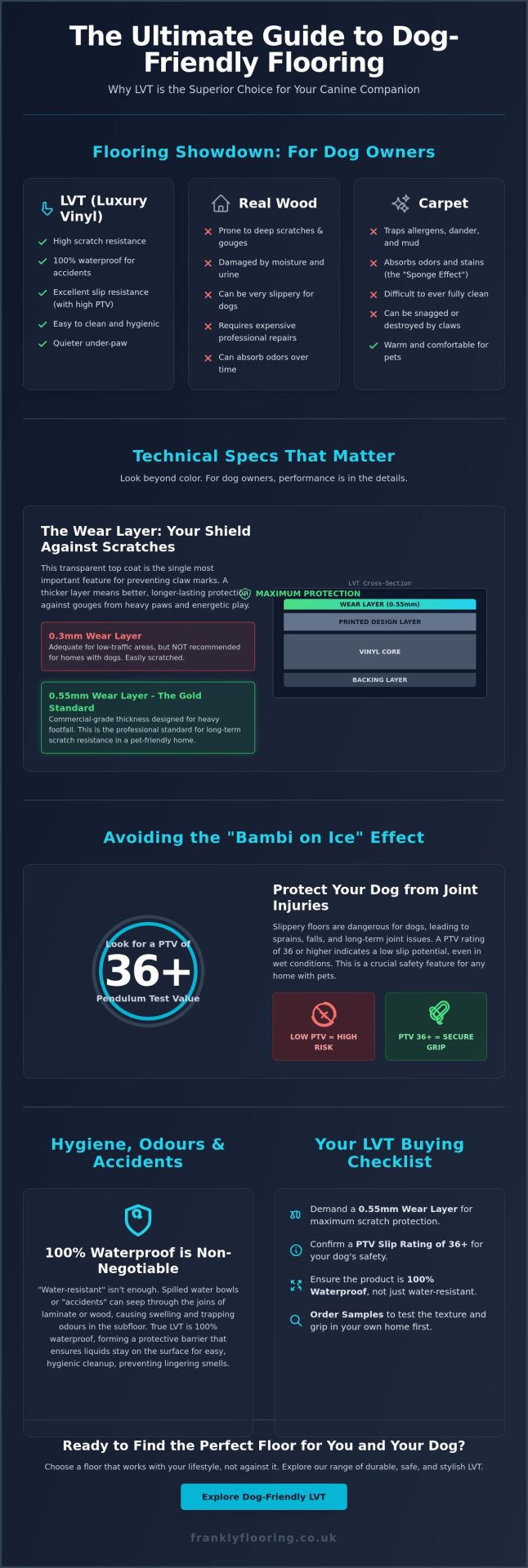
When we look at the “Big Three” flooring choices, LVT consistently outclasses the competition for pet households. Real wood is prone to deep gouges, and carpet is essentially a magnet for mud and odours. LVT offers a middle ground that provides comfort for the dog and peace of mind for you. You don’t have to choose between a beautiful hallway and a happy Labrador. It is about choosing a material that works with your lifestyle rather than against it.
LVT vs Real Wood and Carpet
Real oak or walnut flooring is a significant investment, but it is often a nightmare for owners of large breeds. Heavy claws can easily penetrate the surface finish of timber, leaving permanent scars that require professional sanding to fix. Carpets present a different set of problems. We call it the “Sponge Effect” because carpet fibres trap allergens, dander, and liquid accidents that you simply cannot fully extract. This leads to a persistent “doggy smell” that lingers regardless of how often you vacuum.
Laminate is often suggested as a cheaper alternative, but it has a fatal flaw: moisture sensitivity. If your dog knocks over their water bowl or comes in from a rainy walk, moisture can seep into the joins of a laminate floor. This causes the core to swell and the edges to peak, ruining the look of the room. LVT is fundamentally different because it is built to be moisture-resistant from the ground up, making it ideal for kitchens and utility rooms where dogs spend most of their time.
Setting Realistic Expectations for Pet Owners
We believe in being direct about what our products can do. You should understand that “scratch-resistant” does not mean “scratch-proof”. If you have a Great Dane or a particularly energetic Greyhound, they can eventually leave marks on any surface if they are skidding around corners at full speed. The goal of LVT is to minimise this damage and provide a surface that is easy to maintain, but it still requires a basic routine. Keeping your dog’s claws trimmed is the single most effective way to extend the life of your floor. It reduces the impact force on the wear layer and keeps the surface looking newer for much longer.
Is lvt flooring good for dogs in the long term? Absolutely, provided you choose the right specifications. A quality LVT floor with a thick wear layer will withstand years of paw traffic, but it isn’t a “fit and forget” solution. A quick sweep to remove grit and the occasional damp mop will keep the surface clear of abrasive particles that could dull the finish over time. By combining the right product with sensible pet care, you create a home that is both durable and welcoming.
Technical Specs That Matter: Wear Layers and Sound
When you are browsing for new floors, it is easy to get distracted by the realistic wood-grain patterns or the sophisticated stone-effect finishes. However, if you’re asking is lvt flooring good for dogs, you need to look past the surface aesthetics. The technical data sheet tells the real story of how a floor will perform under pressure. It’s the difference between a surface that looks pristine for six months and one that survives a decade of “zoomies” and heavy paw traffic. Understanding these specs ensures you don’t waste money on a product that wasn’t built for a multi-species household.
Decoding the Wear Layer (0.3mm vs 0.55mm)
The wear layer is the transparent protective top coat that sits above the printed design. It is your first line of defence against claws. While a 0.3mm wear layer is perfectly adequate for a guest bedroom, it is a disaster for a hallway frequented by a Labrador. For homes with dogs, we consider 0.55mm to be the “Gold Standard”. This is often classified as commercial-grade LVT, designed to withstand the footfall of a busy shop or office. In your home, this extra thickness prevents deep gouges from reaching the design layer, keeping the floor’s appearance intact even if your dog has a habit of digging at the door when the postman arrives.
Acoustics and Under-Paw Comfort
One factor that many homeowners overlook is the “Click-Clack” factor. Laminate flooring is notorious for its hollow, percussive sound when a dog walks across it. This noise can be irritating for you and even stressful for anxious pets who might find the lack of grip and the loud noise unsettling. LVT is constructed in multiple layers that naturally dampen sound. It absorbs the impact of paws rather than reflecting it back into the room. This density makes for a much quieter home environment, especially in open-plan living areas.
Beyond the sound, LVT offers a level of comfort that stone or ceramic tiles simply cannot match. It has a subtle “give” that is gentler on a dog’s joints, which is particularly beneficial for older pets or breeds prone to hip dysplasia. It also retains heat far better than natural stone. Your dog will likely prefer napping on a warm LVT surface than a freezing cold tile. Before you get bogged down in the data, it’s often best to order a few samples to see these textures and thicknesses for yourself.
Is lvt flooring good for dogs who love warmth? Yes, especially because it is fully compatible with underfloor heating systems. This pairing creates the ultimate luxury for a pet, providing a consistent, gentle heat that doesn’t damage the floor’s structural integrity. When you combine high-spec durability with this level of comfort, you’re investing in a floor that looks after every member of the family.
Avoiding the ‘Bambi on Ice’ Effect: Slip Resistance and Stability
One of the most common concerns for pet owners is watching their dog struggle to gain traction on a new floor. High-gloss, smooth finishes might look sophisticated in a magazine, but they are a significant slip hazard for any animal with four paws. When you ask is lvt flooring good for dogs, you have to consider the Pendulum Test Value (PTV). This is the industry standard for measuring slip resistance. For a home with active pets, you should look for a PTV score of 36 or higher. This rating indicates a low slip risk, even in conditions where the floor might be slightly damp from a water bowl splash or a rainy walk.
Choosing a floor with the right grip isn’t just about preventing a comical slide across the kitchen. It is about long-term health. Constant slipping causes repetitive strain on a dog’s joints and muscles, which can lead to early-onset arthritis or acute injuries like cruciate ligament tears. A floor with a matte or textured finish provides the mechanical grip a dog needs to stand, sit, and move with confidence. By prioritising stability over a high-shine aesthetic, you are making a direct investment in your dog’s physical well-being.
Why Texture is Your Dog’s Best Friend
Texture is the secret to a pet-friendly home. Modern manufacturing uses a technique called Embossed in Register (EIR), which aligns the physical texture of the plank with the printed wood grain. This isn’t just a visual trick. It creates a riven or hand-scraped surface that mimics the natural irregularities of timber, providing essential traction for paws. We often suggest the “Zoomie Test” for younger dogs. If a dog can’t safely navigate a corner during a burst of energy without their back legs fishtailing, the floor is too smooth. This is why we always recommend that you feel a sample before committing to a large order. Run your hand over the surface; if it feels like polished glass, it will likely be a skating rink for your dog.
Glue-Down vs. Click LVT for Large Breeds
The method of installation plays a surprisingly large role in how is lvt flooring good for dogs who are on the heavier side. Click-system LVT is popular for its DIY-friendly nature, but it can sometimes “bounce” or shift slightly under the weight of a 40kg dog. This subtle movement can feel unstable to a pet, making them hesitant to walk on it. Our frank advice for owners of large breeds is to opt for glue-down LVT. Because the planks are bonded directly to the subfloor, there is zero movement. It feels solid and immovable, which gives a heavy dog much more confidence when moving around.
To achieve this level of stability, using high-quality LVT adhesives is essential. A professional-grade bond ensures that the planks won’t peak or gap, even if a large dog is constantly pivoting and digging in their claws for grip. This setup provides a permanent, quiet, and incredibly stable foundation that can handle the daily physical demands of a busy pet household without breaking a sweat.
Hygiene, Odours, and the ‘Accident’ Factor
One of the most significant advantages of LVT in a pet-friendly home is its non-porous surface. If you’ve ever lived with carpet, you know that the “wet dog” smell isn’t just on the animal; it’s trapped in the floor fibres. When asking is lvt flooring good for dogs, hygiene is usually the deciding factor for most UK homeowners. Because luxury vinyl doesn’t absorb dander, hair, or moisture, it effectively eliminates the breeding ground for dust mites and allergens. This creates a much healthier environment for both you and your pet, especially during those long winter months when dogs spend more time indoors.
While many materials claim to be water-resistant, LVT is often fully waterproof. This makes it the undisputed king of the kitchen and utility room. In these areas, water bowl splashes and soggy paws are a daily occurrence. A truly waterproof floor means that moisture stays on the surface rather than soaking into the core of the plank. This protects your home from structural damage and prevents the growth of mould beneath the surface, which is a common issue with older laminate or poorly sealed wood floors.
Dealing with Puppy Accidents and Senior Incontinence
Accidents happen, whether you’re house-training a puppy or caring for an elderly dog. Our frank advice is to avoid bleach at all costs. Bleach can react with the ammonia in dog urine and may damage the protective wear layer we discussed earlier. Instead, use a pH-neutral or enzymatic cleaner. These products actually break down the proteins in the urine, removing the scent entirely so your dog isn’t tempted to “mark” the same spot twice. While the planks themselves are waterproof, the seams are the vulnerable point. You should aim to address any liquid spills within 24 hours to prevent moisture from reaching the subfloor and potentially weakening the adhesive bond.
Muddy Paws and Daily Maintenance
Muddy paw season in the UK can feel like a never-ending battle. However, maintaining an LVT floor is remarkably straightforward. A simple microfibre mop and a bucket of warm water are usually all you need to keep the surface pristine. We strongly recommend investing in high-quality entrance matting at every door. Most scratches on LVT aren’t actually caused by claws, but by grit and tiny stones trapped in a dog’s paws acting like sandpaper. By catching this debris at the door, you significantly reduce the risk of surface dulling. If you’re ready to upgrade your home to a more hygienic, pet-friendly surface, you can browse our full LVT range to find the right style for your space.
Is lvt flooring good for dogs in terms of long-term cleanliness? It’s arguably the best option available. By removing the “sponge” of carpet or the porous grain of wood, you make it much easier to keep your home smelling fresh. A quick daily sweep and a weekly mop are enough to manage even the messiest of breeds, allowing you to spend more time with your dog and less time scrubbing the floor.
Buying LVT Online Frankly: The Final Checklist
By now, you should have a clear answer to the question: is lvt flooring good for dogs? It is the most resilient, hygienic, and practical choice for a modern pet owner. However, the success of your project depends entirely on the specific product you select. Buying flooring online can feel daunting, especially when you can’t physically walk on the surface before clicking ‘buy’. The key is to look past the beautiful photography and focus on the technical specifications that will actually protect your home from the daily wear and tear of a four-legged family member.
We see many homeowners make the mistake of choosing a floor based solely on the wood-grain pattern or the price point. While aesthetics matter, a floor that looks great but causes your dog to slide around will eventually lead to frustration and potential injury. You need to be certain that the product meets the high standards required for a pet-friendly environment. This final checklist ensures that your investment provides long-term value and comfort for everyone in the house.
The Pet-Owner’s LVT Checklist
Before you place your order, run through these essential technical requirements. This isn’t just about durability; it’s about the safety and stability of your dog. If you need a refresher on the basics, you can consult our Frank guide to LVT for general advice on how these floors are constructed. Use these points as your non-negotiables:
- Wear Layer: Is it 0.5mm or higher? For heavy paw traffic, this commercial-grade thickness is vital for scratch resistance.
- Slip Resistance: Does the floor have a textured finish or a PTV rating of 36+? Avoid high-gloss surfaces that turn into skating rinks.
- Installation Method: Are you opting for glue-down LVT? It offers superior stability for larger, heavier breeds compared to click-systems.
- Sample Testing: Have you ordered a physical sample? You need to feel the texture and see how the colour shifts in your home’s natural light.
Don’t forget to calculate for waste. We always recommend adding 10% extra to your total area measurement. This surplus is vital for achieving a perfect finish around doorways and corners. It also provides you with a few spare planks to keep in the loft, just in case a freak accident occurs years down the line. Having the exact same batch number for repairs is much easier than trying to track down a matching floor in five years’ time.
Why Buy From Frankly Flooring?
We aren’t a faceless corporate entity. Frankly Flooring is a family-run business built on over 20 years of technical expertise. Our approach is simple: we provide high-quality products and honest, direct advice without the marketing fluff. We know that is lvt flooring good for dogs because we’ve seen it perform in thousands of UK homes. We prioritise transparency in our pricing and offer reliable delivery across the country, ensuring your project stays on track from start to finish.
Your home’s character starts with the floor. Choosing a material that can handle the reality of pet ownership means you can stop worrying about scratches and start enjoying your space. If you are ready to make the switch, browse our full range of LVT flooring online to find a surface that both you and your dog will love for years to come.
Build a Better Home for Your Dog
Choosing the right flooring shouldn’t be a gamble between style and your pet’s safety. As we have explored, the answer to is lvt flooring good for dogs depends entirely on the technical details. By prioritising a commercial-grade 0.55mm wear layer and a PTV slip rating of 36 or higher, you can prevent injuries and ensure your floor survives the daily demands of claws and muddy paws. LVT offers a hygienic, non-porous solution that keeps your home smelling fresh while providing the warmth and comfort your dog deserves.
At Frankly Flooring, we believe in providing honest, expert advice based on over 20 years of technical expertise. We are a family-run UK business dedicated to helping you find the perfect foundation for your life, delivered direct to your door with our national service. You don’t have to settle for scratched wood or stained carpets any longer. Browse our durable, pet-friendly LVT range today and discover how a high-quality floor can transform your living space into a stress-free environment for the whole family. It is time to invest in a surface that works as hard as you do.
Frequently Asked Questions
Does LVT flooring scratch easily with dogs?
LVT is highly scratch-resistant but not indestructible. While it holds up far better than real wood, a 0.55mm wear layer is essential to prevent deep gouges from heavy claws. Keep grit and dirt off the floor, as these abrasive particles cause more surface dulling than the dog’s paws themselves. Regular nail trimming also helps maintain the finish for much longer.
Is LVT too slippery for older dogs with arthritis?
LVT is only a slip hazard if you select a high-gloss or smooth finish. To support older dogs with arthritis, you must choose a product with a textured surface and a PTV rating of 36 or higher. This mechanical grip allows your pet to stand and move without their legs splaying. It provides the stability they need to feel confident on their feet.
How do I get dog urine smell out of LVT flooring?
You must use an enzymatic cleaner to break down the proteins and ammonia in dog urine. Standard household cleaners or bleach often just mask the scent, which can lead to your dog returning to the same spot. Since LVT is non-porous, the smell won’t soak into the planks, but you should clean accidents quickly to stop liquid from seeping into the seams.
Is Click LVT or Glue-down LVT better for pets?
Glue-down LVT is the superior choice for households with large or very active dogs. Click-system floors can sometimes shift or “bounce” under the weight of a heavy animal, which can feel unstable for the pet. A glue-down installation creates a solid, immovable surface that handles the physical force of a dog pivoting or running without any risk of gapping or movement.
Can I use a steam mop on LVT if I have dogs?
We strongly advise against using steam mops on any luxury vinyl floor. The intense heat and pressurised moisture can penetrate the seams, potentially weakening the adhesive bond or causing the layers of the plank to separate. A damp microfibre mop with a pH-neutral cleaner is a much safer and more effective way to handle muddy paw prints and daily grime.
Will my dog’s water bowl ruin LVT?
A splashing water bowl will not ruin a quality LVT floor because the material is waterproof. Unlike laminate, which swells when exposed to moisture, LVT remains structurally stable. However, you should still wipe up large puddles within a reasonable timeframe. This prevents water from sitting in the joins for long periods, which protects the subfloor and the adhesive underneath.
What is the best wear layer thickness for a home with dogs?
When asking is lvt flooring good for dogs, the wear layer is the most important spec to check. A 0.55mm wear layer is the “Gold Standard” for residential pet homes. It provides a commercial-grade level of protection that can withstand years of claw traffic and heavy use. Choosing a thinner 0.3mm layer may lead to premature wear in high-traffic areas like hallways.
Is LVT cold for dogs to lie on?
No, LVT is naturally warmer and more comfortable than stone, marble, or ceramic tiles. It stays much closer to the ambient room temperature, making it a pleasant surface for your dog to nap on. If you want to provide extra luxury, LVT is fully compatible with underfloor heating systems. This provides a gentle, consistent heat that is safe for both the floor and your pet.