
The biggest lie in modern landscaping is that artificial grass is maintenance-free. While you’ve successfully ditched the mower, you might now be facing the reality of lingering pet smells in the summer heat or moss creeping around the edges. If your lawn is starting to look more like a flat piece of green plastic than a lush garden, you need a straightforward cleaning artificial grass guide that cuts through the marketing fluff. We believe in being frank about what it actually takes to protect your investment and keep your outdoor space looking sharp.
We understand the frustration of seeing your premium turf lose its luster or develop a stubborn odor that just won’t shift. You want a garden that’s ready for hosting, not one that requires an apology to your guests. This guide promises a no-nonsense look at the methods that actually work, from lifting flattened fibers to effective deodorizing techniques. We will walk you through a logical journey from basic debris removal to deep cleaning strategies, ensuring your lawn remains a proud feature of your home for years to come.
Key Takeaways
- Understand why “zero maintenance” is a myth and how managing organic matter prevents weeds from taking root in your turf.
- Follow a realistic cleaning artificial grass guide that balances quick weekly debris removal with deeper monthly care to keep fibers looking lush.
- Master the science of neutralizing pet odors by targeting uric acid crystals rather than just rinsing with water.
- Protect your investment through the seasons by adapting your care for wet UK winters and intense summer UV exposure.
- Learn to identify when your lawn needs a simple re-sand or power brush versus when it has reached the end of its functional life.
Why Artificial Grass Maintenance Isn’t “Zero Effort” (But It’s Close)
Many homeowners choose synthetic turf because they’re tired of the endless cycle of mowing and weeding. However, believing that your lawn requires zero effort is a recipe for a tired, messy garden within a few seasons. While it’s true you’ve traded the mower for more free time, a basic cleaning artificial grass guide is still necessary to protect your investment. Think of it as a low-maintenance relationship; it doesn’t need daily attention, but it does need consistent care to stay in top condition.
Organic matter is the hidden enemy of a clean lawn. Leaves, twigs, and fine dust don’t just sit on the surface. They break down over time. This decomposition creates a nutrient-rich layer of soil right in the middle of your plastic fibers. When a bird drops a seed or the wind blows one in, it finds a perfect home. If you don’t clear the debris, you’ll eventually find yourself weeding a plastic lawn, which is a situation most people specifically tried to avoid.
Then there’s the issue of pile memory. The synthetic blades are manufactured to stand upright, giving that lush, natural look. If heavy objects or layers of wet leaves sit on the grass for months, the fibers can lose their ability to bounce back. This leads to permanent flattening. Beyond aesthetics, keeping the surface clear is vital for drainage. Your lawn is designed to let water pass through into the ground. If that drainage system gets clogged with silt and organic sludge, you’ll end up with standing water and unpleasant odors.
The “Hoovering” Myth: Why Your Vacuum Stays Inside
It’s a common question: can I just hoover the garden? The short answer is no. A domestic vacuum cleaner is designed for carpets, not outdoor turf. The intense suction can actually pull at the primary and secondary backing, causing the tufts to loosen or the structure to warp. Even worse, most artificial lawns use a sand infill to weigh the carpet down and keep the blades vertical. A vacuum will suck that sand right out, leaving your lawn unstable and prone to matting. For hair and dust, stick to a stiff-bristled brush or a specialized lawn rake.
Understanding Your Lawn’s Construction
To care for your lawn properly, you need to understand what artificial turf is and how it’s built. It isn’t just a green mat. It consists of blades stitched into a primary backing, which is then reinforced with a secondary coating for durability. Between those blades sits the infill, usually silica sand. This sand acts like a shock absorber and a structural support. When you skip the steps in a proper cleaning artificial grass guide, you allow the sand to compact and the blades to mat together. Once matting becomes severe, the lawn loses its soft feel and begins to look like a flat, shiny sheet of plastic.
The Essential Cleaning Routine: Step-by-Step
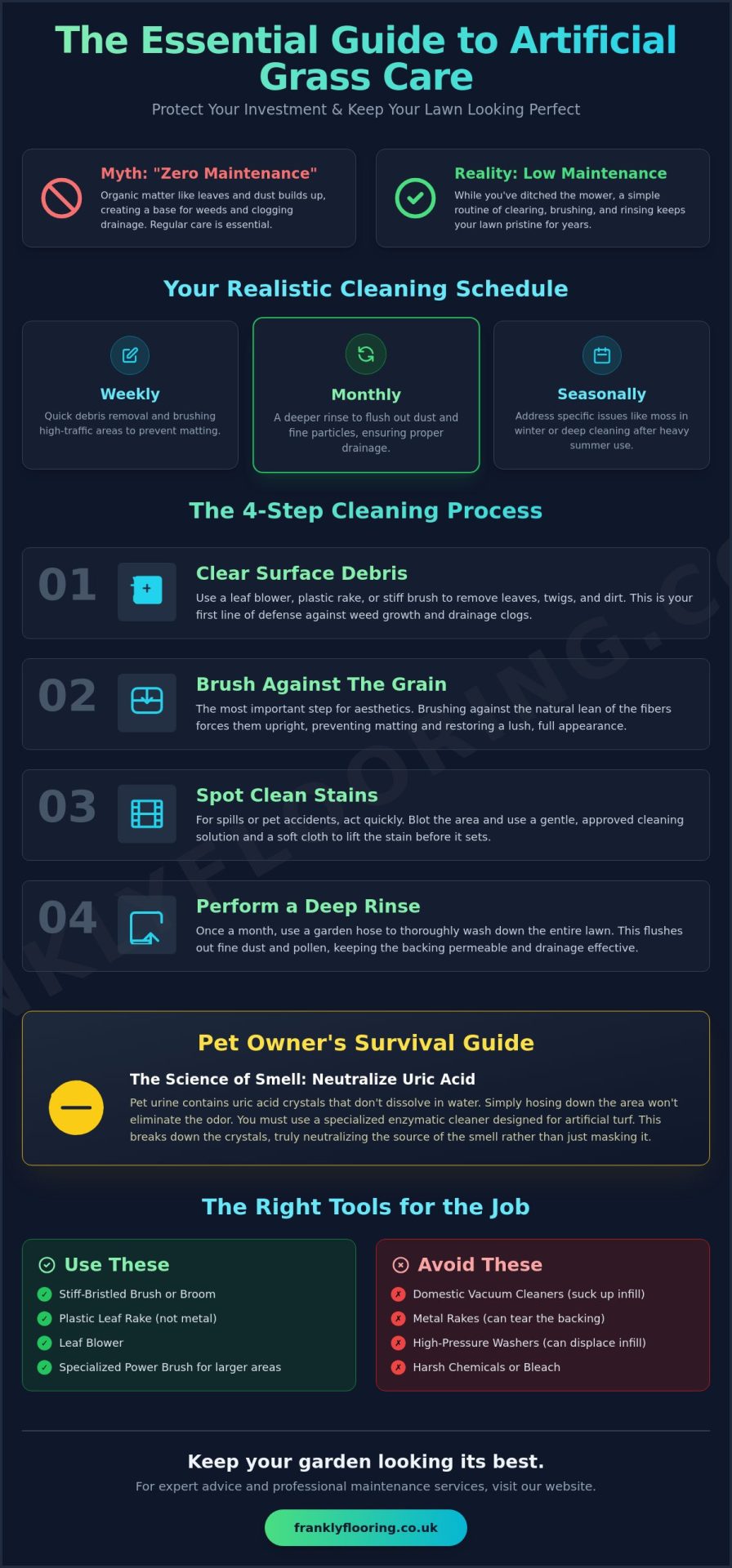
Maintaining a synthetic lawn isn’t a full-time job. For most busy households, a realistic schedule is the key to success. Weekly attention keeps the surface tidy, while a monthly deep dive ensures the underlying structure remains sound. If you want to keep it clean without spending your entire weekend on your knees, follow this simple cleaning artificial grass guide.
- Step 1: Clear the deck. Start by removing larger surface debris. Use a leaf blower or a plastic rake to gather leaves, twigs, and loose dirt. Removing these early prevents them from breaking down into the organic layer that encourages weed growth.
- Step 2: Brush against the grain. This is the most important step for aesthetics. Look at the lawn to see which way the fibers naturally lean. Brush in the opposite direction. This “Frank” method forces the blades upright, restoring that lush look and preventing the permanent flattening we mentioned earlier.
- Step 3: Target the trouble spots. High-traffic areas or spots where drinks were spilled need a quick scrub. Use a soft cloth and a gentle solution to lift stains before they have a chance to settle.
- Step 4: The deep rinse. Every month, give the lawn a thorough drenching with a garden hose. This flushes out fine dust and ensures the drainage holes in the backing stay clear and functional.
Tools You Actually Need (And Ones to Avoid)
Metal rakes are the enemy of synthetic turf. They scratch the plastic fibers and can tear at the primary backing. Instead, opt for a plastic leaf rake or a stiff-bristled broom. If you have a large area to manage, a specialized power brush is a worthwhile investment. It does the heavy lifting for you by mechanically lifting the pile. Avoid high-pressure jet washes. The force is often too great and can easily displace the sand infill or damage the delicate tufts. A standard garden hose provides plenty of pressure for a safe, effective rinse.
Choosing the Right Cleaning Solutions
Don’t reach for harsh chemicals or bleach. A simple DIY mixture of equal parts white vinegar and water is perfectly safe for most lawns and helps neutralize light odors. While washing up liquid is a common suggestion, use it sparingly. It often leaves a sticky residue that actually attracts more dirt over time. We recommend looking for pH-neutral cleaners specifically designed for synthetic turf. These products protect the UV coating on the blades, ensuring your artificial grass stays vibrant and durable for its full lifespan.
The Pet Owner’s Survival Guide to Artificial Turf
If you have dogs, your lawn faces a unique set of challenges that a standard garden doesn’t. Simply hosing down the area after your pet does their business isn’t enough to keep things fresh. The real culprit behind that lingering “farmyard” smell is uric acid. When urine dries, it forms concentrated crystals that trap bacteria and stick to the plastic fibres. These crystals are insoluble in water alone. During a UK heatwave, the rising temperature causes these crystals to react, releasing ammonia gases. This is why the smell becomes unbearable just as you want to enjoy a summer evening outside.
To manage this effectively, you need to identify “hot spots”. These are the specific corners or edges where your pet prefers to go. You might notice the fibres here looking slightly more matted or smelling more pungent than the rest of the lawn. Interestingly, artificial grass doesn’t “yellow” from urine like natural grass does. If you see yellowing or discolouration, it’s usually a sign of a mineral build-up or trapped organic debris that has begun to rot. Following a consistent Artificial Grass Maintenance Tips routine ensures these areas are treated before they become a permanent nuisance.
Enzymatic Cleaners: The Only Real Solution for Odours
Solid Waste and Sanitisation
Handling solid waste is simpler than dealing with liquids, but it requires a bit of patience. The “let it dry” rule is your best friend here. Trying to pick up fresh waste often smears it into the pile, making it much harder to clean out of the thatch. Once dry, it can be lifted cleanly without leaving a mess behind. For sanitisation, use a disinfectant that is clearly labelled as pet-safe to avoid irritating your dog’s paws. If you find persistent smells in tricky areas, such as under quality furniture or near the edges of the patio, focus your deep-cleaning efforts there. This cleaning artificial grass guide ensures that even the most stubborn “hidden” odours are neutralised efficiently without damaging your property.
Seasonal Maintenance: Protecting Your Lawn from the British Weather
The UK climate presents a unique set of hurdles for synthetic turf. While you don’t have to worry about mud during a soggy April, the constant dampness and shifting temperatures require a specific approach. Adapting your cleaning artificial grass guide to the seasons is the best way to ensure your lawn survives a decade of British weather without looking like a relic. Each season brings a different priority, from clearing winter silt to managing summer heat.
- Spring: This is the time for a “reset.” After a wet winter, fine silt and dust often settle deep in the thatch. A thorough brush and rinse will clear the drainage holes and lift fibres that have been weighed down by months of rain.
- Summer: Focus shifts from drainage to temperature. Synthetic fibres absorb more heat than natural grass. Keep an eye on UV exposure and ensure your lawn stays cool enough for bare feet during those rare heatwaves.
- Autumn: We call this the “Leaf War.” Wet leaves left to rot will create that soil layer we discussed earlier. Frequent clearing is vital during these months to prevent organic decay from taking hold.
- Winter: Frost and snow won’t damage the grass, but your tools might. Never use a metal shovel to clear snow. Let ice melt naturally to avoid snapping the frozen plastic blades.
Moss and Algae Prevention in Damp Conditions
In the UK, moss is almost an inevitability because of our high humidity and low light levels in winter. If your garden is north-facing or heavily shaded, you’ll likely see a green tint appearing on the pile. This isn’t just an aesthetic issue; it makes the surface slippery and clogs drainage. Use a safe, pH-neutral algaecide once a year as a preventative measure. Always check that your drainage holes aren’t blocked by debris after heavy storms. Standing water is the primary catalyst for moss growth, and a quick check can save you hours of scrubbing later.
Heat Management During Summer
During a British summer, artificial grass can become significantly hotter than a natural lawn. It’s a simple matter of physics. To manage this, use the “sprinkle” technique. A quick 30-second spray with a garden hose can drop the surface temperature by several degrees instantly, making it safe for children and pets to play. You should also be aware of “window reflection” burn. Highly reflective, modern double-glazing can act like a magnifying glass, concentrating sunlight into a beam that can actually melt plastic fibres. If you notice a specific “burnt” patch, consider a strategic awning or a well-placed potted plant to break the reflection.
Maintaining your garden shouldn’t be a chore that eats into your relaxation time. If you’re looking to upgrade your outdoor space with a durable, high-quality surface, explore our range of artificial grass options designed to withstand the unpredictable British elements.
When to Clean vs. When to Replace Your Artificial Grass
Even with the most diligent care, your synthetic lawn will eventually show its age. It’s a common mistake to assume that a tired-looking lawn is a dead one. Many homeowners consider a full replacement when all they really need is a professional intervention. This cleaning artificial grass guide has focused on prevention, but you also need to know when maintenance can no longer save the day. A high-quality installation in a standard UK garden should realistically last up to 15 years, provided you haven’t neglected the basics.
Maintenance isn’t just about aesthetics. It’s often a formal requirement of your product warranty. Manufacturers expect a reasonable level of care, and proving that you’ve kept the pile clear of organic rot can be the difference between a successful claim and an expensive mistake. Permanent damage, such as melted fibres from window reflections or a total failure of the secondary backing, usually signals that the time for cleaning has passed and replacement is the only honest advice left to give.
The “Frank” Assessment Checklist
Before you decide to rip it all up, run through this quick checklist to see if your lawn is truly beyond repair:
- Flattened pile: If the blades refuse to stand up even after a vigorous session with a power brush, the plastic has likely lost its structural integrity.
- Persistent odours: When enzymatic cleaners no longer neutralise smells, the bacteria may have colonised the sub-base, suggesting a fundamental drainage failure.
- Seam and backing failure: Visible gaps at the joins or a carpet that feels loose underfoot indicate that the installation has reached its functional end.
Maximising Longevity Through Care
The secret to a 15-year lawn isn’t a magic chemical; it’s silica sand. Regular top-ups of infill protect the backing from UV rays and keep the fibres supported. Investing in professional maintenance can extend the lifespan of an artificial lawn by 5 to 10 years, making it a significantly more affordable choice than a full replacement. While your weekly routine handles the surface, a professional deep clean every 2 years is a sound investment. This process uses industrial equipment to mechanically lift the pile and remove deep-seated silt that a garden hose simply can’t reach. Treat your outdoor turf with the same respect you’d give a premium indoor carpet, and it will remain a beautiful, functional part of your home for a generation.
Keep Your Lawn Looking Its Best Year-Round
Maintaining a perfect synthetic lawn doesn’t require a professional degree, but it does require a bit of candour about the effort involved. By following this cleaning artificial grass guide, you can prevent the organic build-up that leads to weeds and eliminate the stubborn pet odours that often plague neglected gardens. Remember that a few minutes of brushing against the grain and a seasonal deep rinse are the simplest ways to protect your investment for the long term.
As a family-run business with over 20 years of flooring expertise, we believe in providing high-quality products without high-pressure sales tactics. We offer direct-to-consumer prices with no hidden markups, ensuring you get the best value for your home. Whether you need a fresh start or the right accessories to maintain your current space, we provide national UK delivery on all our turf and accessories. Browse our range of durable Artificial Grass and accessories at Frankly Flooring and take the first step toward a stress-free, lush garden that stays green regardless of the British weather. Your perfect lawn is well within reach.
Frequently Asked Questions
Can I use a pressure washer on my artificial grass?
You can use a pressure washer, but you must be extremely cautious. Keep the nozzle at least 30cm away from the surface and use a wide fan setting rather than a concentrated jet. High pressure can easily dislodge the sand infill or even tear the primary backing. For most routine maintenance, a standard garden hose provides ample pressure without the risk of permanent damage.
Is it safe to use bleach to clean dog urine off fake turf?
We strongly advise against using bleach on your synthetic lawn. It’s a harsh chemical that can strip the UV stabilisers from the plastic blades, leading to brittle fibres and discolouration over time. Instead, rely on the enzymatic cleaners mentioned earlier in this cleaning artificial grass guide. These products are safer for your pets and far more effective at breaking down the uric acid that causes those stubborn smells.
How do I get rid of weeds growing through the artificial grass?
Weeds usually grow from the top down, taking root in organic debris trapped between the fibres. You can easily pull these out by hand if you catch them early. For more stubborn growth, use a water-based weedkiller rather than an oil-based one, as oil can damage the turf backing. Keeping the surface clear of leaves and dust is the best way to prevent weeds from appearing in the first place.
Will my artificial grass melt if I have a BBQ nearby?
Yes, artificial grass is made of plastic and it will melt if exposed to high heat. Stray embers from a charcoal BBQ or hot grease can cause irreversible damage to the fibres. Always place your BBQ on a solid patio area or a dedicated heat-resistant mat. If you do experience a small burn, it can sometimes be repaired by a professional, but it’s much easier to prevent the issue with a bit of distance.
Can I use a domestic hoover to pick up leaves on the grass?
You should never use a domestic hoover on your artificial lawn. The powerful suction is designed for indoor carpets and will pull the essential silica sand infill right out of the turf. This leaves the blades unsupported and prone to flattening. A plastic rake or a leaf blower is a much safer and more effective tool for clearing debris without compromising the lawn’s structure.
How often should I put new sand on my artificial lawn?
Most residential lawns need a sand top-up every 12 to 18 months. Heavy use or frequent heavy rain can wash away or compact the existing infill. Adding a fresh layer of kiln-dried silica sand helps keep the blades standing upright and provides a vital protective layer for the backing. It’s a simple task that significantly extends the lifespan of your garden and ensures the drainage remains functional.
What is the best way to remove bird droppings from synthetic turf?
The most effective method is to let the droppings dry completely before attempting to remove them. Once dry, you can usually brush or scrape them away with a plastic tool. Any remaining residue can be cleaned with a mixture of warm water and a small amount of mild detergent. Rinse the area thoroughly with a garden hose afterward to ensure no soapy film is left behind to attract more dirt.
Is artificial grass cleaner safe for my real plants and hedges?
Most specialised turf cleaners are formulated to be biodegradable and safe for surrounding vegetation. However, you should always check the label for specific warnings before application. Avoid any products containing bleach or high concentrations of acids, as these will harm your hedges and flowers. Consulting a reliable cleaning artificial grass guide ensures you select products that are effective for the turf while remaining gentle on your garden’s natural borders.