
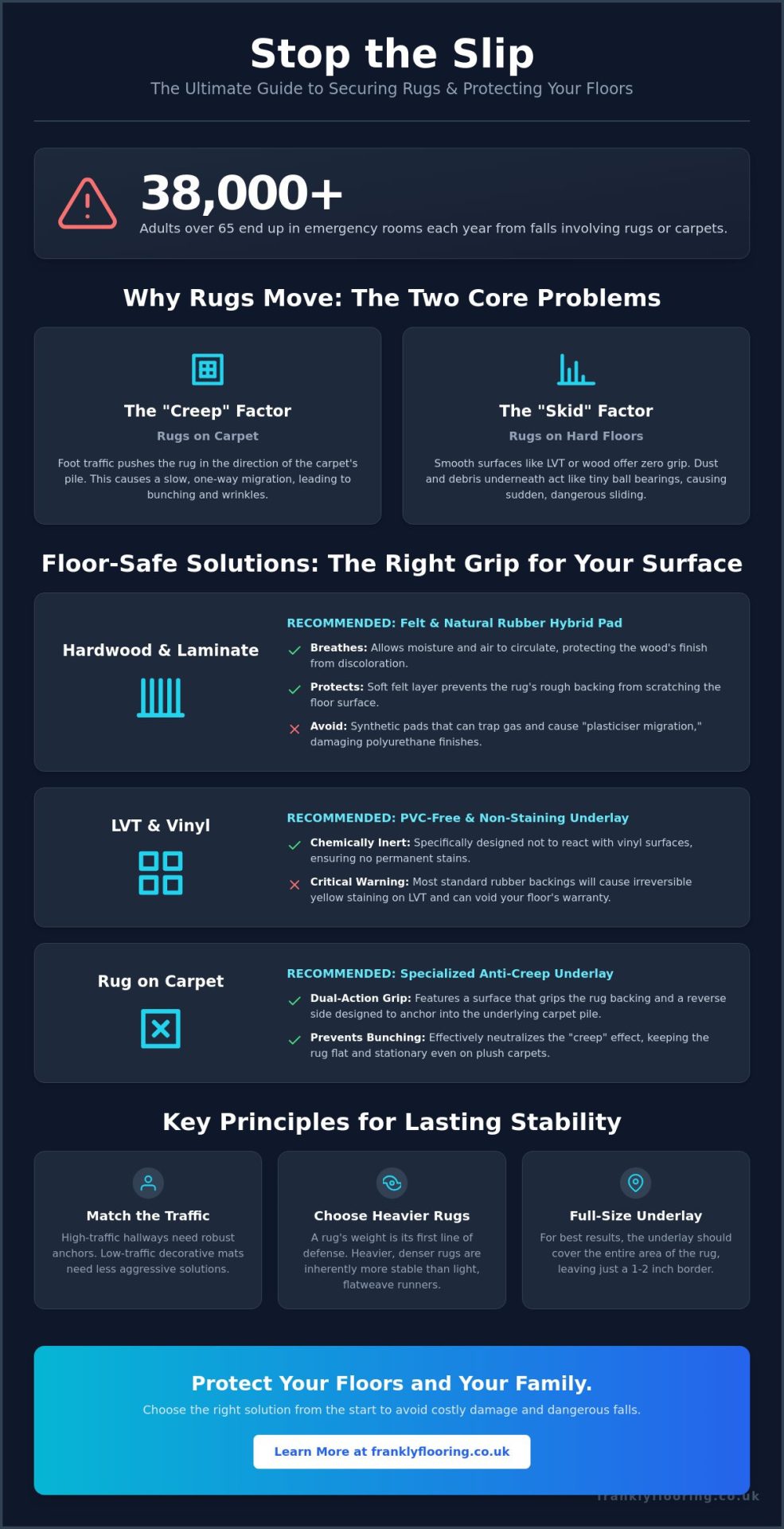
Every year, nearly 38,000 adults aged 65 and older end up in emergency departments because of a fall involving a rug or carpet. It’s a sobering statistic that turns a simple home decor choice into a serious safety concern. You’ve likely felt that heart-stopping moment when a rug slides across your LVT or wood floor, or perhaps you’re tired of constantly straightening a runner that bunches up on your carpet. Finding out how to stop a rug from slipping shouldn’t involve guesswork or cheap tapes that leave a permanent, sticky mess on your beautiful flooring.
We believe in doing things properly. You deserve a solution that anchors your rug firmly in place while protecting the integrity of the floor underneath. In this guide, we’ll explain the most effective, floor-safe methods to secure your rugs across all types of British flooring. We’ll look at why natural rubber beats synthetic alternatives for floor health and how to ensure a flat, trip-free surface that lasts for years. It’s a straightforward look at technical craftsmanship applied to everyday home safety.
Key Takeaways
- Understand why rugs ‘skid’ on hard floors but ‘creep’ on carpets, as the mechanics of movement dictate the best solution for your home.
- Discover how to stop a rug from slipping using floor-safe methods that avoid the sticky residue and chemical off-gassing caused by low-quality tapes.
- Learn why a full-size breathable underlay is the superior choice for stabilising larger rugs on surfaces like engineered wood or LVT.
- Identify how choosing the right rug weight and backing material from the start can prevent bunching and dangerous tripping hazards.
- Get a frank look at which anchoring methods actually work for high-traffic runners versus those best suited for small decorative mats.
Why Do Rugs Slip? Understanding the Mechanics of Movement
To understand how to stop a rug from slipping, we first need to look at the physics of your home. It isn’t just bad luck; it’s a matter of energy transfer. When you walk across a rug, your foot exerts a horizontal force against the material. If there isn’t enough friction between the rug backing and the floor surface, that energy has to go somewhere. Usually, it results in the rug sliding away from you or bunching into a dangerous ridge. While Floor mats also provide safe surfaces by design, many decorative rugs lack the integrated grip needed to handle daily foot traffic safely.
The weight of the rug plays a significant role in its stability. Lightweight rugs, such as flatweaves or thin runners, don’t have the mass required to stay grounded. Without a proper anchor, these pieces are prone to wrinkling and bunching, which creates a serious trip hazard. This movement is often exacerbated by the direction of the carpet pile or the cleanliness of a hard floor, making it essential to match your solution to the specific mechanics of your room.
The ‘Creep’ Factor: Rugs on Carpets
When you place a rug over a carpet, it doesn’t usually skid. Instead, it “creeps.” This happens because carpet fibres have a natural direction, known as the nap. As you walk on the rug, your weight pushes the rug into the carpet pile. Because the pile is angled, it acts like a microscopic, one-way conveyor belt, nudging the rug in one direction every time you take a step. Plush, deep-pile carpets are the hardest to anchor because they offer more “give,” allowing the rug to move freely. If your underlying carpet underlay is low-quality or overly soft, it provides even less resistance, leading to rugs that seemingly migrate toward the door on their own.
The ‘Skid’ Factor: Rugs on Hard Floors
Hard surfaces like LVT flooring or polished wood present a different challenge. Here, the issue is a total lack of surface tension. These floors are designed to be smooth and easy to clean, but that smoothness means there’s very little for a rug backing to bite into. Dust and microscopic debris can accumulate under the rug, acting like tiny ball bearings that reduce friction even further. In hallways, this leads to rugs “walking” down the corridor with every passerby. Learning how to stop a rug from slipping on these surfaces requires a solution that creates a mechanical bond without using cheap adhesives that could ruin your floor’s finish.
Floor-Specific Solutions: Matching Grippers to Your Surface
Many retailers sell “universal” rug pads, claiming they work on every surface. This is simply not true. If you want to know how to stop a rug from slipping without causing permanent damage, you have to consider the chemistry of your floor’s finish. A gripper that works on stone might melt into your vinyl or suffocate your wood. Choosing the wrong material won’t just fail to secure the rug; it could leave you with a repair bill that far outweighs the cost of the rug itself.
The secret lies in matching the gripper’s material to your specific flooring. We see many homeowners struggle with sticky residues or discoloured patches because they opted for a cheap, all-purpose solution from a discount site. Instead, focus on products designed for the specific technical requirements of your subfloor.
Anchoring Rugs on Hardwood and Laminate
Natural oak and engineered wood flooring need to breathe. Using a solid plastic or cheap synthetic rubber pad can trap moisture and gases, leading to discolouration or even warping of the planks. We recommend felt-and-rubber hybrid pads for these surfaces. The felt provides a soft cushion that prevents the rug’s rough backing from scratching the timber, while the natural rubber base provides the necessary grip. This combination prevents “plasticiser migration,” a process where chemicals in cheap pads react with polyurethane finishes to create a dull, cloudy appearance.
Securing Rugs on LVT and Vinyl
This is where most people go wrong. Modern LVT and vinyl floors are incredibly durable, but they are chemically sensitive to certain types of rubber. Many standard rug backings contain chemicals that react with the vinyl, leaving yellow stains that are impossible to remove. Always check your manufacturer’s warranty before applying an anchor. Many explicitly state that “rubber-backed rugs” will void the guarantee. Look for PVC-free, non-slip underlays made from high-quality polymers. If you’re unsure, test a small corner of the gripper on an inconspicuous area for 48 hours before committing to the whole room.
The Challenge of Rug-on-Carpet Anchoring
Standard rubber pads are designed for hard surfaces and won’t help you on a textile floor. On a carpet, a rubber pad will simply slide along with the rug. To solve the “creep” mentioned earlier, you need a “sticky-back” fabric underlay. These are double-sided, felt-like sheets that hook into the carpet fibres and the rug backing simultaneously. This prevents that annoying “hump” from forming in the middle of your room as the rug tries to migrate. If you are looking for a new centrepiece, you can browse our range of durable rugs to find a weight and material that stays put more easily.
Top Methods to Stop the Slip: From Underlays to Anchors
When you’re looking at how to stop a rug from slipping, you’ll find a wide variety of gadgets and “hacks,” but not all of them are created equal. We classify solutions into three main categories: structural underlays, perimeter grippers, and adhesive tapes. While tapes and stickers are often the cheapest initial option, they carry the highest risk of floor damage. For a long-term fix that protects both your rug and your subfloor, a high-quality underlay remains the industry gold standard for stability and safety.
The best method for your home depends on the size of the rug and the volume of foot traffic it handles. A small mat in a doorway needs a different approach than a large area rug in a lounge. By matching the weight and grip of the solution to the specific movement of the rug, you can create a surface that feels solid and secure underfoot.
Choosing the Right Rug Underlay
Weight is the primary indicator of a quality rug underlay. A good product is usually measured in grams per square metre (gsm). For thin rugs on hard floors, a 200 to 300 gsm felt or rubber pad is usually sufficient to provide grip. If you want added comfort and sound insulation, look for 400 gsm or higher. Dual-surface underlays are particularly useful for UK homes; they feature a “sticky” side for hard floors and a “needle-punch” side designed to hook into carpet fibres. When you install it, always trim the underlay so it sits about 3cm inside the rug’s edge. This prevents the pad from peeking out and ensures the rug’s edges stay flush with the floor.
Anchoring with Furniture: A Strategic Approach
If you have a large area rug, your existing furniture can do a lot of the heavy lifting. We recommend the “two-feet-on” rule. Placing the front legs of your sofa or armchairs onto the rug creates a physical anchor that prevents the material from sliding during use. A heavy coffee table in the centre can also pin the material down and reduce the chance of bunching. However, don’t rely on furniture alone if your rug is on a carpet. As we discussed regarding the “creep” factor, a rug can still ripple and bunch between the furniture legs if it isn’t backed with a dedicated carpet-to-carpet underlay.
DIY and Quick Fixes: What Actually Works?
You might have seen the silicone caulk trick online, where you apply beads of silicone to the back of the rug. While this provides some grip, it’s a permanent modification that can damage the rug’s backing and potentially react with your floor finish. A better alternative for small mats or runners is using heavy-duty hook-and-loop strips. These allow you to remove the rug for cleaning while keeping it firmly in place. Whatever you do, never use masking tape or duct tape. These adhesives aren’t designed for flooring; they’ll dry out, crack, and leave a stubborn residue that’s incredibly difficult to remove without stripping your floor’s protective seal.
Protecting Your Investment: Avoiding Long-Term Floor Damage
Finding out how to stop a rug from slipping shouldn’t come at the expense of your subfloor. The Frank truth is that many cheap, imported anti-slip products are made with low-grade PVC and synthetic adhesives. These materials often undergo a process called “off-gassing,” where they release volatile organic compounds that react with the chemicals in your floor’s finish. If you’ve ever lifted an old rug and found a yellowed, sticky grid pattern etched into your floor, you’ve seen this damage firsthand. This isn’t just a cleaning issue; it’s a chemical burn on your floor’s surface.
Maintenance is just as vital as the initial installation. Dust is an abrasive. When it gets trapped between a rug pad and a hard floor, foot traffic turns it into sandpaper. Vacuuming the top of the rug is only half the job. You must lift the edges and vacuum the subfloor underneath at least once a month to remove the grit that causes both slipping and scratching. Additionally, non-breathable pads can trap moisture in humid environments, leading to mould or warping. Always opt for perforated or breathable materials that allow air to circulate freely.
Removing Stubborn Adhesive Residue
If you’ve inherited a floor with sticky residue from a previous owner’s tape, proceed with caution. For laminate flooring, avoid using harsh scrapers or industrial solvents that can melt the wear layer. Start with a simple mixture of warm soapy water and a microfibre cloth to soften the glue. If that fails, a dedicated citrus-based adhesive remover is usually the safest secondary option. If the residue has bonded with the floor’s finish, it may be time to call a professional restorer rather than risking a total surface failure.
Maintaining Your Anti-Slip Solution
Rug pads aren’t a “set and forget” purchase. Most high-quality pads have a lifespan of about three to four years before the material begins to lose its elasticity or starts to crumble. If you use “reusable” silicone grippers on the corners, they will eventually lose their stickiness as they collect dust. You can often restore their grip by washing them in warm water and letting them air dry. During your annual deep clean, lift every rug in the house to check for any signs of floor discolouration or pad degradation. If you’re looking for a fresh start with high-quality materials, you can browse our professional-grade flooring and accessories to ensure your home stays both safe and stylish.
The Frank Conclusion: Choosing the Right Rug from the Start
Ultimately, the most effective way to address floor safety is to consider the construction of the rug before it ever enters your home. While we’ve discussed various external fixes, your first line of defence is the rug’s weight and its backing material. A flimsy, lightweight rug will always struggle to stay grounded, regardless of the grippers you apply. By investing in high-quality rugs with substantial backings, you significantly reduce the mechanical energy available for skidding or creeping.
If you’re still deciding on a purchase and want to know how to stop a rug from slipping, start by looking at the underside. A rug with a dense, integrated non-slip backing or a heavy-duty cotton layer provides much more natural resistance than a thin synthetic alternative. This proactive approach saves you the frustration of dealing with bunching and the potential cost of replacing damaged floor finishes later on. It’s about choosing longevity over a quick, cheap fix.
Material Matters: Backings That Grip
Natural jute backings are common in traditional weaves. They offer great durability but can be quite slippery on polished hard floors. Synthetic “action” backings, often found on budget options, are even more prone to sliding because they lack flexibility and surface tension. In contrast, heavy-duty cotton or latex-coated backings provide a much better “bite” on the floor surface. Be particularly careful with modern ‘washable’ rugs. While they’re convenient for cleaning, these are often very thin and lightweight. They lack the structural integrity to stay flat on their own, meaning they almost always require a high-quality underlay to remain safe and functional.
The Importance of Accurate Sizing
There’s a direct relationship between rug size and stability. A rug that is too small for its space is a moving target. Without the weight of furniture to pin it down or enough surface area to create friction, it will migrate with every step. We often see homeowners choose a smaller rug to save money, only to find it creates a constant tripping hazard. At Frankly Flooring, we help you navigate these technical nuances to find the perfect match for your subfloor. A custom-fit underlay should be slightly smaller than the rug itself to ensure the edges stay flush. This attention to detail prevents the “lip” that causes most household stumbles.
To wrap up, here is your frank checklist for a slip-free home:
- Choose a rug with a heavy, natural backing whenever possible.
- Match your underlay material specifically to your subfloor (LVT, wood, or carpet).
- Ensure the rug is large enough to be anchored by at least two legs of your heavy furniture.
- Vacuum under the rug monthly to remove friction-reducing dust and grit.
- Replace your rug pads every three to four years to maintain maximum grip.
Securing Your Home with Confidence
Securing your home shouldn’t be a matter of trial and error. By matching the right underlay to your specific floor type and prioritizing material quality over cheap adhesives, you protect both your family and your property. You now have the technical knowledge of how to stop a rug from slipping effectively, from understanding the ‘creep’ of carpets to avoiding chemical reactions on LVT.
As a family-run business with over 20 years of flooring expertise, we pride ourselves on providing transparent, ‘Frank’ advice on every product we sell. We don’t believe in high-pressure sales; we believe in helping you make the right choice for your home’s character and safety. Whether you need a heavy-duty rug for a high-traffic hallway or a breathable pad for your engineered wood, we’re here to guide you through the process.
Browse our range of high-quality rugs and flooring accessories at Frankly Flooring and enjoy national UK delivery on all our flooring solutions. Taking these small steps today ensures a safer, more comfortable home for years to come.
Frequently Asked Questions
Will double-sided tape damage my laminate floor?
Double-sided tape will likely damage your laminate floor over time. Most standard tapes use aggressive adhesives that leave a sticky residue or can even strip the protective wear layer when removed. Instead of tape, use a dedicated non-slip underlay that relies on friction rather than glue. This keeps the rug secure without compromising the finish of your laminate planks.
What is the best way to stop a rug moving on a carpet?
The most effective way to stop a rug moving on a carpet is to use a specialized fleece or fabric underlay. Unlike rubber pads which work on hard floors, these underlays feature a tacky surface on both sides that hooks into the carpet fibres and the rug backing. This creates a sandwich effect that prevents the rug from “creeping” across the room as you walk on it.
Can I use a rug pad with underfloor heating?
You can use a rug pad with underfloor heating, provided it’s specifically rated as heat-safe. It’s essential to choose a perforated or breathable pad that allows heat to rise through the material. A solid, non-breathable pad can trap heat against the floor surface; this might cause your wood or LVT to overheat and warp over time.
How do I stop the corners of my rug from curling up?
You can stop corners from curling by using dedicated rug anchors or corner grippers. If a new rug is stubborn, try dampening the corner slightly and placing a heavy object on it for 24 hours. For a permanent fix, triangular corner stickers provide the necessary weight and tension to keep the edges flush with the floor, eliminating a common trip hazard.
Are rubber rug pads safe for luxury vinyl tile (LVT)?
Many rubber rug pads are not safe for LVT because they contain plasticisers that can cause permanent yellow staining. If you want to know how to stop a rug from slipping on vinyl without damage, look for pads explicitly labelled as “PVC-free” or “LVT-safe.” High-quality polymer or natural rubber options are generally the most reliable choices for modern luxury vinyl floors.
How much smaller should a rug pad be than the actual rug?
Your rug pad should be approximately 3cm smaller than the rug on all sides. This ensures the edges of the rug taper down to the floor, which prevents a raised lip that could cause someone to stumble. Trimming the pad also ensures it remains completely invisible, maintaining the aesthetic of your room while providing the necessary grip and cushion.
Can I wash my anti-slip rug gripper?
Most silicone or polymer-based anti-slip grippers are washable. Over time, these products collect dust and lose their “tack,” but a quick rinse with warm, soapy water usually restores their original grip. Always let them air dry completely before reapplying them to your floor. However, felt or fabric underlays should generally be vacuumed rather than washed to avoid damaging the fibres.
Why is my rug still bunching even with a pad?
Rugs often bunch despite having a pad if the rug material is too thin or the pad is the wrong weight. Lightweight flatweave rugs need a denser, higher-gsm pad to provide structural support. If your rug is on a carpet, bunching usually happens because you’re using a hard-floor pad rather than a double-sided fabric underlay designed specifically for how to stop a rug from slipping on textile surfaces.