
Most homeowners treat wool carpet like a fragile heirloom, but it is actually one of the toughest engineering materials you can put under your feet. You want a floor that feels premium and stays that way for a decade, yet the conflicting advice regarding wool carpet pros and cons makes the decision feel like a gamble. It is frustrating to weigh the luxury of natural fibers against the fear of moth damage or constant shedding, especially when you are looking for a long-term investment rather than a quick fix.
We are here to provide a direct, no-nonsense breakdown of whether wool is the right fit for your home. This guide cuts through the jargon to explain the real differences between 80/20 blends and 100% wool, while addressing the maintenance myths that often scare people away. We will look at how these natural fibers improve home insulation and why they remain the gold standard for durability in 2026. You will gain the clarity needed to choose a floor that brings character to your space without the stress of unexpected upkeep.
Key Takeaways
- Understand the real wool carpet pros and cons to decide if the natural durability and insulation outweigh the higher upfront cost.
- Learn how modern moth-proofing standards and simple maintenance routines protect your investment for ten years or more.
- Discover why an 80/20 wool blend is often the superior choice for hallway durability, while 100% wool offers ultimate luxury for bedrooms.
- Master technical specs like total pile weight and tog ratings to ensure you are getting genuine quality when shopping online.
Why Wool Remains the Gold Standard for British Flooring
Wool isn’t just a traditional choice; it’s a legacy material that has stood the test of time for very specific reasons. For decades, it has been the gold standard for flooring because it manages to be both incredibly soft and remarkably tough. When you start researching wool carpet pros and cons, you’ll quickly see that its reputation isn’t just marketing fluff. It is a natural fibre floor covering that offers a level of resilience synthetic materials simply cannot match. In 2026, we are seeing a massive shift back to natural materials as homeowners move away from the disposable culture of cheap, plastic-based alternatives.
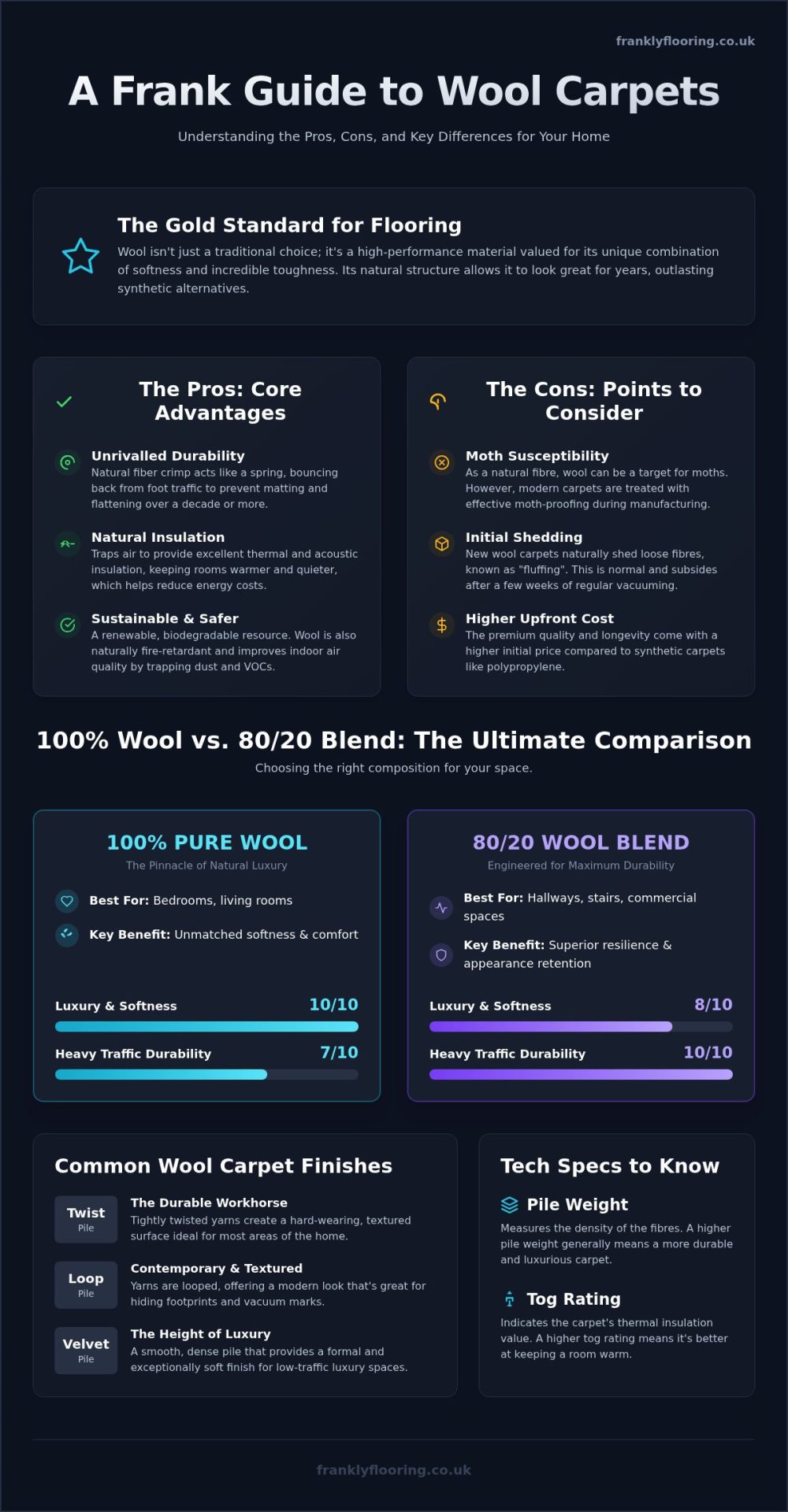
Being frank about your options is essential. Most people choose wool because they want a floor that looks as good in year seven as it did on day one. You generally find wool in three main finishes: twist pile, loop pile, and velvet. Twist pile is the durable workhorse of the industry. Loop pile offers a contemporary, textured look that is great for hiding vacuum tracks. Velvet pile is the height of luxury, providing a smooth, formal finish to master bedrooms. You also have the choice between 100% pure wool and an 80/20 blend, which mixes wool with synthetic fibres like nylon for extra hard-wearing properties in high-traffic areas.
The Science of the Wool Fibre
Why does wool last so much longer than polyester? Every wool fibre has a natural crimp that acts like a microscopic spring. When you walk on it, the fibres compress and then bounce back to their original shape. This prevents the permanent flattening or tracking often seen in synthetic carpets. Wool also features a thin, waxy layer of lanolin. This is a built-in soil repellent that stops light spills from soaking in immediately, giving you a vital window to clean up. Unlike plastic carpets that melt and release toxic fumes in a fire, wool is naturally fire-retardant, making it a safer choice for family homes.
Wool in the Modern UK Home
Modern design in 2026 is focused on quiet luxury, where quality is felt through texture and longevity. Wool fits this perfectly, providing a tactile contrast when used alongside engineered wood flooring in open-plan spaces. While the initial price might be higher, a quality carpet is a foundational element of your home’s character. It is an investment that pays off over a decade, rather than a surface you’ll need to replace in three years because the synthetic fibres have lost their life. Choosing wool is about valuing technical craftsmanship over a quick, cheap fix.
The Pros: Why Wool is More Than Just a Soft Surface
Understanding the full spectrum of wool carpet pros and cons means looking beyond the initial feel of the pile. Wool is a high-performance material that offers benefits synthetic fibres simply can’t match. From a sustainability perspective, it’s hard to beat. It is a renewable resource shorn from sheep every year, and at the end of its long life, it is fully biodegradable. Choosing wool is a vote for a more circular economy in your home design, which is becoming a standard expectation for UK renovations in 2026.
Beyond the environmental impact, wool acts as a natural air purifier. The complex structure of the fibre actually traps common household dust and absorbs harmful Volatile Organic Compounds (VOCs) that are often emitted by modern furniture and paints. It doesn’t just sit there; it actively improves the indoor environment. This makes it an excellent choice for bedrooms where air quality is a priority. If you want to see how these benefits fit into your specific project, you can browse our full range of carpets to find the right texture for your space.
Unrivalled Durability and Appearance Retention
One of the most significant advantages of wool is how it handles heavy foot traffic. While cheaper polypropylene carpets tend to flatten and lose their shape in busy areas like hallways, wool fibres have a natural resilience. They bounce back. This leads to superior appearance retention, which is the ability of a carpet to resist matting and maintain its original look over time. High pile density further reinforces this, ensuring that the “walk-way” effect is kept to an absolute minimum even after years of use.
Energy Efficiency and Thermal Regulation
In a 2026 climate where energy costs are a priority for UK homeowners, wool’s natural insulation is a major asset. The fibres trap air to create a thermal barrier that keeps heat inside the room. It also provides fantastic acoustic insulation, dampening footsteps and reducing noise transfer between floors. While it works with underfloor heating, you must monitor the combined tog rating of the carpet and underpadding. Following proper wool carpet maintenance ensures these fibres stay breathable, keeping the room warm in winter and cool in summer.
The Cons: Being Frank About Moths, Spills, and Maintenance
Every investment has its trade-offs, and wool is no exception. To give you a complete picture of wool carpet pros and cons, we need to talk about the areas where natural fibres require more attention than their plastic counterparts. The most immediate hurdle is the price tag. Because wool is a premium, natural resource, the initial cost is higher than synthetic alternatives like polypropylene or polyester. You are paying for longevity and performance, but it does mean a larger upfront commitment for your renovation budget.
New owners often get a shock during the first few months. You will notice “shedding,” which looks like small balls of fluff appearing on the surface. This is perfectly normal. It is simply short fibres left over from the manufacturing process working their way out of the pile. A few weeks of regular vacuuming usually settles this, but it is a reality of natural materials that synthetic carpets don’t share. Then there is the matter of spills. Wool is naturally resilient, but it is also absorbent. Unlike synthetic fibres that can be scrubbed with harsh chemicals, wool is sensitive to high-alkaline cleaners and heat.
Managing the Maintenance Reality
You cannot reach for a bottle of bleach if you spill red wine on a wool carpet. Doing so will permanently damage the protein structure of the fibre, leading to discolouration or even holes. Maintenance requires a specific approach. Always use pH-neutral cleaning solutions and follow the “blot, don’t rub” rule. Rubbing a stain pushes the liquid deeper into the core of the fibre and can distort the pile permanently. While some manufacturers claim synthetic carpets are “life-proof,” we prefer to be frank: wool is durable, but it requires a level of respect and specific care to reach its 10 or 15-year potential.
Moth Prevention in 2026
Moths are the elephant in the room for many UK homeowners. In 2026, major manufacturers have significantly improved the moth-proofing treatments applied during the scouring and spinning process. These treatments are bound to the fibre and designed to last the life of the carpet. However, pests are opportunistic. They look for dark, undisturbed areas with a food source, like dust or hair trapped under heavy wardrobes or behind long curtains. The best defence is simple: regular vacuuming in the corners and under furniture. By removing the environment they thrive in, you protect your investment without needing to resort to aggressive chemical sprays later on.
100% Wool vs. 80/20 Blends: The Ultimate Comparison
Deciding between 100% pure wool and an 80/20 blend is a critical step in weighing up wool carpet pros and cons for your home. It isn’t a question of “good” versus “bad,” but rather a matter of choosing the right tool for the job. An 80/20 blend consists of 80% wool mixed with 20% synthetic fibres, usually nylon or polyester. This combination is designed to give you the classic look of wool with the added tensile strength of plastic. It is the industry standard for areas that take a beating, while 100% wool remains the choice for those who want the purest natural experience possible.
Price points between the two can vary, but an 80/20 blend is often more accessible for large-scale projects. However, the real saving isn’t just in the initial purchase. It’s in the lifespan of the material in high-traffic zones like stairs and landings. If you put 100% wool on a busy staircase, the fibres may show signs of frictional wear sooner than a blend would. If you are ready to see how these options look in practice, you can browse our full carpet collection to compare different pile types for your home.
When to Choose an 80/20 Twist
The 80/20 twist is widely considered the workhorse of the British home. The synthetic component acts like a binder, helping to hold the wool fibres in place and significantly reducing the amount of shedding you’ll see in the first few months. This makes it ideal for hallways, busy living rooms, and especially stairs, where the carpet is stretched over the “nose” of each step. It offers the best of both worlds: the warmth and soil resistance of wool with the “memory” of nylon that helps the pile stand upright after heavy use.
When Only 100% Wool Will Do
If you are carpeting a master bedroom or a “shoes-off” lounge, 100% wool is often the superior choice. Pure wool has a natural “bounce” and softness that blends can’t quite replicate. There is also the environmental factor to consider. Because 100% wool contains no plastic, it is fully biodegradable and renewable. It feels more substantial underfoot and provides the highest level of thermal insulation. For spaces where comfort and sustainability are the primary goals, the pure natural fibre is the gold standard.
Buying Wool Carpet Online: How to Get Quality Without the Showroom Price
Buying premium flooring online has traditionally felt like a risk, but in 2026, it is the smartest way to secure high-end materials without the inflated showroom margins. When you weigh up the wool carpet pros and cons, the higher initial cost of natural fibres is often the biggest hurdle. By removing the overheads of physical storefronts, we can offer the same technical craftsmanship at a much more realistic price point. It allows you to invest your budget into a higher pile weight rather than contributing to a retailer’s rent and heating bills.
Judging quality from a screen requires a bit of technical know-how. You shouldn’t just look at the photo; you need to check the specifications. Look for the total pile weight, which tells you exactly how much wool is packed into every square metre. A higher weight generally translates to better resilience and a more luxurious feel. You should also check the tog rating to understand the thermal insulation properties. To ensure the colour matches your home’s specific lighting, we always recommend ordering samples. A grey that looks cool in a studio photo might feel much warmer in a north-facing British bedroom.
The Online Buyer’s Checklist
Getting the best value means being precise with your preparation. Accurate measurements are the foundation of a successful project. We recommend measuring the maximum length and width of your room, including any alcoves or doorways, then adding 10cm to each dimension for cutting room. This prevents expensive waste and ensures you don’t end up short on material. You also need to consider the foundational elements. Choosing a high-quality carpet gripper and underlay is just as important as the carpet itself for a professional, long-lasting finish. Finally, verify the delivery logistics, as large carpet rolls require clear access to your property.
Trusting the ‘Frank’ Advice
Our family-run business has 20 years of experience in the UK flooring industry. We’ve spent two decades building relationships with suppliers who share our commitment to quality and transparency. We don’t just list any product; we vet every wool range for its sustainability credentials and manufacturing standards. This direct-to-consumer approach means you get professional-grade advice without the high-pressure sales tactics found in traditional retail. If you’re ready to find a foundational element for your home’s character, browse our range of high-quality wool carpets today and experience a simpler, more honest way to buy flooring.
Investing in a Foundational Element of Your Home
We believe in providing the direct advice you need to make an informed decision. As a family-run business with 20+ years of expertise, we prioritize technical quality and direct-to-consumer pricing over high-pressure sales tactics. We provide national UK delivery on our entire range, bringing the gold standard of flooring directly to your door without the unnecessary showroom markup. Shop our wool carpet collection for the best in British quality and value. Your home deserves a foundation built on quality and character.
Frequently Asked Questions
Is wool carpet better than polypropylene?
Wool is generally superior for longevity and maintaining its original appearance, whereas polypropylene is better for strict budgets and stain resistance. While synthetic fibres are easier to clean with harsh chemicals, they tend to flatten and lose their “life” much faster than the natural, springy structure of wool.
Does wool carpet still shed after a few months?
Shedding should stop completely after the first few months of regular vacuuming. This initial release of short fibres is a normal part of the “bedding in” process and doesn’t affect the long-term density or quality of your floor. If shedding persists after six months, it might be worth checking your vacuum’s brush bar settings.
Can I use wool carpet with underfloor heating?
Yes, wool is compatible with underfloor heating, provided the combined tog rating of the carpet and underlay stays below 2.5. Because wool is a natural insulator, it might take slightly longer for the heat to permeate the room, but it will also retain that warmth more effectively once the system is turned off.
Is wool carpet okay for people with allergies?
Wool is an excellent choice for allergy sufferers as it acts as a natural filter, trapping dust and allergens within its pile. These particles stay out of the breathing zone until they are removed by a vacuum cleaner. This makes it a much cleaner option than hard floors, where dust often sits on the surface and recirculates with every footstep.
How often should I professionally clean a wool carpet?
We recommend a professional deep clean every 12 to 18 months to maintain the health of the fibres. While regular vacuuming removes surface dirt, professional extraction gets rid of the deep-seated grit that can act like sandpaper against the wool. This routine is a vital part of managing wool carpet pros and cons to ensure your floor lasts for its intended decade.
How can I tell if a wool carpet is high quality?
Check the total pile weight and the density of the tufts rather than just the thickness. A high-quality wool carpet feels heavy and firm; you shouldn’t be able to feel the backing material easily when you press your thumb into the pile. High-density carpets resist crushing much better than loose, airy weaves.
Why does my wool carpet smell when it’s damp?
A faint, earthy smell is normal when wool gets wet because it is a natural protein fibre containing trace amounts of lanolin. This isn’t a sign of a defect or poor quality. The scent usually vanishes as soon as the carpet dries out and the room is properly ventilated.
Is 80/20 wool carpet bleach cleanable?
No, you should never use bleach on any carpet that contains wool, including 80/20 blends. Bleach will dissolve the natural protein fibres in the wool, leaving you with permanent bald patches or severe discolouration. Always stick to pH-neutral cleaning products specifically designed for wool care.