
What if the most expensive floor you’ve seen online is actually the wrong choice for your home? It’s a common trap to assume a high price tag equals better performance, but when searching for the best vinyl flooring for kitchens uk, the reality is more nuanced. You likely worry about your new floor peeling near the dishwasher or bubbling after a spill, and technical jargon like wear layers and R-ratings doesn’t make the decision easier. It’s frustrating to feel overwhelmed when you just want a floor that looks like natural stone without the maintenance.
At Frankly Flooring, we take a direct approach. We’ve spent 20 years helping people find the right materials by focusing on durability over sales fluff. This 2026 guide promises to clear up the confusion between sheet vinyl and LVT while explaining which specifications actually matter. We will show you how to identify a truly waterproof surface, why an R10 slip rating is the domestic standard you need, and how buying online can save you money. We’ll also cover the shift toward warmer, natural stone and wood aesthetics. By the end, you’ll have the technical knowledge to choose a floor that stands up to family life.
Key Takeaways
- Identify the best vinyl flooring for kitchens uk by focusing on the wear layer and R10 slip rating instead of just looking at the brand name or price.
- Discover why modern LVT and vinyl have replaced the “lino” of the past by offering complete waterproof protection and durability against heavy kitchen traffic.
- Explore 2026 design trends that move away from cold greys toward warmer, nature-inspired wood and stone effects that add character to your home.
- Master the “Frank” method for measuring your kitchen space and why adding 10% for cutting waste is a non-negotiable step for a stress-free project.
- Understand how buying quality materials online saves you money by cutting out showroom overheads while ensuring reliable national delivery to your door.
Why Vinyl is Still the King of UK Kitchen Flooring in 2026
The kitchen is the hardest working room in your house. Between boiling pans, leaky dishwashers, and the occasional dropped plate, your floor takes a constant beating. While wood looks great, it doesn’t handle moisture well. Carpet is a disaster waiting to happen. This is why vinyl remains the practical choice for most homeowners. It’s 100% waterproof, meaning spills won’t cause the floor to swell or rot. Kitchen vinyl is a multi-layered synthetic floor designed for moisture resistance and durability.
If you’re picturing the thin, peeling stuff from your nan’s house in the 1970s, you’re looking at the wrong product. Modern manufacturing has transformed what vinyl flooring is made of, turning it into a high-performance material that mimics stone and wood with incredible accuracy. It’s about finding the best vinyl flooring for kitchens uk that balances this realism with actual toughness. You don’t have to sacrifice style for a surface that can handle a dropped cast-iron skillet or a flooded washing machine.
Sheet Vinyl vs. Luxury Vinyl Tiles (LVT)
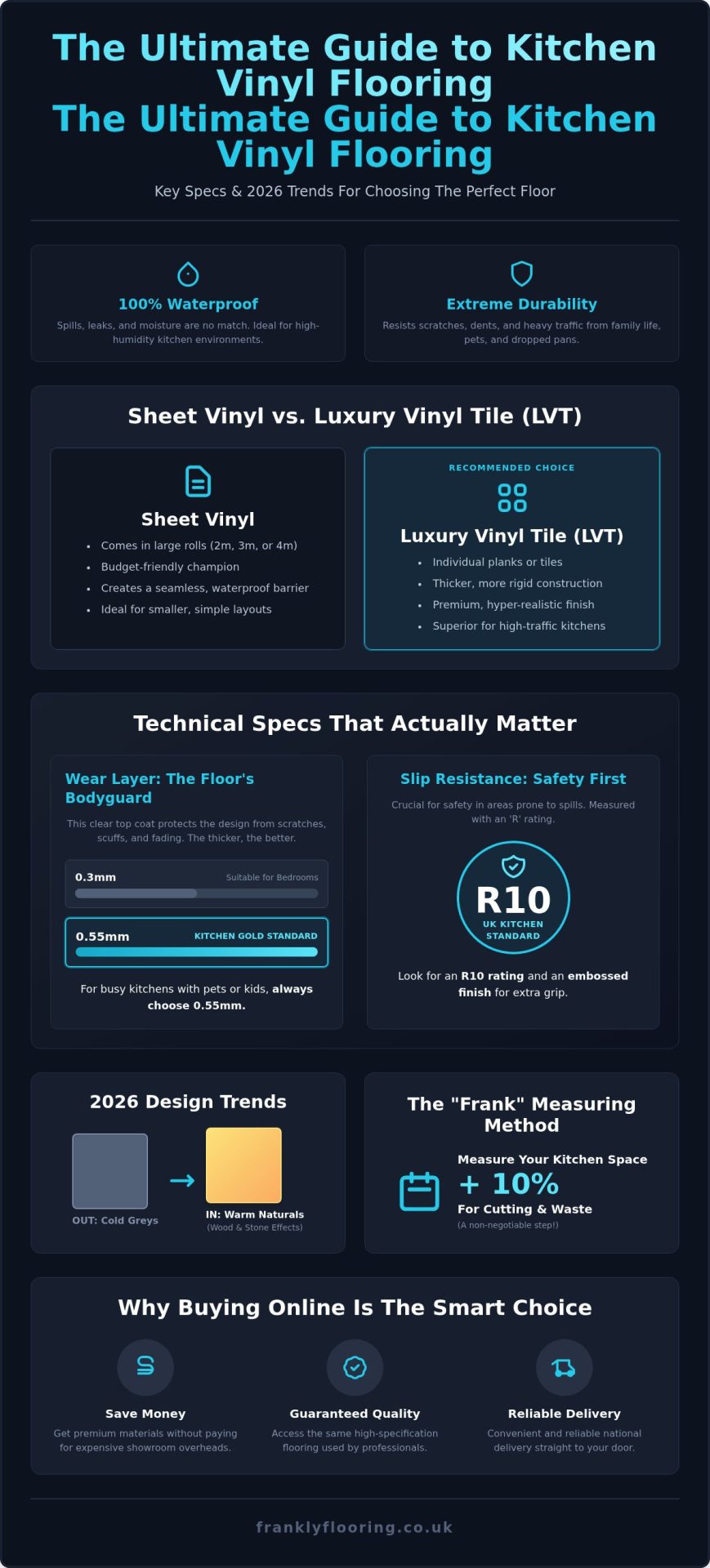
Choosing between these two formats depends on your layout and budget. Sheet vinyl comes in large rolls, usually 2m, 3m, or 4m wide. It’s the budget-friendly champion for smaller kitchens because you can often cover the entire space without any seams, creating a continuous waterproof barrier. On the other hand, LVT flooring consists of individual planks or tiles. It’s thicker, more rigid, and provides a premium finish that’s difficult to distinguish from real timber or slate. For high-traffic family kitchens where aesthetics are a priority, LVT is usually the superior investment.
The ‘Frank’ Truth About Lino vs. Vinyl
We need to be direct about terminology because it causes a lot of confusion. In the UK, people often use the word “lino” as a catch-all term for any smooth floor. However, true linoleum is a natural product made from linseed oil and cork. While it’s eco-friendly, it requires more maintenance and can be sensitive to moisture if not sealed correctly. Synthetic vinyl is far more practical for a modern kitchen environment. It doesn’t need specialist sealing, it’s easier to scrub, and it handles the humidity of a busy cooking environment without complaint. Understanding this distinction helps you avoid buying a material that isn’t fit for the specific demands of a kitchen.
Technical Specs: What Actually Makes the ‘Best’ Kitchen Vinyl?
Finding the best vinyl flooring for kitchens uk isn’t about picking the most expensive box on the shelf. It’s about understanding the technical data that keeps your floor looking new for a decade. While many brands hide behind marketing buzzwords, we prefer to look at the numbers. High-quality flooring is built on UK flooring installation standards that prioritise longevity and safety over flashy patterns. If you focus on the specifications rather than the branding, you’ll end up with a floor that survives the daily chaos of a busy home.
Understanding Wear Layers (0.3mm vs 0.55mm)
The wear layer is the clear protective coating on top of the design. Think of it as the bodyguard for your floor. A 0.3mm layer is common for bedrooms, but for a busy kitchen, you really want a 0.55mm wear layer. This “Gold Standard” thickness protects against scratches from pets, heavy boots, and dragged chairs. It ensures the wood or stone pattern underneath doesn’t fade or wear away in high-traffic spots like the area in front of your sink. If your household includes large dogs or kids who treat the kitchen like a racetrack, don’t settle for anything less than 0.55mm.
The Importance of R10 Slip Resistance
In a room where water spills are inevitable, slip resistance is non-negotiable. The industry uses an R-rating system, and for a domestic kitchen, R10 is the standard you should look for. This rating means the floor has enough grip to be safe underfoot even when slightly damp. We often recommend embossed finishes, where the texture of the grain is physically pressed into the vinyl. It looks more realistic and provides that extra bit of traction when you’re rushing to empty the dishwasher. A smooth, high-gloss floor might look sleek in a magazine, but in a real UK kitchen, it can become a skating rink the moment a pot boils over.
Finally, consider the backing. If your subfloor isn’t perfectly level, felt-backed vinyl is often the smartest choice. It’s more forgiving than rigid core options and can hide minor lumps or bumps in an old concrete or timber base. It adds a bit of warmth and cushioning too. If you’re ready to see these specs in action, you can browse our full vinyl range to find a match for your home that prioritises technical quality over marketing fluff.
Kitchen Design Trends: Choosing Your Aesthetic
Finding the best vinyl flooring for kitchens uk involves more than just checking technical specs; it requires a keen eye for how a pattern interacts with your light and cabinetry. In 2026, we’re seeing a decisive shift toward nature-inspired designs. Homeowners are moving away from the clinical, ultra-modern looks of the last decade in favour of materials that bring texture and warmth into the heart of the home. When you’re choosing a style, look at your worktops first. If you have a busy, speckled granite surface, a simpler floor pattern prevents the room from feeling cluttered. Conversely, plain white or navy cabinets provide the perfect backdrop for a bold, patterned floor.
We’ll give you some frank advice on maintenance that most showrooms skip: don’t choose a solid, dark colour if you have a golden retriever or a busy family. Dark, uniform floors show every crumb, water spot, and pet hair. Instead, look for mottled or “distressed” patterns. These textures are incredibly forgiving and keep your kitchen looking clean between deep scrubs. For smaller UK kitchens, which often lack natural light, choosing lighter tones like sand, honey oak, or pale grey can make the space feel significantly larger and less restrictive.
Stone and Tile Effects
The appeal of slate, limestone, and marble is timeless, but real stone is cold underfoot and unforgiving if you drop a glass. Modern vinyl captures the visual depth of these materials without the literal chill. In 2026, large format tile patterns are particularly popular for open-plan kitchen-diners. Fewer visible joints create a seamless flow that makes a room feel expansive. While sheet vinyl offers a completely grout-free surface that’s easy to wipe, LVT tiles often feature “feature strips” or bevelled edges that mimic real grout lines for a more authentic architectural look. Regardless of the style, ensure your choice meets kitchen flooring safety standards to keep the space practical as well as beautiful.
Wood Effect and Herringbone
Many homeowners want the prestige of engineered wood flooring but worry about water damage near the sink. Vinyl solves this problem by offering hyper-realistic wood grains that are entirely waterproof. The biggest trend for 2026 is the resurgence of herringbone and parquet patterns. These layouts add a sense of luxury and movement to a kitchen, working equally well in traditional Shaker-style rooms and sleek, handleless spaces. While cool greys dominated for years, the current preference is for warm oaks and rich walnuts. These tones create a grounded, “lived-in” feel that turns a functional cooking area into a comfortable social space.
The Frank Guide to Measuring and Ordering Online
Measuring your own kitchen might feel daunting, but it’s the most effective way to avoid the hidden markups of “free” measuring services. To find the best vinyl flooring for kitchens uk for your specific layout, start by sketching a bird’s eye view. Measure the longest and widest points of the room, ensuring you include the space inside alcoves and under any appliances that won’t be moved. If you have a kitchen island, measure the entire floor area as if it weren’t there. You’ll need the extra material to cut around the base anyway.
The “Frank” rule for ordering is simple: always add 10% to your final square meterage. This isn’t a sales tactic. It’s a practical buffer for cutting waste and those inevitable awkward corners. Without it, you risk running short and facing the delay and cost of a second delivery. We also strongly advise ordering samples before committing. Digital images can’t capture how a specific grain looks under your kitchen’s LED spotlights or morning sun. Seeing the material in your own home is the only way to be 100% sure of the colour.
Subfloor Prep: The Secret to a Flat Floor
Vinyl is a relatively thin material, which means it will eventually show every lump, bump, or gap underneath it. This process is called “telegraphing”. If you’re laying over old floorboards, you’ll need to install a layer of 6mm plywood first. For concrete bases, a self-levelling smoothing compound is usually the best route to achieve a flat surface. Make sure the subfloor is completely dry, clean, and free of old adhesive before you start. A little extra time spent on prep prevents the floor from bubbling or peeling later.
Essential Accessories You Shouldn’t Forget
A professional finish depends on the small details. If you’re transitioning from a vinyl kitchen to a carpeted lounge, don’t forget to order a carpet gripper for the threshold. You’ll also need the right adhesive or high-quality double-sided tape if you’ve chosen sheet vinyl. Finally, pick out matching or contrasting door bars. These provide a clean break between rooms and protect the edges of your new floor from lifting. You can view our full range of accessories to ensure you have everything needed for a seamless project.
Why Buying Kitchen Vinyl Online is the Smartest Choice
The traditional way of buying flooring involves driving to a retail park and paying for the overheads of a heated showroom and a fleet of sales staff. We don’t think that’s the best way to do business. By operating as an online specialist, we can pass those overhead savings directly to you. This model is why you can find the best vinyl flooring for kitchens uk at a price that reflects the quality of the material rather than the cost of the shop’s rent. With national UK delivery, the material arrives at your doorstep, removing the hassle of trying to fit long rolls or heavy boxes into a standard car.
When you buy online, you need to know who is on the other side of the screen. It’s important to vet retailers by looking for longevity and clear expertise. Frankly Flooring is a family-run business with 20+ years of experience in the trade. We aren’t a faceless corporate entity; we’re a dedicated team that views flooring as a foundational element of your home’s character. We prioritise transparency in every interaction, which is why we’re always frank about technical specs, slip ratings, and the necessity of proper subfloor preparation.
Value vs. Price: Getting the Best Deal
It’s easy to get distracted by the lowest price, but the cheapest vinyl often costs more in the long run if the wear layer is too thin for a busy kitchen. When you’re comparing costs, look at the price per square metre across different laminate flooring or vinyl websites, but check the technical specs side-by-side. Buying your flooring, underlay, and accessories in one go is usually the smartest move. It ensures that everything is compatible and often qualifies you for more efficient delivery options while keeping your project on schedule.
The Frankly Flooring Promise
Our commitment is to provide no-nonsense, honest advice that helps you make an informed decision for your home. We won’t push you toward the most expensive product if a more affordable sheet vinyl is better suited to your small kitchen layout. Integrity and long-term satisfaction are more important to us than a quick win. We take pride in our work and the products we sell, ensuring that every customer feels supported from the first sample to the final delivery. We invite you to browse our full range of kitchen-ready vinyl and LVT to find the perfect foundation for your room.
Choosing a Foundation for Your Home
Finding the best vinyl flooring for kitchens uk doesn’t have to be a confusing journey through marketing fluff. By focusing on a 0.55mm wear layer and an R10 slip rating, you ensure your floor handles the spills and traffic of a busy home for years to come. Whether you choose the premium finish of LVT or the seamless protection of sheet vinyl, the right choice is built on technical quality and honest advice rather than a high-pressure sales pitch.
At Frankly Flooring, we bring 20+ years of industry experience to our family-run business. We prioritise integrity over quick wins. Our national delivery ensures your materials arrive safely without the hidden showroom markups. You’ve already learned how to measure your space accurately and why technical specs matter more than a fancy brand name. It’s time to stop worrying about peeling floors and start enjoying a kitchen that looks as good as it performs. Browse our Frank selection of Kitchen Vinyl and LVT and find the perfect match for your home today.
Frequently Asked Questions
Is vinyl flooring really 100% waterproof for kitchens?
Yes, modern synthetic vinyl is completely waterproof, making it the best vinyl flooring for kitchens uk where spills and humidity are constant. Unlike wood or laminate, the material won’t swell or rot if it gets wet. However, while the surface is waterproof, water can still seep through seams or edges if they aren’t properly sealed. This is why correct perimeter sealing is vital to protect your subfloor from moisture damage.
Can I lay new vinyl over my existing kitchen tiles?
You can lay vinyl over tiles, but we don’t recommend doing it directly. Most kitchen tiles have grout lines that will eventually “telegraph” through to the surface of your new vinyl. To get a professional finish, you should either remove the tiles or apply a thin layer of smoothing compound over them. This creates the flat, stable base needed for the vinyl to stay looking its best for years.
What is the best slip rating for kitchen vinyl?
R10 is the industry standard for domestic kitchen safety. This rating provides a balance of grip and ease of cleaning. In a room where water or grease might hit the floor, an R10 rating ensures the surface isn’t dangerously slick. While higher ratings like R11 or R12 exist, they often have a coarser texture that can trap dirt more easily in a residential setting, making them harder to scrub.
How do I clean and maintain my kitchen vinyl floor?
Maintenance is straightforward and requires nothing more than regular sweeping and a damp mop. Use a pH-neutral cleaner designed for vinyl to avoid stripping the protective wear layer. You should avoid using abrasive scouring pads or harsh bleach, as these can dull the design over time. For stubborn scuffs, a soft cloth and a bit of elbow grease usually do the trick without damaging the protective surface.
Do I need underlay for kitchen vinyl flooring?
Whether you need underlay depends on the specific product you choose. Many modern LVT planks come with an integrated underlay already attached to the back. For sheet vinyl, a separate underlay isn’t usually required if the floor has a built-in felt or foam backing. Always check the manufacturer’s guidelines for your chosen best vinyl flooring for kitchens uk to ensure you’re providing the right level of support and sound insulation.
How long does vinyl flooring typically last in a busy kitchen?
A high-quality vinyl floor can last between 10 and 20 years in a busy kitchen if it’s maintained correctly. The lifespan depends heavily on the thickness of the wear layer. A 0.55mm wear layer is designed to withstand the heavy traffic of a family home, including pets and children. Investing in a thicker protective coating at the start prevents the pattern from wearing through in high-use areas like the stove.
Is LVT better than sheet vinyl for a kitchen?
Neither is strictly “better,” but they serve different needs. LVT is thicker and offers a more realistic wood or stone appearance with individual planks. It’s easier to repair since you can replace a single tile. Sheet vinyl is a more budget-friendly option and provides a seamless finish, which is excellent for total waterproof protection. Your choice should depend on your specific budget and how much traffic your kitchen handles daily.
Can I use a steam mop on my kitchen vinyl?
We strongly advise against using a steam mop on any vinyl floor. The intense heat and moisture can penetrate the seams, potentially weakening the adhesive or causing the layers of the flooring to separate. Over time, this leads to warping or bubbling that can’t be easily fixed. A traditional damp mop with lukewarm water is much safer and just as effective for keeping your kitchen floor hygienic and clean.