
The closest-looking alternative isn’t automatically the best-value floor. For a wood floor look for less, compare laminate, vinyl and LVT. Each can create a wood-inspired finish, but fitting requirements and performance vary by product. The right choice depends on how the room is used, including its foot traffic and likelihood of spills.
It’s understandable to focus first on appearance. But a convincing wood effect is only part of the decision: stain and water resistance, along with the practicalities of fitting, matter too. A finish that suits a quieter bedroom may not be the best fit for a busy kitchen or entrance.
This comparison explains how the main wood-look alternatives differ, what to consider about installation and how their everyday performance can vary. You’ll also see why room use and floor finish matter when weighing up stains and spills, helping you narrow your options with a clearer sense of the trade-offs.
Key Takeaways
- Compare laminate, vinyl and LVT by fitting requirements as well as appearance to find the option that suits your room.
- Match the floor’s finish to everyday traffic and spill risks, especially in kitchens and entrances.
- Understand how plank direction and pattern can affect the feel of a room before choosing a wood-effect design.
- When assessing laminate cost per m², consider what affects the overall choice, not just the flooring’s appearance.
1. Flooring installation and performance considerations
Laminate, vinyl and engineered wood can all create a wood-style surface, but their constructions differ. Laminate and vinyl use printed designs; engineered wood has a real timber surface over a layered core. Durability depends on the product’s surface and construction, plus how the room is used. Compare specifications alongside appearance rather than assuming one material always lasts longer.
Installation varies by product and floor condition. A level, prepared base helps create an even finish, while the fitting method affects how boards or planks meet at the edges. Real wood flooring needs expansion gaps. Board direction can also change a room’s proportions: laying boards across a narrow room can emphasise its width, while running them along the longest wall draws attention to its length.
There isn’t one named UK retailer or brand that suits every wood-look flooring decision. Shortlist retailers whose ranges include laminate and vinyl, then compare the product details, surface appearance and installation guidance for the specific options.
Luxury vinyl plank flooring has no single price per sq m across all products. Construction, finish and intended use affect the price, so compare similar products rather than relying on the material name alone.
For a realistic wood effect, look closely at the printed grain, plank proportions, surface texture and how patterns repeat across several planks. Deeper texture can catch the light and emphasise individual boards. A single plank may hide repeated grain, so inspect a larger sample laid out where possible. Frankly Flooring offers free door-step samples to help you check colour and texture.
Low-cost flooring can disappoint if its appearance, fitting needs or performance don’t suit the room. A busy kitchen, for example, sees more traffic and spills than a bedroom. Check the product’s wear surface and care instructions against the room’s use. A mismatch can mean more visible wear or extra maintenance.
For entrances and kitchens, suitability may depend on the finish, wear layer and maintenance plan. Lacquered wood flooring can be harder to repair on site when scratches and scuffs appear.
2. Stain and water resistance
Choose a wood floor finish with the room’s traffic and likely spills in mind. Bedrooms generally see less foot traffic than kitchens, which tend to have more movement and a greater chance of spills and stains. That difference matters when comparing finishes. A floor that suits a bedroom’s quieter routine may need more attention in a kitchen where cooking spills are part of daily use.
Lacquered wood flooring generally offers high stain and water resistance, which may make it an option for kitchens. That resistance doesn’t mean spills should be left on the surface: wipe up liquid promptly and follow the floor’s care instructions. Assess the finish in light of the room’s use rather than treating “lacquered” as a complete measure of performance.
Pre-oiled boards call for a different comparison. Their resistance to spills depends on the type and quality of oil applied, so “oiled” alone doesn’t tell you how well a particular floor will resist marks or moisture. Consider the stated finish and maintenance plan together. In a kitchen, regular splashes make those details especially relevant; in a bedroom, lower traffic may make spill exposure less central.
Use a practical room-by-room check before choosing. Note where water or food might reach the floor, how often people cross the space and how much upkeep fits your routine. A kitchen beside an entrance, for example, may face frequent foot traffic and wet footwear, while a bedroom is typically less exposed to spills. Compare the finish and care needs with those conditions, then decide which trade-off works for your household. Stain and water resistance are related considerations, but the finish and its maintenance requirements shape the protection available.
3. What are the cheapest alternatives to real wood flooring in the UK?
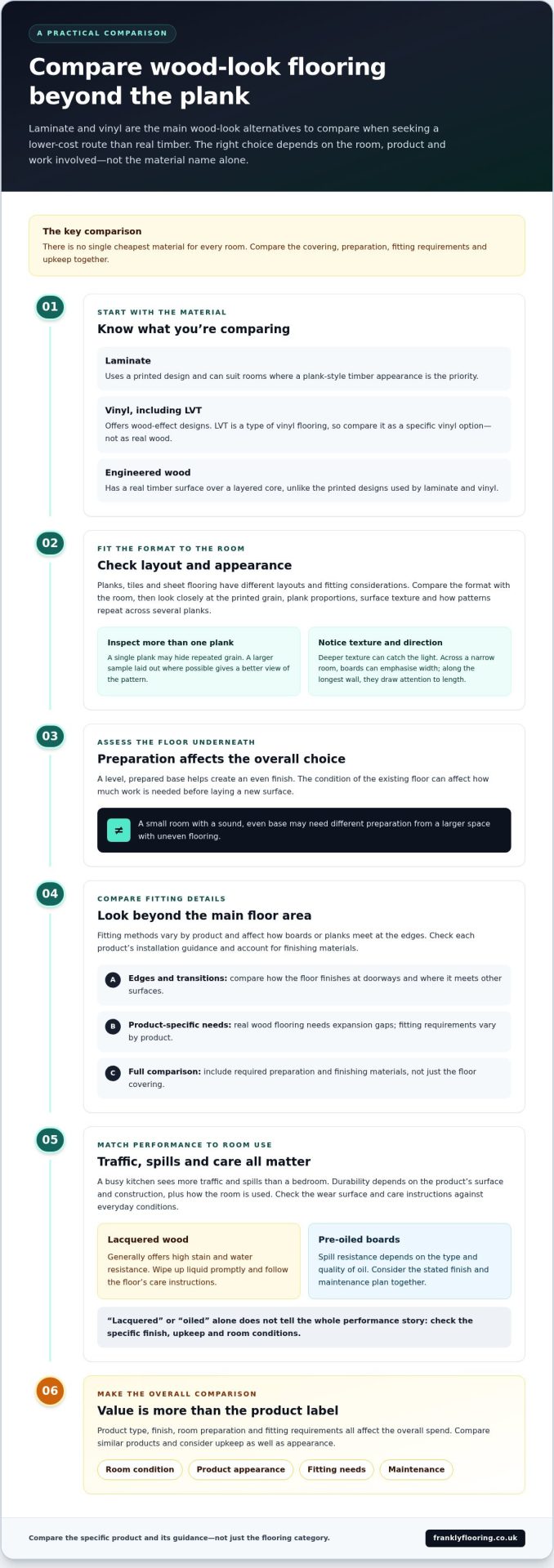
Laminate and vinyl are the main wood-look alternatives to compare when seeking a lower-cost route than real timber. Neither has one fixed price across the UK market: product type, finish, room preparation and fitting requirements all affect the overall spend. Within the same category, a basic-looking plank and a more detailed wood effect may also differ in price.
Laminate can suit rooms where a plank-style timber appearance is the priority. Compare the surface finish, board design and care requirements, not just the product label. Vinyl is another option, with wood-effect designs available; consider whether its format and fitting method suit the room. LVT is a type of vinyl flooring, so compare it as a specific vinyl option rather than as real wood.
To compare alternatives fairly, look at the whole flooring choice, not just the covering:
- Match the format to the room. Planks, tiles and sheet flooring have different layouts and fitting considerations.
- Account for preparation. The condition and level of the existing floor can affect the work needed before laying a new surface.
- Compare finishing details. Edges, transitions and the boundary at doorways influence the completed result.
- Consider upkeep. A finish that needs more careful maintenance may affect long-term value.
For example, a small room with a sound, even base may need different preparation from a larger space with uneven flooring. That affects the overall comparison before you even choose a wood-effect design. Check each product’s fitting guidance and include any required preparation and finishing materials when assessing your options.
There is no single cheapest material for every room in the UK. Laminate and vinyl are sensible categories to compare first, then narrow your choice by room condition, appearance and fitting needs. This helps you find a practical wood floor look for less without assuming the lowest product price means the lowest overall cost.
4. Wood-effect laminate flooring cost per m² in the UK
There is no single UK-wide price per sq m for wood-effect laminate. The total depends on the laminate you choose and the work needed to prepare the room. A product price alone won’t show the full project cost, especially if the existing floor needs attention before fitting.
Compare like with like. Look at each laminate’s finish and design, then consider room size and fitting requirements. Wood-effect options can differ in appearance and product details, so comparing only by material name may not explain the price difference. Check what the product measurement includes before comparing prices.
Use this practical checklist to make your comparison more useful:
- Measure the floor area: multiply the room’s length by its width to work out the area in square metres.
- Review the product details: compare finish, plank appearance and the fitting guidance for each laminate.
- Assess preparation: note whether the existing floor needs work before the new covering can be laid.
- Include finishing materials: account for underlay, adhesives or tools where the chosen product requires them.
For example, a measured room with an even, prepared base may need less groundwork than one with an uneven surface. That can affect the overall budget, even when comparing the same laminate. Separate flooring costs from preparation and associated materials, so the product price doesn’t stand in for the full project estimate.
For a wood floor look for less, compare the per-square-metre product cost alongside the room’s preparation and fitting needs. Keep your measurements and product details together, then use them to compare suitable options without assuming the lowest listed figure represents the finished-floor cost. Explore wood-effect laminate options as part of that comparison.
Frankly Flooring: LVT
Frankly Flooring sells LVT for anyone weighing up a wood-inspired floor against other options. Compare its surface appearance, room suitability and care requirements with real wood and other materials. The right choice depends on what matters most in your home, including the look you want and how you use the space.
Consider the wider room, too. Carpet may suit spaces where you prefer a softer surface, while furniture can help complete the look around your flooring choice. Planning these needs together makes it easier to create a cohesive update rather than treating the floor as an isolated decision.
For a straightforward next step, contact Frankly Flooring to explore its LVT options.
Choose a floor that fits your next chapter
A wood floor look for less is most satisfying when it feels right for your home, not simply when it resembles timber. Before deciding, think about how you want the room to feel and how you use it day to day. This gives you a practical way to assess the look, upkeep and suitability of each option.
Think beyond a single room, too. Flooring sets the tone, while other choices help shape how the space works as a whole. Frankly Flooring sells LVT, wood and carpet, giving you options to consider as you plan your home’s surfaces. Focus on the finish and material that suit your priorities rather than feeling pushed towards one answer.
If you’re ready to take the next step, contact Frankly Flooring for advice and explore the flooring options that could suit your plans. A clear idea of what matters most is a good place to begin.
Frequently Asked Questions
How much does it cost to install laminate or vinyl flooring in the UK?
There is no single UK installation total because the room and preparation affect the work involved. To build a realistic estimate, measure the floor area, then list the flooring, underlay or adhesive, trims and any subfloor preparation separately. An uneven base, for example, may need attention before fitting. Keep product costs distinct from fitting costs when comparing estimates.
Can I install wood-effect flooring myself, and what tools and preparation are needed?
Some homeowners can fit wood-effect flooring themselves if they follow the product’s fitting instructions and prepare the base properly. Start by clearing the room and checking that the subfloor is clean, dry and level. A tape measure, pencil, straightedge and suitable cutting tools can help with measuring and shaping; the tools required vary by flooring format. Underlay, adhesives and fitting tools also depend on the product.
Which wood-look flooring is suitable for kitchens, bathrooms and underfloor heating?
Choose flooring by checking its stated room suitability and compatibility with the heating system, rather than relying on its wood-look appearance. Kitchens need a finish suited to regular traffic and possible spills. Bathrooms require particular attention to moisture exposure: water resistance alone doesn’t establish suitability. Frankly Flooring’s LVT collection is water-resistant, but check the product instructions for room and underfloor-heating compatibility before choosing it.