
You can put a rug on new carpet, but choose a stable combination and secure it properly. If you’re wondering whether you can put a rug on a new carpet, the short answer is yes: a rug pad designed for carpet or another suitable fixing can help prevent slipping and bunching. The carpet’s pile is the key factor, since soft, deep pile can make the rug less stable.
A rug can add colour, define a seating area or protect a particularly busy patch of flooring. However, a thick rug on soft, deep-pile carpet may shift or wrinkle, so consider the pile and how the layers will feel underfoot before laying it down.
This guide explains how carpet and rug materials affect stability, how to position a rug in the room, and which options can help keep it in place. You’ll also learn how furniture, grippers, tape and underlay compare, so you can choose an approach that suits your floor without making the layers feel bulky.
Key Takeaways
- Choose a rug whose thickness suits the carpet pile; a low-profile style can sit more steadily on shorter-pile carpet.
- Use furniture, suitable grippers or rug tape to help keep the rug from creeping or bunching.
- Align the rug with the room’s walls and furniture, leaving a visible border of carpet around it.
- For added grip, choose underlay made for carpet and trim it slightly smaller than the rug on every side.
1. Furniture, grippers and tape to prevent movement
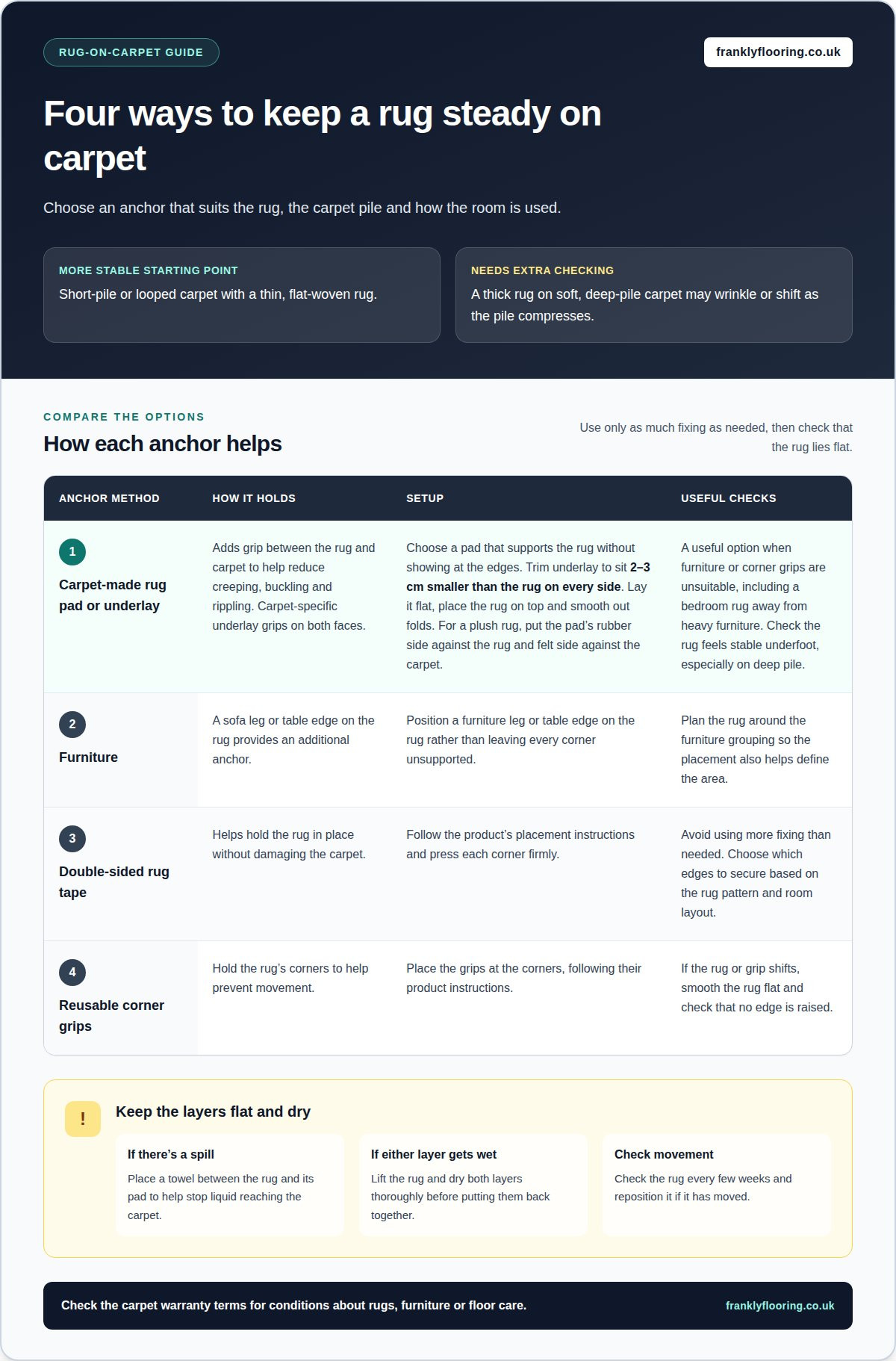
To stop an area rug slipping or bunching on carpet, use a rug pad made for carpet, then secure the rug’s corners. The pad adds grip between the two layers and helps reduce creeping, buckling and rippling. Choose a size that supports the rug without showing around its edges. This keeps the surface neat and helps define the area without adding unnecessary bulk.
For a plush rug, place the pad’s rubber side against the rug and felt side against the carpet. This helps grip both surfaces. If the pad shifts or extends beyond the rug, it can create raised edges, so smooth the rug flat after laying it down. On deep-pile carpet, check that the rug feels stable underfoot before arranging furniture.
Furniture can provide another anchor: position a sofa leg or the edge of a table on the rug, rather than leaving every corner unsupported. Double-sided rug tape or reusable corner grips can also hold the rug in place without damaging the carpet. Follow the product’s placement instructions, press each corner firmly, and avoid using more fixing than needed. The rug’s pattern and the room’s layout can help you choose which edges to secure.
Putting a rug on new carpet does not automatically cancel its warranty. Check the carpet’s warranty terms for any conditions relating to rugs, furniture or floor care, as these determine what is covered.
If there’s a spill, place a towel between the rug and its pad to help prevent liquid reaching the carpet. If either layer gets wet, lift the rug and dry both thoroughly before putting them back together. Check the rug every few weeks and reposition it if it has moved. This helps prevent ongoing movement from distorting the rug or carpet.
2. What should you know about carpet and rug materiality before layering?
Area rugs generally sit more securely on short-pile or looped carpet than on deep, springy pile. A thin, flat-woven rug is a practical choice over plush carpet because it needs less support beneath it. Thick rugs on shag or frieze carpet can wrinkle or shift as the soft pile compresses underfoot. The difference in thickness also helps each layer look distinct.
The materials you choose affect both the feel and appearance of a room. A wool area rug over synthetic nylon or polyester carpet, or the reverse, creates a clear contrast in texture. Low-profile hides, kilims and dhurries are other options for layering without adding a bulky top layer. On patterned carpet, a simple rug in a solid or low-contrast design can keep the room from feeling too busy.
Layering can define a seating area or add a focal point to a room with plain fitted carpet. A rug can also cover a stain, damage or other visible imperfection, and protect a selected section from everyday wear. However, it may contribute to uneven wear, dents or discolouration underneath, particularly if left in one position. Lift and move it periodically to check for changes and give the carpet time to recover.
For a new rug over light carpet, test for dye transfer before laying it down. Press a damp white cloth firmly into the rug pile for a few seconds; colour on the cloth signals that dye may transfer. For safe backing, choose a rug or underlay designed for use on carpet, rather than assuming any backing suits every surface. Check how the material grips the carpet pile, and avoid a thick backing that makes an already plush combination unstable. This keeps the layering low-profile while helping the rug sit evenly.
3. Aligning the rug with the room
In a living room, a rug can define a seating area without covering the whole carpet. Centre it around the main furniture grouping, then align its edges with the walls and furniture. A rug laid at an angle can make a carefully arranged room look unsettled, even when its colour and texture suit the carpet.
Leave visible carpet around the rug so the two layers read as intentional. A commonly used guide is to leave between six and 24 inches of carpet visible around the rug’s sides. For fitted carpet, keep at least 40 cm of visible carpet at the narrowest point. These measurements describe different practical guides, so use the room’s proportions to avoid a rug that crowds the edges.
Before moving the rug into place, identify the room’s main visual line. In a rectangular room, use the longest wall as a guide and set the rug parallel to it. In a seating area, align its longer edge with the sofa rather than a doorway or window. This connects the rug to the furniture and makes the placement feel deliberate.
For example, in a living room with a sofa facing a fireplace, centre the rug on the seating group and keep its edges parallel to the sofa. In a smaller room, a compact rug can mark the space between an armchair and coffee table while leaving a visible carpet border. Step back from the doorway to check that the rug sits squarely within the room.
Room shape matters too. A narrow rug across a wide floor can divide the space awkwardly, while a broad rug may leave too little carpet visible. Check the rug’s position from more than one entrance, then adjust it until the border looks balanced. Aligning it with the walls and furniture is a straightforward starting point; the final position should suit the room’s proportions and focal point.
4. Alternative ways to anchor rugs on carpet
A carpet-specific underlay can help anchor a rug when furniture or corner grips aren’t suitable. Choose one designed to grip on both faces: one side holds the rug, while the other grips the carpet pile. This helps keep the layers aligned across the rug’s surface, rather than securing only its corners. It can be useful in a bedroom, where a rug may sit away from heavy furniture.
Trim the underlay so it’s 2-3 cm smaller than the rug on every side. This keeps the underlay hidden and reduces the chance of catching an exposed edge while walking. Lay the underlay flat first, then place the rug on top and smooth out folds. If the rug has curled corners, reposition the layers before use instead of leaving a raised edge.
For UK carpet care, vacuum the layered area rug at least once a week and clean it at least once a year. Regular care helps remove dust and grit from the rug and carpet surface. If either layer gets wet, lift the rug and dry both rug and carpet thoroughly. Put the rug back only when both are completely dry, so moisture isn’t trapped between the layers.
Check the anchor solution every few weeks. Look for shifted edges, folds or compressed areas, then lift and reposition the rug and underlay if needed. This is especially useful in a bedroom where repeated footfall follows the same route. A double-sided underlay is a practical choice for broad, even grip; smaller corner grips can suit a rug that needs support only at its edges. For a stable foundation beneath your room’s finishes, explore suitable flooring options.
Frankly Flooring: Carpet
Frankly Flooring offers carpet for rooms where the existing floor no longer suits your needs or the rug feels unstable over a deep pile. Choosing a carpet with the right texture and pile can help create a more suitable base for layering, while furniture can help complete the room. If you’re weighing up a new carpet rather than adding a rug, consider how the room is used and how its furnishings will sit on the surface.
Frankly Flooring also offers LVT and wood, giving you other flooring materials to consider for your home. The right choice depends on the look and feel you want underfoot, as well as how you plan to use the space. For help exploring carpet options, contact Frankly Flooring.
Choose the flooring that fits your next step
If you’re still considering whether you can put a rug on a new carpet, think about how you want the room to look and feel over time. A rug can be a useful finishing touch, but it isn’t right for every space. For a broader change, consider how your flooring will work with your furniture, daily routines and preferred look.
Frankly Flooring offers carpet, wood and LVT, so you can explore different flooring options as you shape the room. Carpet gives you a soft surface underfoot, while wood and LVT offer different looks and finishes. Start with the role you want the floor to play, then decide whether a rug is part of the plan.
Take the next step at your own pace. Contact Frankly Flooring today to discuss your flooring options, and move forward with a choice that feels right for your home.
Frequently Asked Questions
Should You Put a Rug on a Carpet?
Yes, an area rug can work over fitted carpet if the pile gives it a steady base. A flat-woven rug is usually more practical with short-pile carpet than a thick rug over deep shag. Consider what you want the rug to do: mark out a reading corner, add contrasting texture or cover a visible imperfection.
What should you know about carpet and rug materiality before layering?
Match the rug’s thickness to the carpet pile, and consider how their textures and colours work together. A low-profile kilim or dhurrie can add definition without making a plush floor feel overly thick. If the carpet is patterned, a simple rug can create visual balance. Before placing a new rug on pale carpet, test it for dye transfer with a damp white cloth.
What should you know about sizing and measurements?
Measure the intended area and consider the furniture layout before settling on a rug size. A visible carpet border helps the rug look like a deliberate layer rather than wall-to-wall coverage. One guide suggests leaving 6-24 inches around the rug; another recommends at least 40 cm at the narrowest point. Keep the rug parallel to the room’s walls and main furniture.
Can you put an area rug on new carpet?
Yes, you can put an area rug on new carpet if the combination sits securely and suits the carpet pile. A flat-woven rug is a sensible starting point for softer carpet, while deep, bouncy pile may make a rug less stable. If the carpet is light, test the rug for dye transfer before laying it down.
Can rugs damage or discolour carpet underneath?
They can. A rug left in one position may contribute to dents, uneven wear or discolouration beneath it, and dye from a new rug may transfer onto pale carpet. Lift and reposition the rug periodically to inspect the carpet. If the layers get wet, dry both completely before putting them back together to avoid trapping moisture.
Do you need a rug pad on carpet, and which type works best?
A rug pad isn’t essential in every room, but a carpet-specific pad can help limit movement and bunching. Choose one that grips on both sides, with one face holding the rug and the other gripping the carpet pile. Trim it 2-3 cm smaller than the rug on every side, so the pad stays hidden beneath the edges.