
A wool carpet can be deep-cleaned with a carpet washer, but the key is controlled moisture, a wool-suitable cleaning solution and thorough water extraction. To learn how to deep clean a wool carpet, vacuum first, treat spills and stains, then make slow passes with cool or lukewarm water without repeatedly soaking the pile. Finish with dry extraction passes and good airflow.
Take extra care when deep cleaning a wool carpet: excess moisture, harsh products and high temperatures can damage the fibres. Too much water or an unsuitable solution may cause colour bleed, pile distortion and longer drying times. This guide covers routine vacuuming, stain pre-treatment, careful use of a carpet washer and thorough drying.
Key Takeaways
- Vacuum regularly and blot fresh spills with a clean white cloth; rubbing can push soil deeper into the wool.
- Pre-treat stains with a wool-suitable product, test it on a hidden area first, and avoid bleach.
- Use a carpet washer with cool or lukewarm water and slow passes, taking care not to repeatedly soak the same area.
- Extract as much moisture as possible, then improve airflow to help the carpet dry and reduce the risk of browning.
Drying wool carpets
Drying is part of the cleaning process, not an afterthought. Wool can hold moisture, so extract as much water as possible and keep air moving across the carpet.
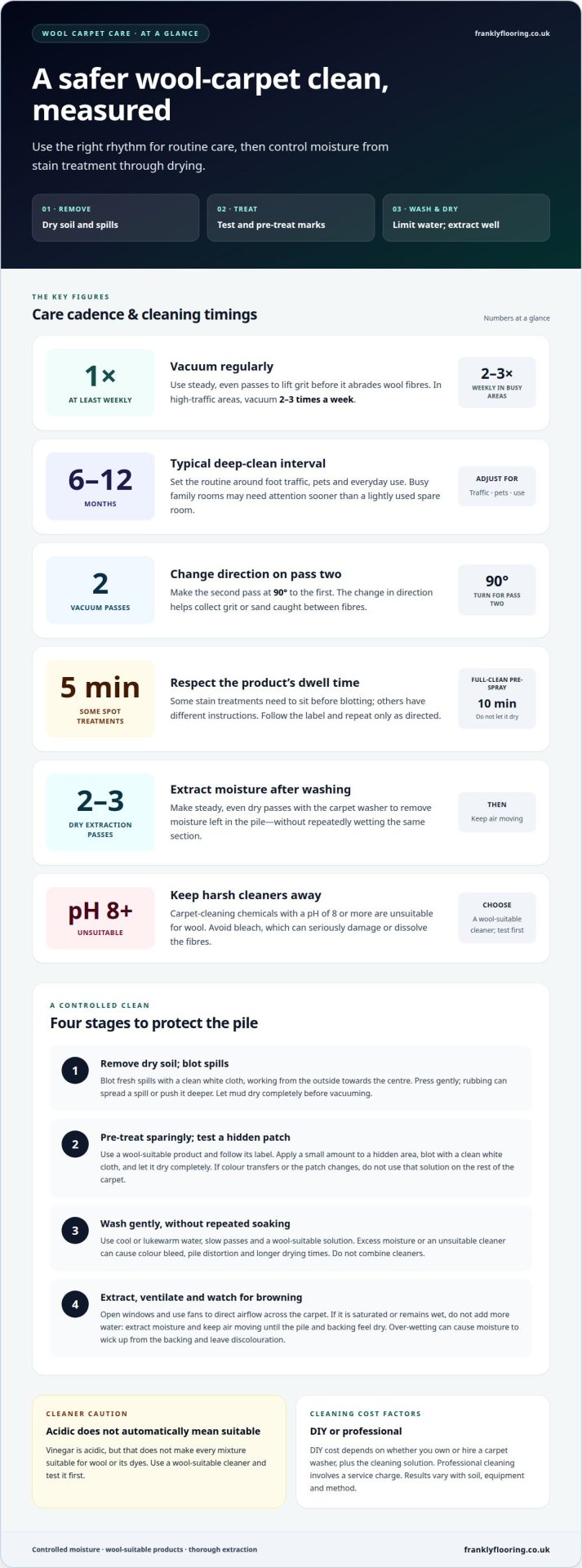
- After washing, make two or three dry passes with the carpet washer. These extraction passes remove moisture left in the pile. Move steadily and cover each section evenly, rather than repeatedly wetting it.
- Test for colourfastness before cleaning, and let the test area dry completely. Apply a little cleaning solution to a hidden patch, then blot it with a clean white cloth. If colour transfers or the patch changes, don’t use that solution on the rest of the carpet.
- For DIY wool carpet cleaning in the UK, costs depend on whether you already own a carpet washer or need to hire one, as well as the cleaning solution. Professional cleaning involves a service charge. Results vary with the soil, equipment and method, so weigh the work involved rather than assuming one option will always clean better.
- To dry a wet wool carpet, open windows and use fans to improve ventilation. Direct airflow across the carpet, not just at one damp spot. If the carpet is saturated or remains wet, don’t add more water. Extract moisture and keep air moving until the pile is dry.
- Avoid bleach and alkaline cleaners: bleach can seriously damage or dissolve wool, and carpet cleaning chemicals with a pH of 8 or more are unsuitable. Vinegar is acidic, but that doesn’t make every mixture suitable for wool or its dyes; use a wool-suitable cleaner and test it first.
- Watch for browning as the carpet dries. If it is over-wet, moisture from the backing can wick towards the surface and leave discolouration. Good ventilation and well-positioned fans can help speed drying. Keep the room ventilated until the pile and backing feel dry.
Routine vacuuming and spill treatment
Regular care removes grit before it abrades wool fibres and helps stop spills becoming stubborn stains. Follow these steps between deep cleans.
-
Vacuum wool fibres regularly
Vacuum the carpet at least once a week, using steady passes across the pile. In high-traffic areas, such as a hallway or the route between a sofa and doorway, vacuum two to three times a week. Cover the area evenly rather than rushing over the same strip, which can concentrate wear.
-
Remove dry soil through vacuuming
Make two passes over each section, taking the second pass at 90 degrees to the first. This changes the direction of the vacuum head and helps collect grit or sand caught between fibres. Dry soil can act like an abrasive, gradually wearing the pile if it stays embedded. Empty the vacuum when its collection compartment is full, so suction can continue picking up loose particles.
-
Maintain carpets between deep cleans
Set a deep-cleaning routine based on foot traffic, pets and everyday use. A wool carpet typically needs a deep clean every 6-12 months; busy family rooms may need attention sooner than a lightly used spare room. Regular vacuuming helps reduce the dry soil that builds up between washes. Check entrances and frequently used paths, where tracked-in grit can collect first.
- Blot fresh spills immediately with a clean white cloth, working from the outside towards the centre. Press gently and switch to a clean part of the cloth as it absorbs liquid. Rubbing can spread the spill or push it deeper into the pile. For a remaining mark, dab it with a cloth moistened with water or a WoolSafe-approved cleaning spray. Let mud dry completely before vacuuming, as wet mud can smear across the wool.
Regular vacuuming lifts dry soil, including grit and sand, before it wears the wool pile. Sticky residue can attract more dirt, a process known as re-soiling, so deal with spills promptly to limit build-up. Dried-in stains are harder to remove from any fibre.
For routine care, make two vacuuming passes over the carpet, with the second pass at 90 degrees to the first. Blot fresh spills immediately with a clean white cloth, without rubbing, and work from the outside of the stain towards the centre. Allow mud to dry completely before vacuuming it away.
Pre-treating stains before deep cleaning
Pre-treat marks before washing to help stop the carpet washer spreading them through the pile. Apply a wool-suitable product sparingly and follow its instructions.
- Identify the stain before choosing a treatment. Wool is naturally stain resistant, and water or a WoolSafe-approved spot-cleaning spray can remove many marks. Food, mud and pet accidents need different handling, so don’t combine cleaners or apply an unfamiliar solution across the pile.
- Test the cleaner on a hidden patch, such as beneath furniture. Apply a small amount, blot with a clean white cloth and leave the area to dry completely. Check for colour transfer or a visible change before treating the stain. A patch that looks unchanged while wet may look different once dry.
- Prepare the wool carpet cleaning solution according to its label, then apply it lightly to the stain. Avoid soaking the area: excess moisture can reach the backing and make drying harder. For a small mark, dab the solution into the affected fibres with a cloth instead of pouring it onto the carpet.
- Follow the product’s dwell time instead of scrubbing. Some stain treatments need to remain on the mark for 5 minutes before blotting; others have different instructions. Blot with a clean cloth after the stated time, lifting loosened soil without rubbing it across surrounding fibres. Repeat only as the product directions allow.
- For a pet accident, blot up as much moisture as possible first, then use a suitable WoolSafe-approved pet cleaning solution. Keep the application light to avoid saturating the carpet. For a pre-spray intended for the full clean, allow a 10-minute dwell time without letting it dry before using the carpet washer.
- Keep bleach and bleaching agents away from wool and wool-mix carpets, as they can seriously damage or dissolve the fibres. After treating each spot, make sure no cleaner residue remains before starting the main wash.
Deep-cleaning with a carpet washer
How much water should you use? There’s no fixed amount that suits every wool carpet. Use the washer’s controlled application, enough to clean the pile without soaking it. Wool absorbs moisture, and excess water can distort fibres and prolong drying.
- Set up the carpet washer according to its instructions and choose a wool-suitable cleaning solution. Use cool or lukewarm water, not hot water, and measure the solution as directed. More detergent isn’t better: wool absorbs readily, and excess chemicals can leave residue or harm the fibres.
- Choose a slow, steady pace before switching on the machine. Move forwards in even passes and follow the washer’s operating instructions. Steady movement helps the machine apply and extract water consistently; rushing can leave some areas unevenly cleaned.
- Clean one manageable section at a time, keeping each pass consistent. Don’t repeatedly soak an area to tackle a stubborn mark. Pre-treatment should address local stains; extra water can penetrate deeper and increase the risk of pile distortion, colour bleed or a musty odour.
- Use only cleaning chemicals suitable for wool. Avoid carpet cleaning solutions with a pH of 8 or more, which can be too alkaline for wool fibres. Follow the product label for dilution, and don’t combine different cleaners in the washer. An unsuitable solution can damage the carpet even when the machine is used carefully.
- Finish each section according to the washer’s instructions, keeping water application controlled. Wool can be wet-cleaned without shrinkage when appropriate methods are used, but technique matters: avoid high temperatures, excess moisture and harsh products. If the colour changes or the pile becomes distorted, stop instead of making more wet passes.
If you’re considering a different carpet for your home, explore carpet options to find a suitable style.
Frankly Flooring: Carpet
If you’re considering replacing a carpet after cleaning, Frankly Flooring sells carpet as well as other flooring options. When a wool carpet is worn, damaged or no longer suits the room, compare options with its foot traffic, household routines and the feel you want underfoot in mind.
A carpet doesn’t need replacing simply because it requires careful maintenance. The steps above can help you care for wool; replacing it is a separate decision based on its condition and your preferences. If you’re considering a change, Frankly Flooring also sells LVT, wood and furniture.
For help with your flooring choice, contact Frankly Flooring.
Choose the next step for your room
Knowing how to deep clean a wool carpet gives you a practical way to care for it, but cleaning is only one part of deciding what works in your home. If the carpet no longer suits the room, consider whether another surface better matches its use and your preferences. Frankly Flooring sells carpet, LVT and wood, giving you options to consider as you plan the space.
There’s no need to rush the decision. Think about the room’s daily demands, the feel you want underfoot and how the flooring will sit alongside your furniture. A considered choice can help the space work better for the way you live.
For advice on your flooring options, contact Frankly Flooring. Take the next step when you’re ready, with a clear idea of what you want your room to do.
Frequently Asked Questions
Why do wool carpets need special care?
Wool is a natural fibre that can be affected by excess moisture, heat and unsuitable chemicals. An overly wet clean, for example, may cause colour bleed, pile distortion or longer drying. Treat the carpet gently and choose products made for wool rather than assuming a cleaner designed for synthetic fibres will work just as well.
Which cleaning products are safe for wool carpets in the UK?
Choose a cleaner labelled as suitable for wool, ideally one carrying WoolSafe approval. Wool-safe cleaning chemicals are typically slightly acidic, around pH 5 to 6; avoid carpet cleaning chemicals with a pH of 8 or more. Read the product directions and use the stated dilution. Don’t assume a general-purpose household cleaner is appropriate for carpet fibres.
Can you use a steam cleaner or carpet shampooer on wool?
A carpet washer can be used on wool if the method controls moisture, temperature and extraction. Steam cleaning needs particular caution because high temperatures can damage wool fibres; steam above 150°C can permanently damage them. Avoid using a machine setting that delivers excessive heat, and don’t leave shampoo residue in the pile. Check that the cleaning product is wool-suitable.